
In This Article
Discover practical self esteem activities that build lasting confidence through reflection and intentional practice, not temporary motivation.
You’ve tried the affirmations. You’ve saved the motivational quotes. You’ve told yourself you’re capable, worthy, and enough.
And when the moment arrives where you need to trust yourself—to speak up in the meeting, set a boundary with a friend, or make a decision without second-guessing—the doubt returns like it never left.
If this sounds familiar, you’re not alone. Most self-esteem advice treats confidence like a light switch you can flip on with the right thought. But real self-esteem doesn’t come from thinking differently. It comes from practicing differently.
This article introduces nine evidence-informed self-esteem activities that actually change how you relate to yourself. These aren’t quick fixes or surface-level exercises. They’re intentional practices that help you recognize patterns, align your actions with your values, and rebuild the trust you may have lost with yourself over years of overriding your instincts.
You’ll learn what makes these activities different from motivation, why they work better for thoughtful women who are tired of shallow confidence tips, and how to integrate them into your life without adding another overwhelming task to your plate.
What Are Self-Esteem Activities (And Why They Work Better Than Motivation)
Self-esteem activities are structured practices that combine action and reflection to retrain how you perceive and respond to yourself. Unlike motivation, which offers temporary emotional lift, these activities create behavioral and cognitive shifts that compound over time.
Motivation tells you that you’re worthy. Self-esteem activities help you experience that worth through your own choices.
Think of it this way: affirmations are like reading a map and hoping you’ll arrive at your destination. Self-esteem exercises are the actual steps you take to get there. They require more effort than scrolling through Instagram quotes, but they also produce tangible change in how you move through the world.
Research from the field of cognitive-behavioral therapy shows that self-perception changes most effectively when we engage in repeated actions that contradict old beliefs. When you practice a self-esteem activity consistently, you’re not just challenging a thought. You’re building new neural pathways that support a different relationship with yourself.
The women who benefit most from this approach are those who’ve spent years being told they should “just be more confident” without being given any practical tools to actually build it. These activities offer a grounded alternative to toxic positivity and hustle culture. They acknowledge that confidence isn’t something you summon on demand. It’s something you cultivate through intentional practice.
Who These Self-Esteem Activities Are For
These self-esteem activities are designed for women in their late twenties through forties who appear capable on the outside but carry persistent self-doubt on the inside. You might be high-functioning, professionally successful, and well-regarded by others while simultaneously questioning your worth in quiet moments.
You’re thoughtful and self-aware, which sometimes works against you because you notice every perceived flaw and missed opportunity. You overthink decisions, replay conversations in your mind, and wonder if you’re doing enough even when logic tells you that you are.
Low self-esteem in this context isn’t a personality flaw or a sign that something is fundamentally wrong with you. It’s often a learned pattern shaped by years of conditioning—messages about who you should be, how you should behave, and what you need to achieve to deserve respect or rest.
If you’ve spent significant time minimizing your needs, overriding your intuition, or performing a version of yourself that feels safer than being honest, these activities will feel both uncomfortable and necessary. They’re designed to help you recognize where you’ve been abandoning yourself and to practice a different response.
The goal isn’t to become someone new. It’s to remember who you were before the world told you that your worth was conditional.

9 Powerful Self-Esteem Activities That Build Real Confidence
1. The Self-Respect Audit (Boundaries Check-In)
This self-esteem activity asks you to identify where you consistently override your own needs, preferences, or limits. It’s not about judging yourself for having weak boundaries. It’s about gathering honest data so you can see where your behavior contradicts your self-respect.
How to do it:
Take out a notebook or open a blank document. Divide the page into three columns: Work, Relationships, and Time. Under each category, write down at least two situations where you said yes when you meant no, stayed quiet when you wanted to speak, or ignored your body’s signals because you felt you should push through.
For each situation, ask yourself: What was I afraid would happen if I honored my own needs in that moment?
This practice builds self-esteem because it brings awareness to the gap between what you value and how you actually behave. Once you see the pattern clearly, you can begin making different choices—not out of obligation, but because you recognize that self-respect is a foundation for confidence, not a reward you earn after achieving certain milestones.
2. Evidence-Based Self-Talk (Not Affirmations)
Affirmations often fall flat because they ask you to believe something your mind rejects as untrue. Evidence-based self-talk takes a different approach. Instead of repeating vague statements like “I am confident,” you build confidence by acknowledging real moments where you demonstrated the quality you want to strengthen.
How to do it:
Choose one area where you doubt yourself—public speaking, decision-making, handling conflict, or trusting your creative instincts. Write down three specific instances where you successfully navigated a challenge in that area, no matter how small.
Instead of saying “I am good at difficult conversations,” write: “I handled a tense conversation with my colleague last Tuesday. I stayed calm when my sister criticized my choices at dinner. I set a boundary with my manager about weekend emails.”
This self-esteem exercise works because it shifts your internal narrative from abstract hope to concrete proof. Your brain is wired to respond to evidence. When you can point to real examples of your capability, self-doubt loses some of its power.
3. Inner Critic Pattern Mapping
Most of us spend energy arguing with our inner critic or trying to silence it through positive thinking. Pattern mapping takes a different approach. Instead of focusing on what the critic says, you observe when it appears and what triggers it.
How to do it:
For one week, keep a simple log. Each time you notice harsh self-talk or a moment of intense self-doubt, jot down three things: the situation (what was happening), the emotion you felt just before the criticism started, and the physical sensation in your body.
At the end of the week, review your notes and look for patterns. Does the inner critic show up most often when you’re tired? After comparing yourself to someone on social media? Before making a decision that requires you to trust yourself?
Awareness reduces the unconscious hold these patterns have over you. When you know your triggers, you can catch the spiral earlier and respond with compassion instead of shame. This is one of the most powerful self-esteem activities because it transforms your relationship with self-criticism from reactive to curious.
4. Values-to-Actions Alignment Exercise
Self-esteem grows when your daily choices reflect what you genuinely value, not what you think you should value or what others expect from you. This exercise helps you close the gap between stated values and lived behavior.
How to do it:
Write down three core values—qualities or principles that feel true to who you are at your best. These might include creativity, honesty, rest, connection, freedom, or growth.
For each value, identify one small action you can take this week that honors it. If rest is a core value, your action might be protecting one evening from social obligations. If creativity matters to you, your action could be spending 15 minutes drawing or writing without any goal attached.
At the end of the week, reflect on which actions felt easiest to follow through on and which ones you resisted. The resistance often points to where your conditioning conflicts with your authentic values.
This self-esteem activity builds confidence because it reminds you that worthiness isn’t about external achievement. It’s about living in integrity with what you know to be true for yourself.

5. The “Enough List” (Deconditioning Worth)
Many of us carry invisible conditions that determine when we’re allowed to feel worthy. These conditions sound like: “I’ll be enough when I lose ten pounds. I’ll be worthy when I get promoted. I’ll deserve rest when I finish everything on my list.”
The Enough List brings these conditions into conscious awareness so you can begin questioning them.
How to do it:
Complete this sentence at least five times: “I will feel enough when…”
Write quickly without censoring yourself. Let the honest answers surface, even if they feel shallow or uncomfortable to admit.
Once you have your list, go back through each item and ask: Who told me this was the requirement? Is this condition actually true, or is it a story I absorbed from someone else’s expectations?
For each condition, write an alternative statement that removes the requirement. For example: “I am enough now, regardless of my productivity. My worth isn’t determined by how I look. I deserve rest simply because I’m human.”
This practice is especially powerful for women who have spent years earning approval through performance. It gently interrupts the belief that your value is something you have to prove.
6. Emotional Validation Journaling
Self-esteem suffers when we habitually dismiss or minimize our own feelings. This self-esteem exercise teaches you to respond to emotions with curiosity instead of judgment, which strengthens the trust you have in your internal experience.
How to do it:
When you notice a strong emotion—frustration, sadness, anxiety, or even unexpected joy—pause and write for five minutes without trying to solve anything. Describe the feeling in detail. Where do you notice it in your body? What metaphor or image comes to mind? What might this emotion be trying to tell you?
The goal isn’t to rationalize the feeling away or to make it more acceptable. The goal is to let it exist without immediate correction. When you practice this consistently, you begin to trust that your emotions carry information worth listening to.
This is especially valuable for women who were taught to prioritize others’ comfort over their own feelings. Validating your emotional experience without needing external permission is a radical act of self-respect.
7. Self-Trust Rebuilding Prompts
Confidence is deeply tied to self-trust. Every time you override your intuition, ignore your boundaries, or betray your own knowing to avoid conflict or keep the peace, you erode the foundation of self-esteem.
This self-esteem activity helps you identify moments where you abandoned yourself and to reflect on them without shame so you can make different choices moving forward.
How to do it:
Set a timer for ten minutes and respond to one of these prompts:
- When was the last time I said yes when everything in me wanted to say no?
- What decision have I been avoiding because I don’t trust my judgment?
- In what situation did I ignore my instincts to make someone else more comfortable?
Write freely without editing or justifying your choices. The purpose of this reflection is to notice patterns, not to criticize yourself for past decisions. Once you see where you tend to override yourself, you can begin practicing small acts of self-trust in low-stakes situations.
Rebuilding trust with yourself is incremental work. Each time you honor your intuition—even in something as small as choosing what to eat for dinner based on what you actually want—you reinforce the neural pathway that says your inner knowing is reliable.

8. Identity Rewriting Through Daily Reflection
Many of us define ourselves by our roles, achievements, or past mistakes. This self-esteem exercise invites you to explore who you are beyond those labels and to anchor your identity in qualities that remain true regardless of external circumstances.
How to do it:
Each evening, spend three minutes responding to one of these prompts in a journal:
- What quality did I demonstrate today that I’m proud of?
- When did I feel most like myself today?
- What value guided my choices today, even in small ways?
The reflection doesn’t need to center on accomplishments. It can focus on presence, kindness, curiosity, or any other quality you want to strengthen. Over time, these daily reflections build a self-image rooted in character rather than performance.
If you’re looking for structured support with this practice, the Self-Esteem Worksheets for Adults offer 30 days of guided prompts designed to help you reconnect with your core identity without the pressure of perfection.
9. 30-Day Self-Esteem Ritual (Consistency Over Intensity)
Real change happens through repetition, not through one powerful moment of insight. A 30-day self-esteem ritual gives you a sustainable structure to practice any of the activities above without overwhelming yourself.
How to do it:
Choose one self-esteem activity from this list that resonates most with you right now. Commit to practicing it once a day for 30 days, even if some days you only spend three minutes on it.
Keep the practice small enough that it feels doable on your worst day. If you miss a day, return to it the next day without judgment. The goal is to build the habit of turning toward yourself with curiosity and care, not to execute perfectly.
Tracking your practice in a journal or printable worksheet can help you stay consistent and notice subtle shifts in how you relate to yourself over time. The act of showing up for yourself daily—regardless of what else is happening in your life—is itself a powerful statement of self-worth.
Why Printable Self-Esteem Worksheets Work Better Than “Doing It in Your Head”
You might be tempted to skip the writing and just think through these exercises mentally. But there’s a significant difference between thinking about self-esteem and actively engaging with it on paper.
Writing slows down your thought process and creates psychological distance between you and your automatic patterns. When you write, you externalize the inner critic and can observe it more objectively. You also build a record of your progress, which becomes evidence when self-doubt tries to convince you that nothing is changing.
Research in expressive writing shows that putting thoughts and emotions into words activates different neural pathways than simply ruminating on them. The physical act of writing engages both hemispheres of the brain and helps integrate emotional experience with cognitive understanding.
Printable self-esteem worksheets offer an additional layer of structure. They provide prompts that guide your reflection without leaving you staring at a blank page wondering what to write. They also remove the friction of having to design your own system, which is especially helpful when you’re already feeling overwhelmed.
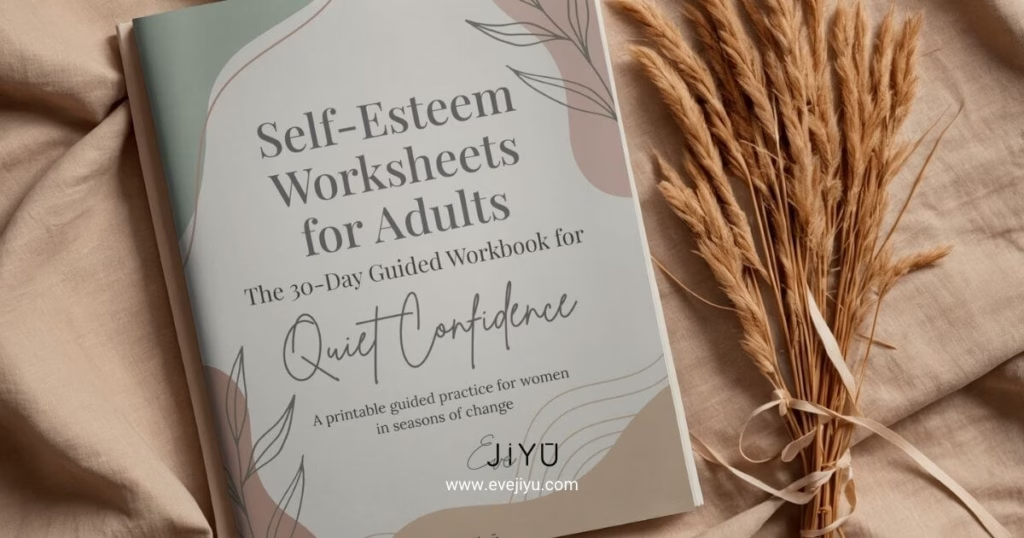
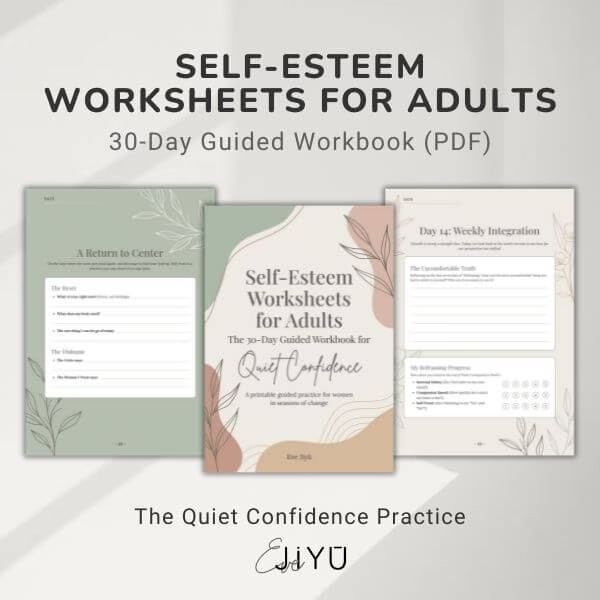
If you’re someone who benefits from clear frameworks and doesn’t want to reinvent this process yourself, the Self-Esteem Worksheets for Adults PDF offers 30 days of guided journaling designed specifically for women navigating burnout, life transitions, and the quiet work of rebuilding self-trust.
A Simple Way to Practice These Self-Esteem Activities Daily (Without Overthinking)
The biggest obstacle to building self-esteem isn’t a lack of tools. It’s the tendency to overcomplicate the process or to wait for the perfect moment to start.
If you’re feeling stuck right now, choose one self-esteem activity from the list above. Commit to practicing it for seven days before evaluating whether it’s working. Give yourself permission to keep it simple—five minutes a day is enough.
You don’t need to do all nine activities at once. You don’t need to track every detail or measure your progress in visible ways. The practice itself is the progress.
One of the reasons I created structured self-esteem worksheets was because I watched so many thoughtful women get caught in analysis paralysis. They knew they needed to do something different, but they spent so much energy trying to figure out the “right” approach that they never actually started.
Having a clear structure removes that friction. The 30-day guided journal walks you through four phases—Awareness, Reframing, Expression and Boundaries, and Integration—so you don’t have to design your own path while simultaneously trying to heal. The prompts do the heavy lifting. You just show up and respond honestly.
If that kind of structure appeals to you, you can access the printable self-confidence self-esteem worksheets for adults and start today. If you’d rather work through these activities on your own, that’s valid too. What matters most is that you begin somewhere.
How to Start Today (Even If You Feel Stuck)
Starting a new self-esteem practice can feel vulnerable, especially if you’ve tried similar exercises before and didn’t see immediate results. It’s normal to feel resistance or skepticism.
Here’s what I’d suggest: pick the activity that sparked the strongest reaction in you while reading this article. That reaction—whether it was discomfort, curiosity, or recognition—is usually a sign that the exercise touches something true.
Practice it for seven consecutive days without judging whether it’s “working.” Notice what comes up. Notice what changes, even if the shifts are subtle.
Self-esteem work often feels uncomfortable before it feels empowering. You might notice old patterns more clearly once you start paying attention. You might feel frustrated that change isn’t happening faster. These are normal parts of the process, not signs that you’re doing it wrong.
The women who experience the most transformation through these self-esteem activities are the ones who commit to consistency over intensity. They show up on the days when they don’t feel like it. They write messy, honest reflections instead of waiting for profound insights. They trust that small, repeated actions compound into meaningful change.
If you want additional support as you begin this work, the guided structure in the Self-Esteem Worksheets for Adults offers daily prompts, weekly check-ins, and reflection tools that make it easier to stay consistent without feeling overwhelmed.
Final Thoughts: Self-Esteem Is Built, Not Discovered
You don’t wake up one morning and suddenly find confidence waiting for you. Self-esteem is built through intentional practice—through choosing to honor your boundaries, validate your emotions, align your actions with your values, and trust your instincts even when it feels risky.
These nine self-esteem activities give you practical starting points. They acknowledge that building confidence requires more than positive thinking. It requires changing the relationship you have with yourself through repeated, meaningful action.
Some days you’ll feel the shift immediately. Other days the practice will feel mechanical or pointless. Both experiences are part of the process. What matters is that you keep returning to the work, even when it’s uncomfortable.
The version of you that trusts herself, that speaks up without second-guessing, that rests without guilt—she’s not someone you need to become. She’s already there, waiting for you to practice listening to her again.
Start with one activity. Give it seven days. Notice what changes, not just in how you feel, but in how you move through the world when you choose to honor yourself instead of overriding what you know to be true.
If this article resonated with you, share it with a friend who might need these tools. Leave a comment below about which self-esteem activity you’re planning to try first. And if you’re ready for structured guidance through this process, explore the 30-day Self-Esteem Worksheets for Adults designed to support you through each phase of rebuilding quiet, grounded confidence.
⬇⬇⬇Pin or save to read later ⬇⬇⬇












0 Comments