
In This Article

Key Takeaways
- Definition: Rumination is the habit of mentally “chewing” on distressing thoughts, often linked to burnout and anxiety.
- The Brain Loop: Rumination activates the amygdala, keeping your body locked in a state of high stress.
- Quick Fix: “Broaden the view”—physical movement and mindfulness are the fastest ways to interrupt the cycle.
- Long-term Strategy: Building self-esteem and creating “worry windows” prevents the return of obsessive loops.
Discover science-backed techniques to stop ruminating thoughts and reclaim your mental peace. Learn how to stop obsessive thinking with practical steps you can use today.
How to Stop Ruminating: The Weight of the Unfinished Thought
Learning how to stop ruminating starts with recognizing the pattern. You know that moment at 3:00 AM when your mind replays a conversation from three days ago? You rewrite what you said, rehearse what you should have said, and imagine what the other person thought. The loop tightens. Your chest feels heavy. Sleep stays just out of reach.
This mental fog has a name: rumination.
The word comes from the Latin ruminare, which means to chew cud. Cows chew their food twice. Rumination means your brain is chewing the same thought over and over, extracting nothing useful. You’re not solving the problem. You’re just wearing yourself down.
For high-achieving women in their late twenties through early forties, ruminative thoughts often show up when something deeper is calling for attention. Maybe you’re burned out. Maybe your creative voice has been silenced for too long. Maybe you’ve been performing instead of living.
Understanding how to stop ruminating thoughts isn’t about forcing positive thinking or pretending everything is fine. It’s about recognizing the pattern and choosing where to place your attention.
This article walks you through seven grounded, science-informed steps to break the cycle of obsessive thoughts and find your way back to clarity.
What is Rumination? (Psychology & Neuroscience)
In psychology, the rumination definition refers to repetitive, intrusive thinking about the causes and consequences of your distress. You’re not problem-solving. You’re stuck in a mental maze with no exit.
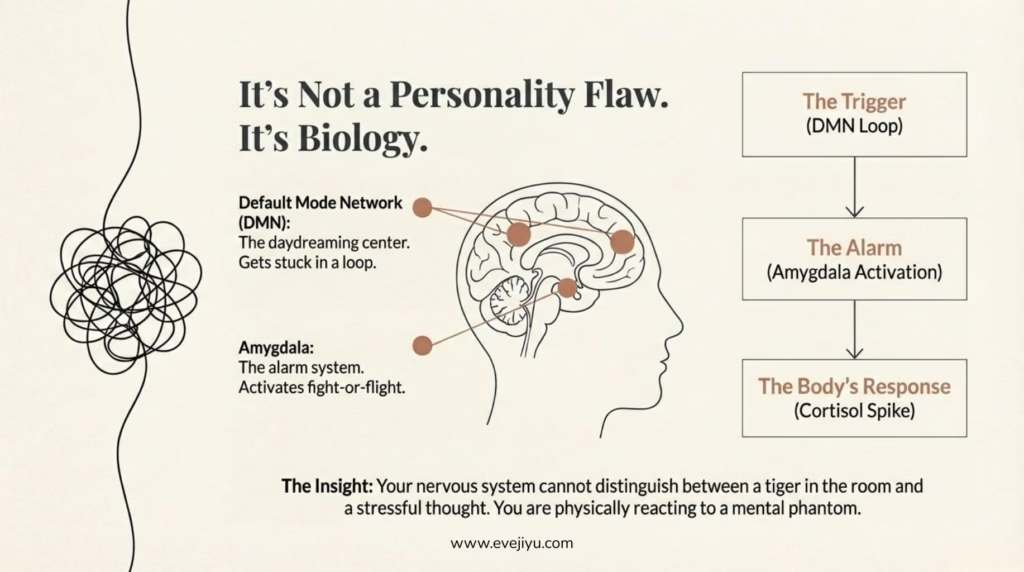
Neuroscience shows us why this feels so hard to escape. When you ruminate, your brain’s Default Mode Network (DMN) becomes overactive. The DMN is the network that fires up when you’re not focused on a task—when you’re daydreaming, remembering, or worrying. In healthy doses, it helps you plan and reflect. But when the DMN gets stuck in a negative loop, it activates your amygdala, the brain’s alarm system.
Your body reads this as danger. Cortisol rises. Your heart rate increases. Your nervous system stays on high alert, even though there’s no immediate threat.
Why does this happen more often to women? Societal conditioning plays a role. Women are taught to anticipate problems, manage emotions for others, and perfect every outcome. This pressure creates fertile ground for ruminative thoughts to take root.
Recognizing rumination as a pattern—not a personality flaw—is the first step toward changing it.
Step 1: Label the Loop (Awareness)
The moment you notice you’re ruminating, say it out loud or write it down: “I am ruminating.”
This simple act of labeling creates distance between you and the thought. You’re no longer tangled inside the loop. You’re observing it from the outside.
There’s a big difference between productive thinking and rumination. Productive thinking moves toward a solution. Rumination circles the same problem without progress.
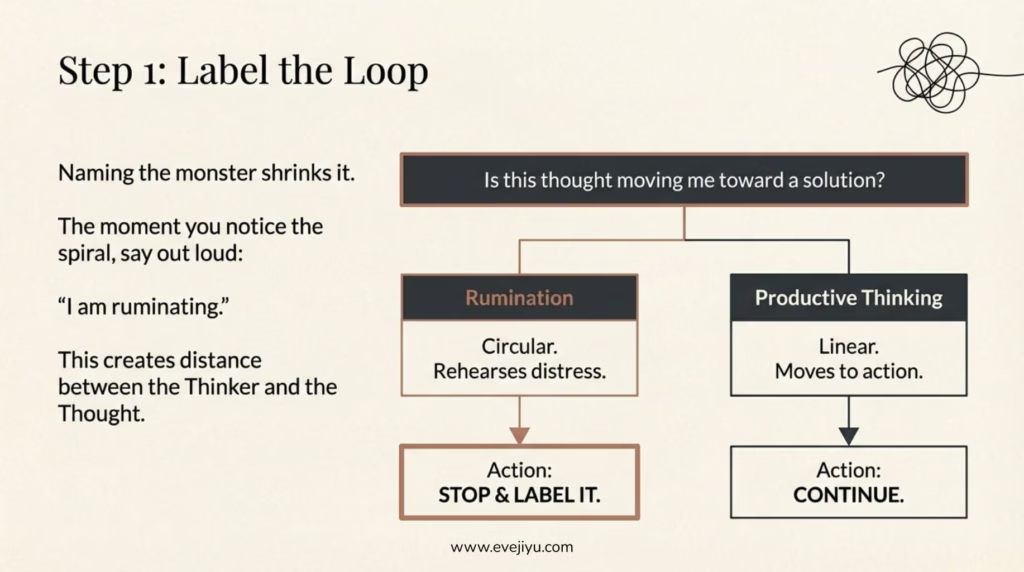
Ask yourself: “Is this thought helping me take action, or is it just replaying the same scene?”
If you can’t answer that question clearly, you’re probably ruminating.
Reflective Questions:
- When did I first notice this thought today?
- Has thinking about this changed anything in the past hour?
- Am I trying to solve a problem, or am I just rehearsing my distress?
Step 2: Use “The 15-Minute Circuit Breaker”
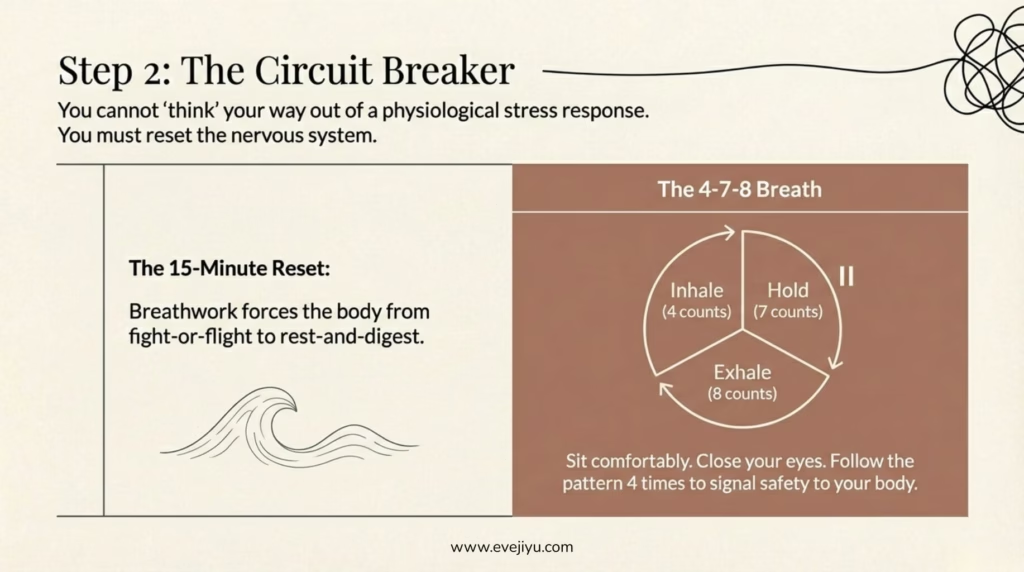
Rumination keeps your body in a stress state. To interrupt that physiological loop, you need to reset your nervous system.
A 15-minute practice can act as a circuit breaker. This could be breathwork, a body scan, or a short meditation. The goal is to shift your body out of fight-or-flight mode and into rest-and-digest.
One of the most effective tools I’ve found is structured meditation. When your mind is spinning, structure helps. You need a container, a guide, something external to anchor you.
Try a 15-minute meditation designed to calm the nervous system. The rhythm of guided breathing gives your brain something to follow instead of the loop.
Quick Exercise: The 4-7-8 Breath
- Sit comfortably and close your eyes.
- Breathe in through your nose for 4 counts.
- Hold your breath for 7 counts.
- Exhale slowly through your mouth for 8 counts.
- Repeat this cycle 4 times.
This pattern activates your parasympathetic nervous system, signaling to your body that it’s safe to relax.
Step 3: Shift from “Why” to “How”
“Why did this happen?” is a dead-end question. It leads you deeper into the past, where you have no control.
“How can I handle the next five minutes?” gives you agency.
Rumination loves the “why” question. It’s abstract, emotional, and impossible to answer definitively. But “how” questions are concrete. They focus on action.
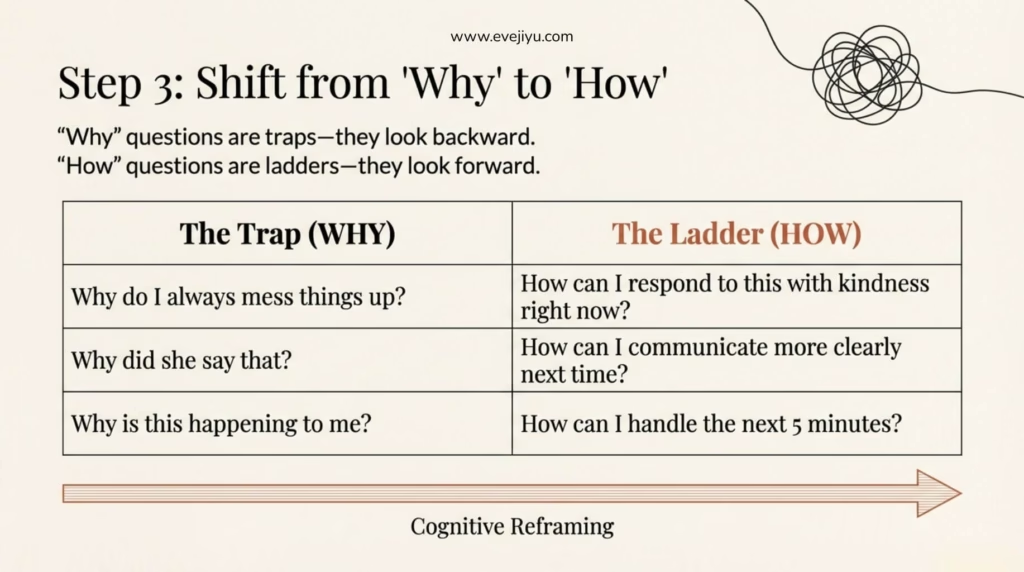
When you catch yourself stuck in a “why” loop, pause. Reframe the question.
Instead of: “Why do I always mess things up?”
Ask: “How can I respond to this situation with kindness toward myself?”
Instead of: “Why did she react that way?”
Ask: “How can I communicate more clearly next time?”
This shift doesn’t erase the problem. It redirects your mental energy toward something you can actually control.
Reflective Questions:
- What “why” question has been looping in my mind?
- Can I rephrase it as a “how” question focused on action?
- What is one small step I can take in the next hour?
Step 4: Grounding Through the Senses
Rumination pulls you out of your body and into your head. To break the cycle, you need to come back to the present moment. Your senses are the fastest way to do that.
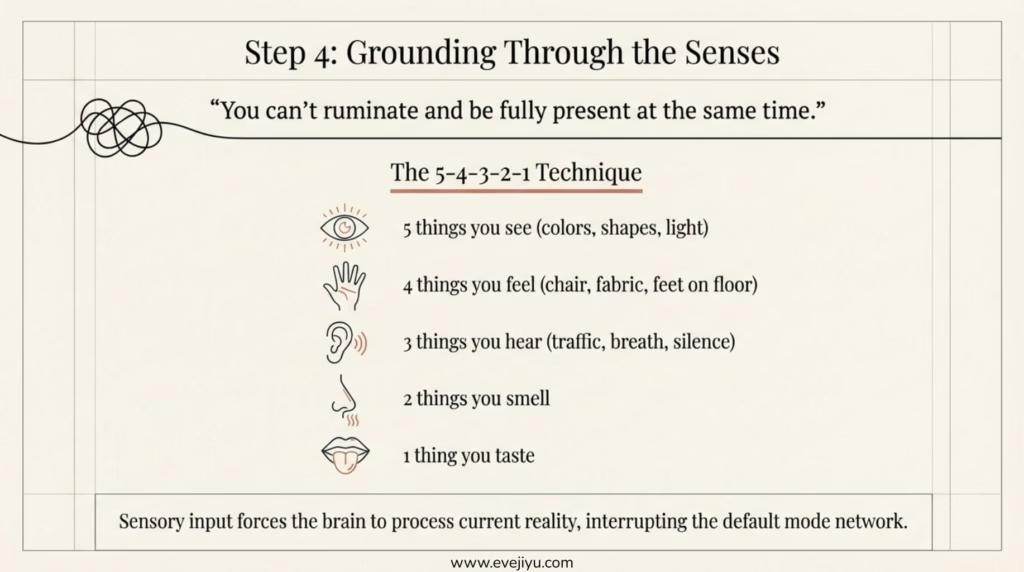
The 5-4-3-2-1 grounding technique is simple and effective.
- Name 5 things you can see. Look around the room. Notice colors, shapes, textures.
- Name 4 things you can touch. Feel the chair beneath you, the fabric of your clothes, the temperature of the air.
- Name 3 things you can hear. Listen for distant sounds, close sounds, the hum of silence.
- Name 2 things you can smell. If you can’t smell anything, recall a scent you love.
- Name 1 thing you can taste. Even if it’s just the taste of your own breath.
This practice interrupts the mental loop by anchoring your attention in sensory reality. You can’t ruminate and be fully present at the same time.
For a deeper dive into grounding practices, explore these mindfulness exercises for anxiety.
Reflective Questions:
- What physical sensations am I ignoring right now?
- Where is my body holding tension?
- What happens when I focus on my breath for one full minute?
Step 5: Schedule a “Worry Window”
This sounds counterintuitive, but it works: give yourself permission to ruminate—but only during a specific 10-minute window.
Psychologists call this “containment.” When you know you have a dedicated time to worry, your brain stops trying to do it all day long.
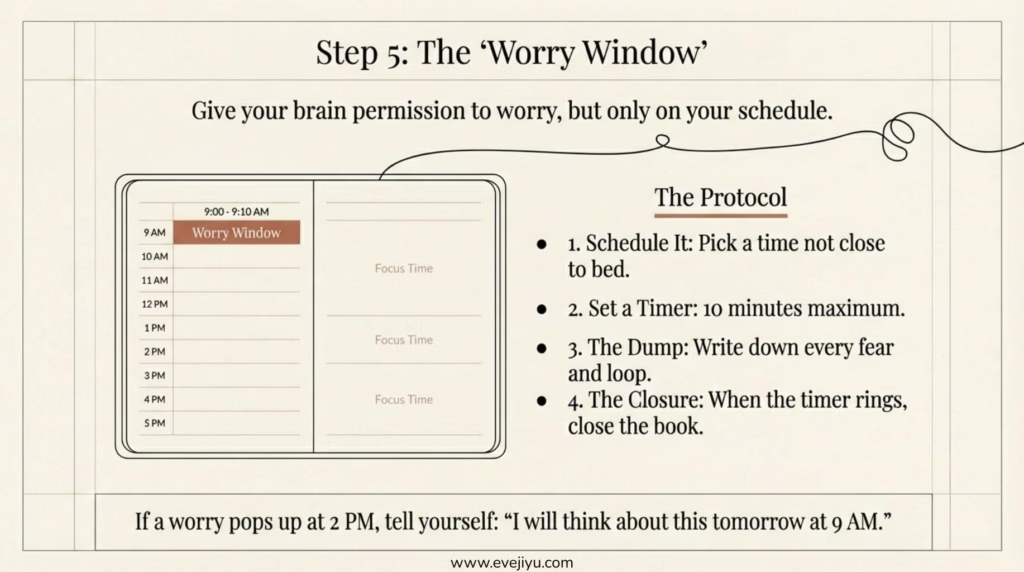
Here’s how to set up your worry window:
- Choose a time each day (morning works better than evening).
- Set a timer for 10 minutes.
- Write down every worry, fear, or obsessive thought that comes up.
- When the timer goes off, close the notebook and move on with your day.
If a ruminative thought shows up outside your worry window, acknowledge it and say, “I’ll think about this at 9:00 AM tomorrow.”
This practice teaches your brain that rumination has a place—but it doesn’t get to run your entire day.
Reflective Questions:
- What time of day would work best for my worry window?
- What do I usually do when a worry pops up outside that time?
- Can I trust myself to return to the thought later, instead of spiraling now?
Step 6: Address the Root (Self-Esteem & Burnout)
Rumination is often a symptom of something deeper. For many women, it’s tied to feeling “not enough.”
You replay conversations because you’re convinced you said the wrong thing. You obsess over mistakes because you believe one error defines your worth. You ruminate about the future because you don’t trust yourself to handle what comes next.
This is where self-esteem work becomes essential. When you build internal resilience, rumination loses its grip.
Research including in the Journal of Rational-Emotive & Cognitive-Behavior Therapy links higher self-esteem to reduced ruminative thinking, allowing acknowledgment of mistakes without self-definition.
Start small. Self-esteem isn’t built through affirmations alone. It’s built through actions that prove to yourself that you are capable, worthy, and deserving of rest.
Try incorporating powerful self-esteem activities into your routine. These practices help you recognize your inherent worth, separate from your achievements or failures.
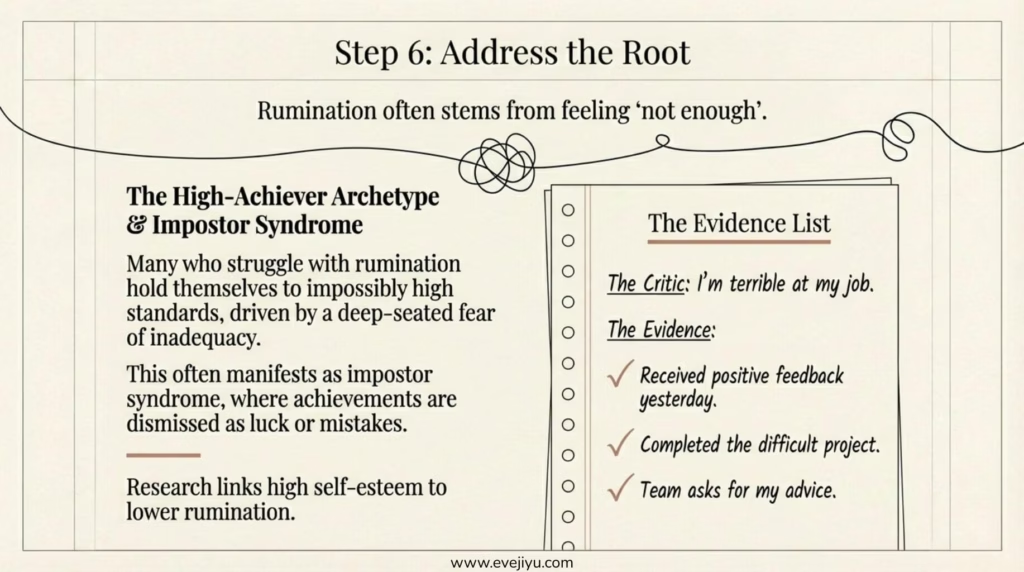
Quick Exercise: The Evidence List
When you catch yourself ruminating about a perceived failure, write down three pieces of evidence that contradict the harsh story your mind is telling.
Example:
- Story: “I’m terrible at my job.”
- Evidence: “I received positive feedback on my last project. My colleague asked for my advice. I completed a difficult task this week.”
This practice doesn’t erase the critical voice, but it offers a more balanced view.
Reflective Questions:
- What underlying belief is fueling my rumination?
- Do I trust myself to handle difficult emotions?
- What would change if I believed I was enough, just as I am?
Step 7: The “Broaden the View” Technique
Sometimes the fastest way to stop ruminating thoughts is to literally change your visual field.
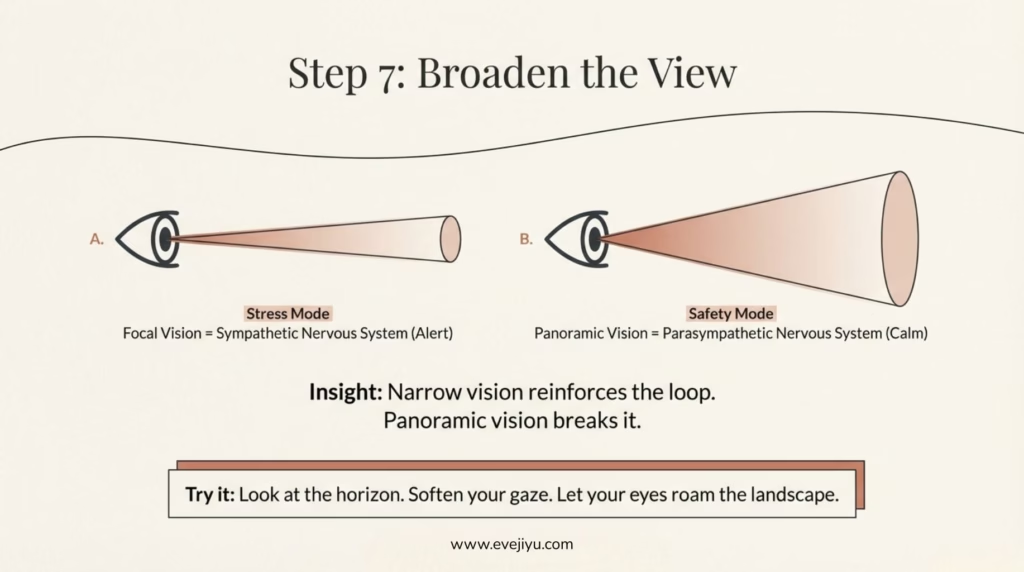
When you’re stuck in your head, your gaze narrows. You might be staring at a screen, or down at your hands, or at nothing in particular. This narrow focus reinforces the mental loop.
Try this: look at the horizon. If you’re indoors, look out a window at the furthest point you can see. If you’re outside, look at the sky.
This simple act activates your parasympathetic nervous system. Wide-angle vision signals to your brain that you’re safe. There’s no immediate threat. Your body begins to relax.
Neuroscientist Dr. Andrew Huberman explains that panoramic vision (as opposed to focused vision) shifts the brain into a more restful state. It interrupts the stress response and helps you move out of rumination.
Pair this with movement. Walk outside. Let your eyes roam across the landscape. Notice the space around you instead of the thoughts inside you.
Reflective Questions:
- When was the last time I looked at something far away?
- How does my body feel when I soften my gaze?
- What changes when I give my mind something bigger to focus on than my worries?
Returning to Yourself
Learning how to stop ruminating isn’t about perfecting your thoughts. You won’t eliminate every anxious loop or obsessive worry. That’s not the goal.
The goal is to recognize when you’re stuck and choose where to place your attention.
Rumination thrives in isolation and narrow focus. It fades when you bring awareness, movement, and self-compassion into the picture.
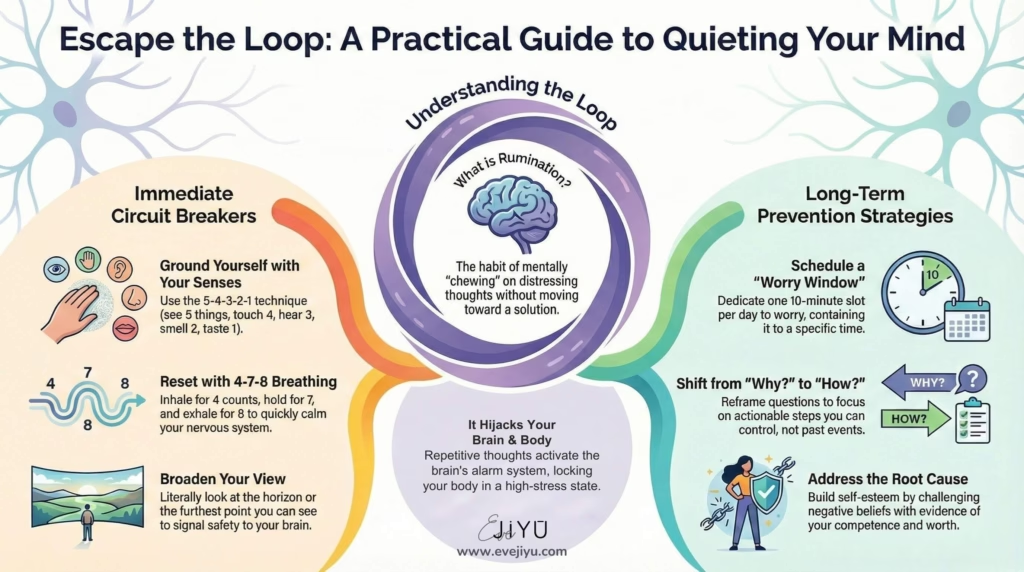
Here’s what we covered:
- Label the loop. Awareness creates distance between you and the thought.
- Use a 15-minute circuit breaker. Reset your nervous system with structured breathwork or meditation.
- Shift from “why” to “how.” Move from abstract worry to concrete action.
- Ground through your senses. Anchor yourself in the present moment with the 5-4-3-2-1 technique.
- Schedule a worry window. Contain rumination to a specific time instead of letting it dominate your day.
- Address the root. Build self-esteem so you trust yourself to handle what comes next.
- Broaden the view. Look at the horizon. Let your gaze soften. Give your mind space to rest.
You don’t have to do all seven steps today. Choose one. Just one.
Maybe you’ll label the loop when it shows up tomorrow morning. Maybe you’ll try the 4-7-8 breath before bed tonight. Maybe you’ll schedule your first worry window for this weekend.
Rumination doesn’t disappear overnight. But each time you interrupt the cycle, you’re teaching your brain a new pattern. You’re proving to yourself that you don’t have to stay stuck.
That’s where clarity begins.
What’s one step you’ll try today? Let me know in the comments, or share this article with someone who needs to hear it.
⬇⬇⬇Pin or save to read later ⬇⬇⬇












0 Comments