
In This Article

Discover how to build self-worth through practical shifts that create lasting internal security, even when confidence feels impossible.
You’ve checked every box. Career advancement, meaningful relationships, personal achievements that should feel significant. Yet when you look in the mirror, something fundamental feels missing. Not confidence exactly, but something quieter and more essential: the deep knowing that you’re enough, regardless of what you accomplish or how others respond to you.
This disconnect isn’t a character flaw. It’s the natural result of growing up in a world that taught you to earn your worth through performance, achievement, and the careful management of other people’s comfort. Understanding how to build self-worth means unlearning those patterns and creating new evidence that your value exists independently of external validation.
This article walks you through nine research-backed shifts that change how you relate to yourself. Not through affirmations or forced positivity, but through small, repeatable actions that rebuild the foundation of self-trust. You’ll learn why traditional advice often fails, what actually creates lasting change, and how to practice self-worth when your nervous system is convinced you need to keep proving yourself.
What Self-Worth Actually Is (And Why It’s Not Confidence)
Most people use the terms self-worth, self-esteem, and confidence interchangeably. They’re related concepts, but the distinctions matter when you’re trying to build internal security.
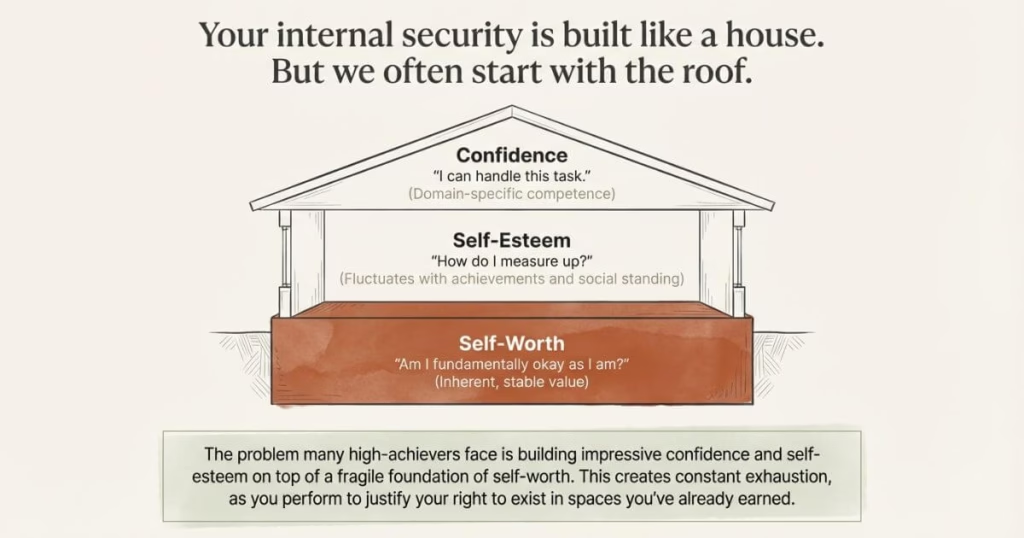
Self-worth is your baseline belief about your inherent value as a person. It answers the question: “Am I fundamentally okay as I am?” This exists independently of achievements, relationships, or external circumstances. When your self-worth is stable, you can experience failure, rejection, or criticism without your core sense of okayness collapsing.
Self-esteem reflects how you evaluate yourself based on your abilities, achievements, and social standing. It fluctuates with circumstances. You might have high self-esteem at work because you’re skilled in your role, but low self-esteem in social situations where you feel awkward or uncertain.
Confidence is domain-specific competence. It’s the belief that you can successfully handle particular situations or tasks. You can be confident in your professional abilities while having low self-worth that makes you constantly question whether you deserve your success.
The problem many high-achieving women face is building impressive confidence and external self-esteem while their foundational self-worth remains fragile. You know you’re capable, but you don’t feel fundamentally worthy. This creates a specific kind of exhaustion: you’re constantly performing to justify your right to exist in spaces you’ve already earned access to.
Understanding how to build self-worth starts with recognizing it as the foundation beneath confidence and self-esteem. When that foundation is unstable, everything built on top of it requires constant maintenance. When it’s solid, your sense of self can withstand normal human setbacks without fracturing.
Psychology research shows that people with stable, internal self-worth are less emotionally reactive to daily stress and more resilient during life transitions, even though they still experience pain and disappointment.
If you’re still working to understand how these concepts connect, this guide on how to build self-esteem breaks down the relationship between self-worth and self-esteem in practical terms.
The Hidden Causes of Low Self-Worth Most Women Miss
Low self-worth rarely announces itself obviously. It disguises itself as productivity, perfectionism, or a strong work ethic. You might not recognize it as a problem until you notice the quiet ways it shapes your life: the constant internal audit of whether you’re doing enough, the inability to rest without guilt, the sense that other people’s needs automatically take priority over yours.
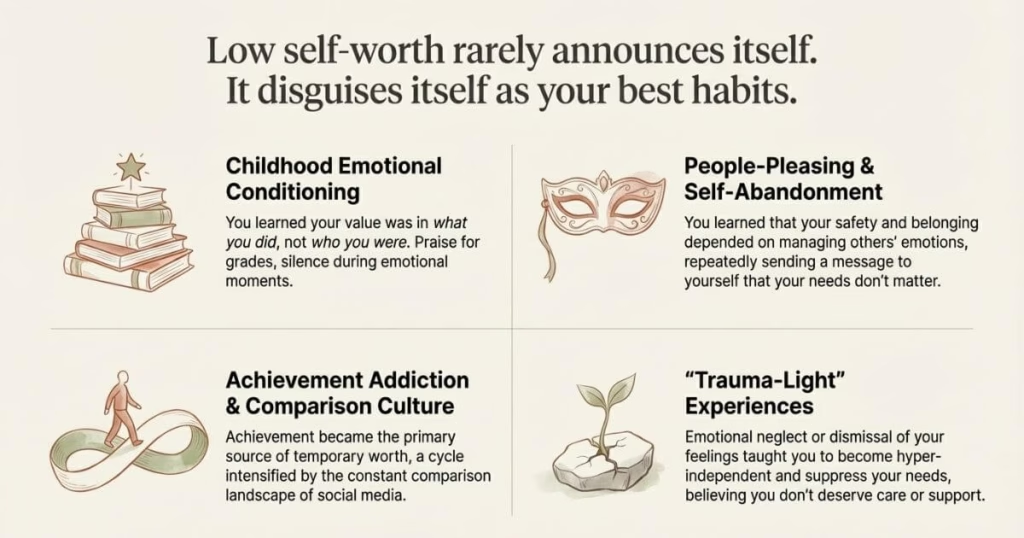
Childhood Emotional Conditioning
Your early environment taught you what made you valuable. If praise came primarily for achievements, obedience, or managing other people’s emotions, you learned to tie your worth to external performance. This wasn’t necessarily abusive or neglectful. Many well-meaning parents simply replicated the patterns they inherited.
When a child hears “I’m so proud of you” after bringing home good grades but experiences silence or distraction during emotional moments, the lesson is clear: your value lies in what you produce, not in who you are. That conditioning doesn’t disappear when you become an adult with objective evidence of your capabilities.
People-Pleasing and Chronic Self-Abandonment
People-pleasing isn’t about being nice. It’s a survival strategy that develops when you learn your safety or belonging depends on managing other people’s emotions. You become skilled at reading rooms, anticipating needs, and adjusting your behavior to maintain harmony.
The cost is chronic self-abandonment. Every time you say yes when you mean no, every time you minimize your needs to accommodate someone else’s preferences, you send yourself a message: what you want doesn’t matter as much as keeping others comfortable. Over time, this pattern erodes your ability to trust your own judgment or honor your own boundaries.
For women who recognize this pattern, this article on how to rebuild self-worth after people-pleasing offers specific strategies for breaking the cycle without losing your relationships or sense of compassion.
Achievement Addiction and Comparison Culture
Achievement becomes addictive when it’s the primary source of temporary worth. You finish one project and immediately need the next goal to feel okay about yourself. The satisfaction never lasts because you’re using external accomplishments to fill an internal void.
Social media intensifies this pattern by providing constant opportunities for comparison. Even when you intellectually understand that you’re viewing curated highlights, the emotional impact of seeing others appear more successful, more balanced, or more confident creates persistent feelings of inadequacy.
Experimental research in clinical and health psychology shows that limiting social media use to about 30 minutes per day for several weeks significantly reduces loneliness and depression, with improvements driven by fewer opportunities for unfavorable comparisons rather than total abstinence.
Trauma-Light Experiences
Not all wounds come from obviously traumatic events. Emotional neglect, inconsistent caregiving, or growing up in an environment where your feelings were routinely dismissed creates what some psychologists call “trauma-light” experiences. The impact is real even when the cause doesn’t fit traditional definitions of trauma.
These experiences teach you that your internal world is either unimportant or too much for others to handle. You learn to minimize your needs, suppress your emotions, or become hyper-independent to avoid burdening anyone. The result is an adult who appears highly functional but struggles to believe she deserves care, support, or tenderness.
Why “Just Love Yourself” Doesn’t Work (And What Does)
If you’ve ever been told to “just love yourself more” or “practice positive affirmations,” you know how unhelpful that advice feels when your nervous system is convinced you’re fundamentally inadequate. The problem isn’t that self-love is wrong, but that it skips several crucial steps.

Affirmations Fail When They Don’t Match Your Nervous System Reality
Your nervous system operates on evidence, not repetition. When you tell yourself “I am worthy and deserving” while your body holds tension and your mind generates a list of everything you did wrong today, the affirmation creates cognitive dissonance rather than genuine shift.
Neuroscience research on self-affirmation and belief defense shows that when new information clashes too sharply with existing self-beliefs, the brain tends to dismiss or defend against it instead of integrating it—one reason generic affirmations can feel hollow or even increase anxiety.
Self-Worth Grows Through Evidence, Not Repetition
Real change happens when you create small, consistent experiences that demonstrate your worth through action. Each time you honor a boundary, keep a promise to yourself, or choose your wellbeing over someone else’s comfort, you generate evidence that shifts your internal narrative.
This is the foundation of how to improve self-esteem and how to build self-worth: you prove to yourself through repeated experience that your needs matter, your judgment is reliable, and your existence has inherent value. The evidence accumulates gradually until it becomes the new baseline your nervous system accepts as true.
The Role of Self-Trust and Internal Safety
Self-worth can’t exist without self-trust. If you constantly second-guess your decisions, override your instincts to please others, or abandon your needs when they conflict with external expectations, you’re teaching yourself that you’re unreliable. That pattern makes it impossible to feel secure in your own company.
Building self-trust means starting small. You don’t need to make perfect decisions or never doubt yourself. You need to practice listening to your internal signals and taking them seriously, even when external pressure suggests you should ignore them.
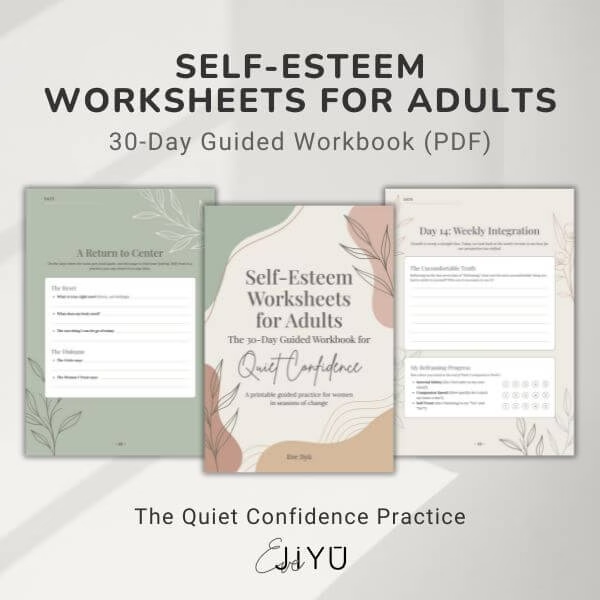
For women who struggle with this foundational piece, the Self-Esteem Worksheets for Adults provide structured daily practices specifically designed to create evidence of self-trust without requiring dramatic life changes or perfect execution.
9 Transformational Shifts to Build Real Self-Worth
These aren’t tips or hacks. They’re fundamental changes in how you relate to yourself that, practiced consistently, rebuild the foundation of your self-worth from the inside out.
1. Stop Measuring Yourself Through Other People’s Reactions
You know intellectually that other people’s opinions don’t define your worth, but you still adjust your behavior based on how you think others will respond. You edit your words, manage your tone, and carefully curate which parts of yourself you reveal to avoid disapproval or rejection.
The shift: practice noticing when you’re about to modify your behavior to manage someone else’s potential reaction. Pause and ask yourself what you would say or do if you trusted that your worth wouldn’t change based on their response. Then, when it feels safe enough, choose the authentic option.
This doesn’t mean being reckless with your vulnerability or abandoning appropriate social awareness. It means stopping the constant internal audit that treats other people’s comfort as more important than your own truth.
Reflective questions:
- In which relationships do I most frequently edit myself?
- What am I afraid will happen if I stop managing other people’s reactions?
- When was the last time I said something true even though I worried about how it would be received?
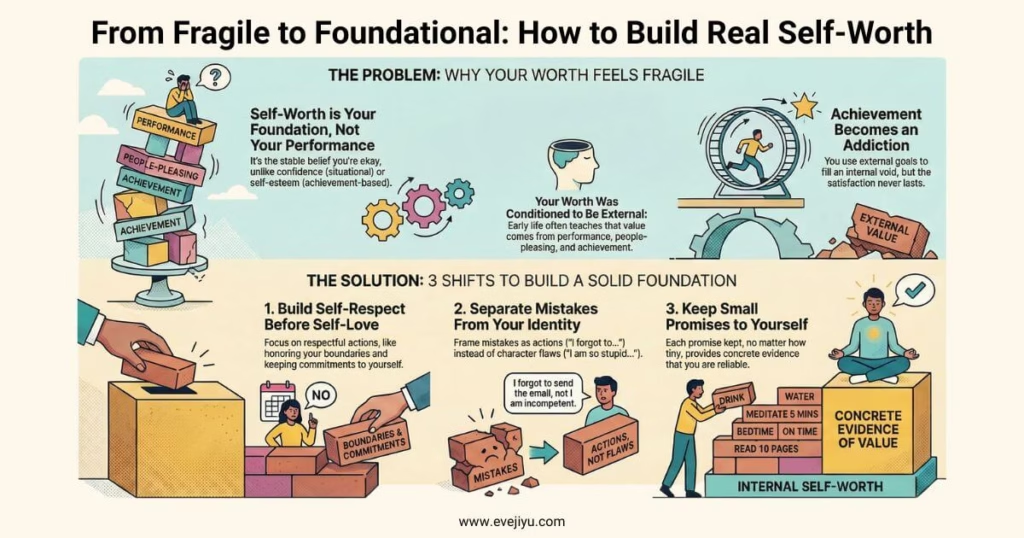
2. Build Self-Respect Before Self-Love
Self-love feels impossible when you’re actively treating yourself in ways you would never tolerate from another person. You can’t love yourself while simultaneously ignoring your needs, breaking promises to yourself, or allowing others to consistently disrespect your boundaries.
The shift: focus on self-respect as the bridge to self-love. Self-respect is behavioral. It shows up in how you spend your time, what you tolerate in relationships, and whether you honor the commitments you make to yourself. When you start treating yourself with basic respect, the feelings of self-worth naturally follow.
Start with one area where you’re currently not respecting yourself. Maybe you consistently sacrifice sleep to accommodate others’ schedules, or you allow people to speak to you in ways you would never accept for a friend. Choose one boundary or commitment and practice maintaining it for two weeks.
For deeper guidance on this foundation, read how to respect yourself for specific strategies on building self-respect in practical, daily ways.
Exercise: The Self-Respect Audit
Write down three ways you’re currently not treating yourself with respect. For each one, identify the smallest possible action you could take this week to shift that pattern. Not perfect adherence, just one small moment of choosing self-respect over convenience or approval.
3. Learn to Tolerate Discomfort Without Self-Abandonment
Low self-worth often develops because you learned to abandon yourself the moment things felt uncomfortable. Someone expressed disappointment, so you immediately apologized and adjusted. You felt uncertain about a decision, so you deferred to someone else’s judgment. The discomfort became a signal that you were wrong, not that you were simply in a moment of normal human uncertainty.
The shift: practice staying with yourself during uncomfortable moments without immediately fixing, explaining, or abandoning your position. Notice when someone’s disappointment makes you want to fold instantly. Breathe through the discomfort and wait to see if your initial boundary or decision still feels right after the acute discomfort passes.
This is how you improve self-confidence in the truest sense: you learn that you can handle other people’s reactions without losing yourself.
4. Separate Mistakes From Identity
When you have fragile self-worth, mistakes feel like evidence of your fundamental inadequacy. You don’t just think “I made a mistake,” you spiral into “I am a mistake.” This pattern makes growth impossible because the stakes of trying anything new become too high.
The shift: practice describing mistakes in specific, behavioral terms rather than identity-based language. Instead of “I’m so stupid for forgetting that meeting,” try “I forgot to set a calendar reminder and missed the meeting.” The first version attacks your identity. The second describes a specific action that can be adjusted.
Reflective questions:
- What’s the harshest thing I say to myself when I make a mistake?
- Would I ever speak that way to someone I care about?
- What would change if I treated my mistakes as information rather than evidence?
5. Keep Promises to Yourself (Small Ones Count)
Every time you tell yourself you’ll do something and then don’t follow through, you erode self-trust. This is true for big commitments and tiny ones. When you think “I’ll go to bed by 10 tonight” and then scroll until midnight, you’ve just demonstrated that your word to yourself doesn’t mean much.
The shift: make fewer commitments to yourself, but take the ones you make seriously. Start embarrassingly small if needed. Commit to drinking a glass of water when you wake up, or writing one sentence in your journal. The size of the commitment matters less than your consistency in following through.
This practice directly addresses how to boost your self-esteem because it creates concrete evidence that you’re reliable and trustworthy.
Exercise: The Weekly Promise Practice
Choose one tiny commitment you can realistically keep every day this week. Write it down. At the end of each day, mark whether you followed through. Notice how it feels to be someone who keeps promises to herself.
6. Replace Harsh Self-Talk With Neutral Observation
You probably speak to yourself in ways you would never tolerate from another person. The constant criticism, the harsh judgments, the immediate leap to worst-case scenarios about your character or capabilities. This internal voice isn’t motivating you to improve; it’s keeping you small and afraid.
The shift: when you catch yourself in harsh self-talk, pause and restate the observation in neutral language. Not “I’m such a failure for not finishing that project on time,” but “The project took longer than I estimated.” The neutral version allows for learning without the identity assault.
This takes practice because the harsh voice is often deeply ingrained. You might not even notice it’s happening until you’ve already spiraled. Start by noticing the aftermath: when do you feel suddenly heavy or anxious? Track back to what you just told yourself.

7. Build Emotional Boundaries (Not Emotional Walls)
Emotional boundaries protect your energy and wellbeing without disconnecting you from meaningful relationships. They’re the difference between being open and being available to everyone at all times regardless of your own capacity.
Many women with low self-worth struggle to set emotional boundaries because they learned their value comes from being endlessly available and responsive. Saying “I don’t have capacity to hold this right now” feels selfish, even when you’re already depleted.
The shift: practice distinguishing between empathy and absorption. You can care about someone’s struggle without taking on their emotional state as your own. You can offer support without abandoning your own needs or boundaries to solve their problem.
Start noticing when you feel emotionally drained after interactions. That’s data. It tells you where your boundaries need reinforcement. You don’t need to cut people off; you need to be honest about what you actually have capacity to offer.
Reflective questions:
- With whom do I feel most emotionally drained after spending time together?
- What would it look like to care about that person while still protecting my own energy?
- What am I afraid will happen if I’m honest about my emotional capacity?
8. Practice Self-Worth When No One Is Watching
The real test of self-worth isn’t how you show up in public or how you present yourself on social media. It’s how you treat yourself in private moments when no one will ever know or care what you chose.
Do you keep your living space in a way that feels nurturing, or do you only clean up when someone might visit? Do you eat food that genuinely nourishes you, or do you only care about your choices when someone might notice your body? Do you take time to rest and restore, or do you only pause when you’re too depleted to continue?
The shift: make one small choice each day that honors your wellbeing even though no one will see it or praise you for it. This is how to build self-worth in its purest form: you demonstrate to yourself that you matter, regardless of external recognition or reward.
9. Use Reflection, Not Rumination, to Grow
Reflection and rumination look similar on the surface, but they lead to opposite outcomes. Reflection helps you learn from experiences and adjust your approach. Rumination keeps you stuck in repetitive loops of self-criticism and regret without producing insight or change.
The shift: set a timer when you’re processing something difficult. Give yourself 15 minutes to think through what happened, what you learned, and what you might do differently next time. When the timer goes off, actively redirect your attention. If the thoughts come back, acknowledge them and return to the present moment.
This practice teaches your nervous system that you can process difficult experiences without getting trapped in them indefinitely. That capacity is essential for building lasting self-worth because it means you can face mistakes, disappointments, and failures without losing yourself in them.
For a structured approach to this practice, the 30-Day Self-Esteem Journal guides you through daily reflection exercises specifically designed to build awareness without triggering rumination.
How to Improve Self-Esteem Without Forcing Confidence
Understanding how to improve self-esteem means recognizing that confidence is often the result, not the starting point. When you try to force confidence before building the underlying self-worth, you end up with performance confidence: you can act confident in specific situations, but it collapses under pressure because the foundation isn’t solid.

Small, Repeatable Self-Trust Actions
Self-esteem grows through accumulated evidence that you’re reliable, capable, and worthy of your own trust. You don’t need to make dramatic changes or tackle your biggest fears immediately. You need small, consistent actions that demonstrate you can trust yourself to show up.
This might look like keeping one small promise to yourself each day for a month. Setting one tiny boundary and maintaining it even when it feels uncomfortable. Choosing one authentic response instead of the automatic people-pleasing version. These moments add up to create a new baseline of self-trust.
The Role of Journaling in Emotional Integration
Writing about your experiences helps your brain integrate new information and consolidate learning. When you write about a situation where you honored a boundary or kept a commitment to yourself, you’re reinforcing the neural pathways associated with self-trust and self-worth.
Journaling also creates distance between you and your thoughts. When harsh self-talk lives only in your head, it feels like truth. When you write it down and read it back, you can see it more objectively and question whether it’s actually accurate.
The key is consistency over perfection. Three honest sentences in a journal each day will create more lasting change than a detailed entry once a month when you remember.
How Do You Improve Your Self-Confidence When You Feel Insecure?
The question “how do you improve your self confidence” usually comes from a place of acute insecurity. You’re facing a situation where you feel inadequate, and you want to know how to feel more capable right now.
The honest answer is that you can’t force confidence in moments of deep insecurity. But you can practice self-trust and emotional resilience, which are the foundations that allow confidence to develop naturally over time.

Reframe Confidence as Emotional Resilience
Real confidence isn’t the absence of doubt or fear. It’s the ability to move forward despite those feelings because you trust yourself to handle whatever happens. This kind of confidence comes from experience: you’ve faced difficult situations before, you’ve made mistakes and recovered, you’ve learned that discomfort is temporary and doesn’t destroy you.
Building this foundation means intentionally putting yourself in situations that stretch your comfort zone without overwhelming your nervous system. Start with challenges that feel manageable rather than impossible. Each time you handle something difficult, you create evidence that supports your ability to cope.
Nervous System Regulation Basics
When your nervous system is dysregulated, confidence feels impossible because your body is convinced you’re in danger. Learning basic regulation techniques helps you access your capacity for clear thinking and self-trust even when you’re anxious or uncomfortable.
Simple practices like deep breathing, progressive muscle relaxation, or spending time in nature can shift your nervous system from threat response into a state where confidence is actually accessible. This isn’t about eliminating anxiety or fear; it’s about not being controlled by those feelings.
Why Quiet Confidence Lasts Longer Than Performative Confidence
Performative confidence relies on external validation and visible success. When those disappear, the confidence collapses. Quiet confidence comes from internal security: you know who you are, what you value, and that you can trust yourself to handle challenges even when you’re uncertain about the outcome.
This internal foundation is what allows you to take risks, try new things, and recover from failures without losing your sense of self. It’s how to build self-confidence that actually sustains you through difficult periods rather than abandoning you the moment things get hard.
A Simple Daily Practice That Builds Self-Worth Over Time
Complex systems rarely create lasting change. You need something simple enough to maintain even on difficult days, structured enough to provide consistency, and flexible enough to adapt to your actual life.
The Self-Worth Reflection Loop
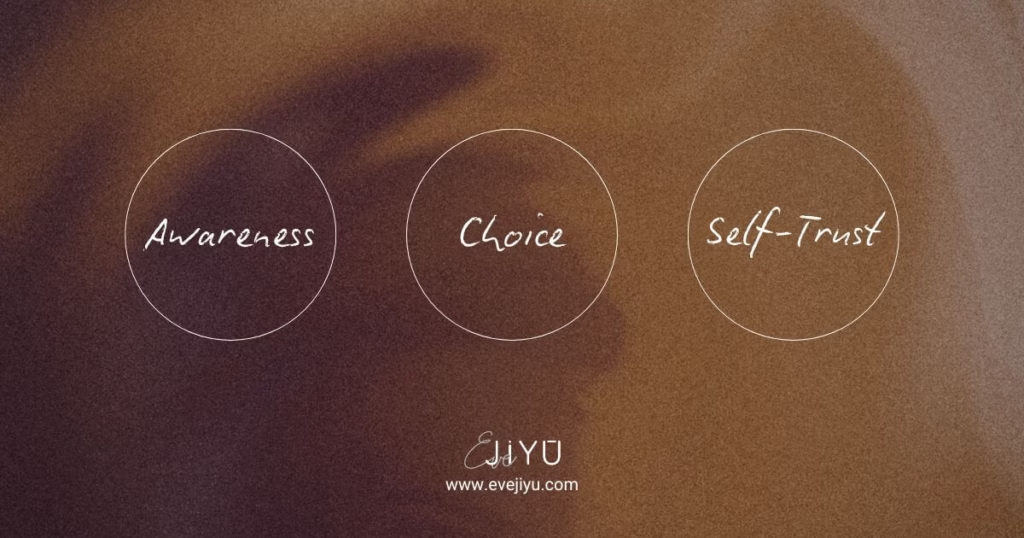
This practice takes about 10 minutes and follows a simple pattern: awareness, choice, self-trust.
- Awareness: Notice one moment today when you felt disconnected from your sense of worth. Maybe someone’s comment triggered self-doubt, or you caught yourself in harsh self-talk, or you abandoned a boundary to keep someone else comfortable.
- Choice: Identify one small action you could take right now that honors your worth. Not what you should have done differently in that earlier moment, but what you can choose in this present moment. Maybe it’s speaking kindly to yourself about the situation, setting a boundary for tomorrow, or simply acknowledging that your reaction makes sense given your history.
- Self-Trust: Follow through on that small action. Write it down so you have a record of moments when you chose yourself. This becomes the evidence that gradually shifts your internal narrative.
Why 30 Days Matters Psychologically
Research on habit formation shows that it takes consistent practice over several weeks to establish new neural pathways. Thirty days provides enough repetition to start shifting automatic patterns without feeling endless. You’re not trying to fix yourself permanently in a month; you’re establishing a foundation you can build on.
This timeframe also allows you to notice patterns in your responses. You’ll start recognizing recurring situations that trigger self-doubt, consistent thoughts that undermine your worth, and specific relationships where you habitually abandon yourself. That awareness is essential for targeted change.
The Self-Esteem Worksheets for Adults provide exactly this structure: a 30-day guided practice with daily prompts that help you build quiet confidence without pressure or perfection. Each day includes reflection exercises designed to create evidence of self-trust and specific practices for strengthening your foundational self-worth.
Exercise: The Evidence Journal
For the next week, write down one piece of evidence each day that demonstrates you’re worthy of your own trust and respect. These should be specific actions, not aspirational statements. “I kept the boundary I set with my sister even though she was disappointed” is evidence. “I am worthy” is a statement. Focus on what you did, not what you hope to feel.
Signs Your Self-Worth Is Actually Growing (Even If It Feels Slow)
Change rarely announces itself obviously. You don’t wake up one morning feeling completely transformed. Instead, you notice small shifts in how you respond to situations that used to destabilize you completely.

Less Explaining and Proving
When your self-worth is fragile, you feel compelled to explain and justify your decisions to anyone who questions them. As it strengthens, you notice yourself stating your choice without the automatic defensive explanation. You might say “That doesn’t work for me” without immediately following it with a detailed justification of why your needs are reasonable.
This shift feels subtle, but it represents a fundamental change in your relationship with yourself. You’re no longer seeking external validation before trusting that your choice is acceptable.
Stronger Boundaries
You start noticing moments when you maintain a boundary even though it’s uncomfortable. Maybe you don’t respond to a text immediately just because you saw it. You leave a social event when you’re tired rather than pushing through to avoid disappointing anyone. You say no to a request without automatically apologizing or offering to help in some other way.
These small moments accumulate into a pattern of self-respect that reinforces your foundational belief in your own worth.
Reduced Emotional Reactivity
Someone’s criticism or disappointment still feels uncomfortable, but it doesn’t send you into an immediate spiral of self-doubt. You can sit with the discomfort long enough to evaluate whether the feedback is useful rather than automatically assuming you’re wrong and need to fix yourself.
This doesn’t mean you become cold or defensive. It means you maintain enough internal stability to consider external input without losing yourself in it.
More Internal Permission
You notice yourself making small choices for joy, rest, or pleasure without needing to justify them through productivity or usefulness. You take a bath just because you want to, not because you earned it. You spend an afternoon reading without the guilty feeling that you should be doing something more valuable with your time.
These moments of internal permission signal that your worth is no longer conditional on constant achievement or usefulness.
Reflective questions:
- Where have I noticed myself feeling more solid in the past month?
- What situation that used to completely destabilize me now feels more manageable?
- What small choice did I make recently that honored my own worth without requiring external approval?
Self-Worth Isn’t Built Overnight, It’s Reclaimed

You weren’t born believing you had to earn your worth. Somewhere along the way, you learned that your value was conditional: based on achievement, appearance, usefulness, or the careful management of other people’s comfort. That learning created the patterns you’re now working to shift.
Understanding how to build self-worth isn’t about creating something new. It’s about dismantling the false beliefs that covered your inherent worth and reconnecting with the truth that was always there: you matter because you exist, not because of what you do or who approves of you.
This work takes time because you’re not just changing thoughts; you’re rewiring neural pathways, shifting nervous system responses, and creating new evidence that contradicts years of conditioning. Some days will feel like significant progress. Others will feel like you’ve learned nothing. Both are normal parts of the process.
The nine shifts outlined in this article provide a practical framework for that process. They’re not steps to complete in order; they’re ongoing practices that deepen with repetition. Choose one or two that resonate most strongly and focus there. When those become more automatic, add another layer.
Be patient with yourself through this process. The goal isn’t perfection or complete transformation. It’s gradual movement toward a more honest, grounded relationship with yourself where your worth isn’t constantly on trial.
If you’re ready to move from understanding these concepts to actually practicing them, the Self-Esteem Worksheets for Adults offer structured daily support for exactly this work. Thirty days of guided reflection, practical exercises, and gentle accountability to help you build quiet confidence that lasts beyond the initial motivation.
Your worth isn’t something you need to find or create. It’s something you remember by slowly releasing everything that taught you to doubt it.
Final reflection: What’s one small action you can take today that honors your inherent worth, regardless of what you accomplish or how anyone responds?
⬇⬇⬇Pin or save to read later ⬇⬇⬇












0 Comments