
Table of Contents

Key Takeaways
- What self acceptance actually means: The unconditional embrace of both your strengths and shadows without requiring yourself to be different first.
- Why it matters now: Self acceptance is the antidote to burnout culture and the persistent feeling that you’re always behind or not doing enough.
- The core shift: Accepting yourself isn’t a destination you reach after fixing everything wrong. It’s a daily practice of returning to yourself with honesty instead of judgment.
- The practical path: Use neutral observation to separate yourself from your inner critic’s narrative. Notice thoughts without believing them.
- The foundation for growth: You cannot reinvent your life until you accept the person currently living it. Acceptance isn’t resignation; it’s the soil where real change grows.
Discover practical, grounded ways to practice self acceptance and stop the exhausting cycle of self-rejection. Real tools for women who are tired of waiting to be “enough.”
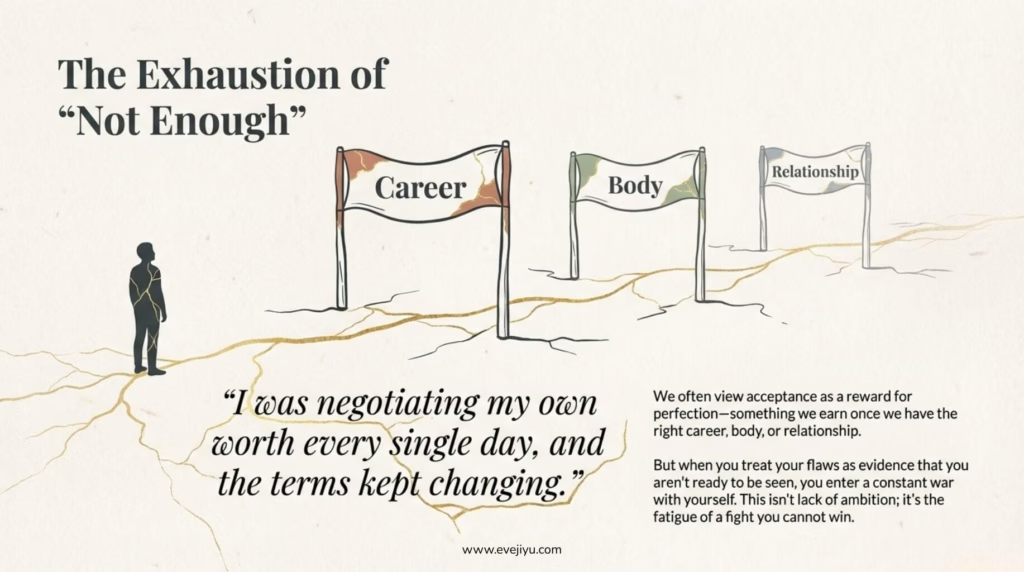
Learning how to accept yourself is one of the hardest practices you’ll ever commit to. I spent years believing I would accept myself once I achieved enough. Once I had the right career, the right body, the right relationship, the right level of “put together.” The acceptance would come then, like a reward for all that striving.
It never did.
What came instead was exhaustion. A quiet, persistent sense that no matter what I accomplished, I was still somehow failing at being myself. I was negotiating my own worth every single day, and the terms kept changing.
If you’ve ever felt like you’re in a constant war with yourself, where every flaw is evidence that you’re not ready to be loved or seen or valued, you’re not alone. The question “how to accept yourself” doesn’t come from laziness or lack of ambition. It comes from being tired of the fight.
This piece offers five grounded ways to practice self acceptance that don’t require you to become someone new first. Because when you finally learn how to accept yourself, you don’t need to earn permission to stop rejecting yourself.
Why Self Acceptance Is Important (And Why It Feels So Hard)
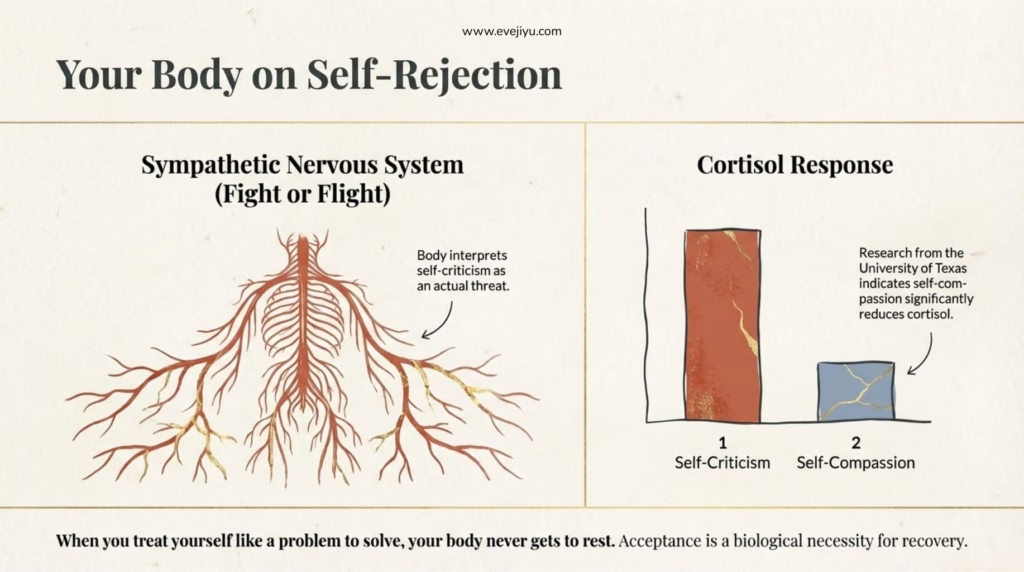
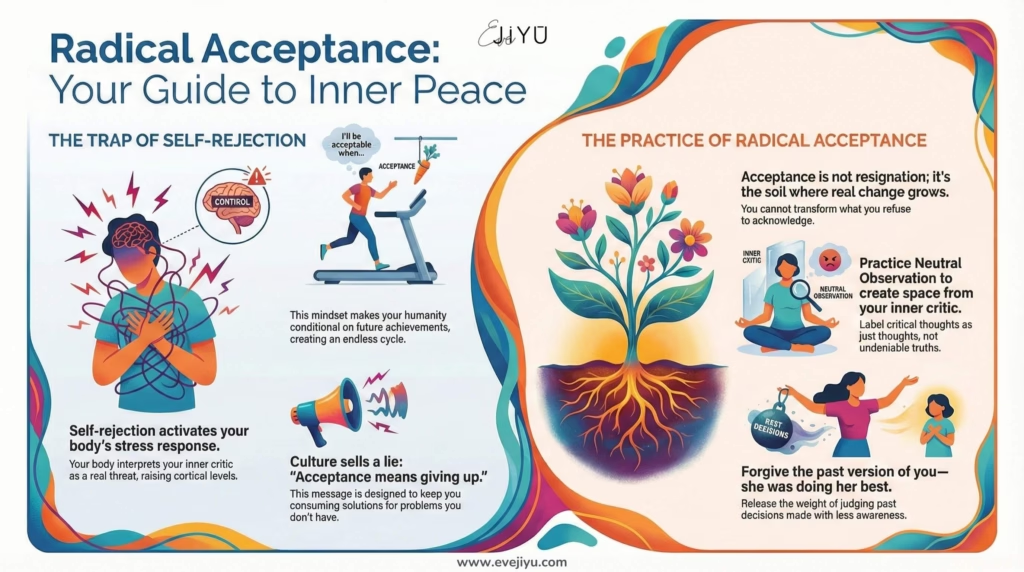
Our nervous systems weren’t designed for constant self-improvement. When you live in a state of chronic self-rejection, your body interprets that as a threat. The inner critic that tells you you’re not enough activates the same fight-or-flight response as an actual danger.
Neuroscience research shows self-compassion—with acceptance at its core—significantly reduces cortisol and activates the parasympathetic nervous system. In plain terms: when you stop treating yourself like a problem to solve, your body can finally rest.
But here’s where it gets tricky. We live in a culture that sells us the opposite message. Everywhere you look, someone is telling you that you need to optimize, upgrade, transform. That the current version of you is just the “before” photo in someone else’s success story.
This is why feeling not enough in a world that always wants more has become the baseline experience for so many women in their late twenties through forties. The message is clear: acceptance equals settling. Acceptance means giving up.
That’s a lie designed to keep you consuming solutions to problems you don’t actually have.
Real acceptance doesn’t mean you stop growing. It means you stop using your own inadequacy as motivation. You can want to change and accept where you are at the same time. In fact, you have to.
You cannot transform what you refuse to acknowledge. That’s the paradox most self-help advice misses entirely.
The Missing Piece: Acknowledgment Before Action
When I look back at the years I spent trying to “fix” myself, I realize I was skipping the most important step. I never paused to say, “This is where I am, and that’s okay for right now.”
I went straight from “I hate this about myself” to “Here’s my 47-step plan to change it.” And when the plan didn’t stick, I used that as proof that I was fundamentally broken.
Accepting yourself means looking at your life, your body, your choices, your mess, and saying: “This is mine. This is what’s true right now.” Not as a prison sentence, but as a starting point.
The Realization of Self Acceptance: It’s Not What You Think
The realization of self acceptance doesn’t arrive as a lightning bolt of enlightenment. It shows up quietly, usually on an ordinary Tuesday when you’re too tired to perform anymore.
For me, it happened on a walk. I was mentally listing all the ways I was falling short that week, and then I just stopped. Not because I suddenly loved myself, but because I was bored of the script. The voice in my head that kept cataloging my failures felt like a broken record I didn’t want to listen to anymore.
I thought: “What if I just… didn’t do this today?“
That small question cracked something open.
Self acceptance isn’t the same as self-love. You don’t have to wake up every morning thrilled about who you are. Sometimes acceptance is just the absence of attack. It’s choosing not to weaponize your own thoughts against yourself, even if you don’t feel particularly warm and fuzzy about the current state of things.
The cultural myth tells us acceptance looks like affirmations in the mirror and bubble baths and “loving every inch of yourself.” That can be part of it, sure. But the real work happens in the moments when you catch yourself mid-criticism and decide not to finish the sentence.
What Self Acceptance Actually Requires
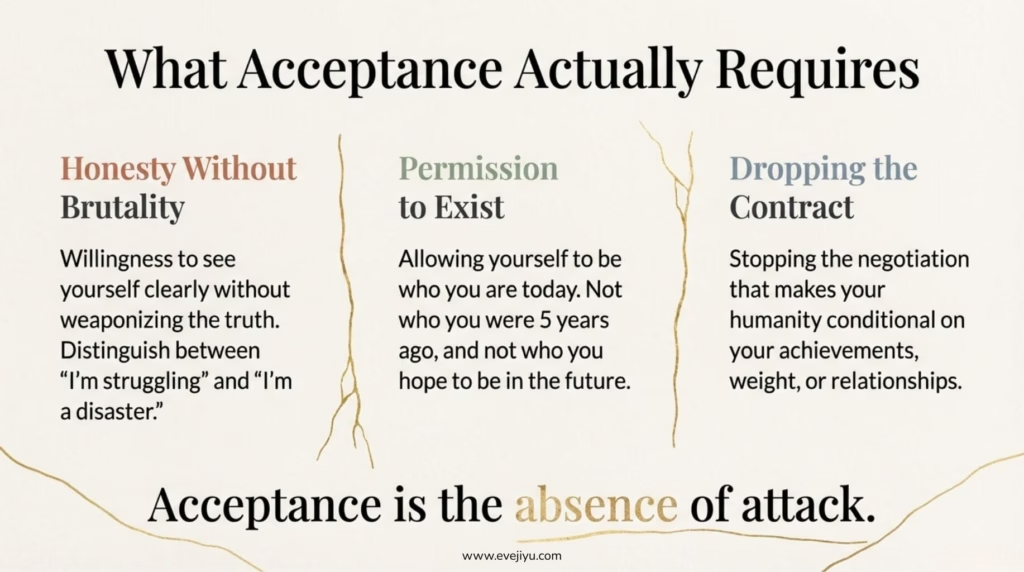
Let’s be clear about what we’re talking about here. Self acceptance requires three things:
- Honesty without brutality. You have to be willing to see yourself clearly, but that doesn’t mean weaponizing the truth. There’s a difference between “I’m struggling with this” and “I’m a complete disaster who will never get it together.”
- Permission to exist as you are today. Not as you were five years ago. Not as you hope to be five years from now. As the messy, imperfect, learning-as-she-goes woman you are right now.
- The courage to stop negotiating your worth. Every time you think “I’ll be acceptable when I lose the weight, get the promotion, fix the relationship,” you’re making your own humanity conditional. Acceptance means dropping the contract.
This is deeply connected to the chaos of self-discovery and accepting the freedom of not knowing. Because so much of what blocks acceptance is the belief that you should have it all figured out by now.
You don’t. You won’t. And that’s not a failure.
5 Grounded Ways to Accept Yourself
Let me give you practical tools for how to accept yourself that don’t require you to pretend everything is fine when it isn’t. These aren’t affirmations you paste on your mirror. These are shifts in how you relate to yourself when things get hard.
1. Practice Neutral Observation (Separate Yourself From Your Thoughts)
Your inner critic is loud, and it speaks with authority. It sounds like truth because it’s been rehearsing the same lines for decades. The problem is, you’ve been listening without questioning.
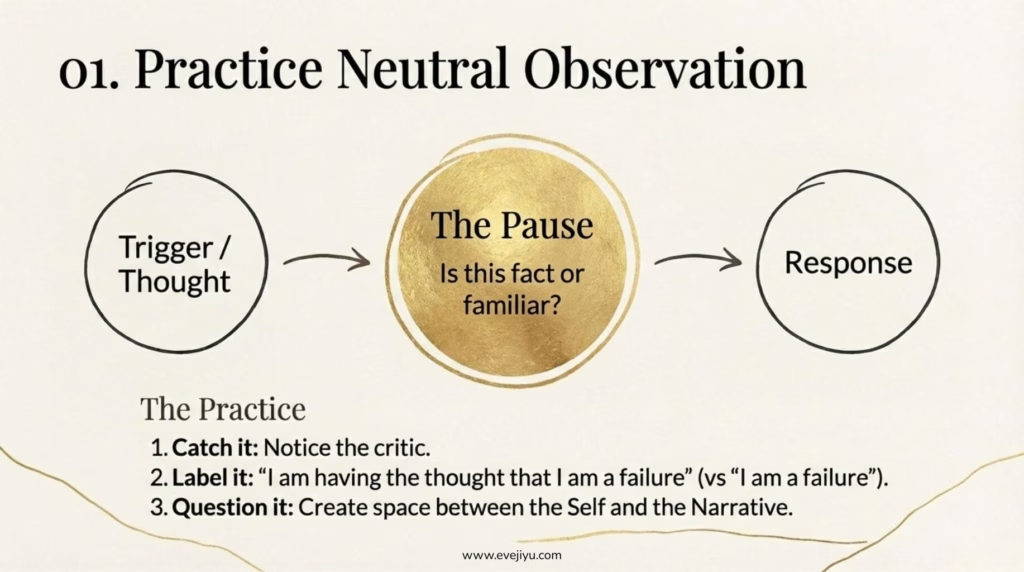
Neutral observation is the practice of noticing your thoughts without automatically believing them. When the voice in your head says “I’m a failure,” neutral observation asks: “Is that a fact, or is that just a thought I’m having right now?”
This sounds simple, but it disrupts the automatic loop. Most of us go from thought to emotion to identity in about three seconds. “I made a mistake” becomes “I’m always messing things up” becomes “I’m fundamentally incompetent” before we’ve even had our morning coffee.
Neutral observation slows that process down.
How to practice it:
- Notice when the inner critic shows up. Don’t try to stop it. Just catch it in the act.
- Label it as a thought, not as truth. Say to yourself: “I’m having the thought that I’m not good enough.”
- Ask: “Is this thought helping me right now? Is it based on evidence, or is it just familiar?”
- Let it be there without arguing with it. You don’t have to convince yourself it’s wrong. You just have to stop treating it as gospel.
The goal isn’t to have perfect, positive thoughts. The goal is to create space between you and the narrative your mind tells about you.
2. Audit Your Inner Dialogue (From Hustle Culture to Supportive Witness)
If you spoke to your best friend the way you speak to yourself in your head, she would stop taking your calls.
Most of us have internalized a voice that sounds like a demanding boss, a disappointed parent, or a culture that measures worth in productivity. That voice doesn’t belong to you. It’s borrowed. And you can give it back.
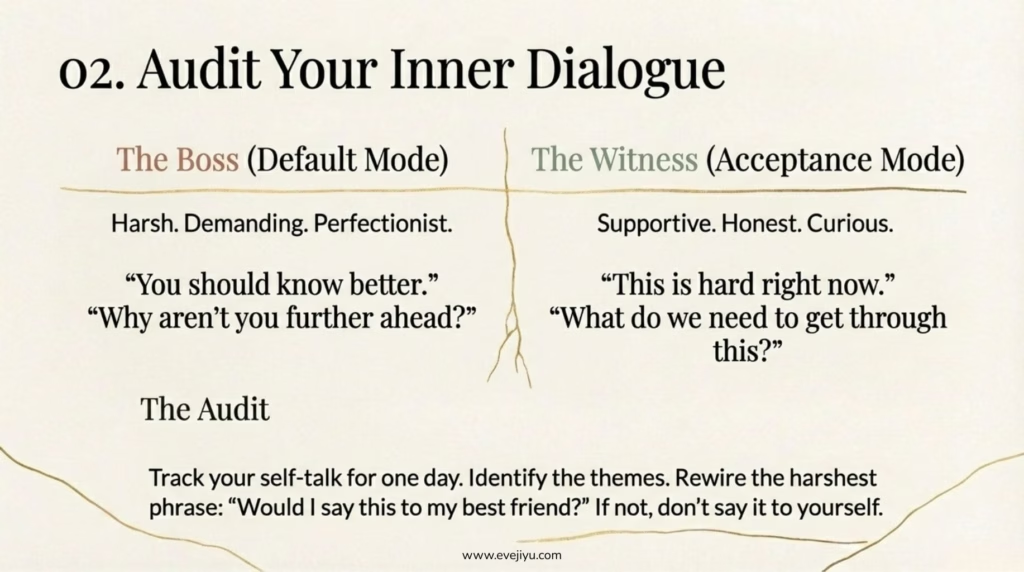
Learning how to love yourself begins with noticing the quality of your self-talk. Not the content, but the tone. Is it harsh? Sarcastic? Exhausted?
The audit process:
- Track one day of self-talk. Keep a note on your phone. Every time you catch yourself thinking something critical, jot down the phrase.
- Identify the pattern. Is there a theme? “You’re too much.” “You’re not enough.” “You should have known better.”
- Find the source. Where did you learn to talk to yourself this way? Whose voice does it sound like?
- Rewrite one phrase. Just one. Choose the harshest thing you said to yourself today and ask: “How would I say this to someone I care about?”
You don’t have to love yourself wildly and unconditionally tomorrow. You just have to stop being cruel to yourself today.
3. Identify Your “Stuck” Patterns (Acceptance Means Looking at the Shadows)
Self acceptance isn’t about pretending your patterns don’t exist. It’s about seeing them clearly enough to stop letting them run your life on autopilot.
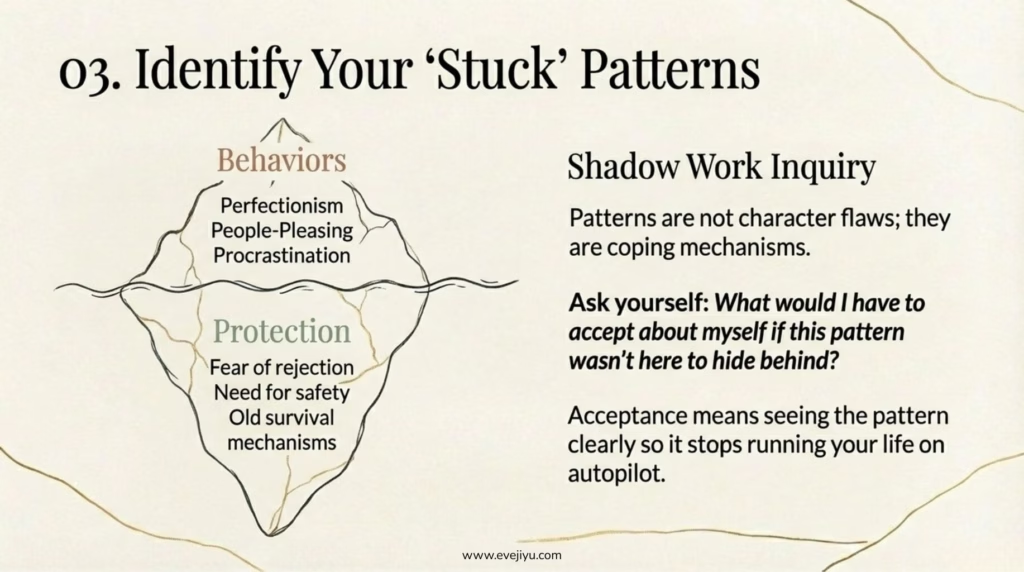
Most women I work with have one or two patterns that show up over and over. The perfectionism that keeps you waiting for the “right time.” The people-pleasing that has you saying yes when you mean no. The comfort zone that makes safe feel like the only option.
These patterns aren’t character flaws. They’re coping mechanisms that once served you. And now they’re keeping you small.
If you’re not sure which patterns are running the show, take the 5 patterns keeping women stuck quiz. Sometimes you need to name what’s holding you back before you can accept that it’s there.
Reflective questions for shadow work:
- Which pattern shows up when I’m stressed or afraid?
- What is this pattern trying to protect me from?
- What would I have to accept about myself if this pattern wasn’t here to hide behind?
- What small choice could I make today that goes against this pattern?
Acceptance doesn’t mean you stop wanting to change. It means you stop pretending the pattern isn’t there while it quietly controls your decisions.
4. Forgive the Past Version of You (She Was Doing Her Best)
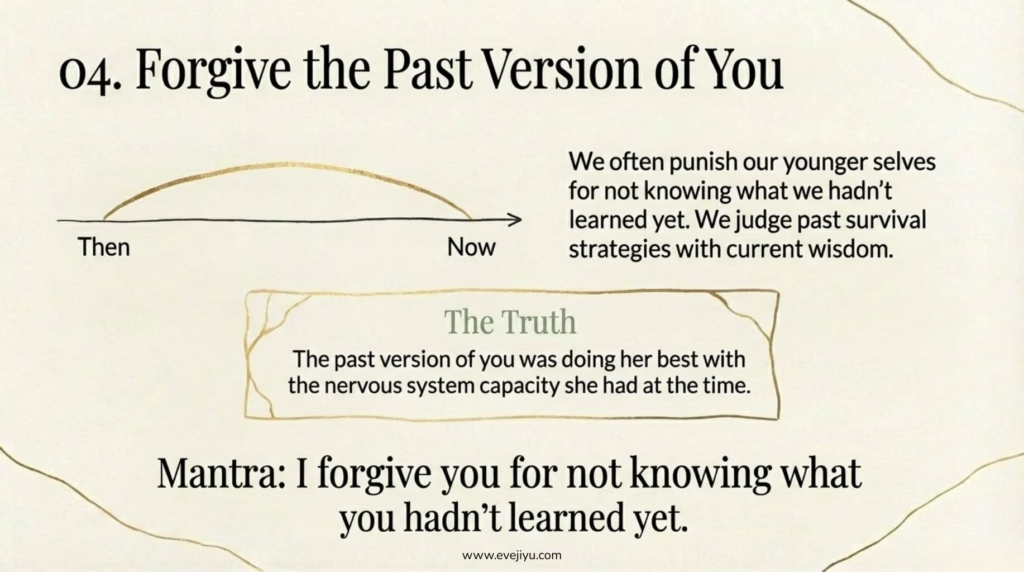
One of the cruelest things we do to ourselves is hold grudges against our younger selves for not knowing what we hadn’t learned yet.
You stayed in the wrong relationship too long. You took the safe job instead of the one that scared you. You ignored your body’s signals until burnout made the decision for you. And now you punish yourself for those choices as if shame will somehow rewrite history.
It won’t.
The version of you who made those choices was doing her best with the resources, awareness, and nervous system capacity she had at the time. She wasn’t broken. She was surviving.
Forgiving her isn’t about excusing the consequences. It’s about releasing the weight of carrying both the past and the judgment of the past into every new day.
A simple forgiveness practice:
- Write a letter to your past self. Pick a specific moment or decision you’re still punishing yourself for.
- Acknowledge what she was dealing with at the time. What fear was she navigating? What did she believe about herself?
- Tell her what you know now that she didn’t know then.
- Say out loud: “I forgive you for not knowing what you hadn’t learned yet.”
This isn’t about letting yourself off the hook. It’s about recognizing that growth requires compassion, not contempt.
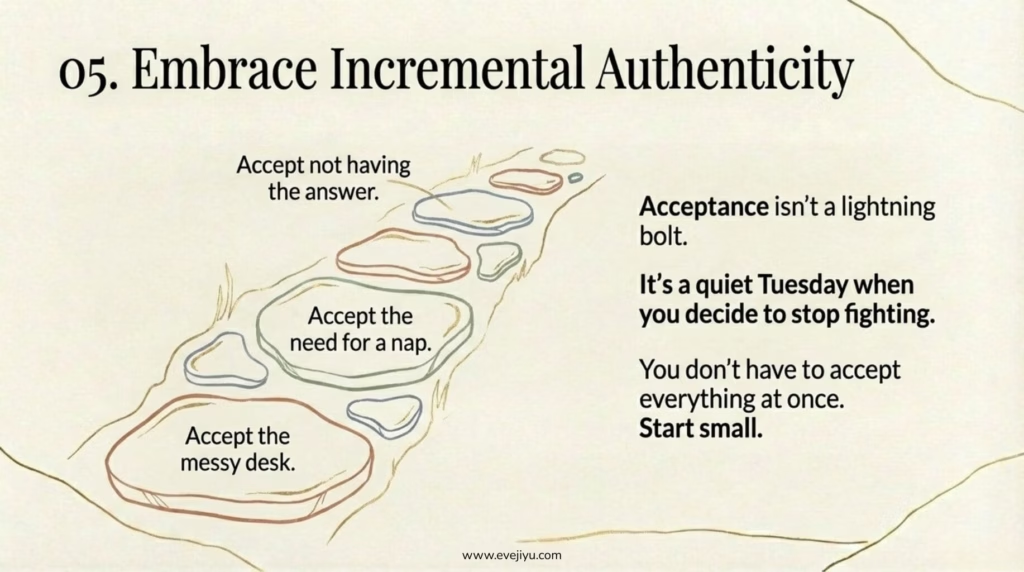
5. Embrace Incremental Authenticity (Start Small, Stay Honest)
The biggest barrier to self acceptance is the belief that it has to be complete and permanent before it counts. You think you need to wake up one morning fully at peace with every part of yourself, or it doesn’t matter.
That’s not how it works.
Self acceptance is incremental. Some days you’ll accept that you’re tired and need rest. Other days you’ll accept that you’re messy and imperfect and still worthy of showing up. And some days you’ll forget all of this and go right back to the war with yourself.
All of that is normal.
Small steps toward acceptance:
- Accept your need for rest today, even if your to-do list isn’t finished.
- Accept that your desk is messy and it doesn’t mean your life is falling apart.
- Accept that you don’t have all the answers right now, and that’s not a moral failing.
- Accept that you can want things to be different and still acknowledge what’s true today.
You don’t have to accept everything at once. You just have to stop making acceptance contingent on being someone else first.
Self Acceptance Examples in Daily Life
Let me show you what learning how to accept yourself looks like in practice, because abstract concepts don’t help when you’re standing in your kitchen at 9 PM wondering why you still feel like you’re failing at life.
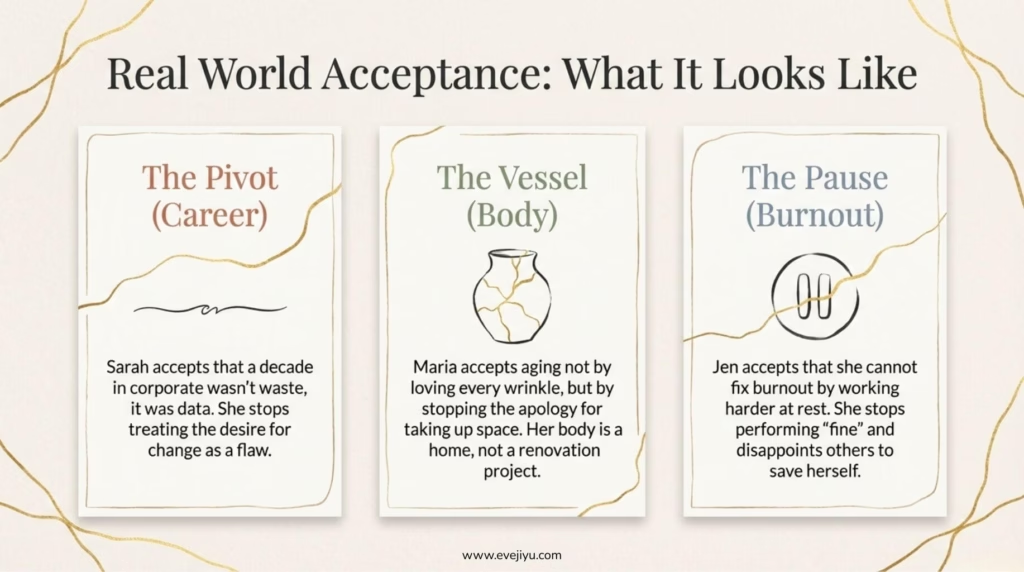
Example 1: Accepting a Career Pivot at 35
Sarah spent a decade building a career in corporate marketing. From the outside, she looked successful. From the inside, she felt hollow. At 35, she started training as a yoga instructor.
Her inner critic had a field day. “You’re throwing away everything you worked for. You’re starting over when you should be established. What will people think?”
Acceptance didn’t mean Sarah suddenly loved the uncertainty. It meant she stopped treating the desire for change as a character flaw. She acknowledged: “I spent ten years learning what I don’t want. That information has value.”
She accepted that pivoting didn’t mean the previous decade was wasted. It meant she was finally paying attention to what felt true instead of what looked impressive.
Example 2: Accepting Physical Changes Without the Anti-Aging War
Maria turned 40 and noticed her body changing in ways she couldn’t control. The lines around her eyes. The weight that settled differently. The energy that required more rest to replenish.
She could have gone to war with aging. Instead, she practiced acceptance. Not in a “love your wrinkles” Instagram-caption way, but in a quiet, private acknowledgment: “This is what 40 looks like on my body. This is what a life lived looks like.”
She stopped scrolling comparison feeds. She stopped apologizing for taking up space. She started treating her body like a home she lives in, not a project she’s renovating.
Example 3: Accepting Burnout Instead of Pushing Through
Jen crashed hard at 33. She’d been running on fumes for years, measuring her worth by her output, and her body finally said no. She couldn’t think clearly. She couldn’t sleep. She couldn’t perform the version of herself everyone expected.
Acceptance looked like this: “I am burnt out. I cannot fix this by working harder at rest. I need actual time to recover, and that means disappointing people.”
She stopped pretending she was fine. She stopped forcing herself to be productive during recovery. She accepted that healing doesn’t happen on a timeline, and her worth wasn’t determined by how fast she bounced back.
The Brave Act of Staying
Here’s what I want you to understand: learning how to accept yourself is not passive. It’s not giving up or settling or lowering your standards.
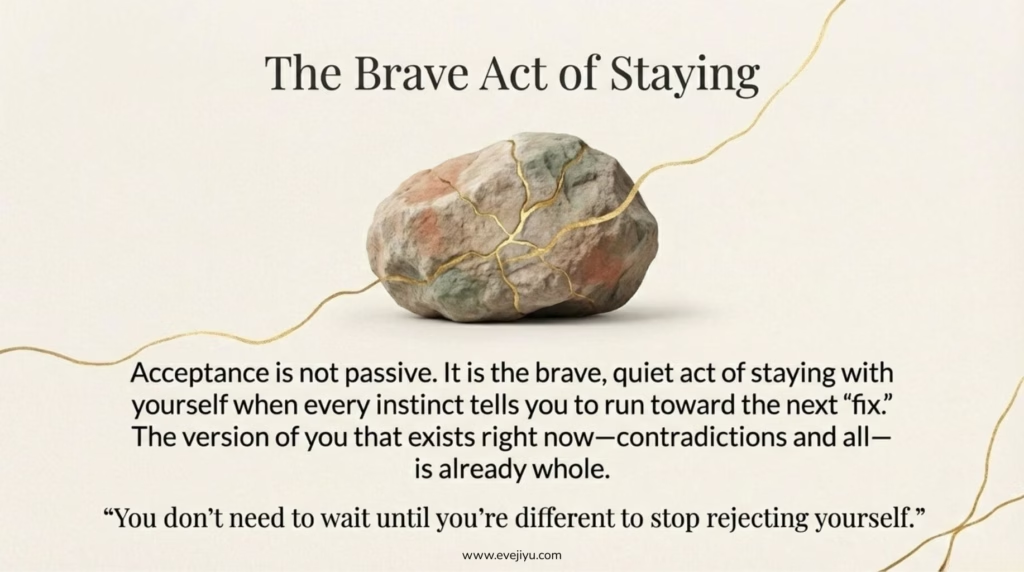
It’s the brave, quiet act of staying with yourself when every instinct tells you to run toward the next fix, the next guru, the next program that promises to make you acceptable.
Acceptance is the soil where authentic reinvention grows. You cannot build a life that fits if you’re still at war with the person living it.
The version of you that exists right now, reading these words, with all her contradictions and unfinished business and messy feelings, is already whole. Not perfect. Not complete. But whole.
You don’t need to wait until you’re different to stop rejecting yourself.
What Acceptance Makes Possible
When you stop spending energy trying to be someone else, that energy becomes available for everything else. For creativity. For rest. For joy. For the kind of deep, honest relationships that only happen when you stop performing.
Self acceptance doesn’t mean you never want to grow. It means you stop using your own inadequacy as fuel. You grow from curiosity instead of shame. From desire instead of disgust.
And when you accept yourself, you give other people permission to do the same. Your honesty becomes an invitation for theirs.
One Thing You Can Accept Today
I’m not going to ask you to accept everything about yourself by tomorrow morning. That’s not realistic, and it’s not the point.
Instead, I’m asking you to choose one thing. One small, uncomfortable truth about where you are right now, and practice not fighting it for 24 hours.
Maybe it’s accepting that you’re tired and rest is not a reward you have to earn. Maybe it’s accepting that you don’t have your life figured out and that’s not a sign of failure. Maybe it’s accepting that you need help, or space, or time, or all three.
Just one thing.
What are you choosing to accept about yourself today?
Leave a comment below. Sometimes naming it out loud to someone who gets it makes all the difference.
⬇⬇⬇Pin or save to read later ⬇⬇⬇


0 Comments