
In This Article

Key Takeaways
- What is REM sleep? REM (Rapid Eye Movement) is the sleep stage where your brain processes emotions, consolidates memories, and engages in creative problem-solving. It typically occurs in 90-minute cycles throughout the night.
- How to boost REM sleep: Maintain a consistent wake time, limit alcohol intake, manage afternoon stress, regulate bedroom temperature, and practice evening wind-down rituals like journaling or meditation.
- Optimal sleep ratios: Adults typically need 20-25% of total sleep time in REM (roughly 90 minutes to 2 hours per night) and 15-20% in deep sleep (about 1.5 to 2 hours).
- The emotional connection: How you regulate emotions during the day directly impacts REM quality at night. Chronic stress and unprocessed feelings fragment REM cycles.
- Key insight: REM sleep isn’t a luxury. It’s how your nervous system recovers from the emotional labor of modern life.
Discover how to boost REM sleep naturally with science-backed strategies that support emotional processing, creative thinking, and burnout recovery.
You’ve been in bed for eight hours. You wake up feeling like you never left the office. Your brain is foggy, your mood is flat, and the idea of facing another day feels exhausting before it even begins.
The problem isn’t always how long you sleep. Often, it’s what happens during those hours your eyes are closed. More specifically, it’s what’s happening during your REM cycle—the stage where your brain processes emotions, consolidates memories, and solves problems you couldn’t crack while awake.
REM sleep is the brain’s quiet workshop. While your body rests, your mind sifts through the emotional debris of the day. It files away what matters, discards what doesn’t, and makes connections that feel like breakthroughs when you wake. Without enough REM, you’re left carrying yesterday’s stress into today.
This article walks you through seven research-backed ways to boost REM sleep. You’ll learn why REM matters for emotional clarity, how much you actually need, and what simple shifts can help you get more of it. If you’re struggling to even fall asleep in the first place, start with how can you fall asleep fast before diving into REM optimization.
Understanding Sleep Architecture: The Stages of Sleep
Your brain doesn’t just shut off when you close your eyes. Sleep moves through distinct stages, each with a different job.
A full sleep cycle lasts about 90 minutes and repeats four to six times per night. Each cycle includes:
- Light sleep (Stage 1 and 2): Your body temperature drops, heart rate slows, and you drift in and out of consciousness. This is the transition zone.
- Deep sleep (Stage 3): Your body repairs tissue, strengthens the immune system, and consolidates physical memories. This is where your muscles recover from the day.
- REM sleep: Your brain becomes highly active while your body remains still. This is where emotional processing, creative thinking, and memory consolidation happen.
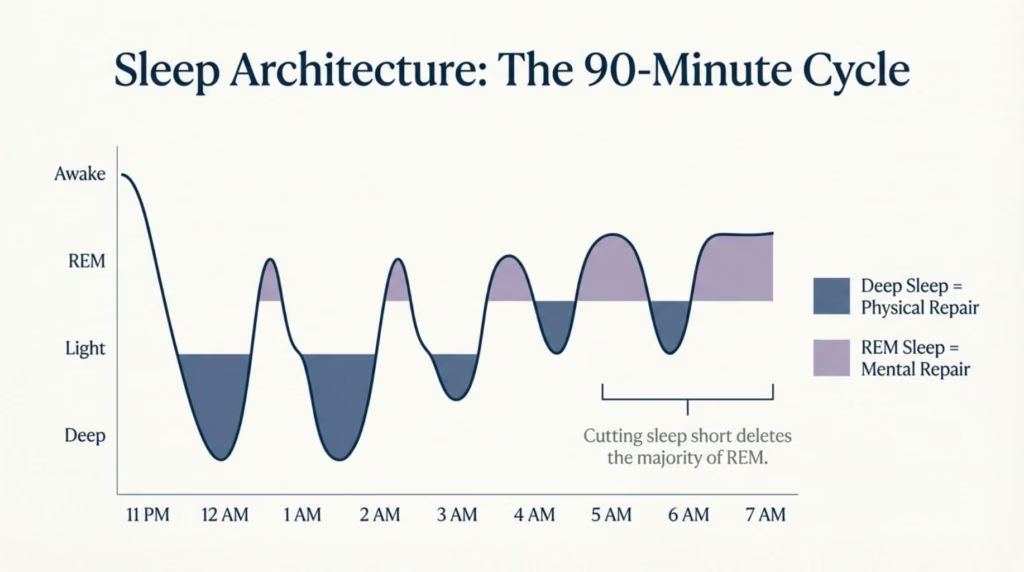
The ratio shifts as the night progresses. Early cycles contain more deep sleep. Later cycles—especially in the final third of the night—contain longer stretches of REM. If you cut your sleep short, you lose the REM-heavy hours.
To understand the physical repair that happens during deep sleep, read our guide on what is deep sleep.
The Metrics: How Much REM and Deep Sleep Should You Get?
Sleep tracking apps have created a new kind of anxiety. You wake up, check your wearable, and see a “sleep score” that feels like a grade on a test you didn’t study for.
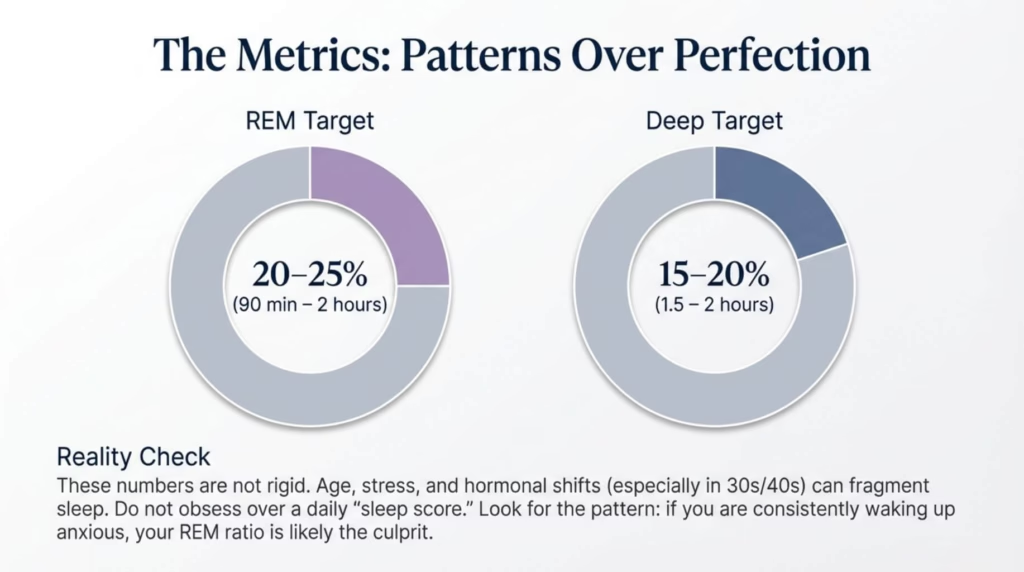
Here’s what the research actually says:
- How much deep sleep should you get per night? For most adults, 1.5 to 2 hours (15-20% of total sleep time) is typical. Some nights you’ll get less, especially during periods of stress or hormonal shifts.
- How much REM sleep should you get? Around 90 minutes to 2 hours (20-25% of total sleep time). REM increases in duration as the night progresses, so sleeping 7-8 hours is crucial for hitting this target.
These numbers aren’t rigid. Age, stress levels, and even where you are in your menstrual cycle can shift the balance. Women in their 30s and 40s often experience lighter, more fragmented sleep due to hormonal changes, which can reduce both REM and deep sleep percentages.
The goal isn’t to obsess over exact numbers. The goal is to notice patterns. If you’re consistently waking up anxious or emotionally reactive, low REM might be part of the picture.
7 Proven Strategies: How to Boost REM Sleep
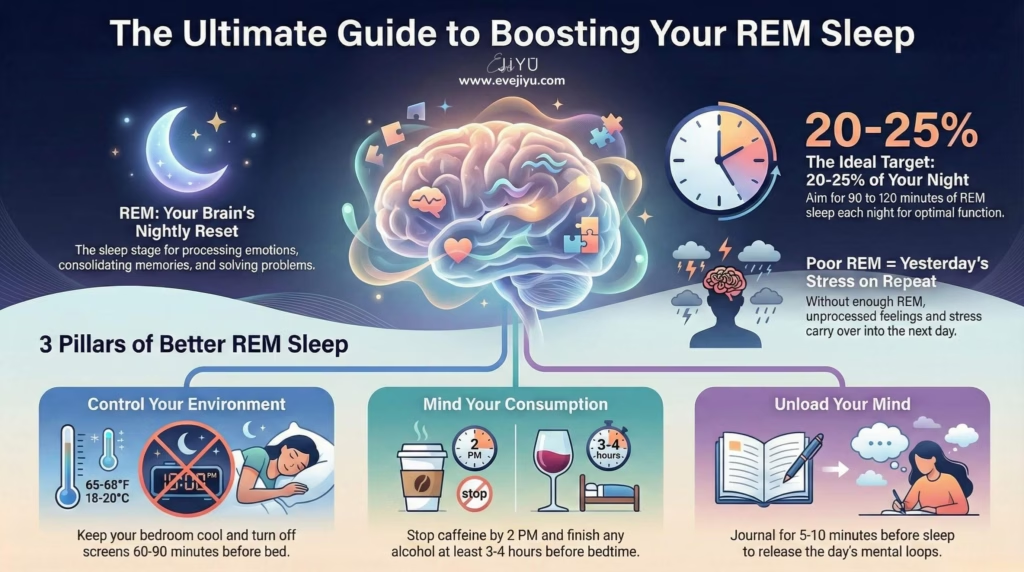
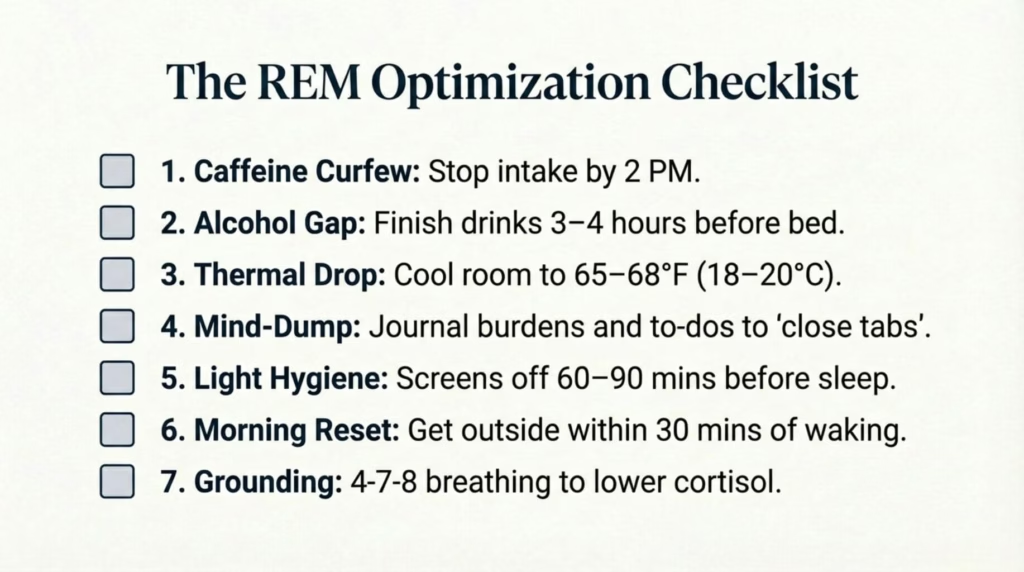
Strategy 1: The Caffeine Curfew
Caffeine blocks adenosine, a chemical that signals your brain it’s time to rest. Even if you fall asleep easily, caffeine in your system can suppress REM cycles.
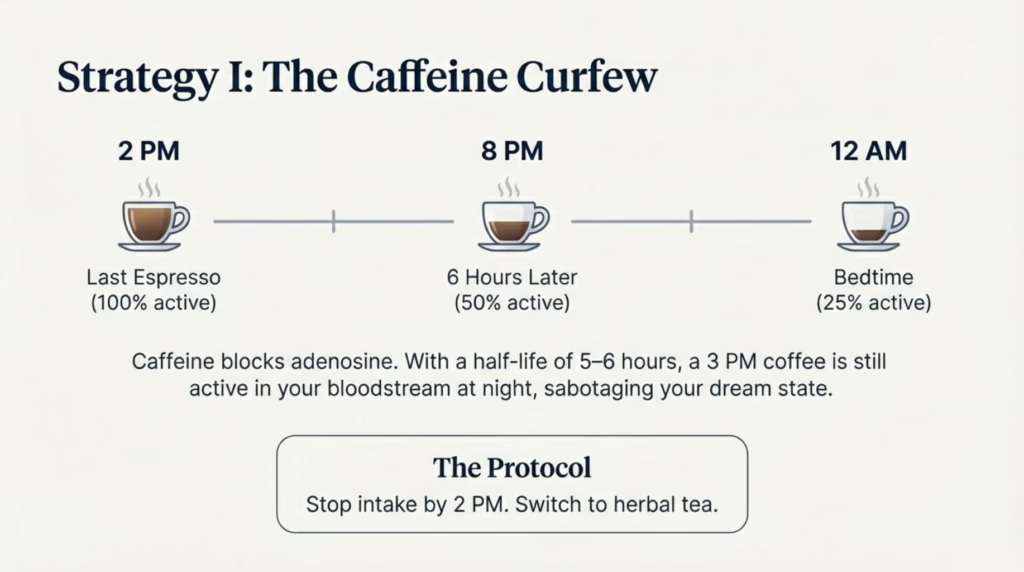
The half-life of caffeine is about 5-6 hours. That afternoon espresso at 3 PM is still in your bloodstream at 9 PM, quietly sabotaging your dream state.
What to try: Stop caffeine intake by 2 PM. If you crave something warm in the afternoon, switch to herbal tea or decaf.
Strategy 2: Alcohol and the “REM Rebound”
A glass of wine might help you fall asleep faster, but it wrecks your REM cycle. Alcohol suppresses REM during the first half of the night. As your body metabolizes it, you experience a “REM rebound”—fragmented, restless sleep that feels more like waking dreams than true rest.
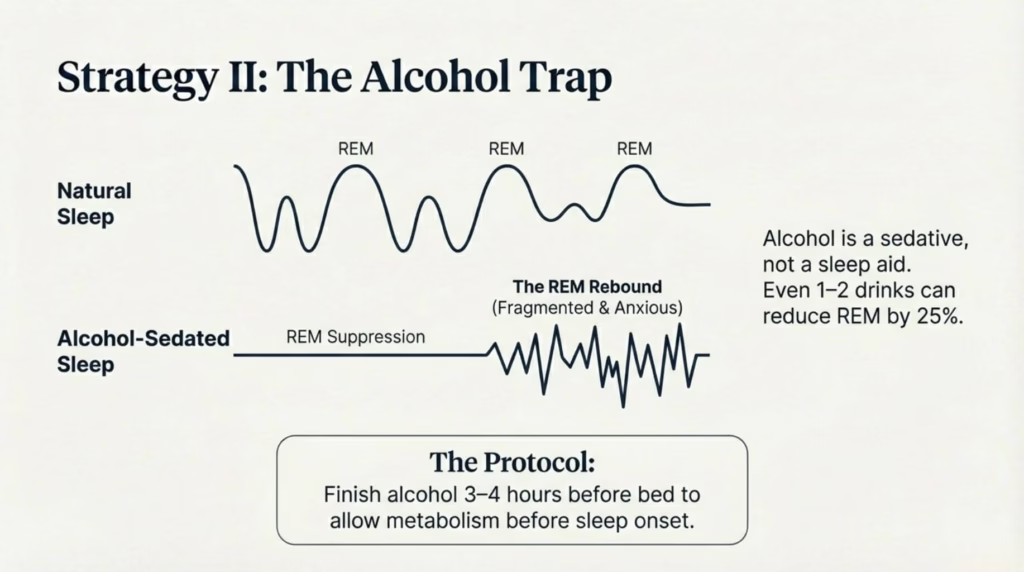
Studies show that even moderate drinking (one to two drinks) can reduce REM by up to 25% in a single night.
What to try: If you drink, finish at least 3-4 hours before bed. Notice how your sleep quality shifts when you take a week off alcohol.
Strategy 3: Temperature Regulation
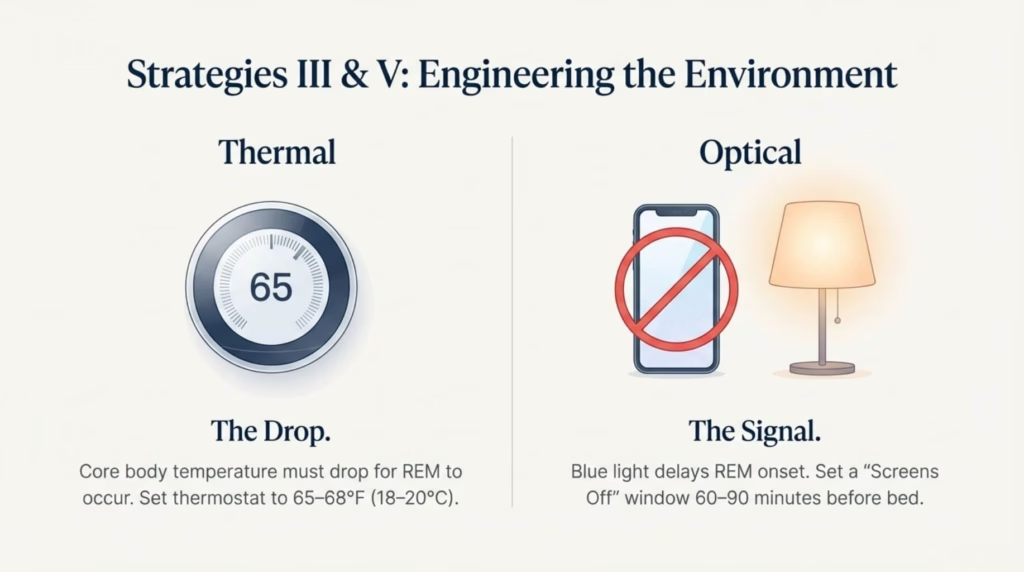
Your core body temperature needs to drop for REM sleep to occur. The ideal bedroom temperature is around 65-68°F (18-20°C).
Too warm, and your body struggles to enter the deeper stages of sleep. Too cold, and you’ll wake up shivering.
What to try: Lower your thermostat before bed. If that’s not an option, try cooling your extremities—wear light socks, keep a window cracked, or use a fan.
Strategy 4: The Mind-Dump Ritual
REM sleep processes unresolved emotions. If you go to bed with your mind still running through tomorrow’s to-do list or replaying today’s conflicts, your brain treats sleep like a continuation of the workday.
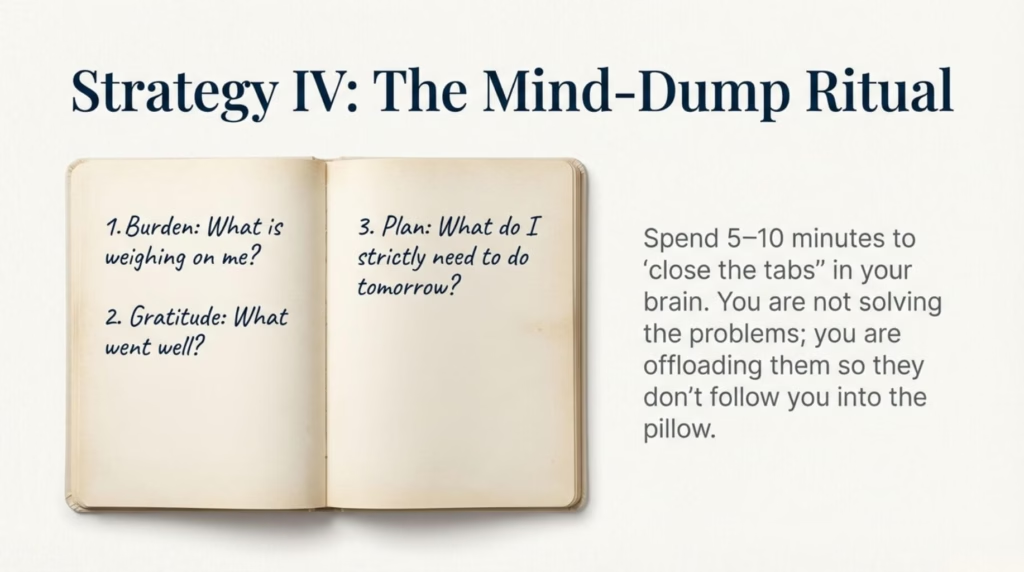
Journaling before bed gives your mind permission to let go. You’re not trying to solve anything. You’re just offloading the mental loops so they don’t follow you into sleep.
What to try:
- Spend 5-10 minutes writing three things: what’s weighing on you, what you’re grateful for, and what you need tomorrow.
- Close the notebook and leave it on your desk. Symbolically, you’re putting the day to rest.
- Move into a calming transition activity—reading, stretching, or breathing exercises.
For more grounding practices, try these grounding meditation 15-minute techniques.
Strategy 5: Light Hygiene
Blue light from screens suppresses melatonin, the hormone that signals your brain it’s time to sleep. Even an hour of scrolling before bed can delay REM onset by up to 30 minutes.
What to try:
- Set a “screens off” time 60-90 minutes before bed.
- If you must use devices, enable night mode or use blue-light-blocking glasses.
- Dim overhead lights in the evening. Use warm-toned lamps instead.
Strategy 6: Morning Sunlight
Your circadian rhythm—the internal clock that governs sleep-wake cycles—needs to be anchored. Morning sunlight is the reset button.
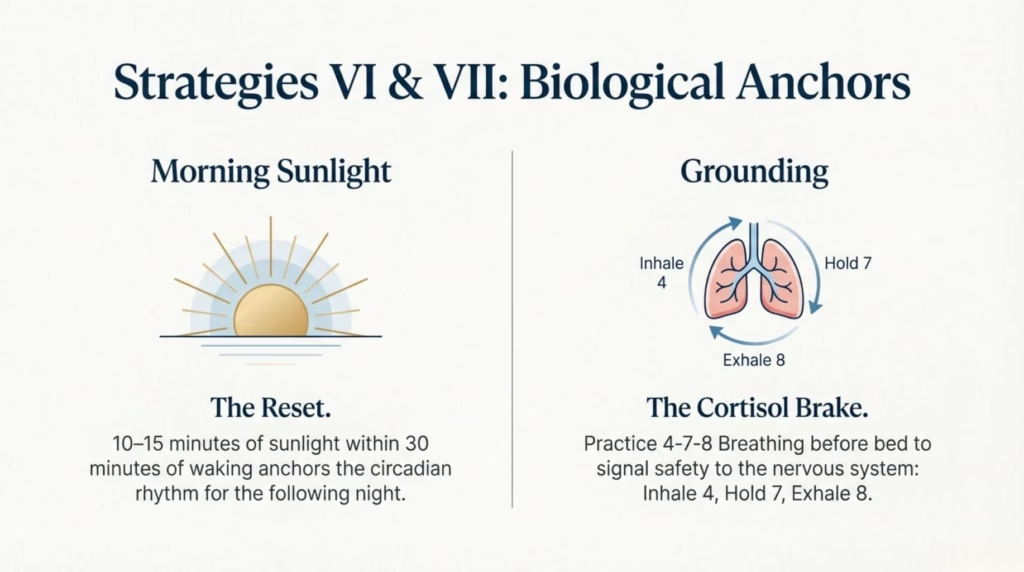
Getting bright light exposure within 30 minutes of waking signals your brain that the day has started. This helps regulate melatonin production later in the evening, making it easier to fall asleep and enter REM on time.
What to try: Step outside for 10-15 minutes within an hour of waking. If natural light isn’t available, consider a light therapy lamp.
Strategy 7: Grounding Practices
Chronic stress elevates cortisol, which suppresses REM sleep. Grounding practices—meditation, breathwork, gentle movement—lower cortisol and signal your nervous system that it’s safe to rest.
What to try:
- Spend 5 minutes doing a body scan meditation before bed. Notice where tension lives and consciously release it.
- Practice 4-7-8 breathing: inhale for 4 counts, hold for 7, exhale for 8. Repeat four times.
- Try these mindful activities to calm your mind without forcing sleep.
The Intersection of REM and Creative Voice
There’s a reason artists, writers, and problem-solvers often wake up with breakthroughs. REM sleep allows your brain to make connections it couldn’t see during waking hours.
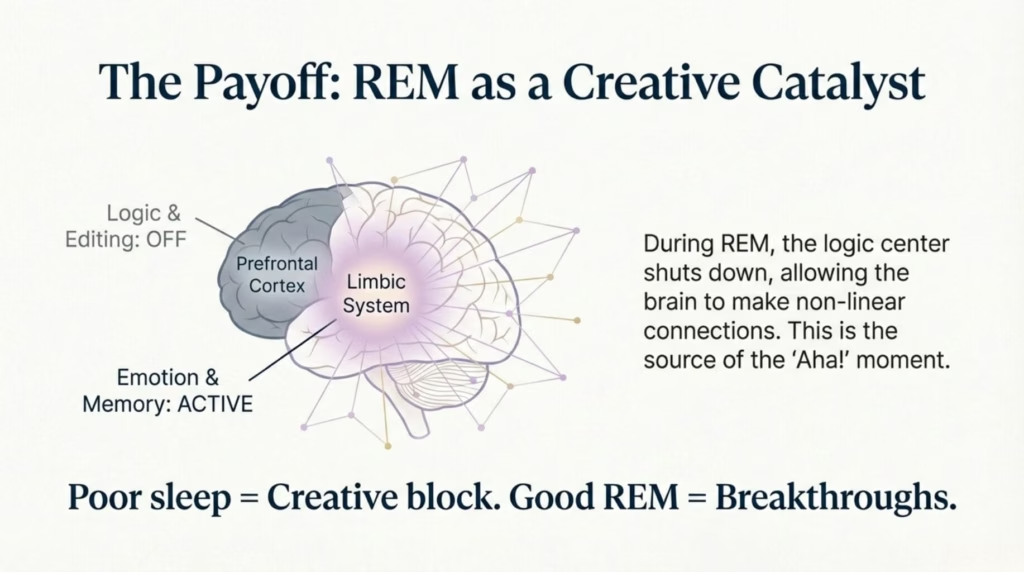
During REM, the prefrontal cortex—the part of your brain responsible for logic and self-editing—takes a back seat. The limbic system, which governs emotion and creativity, becomes more active. This is why dreams feel surreal and why solutions to creative problems often arrive without effort.
If you’ve been feeling stuck in your creative work or struggling to access your authentic voice, poor REM sleep might be part of the issue. Your brain needs that nightly reset to process emotions and make sense of the noise.
For a deeper look at rest beyond the metrics, read sleep optimization for women beyond sleepmaxxing hype.
Gentle Alternatives When Sleep Won’t Come
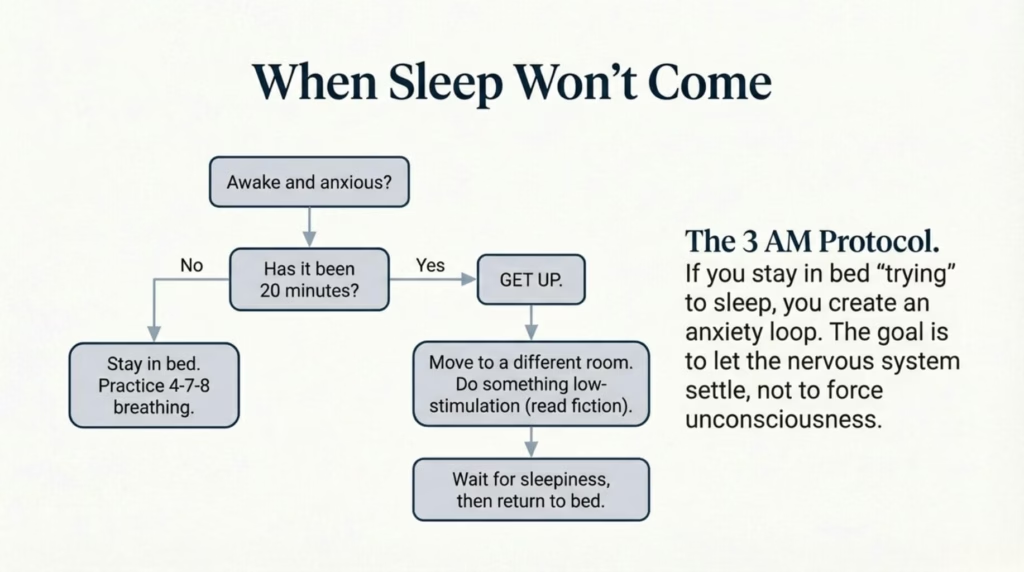
Sometimes, the harder you try to sleep, the more elusive it becomes. Lying in bed, watching the clock, thinking about how tired you’ll be tomorrow—this creates a feedback loop of anxiety.
If you find yourself awake at 3 AM, resist the urge to force it. Get up, move to another room, and do something calm and low-stimulation. Read a few pages of a book, write in your journal, or listen to a guided meditation.
The goal isn’t to “try harder.” The goal is to stop fighting and let your nervous system settle.
Conclusion: Dreaming as Self-Discovery
Boosting REM sleep isn’t about biohacking your way to perfect metrics. It’s about creating the conditions for your brain to do what it does best—process, integrate, and heal.
When you prioritize REM, you’re giving yourself the gift of emotional clarity. You’re allowing your mind to make sense of the day so you don’t carry its weight into tomorrow. You’re honoring the quiet work that happens when you’re not in control.
Start with one strategy from this list. Notice what shifts. And remember: sleep is not something you earn. It’s something you allow.
What helps you sleep better? What keeps you awake? Leave a comment below or share this with someone who needs the reminder that rest is not a reward—it’s a necessity.
⬇⬇⬇Pin or save to read later ⬇⬇⬇





0 Comments