
In This Article
Discover seven grounded meditation practices designed specifically for burnout recovery, backed by neuroscience and tested by women navigating exhaustion.
Key Takeaways
Meditation for burnout works by regulating your nervous system, not by forcing your mind to go blank. When you’re burned out, traditional “clear your mind” instructions often backfire because your body is stuck in survival mode. These seven practices offer concrete techniques to shift from fight-or-flight into rest-and-repair, giving you space to process what’s actually happening beneath the exhaustion.
You know that feeling when your chest tightens before you even open your laptop in the morning? When the thought of one more email makes your stomach clench? When sitting still feels dangerous because if you stop moving, you’ll have to face how tired you actually are?
I sat on my bedroom floor four years ago, determined to meditate my way out of burnout. I’d read all the articles promising that ten minutes of mindfulness would restore my energy and clarity. I set a timer, closed my eyes, and within ninety seconds, I wanted to scream. My mind raced faster. My body felt trapped. The silence amplified every anxious thought I’d been outrunning.
So I gave up, convinced I was “bad at meditation” and that my brain was too broken to benefit from something so simple.
What I didn’t understand then: meditation for overwhelm doesn’t mean emptying your mind. When you’re burned out, your nervous system is wired for threat detection. Your body interprets stillness as vulnerability. The goal isn’t to achieve some blissed-out state where nothing bothers you. The goal is to train your nervous system to recognize safety again.
This article walks you through seven meditation practices designed for people who feel too wired to sit still, too exhausted to focus, and too frustrated with generic advice that doesn’t account for what burnout actually does to your brain. Each practice includes the neuroscience behind why it works, step-by-step instructions you can follow today, and realistic guidance for what to expect when you’re starting from a place of complete depletion.
If you’ve tried meditation before and felt like you failed, or if you’re so overwhelmed that the idea of adding one more thing to your day feels impossible, these techniques meet you where you are.
Why Traditional Meditation Often Fails During Burnout
Most meditation guidance assumes you’re starting from a baseline of relative calm. The instructions tell you to “observe your thoughts without judgment” or “return to the breath when your mind wanders.” But when you’re burned out, your thoughts aren’t gentle clouds drifting by. They’re alarm bells. Your breath feels shallow and restricted. Your body doesn’t trust stillness.
Research on chronic stress and trauma shows that prolonged activation disregulates the HPA axis and autonomic nervous system, making it harder to shift out of hypervigilance even when the stressor is gone. Your cortisol levels stay elevated. Your nervous system remains on high alert. You’re stuck in a physiological state that interprets meditation as another demand rather than relief.
The traditional approach to meditation asks you to quiet the noise. But when you’re burned out, the noise is your body’s way of telling you something is deeply wrong. Ignoring it doesn’t create peace. It creates more internal conflict.
So instead of trying to force your mind into silence, these practices work with your nervous system’s actual needs. They give you concrete anchors when your thoughts spiral. They acknowledge that rest might feel foreign or even frightening when you’ve been running on adrenaline for months. They recognize that recovery from burnout requires more than willpower or positive thinking.
The shift happens when you stop treating meditation as a performance and start treating it as a conversation with your body about what it needs to feel safe.

The Science of the Burned-Out Brain
Your nervous system has two primary states: sympathetic (fight-or-flight) and parasympathetic (rest-and-digest). When you’re functioning well, you move fluidly between these states throughout the day. You activate sympathetic arousal when you need focus or energy, then return to parasympathetic calm when the task is done.
Burnout traps you in chronic sympathetic activation. Your body stays in threat mode even when you’re lying in bed at night. Your vagus nerve (the main pathway for parasympathetic signaling) becomes less responsive. You lose access to the physiological brake that would normally help you downregulate after stress.
Research shows that certain forms of meditation and slow, mindful breathing can improve vagal tone and autonomic balance, strengthening the body’s ability to shift out of fight‑or‑flight. But the key word is “regular,” and the approach matters. If meditation feels like another thing you’re failing at, you’re activating the same stress response you’re trying to calm.
Meditation burnout is real. It happens when you treat mindfulness as a productivity hack rather than a practice of nervous system regulation. When you push yourself to meditate for thirty minutes because that’s what the app recommends, even though your body is screaming for you to stop. When you judge yourself for having thoughts during meditation, adding self-criticism to an already overloaded system.
The practices below are designed to sidestep these pitfalls. They prioritize what your nervous system needs over what meditation is “supposed” to look like.
What Happens in Your Body During Meditation for Overwhelm
When you engage in somatic (body-based) meditation, you’re activating the ventral vagal pathway. This signals to your brain that you’re safe enough to rest. Your heart rate variability increases, which is a marker of nervous system flexibility. Your prefrontal cortex (responsible for executive function and emotional regulation) comes back online after being suppressed by chronic stress.
You’re not just “relaxing.” You’re literally rewiring the neural pathways that have been keeping you stuck in survival mode.
The process takes time, though. Neuroplasticity (your brain’s ability to form new neural connections) requires consistent practice, not perfection. Three minutes of grounding meditation every day will do more for your nervous system than an hour-long session once a week when you’re already depleted.
7 Authentic Meditations for Burnout Recovery
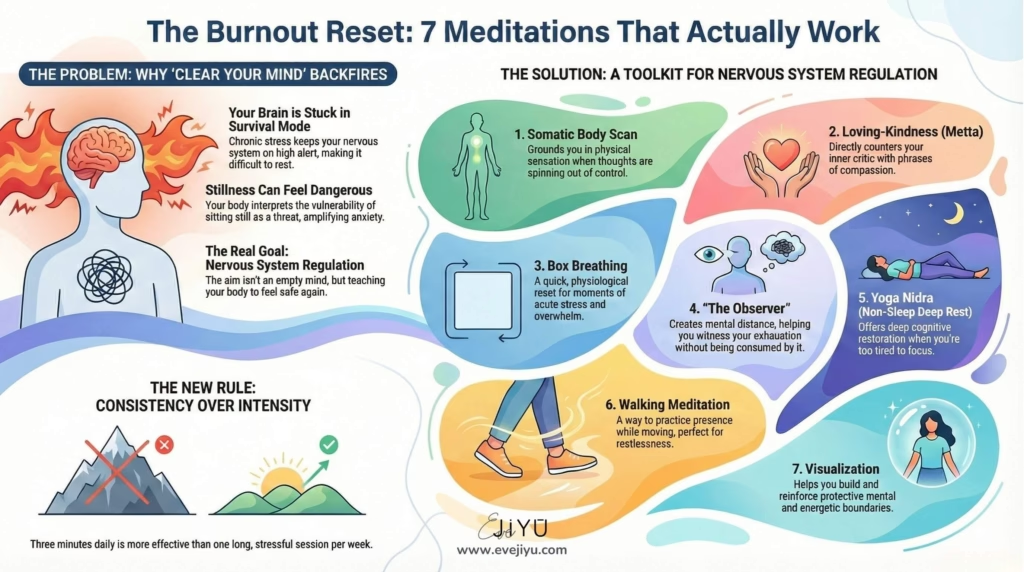
I. The Somatic Body Scan (Grounding)
When your thoughts are spinning and you can’t quiet your mind, the fastest way out of the loop is through your body. A somatic body scan pulls your attention out of anxious rumination and anchors it in physical sensation.
How to Practice:
- Sit or lie down in a position that feels stable. If sitting feels too formal, lie on the floor with your knees bent and feet flat.
- Close your eyes or soften your gaze toward the floor. Notice where your body makes contact with the surface beneath you.
- Bring attention to your feet. Don’t try to relax them. Just notice the temperature, any tingling, the weight of them against the ground.
- Slowly move your awareness up through your ankles, calves, knees, thighs. Pause at each area for three to five breaths.
- Continue through your pelvis, lower back, abdomen, chest, shoulders, arms, hands, neck, face, and crown of your head.
- When you notice your mind wandering into thoughts, name where it went (“planning,” “worrying,” “remembering”) and gently return to the body.
This practice pairs naturally with the 15-minute grounding techniques I’ve written about before. The goal isn’t to feel instantly calm. The goal is to practice redirecting your attention away from the threat-scanning your brain has been doing and toward neutral sensation.
What to Expect:
The first few times, you might feel restless or frustrated. Your body might resist slowing down because it’s been in motion for so long. That’s normal. You’re not doing it wrong. You’re just noticing how unfamiliar stillness has become.
Reflective Questions:
Where in your body did you notice the most tension? Did any area feel numb or disconnected? What does it tell you about how you’ve been carrying stress?
II. Loving-Kindness (Metta) for the Self-Critic
Burnout often comes with a relentless inner voice telling you you’re not doing enough, not working hard enough, not recovering fast enough. Loving-kindness meditation directly addresses that voice with phrases of compassion.
How to Practice:
- Sit comfortably and place one hand on your heart. Feel the warmth of your palm against your chest.
- Silently repeat these phrases (or create your own that feel authentic):
- May I be safe.
- May I be healthy.
- May I be at ease.
- May I rest without guilt.
- If the words feel hollow or fake, that’s okay. You’re not trying to force belief. You’re creating a counterpoint to the critical voice.
- Notice what comes up. Resistance? Sadness? Relief? Let it be there without needing to fix it.
- After a few minutes, bring to mind someone who feels easy to love (a pet, a child, a friend). Direct the same phrases toward them. Then return to yourself.
This practice is especially useful for high achievers recovering from burnout, because it interrupts the pattern of conditional self-worth. You’re offering yourself kindness not because you earned it, but because you’re struggling.
What to Expect:
You might cry. You might feel angry at the idea that you “need” compassion. You might feel nothing at all. All of these responses are valid. The practice works by repetition, not by immediate emotional breakthrough.
Reflective Questions:
What does your inner critic say most often? Whose voice does it sound like? What would it mean to speak to yourself the way you’d speak to someone you genuinely care about?
III. Box Breathing for Acute Overwhelm
When you’re in the middle of a panic response or acute stress, you need something immediate and physiological. Box breathing is a four-count technique that resets your autonomic nervous system within minutes.
How to Practice:
- Inhale through your nose for four counts.
- Hold your breath for four counts.
- Exhale through your mouth for four counts.
- Hold empty for four counts.
- Repeat for at least five rounds (about two minutes).
Why It Works:
The controlled breath pattern activates your parasympathetic nervous system and reduces cortisol. The equal counts give your mind something concrete to focus on, which interrupts the spiral of anxious thoughts.
What to Expect:
Your first exhale might feel shaky. Your chest might feel tight during the holds. That’s your body releasing stored tension. Keep going. By the third or fourth round, you’ll likely notice your shoulders dropping and your jaw unclenching.
Reflective Questions:
When did you first notice the overwhelm building today? What would it look like to use this technique before you hit the breaking point instead of after?
IV. “The Observer” Meditation
Burnout can make you feel like you are your exhaustion, like the fatigue and frustration define who you are. The Observer meditation creates distance between your experience and your identity.
How to Practice:
- Sit quietly and notice what’s present. Don’t try to change anything. Just observe.
- Label your experiences in third person: “There is tightness in the chest. There is a thought about tomorrow’s meeting. There is tiredness behind the eyes.”
- Notice that you are the one observing these experiences. You are not the tightness. You are not the thought. You are the awareness noticing them.
- When you get pulled into a thought or feeling, gently return to the observing stance: “There is frustration. There is impatience with this practice.”
What to Expect:
This feels abstract at first. Your mind will resist the idea that you’re separate from your thoughts. But over time, this practice builds the capacity to witness burnout without being consumed by it.
Reflective Questions:
What changes when you see your exhaustion as a state you’re experiencing rather than who you are? Can you make space for both the burnout and the part of you that’s still whole underneath it?
V. Yoga Nidra (Non-Sleep Deep Rest)
Yoga Nidra is often called “yogic sleep,” and it’s one of the most effective practices for cognitive exhaustion. You lie down, follow a guided body scan and visualization, and enter a state between waking and sleeping that allows deep restoration without actual sleep.
How to Practice:
- Find a quiet space where you can lie flat on your back. Use a pillow under your knees if your lower back feels strained.
- Use a guided Yoga Nidra recording (many are available for free; look for 20-30 minute sessions designed for stress relief).
- Follow the voice as it guides you through body awareness, breath observation, and visualization.
- If you fall asleep, that’s fine. Your nervous system still benefits.
Why It Works:
Neuroscience research shows that Yoga Nidra increases dopamine release and shifts brain-wave activity into deeper slow‑wave bands (delta and theta), patterns linked to memory consolidation and emotional processing. When you’re too burned out to focus on active meditation, Yoga Nidra does the work for you.
What to Expect:
You might feel deeply rested after twenty minutes, or you might feel disoriented as you come out of the practice. Both are normal. Give yourself a few minutes to transition back before jumping into your day.
Reflective Questions:
What quality of rest feels most missing from your life right now? What would it mean to prioritize restoration even when your to-do list feels urgent?
VI. Walking Meditation (Active Presence)
If sitting still feels impossible, walking meditation gives you a way to be present while moving. This is particularly useful for people whose burnout manifests as restlessness or who associate stillness with being trapped.
How to Practice:
- Choose a short path (even just ten steps back and forth in your living room).
- Walk slowly and deliberately. Notice the sensation of your foot lifting, moving through the air, and making contact with the ground.
- Synchronize your breath with your steps if it helps: inhale for three steps, exhale for three steps.
- When your mind wanders, bring attention back to the physical sensation of walking.
For more movement-based mindfulness practices, you can explore my full guide to mindful activities.
What to Expect:
Walking meditation feels less “meditative” than sitting practice, which is exactly why it works for burnout. You’re training presence without the pressure of stillness.
Reflective Questions:
Where do you feel most at ease in your body when you’re moving versus when you’re sitting? What does that tell you about the kind of rest you actually need?
VII. Visualization: The Protective Boundary
Burnout blurs the line between work and self. You carry stress into your evenings, your weekends, your sleep. Visualization meditation helps you create mental separation between your responsibilities and your inner space.
How to Practice:
- Close your eyes and imagine a boundary around yourself. It could be a wall of light, a circle of trees, a force field. Choose an image that feels protective without being rigid.
- Notice what’s outside the boundary: work emails, other people’s expectations, guilt about not doing enough.
- Notice what’s inside the boundary: your breath, your body, your right to rest.
- Visualize the boundary as permeable. You can let things in when you choose, but nothing crosses without your consent.
- Spend a few minutes breathing inside this protected space.
What to Expect:
This might feel silly or “woo-woo” at first. But the brain responds to visualization the same way it responds to actual experience. You’re training your nervous system to recognize the difference between being available and being consumed.
Reflective Questions:
What would it feel like to say no to just one thing that’s been draining you? What permission do you need to give yourself to create actual boundaries in your life, not just visualized ones?
Common Pitfalls: Why “Meditation Burnout” is Real
Meditation becomes another source of stress when you approach it like a task to optimize. When you judge yourself for having thoughts. When you force yourself to sit for thirty minutes because that’s what the research says, even though your body is asking for something different.
I’ve seen women treat meditation like a performance review. They track their “progress,” measure their consistency, and feel guilty when they miss a day. They turn a nervous system practice into another metric of productivity.
Here’s what actually helps: stupid-simple consistency. Three minutes every morning before you check your phone. Five minutes of box breathing when you feel the panic rising. Ten minutes of Yoga Nidra before bed when your mind won’t stop racing.
You don’t need to clear your mind. You don’t need to achieve some transcendent state. You need to practice interrupting the pattern of constant doing long enough for your body to remember what safety feels like.
If meditation feels like another chore, you’re doing too much. Scale back. Make it so easy that you can’t fail.

Expert FAQ Section
How long does it take for meditation to help with burnout?
You’ll likely notice physiological changes (calmer breathing, less tension in your shoulders) within the first few sessions. The deeper nervous system regulation that addresses the root of burnout takes consistent practice over weeks or months. Think of it like physical therapy: you’re retraining patterns that took years to develop. Progress isn’t linear, but small daily practices compound over time.
Can meditation make burnout worse?
Yes, if you’re using it to bypass the actual changes your life needs. Meditation can help you regulate your nervous system, but it doesn’t fix a job that’s fundamentally unsustainable or relationships that consistently deplete you. If you’re meditating so you can keep pushing through burnout rather than addressing what caused it, you’re using mindfulness as a band-aid. The practice should give you clarity to make necessary changes, not help you tolerate what’s harming you.
What is the best time of day to meditate for overwhelm?
The best time is whenever you’ll actually do it. Morning practice sets a grounded tone for the day, but if you’re barely functional in the morning, forcing yourself to meditate then adds stress. Evening practice can help you process the day and transition into rest, but if you fall asleep every time, you might benefit from an earlier session. Experiment. Notice what works for your body and your schedule rather than following someone else’s ideal routine.
Moving Toward Life Reinvention
Meditation for burnout doesn’t fix you so you can return to the life that depleted you in the first place. The practices in this article give you space to hear what your body has been trying to tell you underneath the noise: that something needs to change.
The somatic body scan teaches you to recognize where you hold tension before it becomes chronic pain. Loving-kindness practice softens the self-judgment that keeps you trapped in overwork. Box breathing gives you a tool for acute moments when the overwhelm feels unbearable. The Observer meditation creates distance between your exhaustion and your identity. Yoga Nidra restores you when sleep isn’t enough. Walking meditation meets you where restlessness lives. Visualization helps you practice boundaries before you set them in real life.
Each technique builds your capacity to notice what’s actually happening in your nervous system instead of pushing through it. You’re not learning to be more productive or more resilient. You’re learning to listen.
The real question isn’t how to meditate your way out of burnout. The real question is: what becomes possible when you stop ignoring your body’s signals and start responding to them?
What does your overwhelm tell you about the life you’re living? What small practice can you commit to today, not as another obligation, but as an act of returning to yourself?
⬇⬇⬇Pin or save to read later ⬇⬇⬇



0 Comments