
In This Article
Discover grounding meditation techniques that calm your nervous system in 15 minutes. Science-backed practices for women navigating burnout and life transitions.
There’s a specific kind of exhaustion that comes from holding too many things at once. Career decisions that feel half-made. Relationships that need attention you don’t have. A nagging sense that you’re running on a treadmill you never chose to step on.
I know this feeling well. A few years ago, I sat on my living room floor at 11 PM, laptop still open, wondering why I couldn’t shake the floaty, disconnected sensation in my chest. I’d tried the bubble baths. I’d downloaded the apps. I’d even attempted a 20-minute guided meditation that left me more agitated than when I started.
What I needed wasn’t another way to think about calm. I needed to feel the ground beneath me.
That’s when I discovered grounding meditation. Not the fluffy, incense-scented version. The kind rooted in neuroscience, designed for women who don’t have time for BS but desperately need a reset.
This article walks you through seven grounding meditation techniques you can practice in 15 minutes. Each one is backed by research and designed for real life. You’ll learn why 15 minutes is the ideal duration, how these practices calm your nervous system, and how to weave them into your day when you’re navigating burnout or a major life transition.
What is Grounding Meditation? (The Science of Presence)
Grounding meditation is a practice that anchors your awareness in the physical body and the present moment. Unlike visualization or mantra-based methods, grounding techniques emphasize your connection to the earth and the sensations happening right now in your skin, muscles, and breath.
The goal is simple: bring your nervous system out of fight-or-flight and into a state of regulated calm.
Neuroscience and psychophysiology research show that body-focused mindfulness and grounding practices increase parasympathetic activity and can reduce stress-hormone output, helping the nervous system shift out of fight‑or‑flight into a state of greater safety. When you focus on the weight of your body, the temperature of your hands, or the texture of the floor beneath your feet, you signal to your brain that you are not in danger.
This is different from trying to “clear your mind” or force yourself into a peaceful state. Grounding meditation works with your nervous system, not against it.
If you’ve ever felt skeptical about meditation, you’re not alone. I spent years thinking it was pseudoscience until neuroscience proved me wrong. Grounding techniques are part of a broader toolkit of techniques in meditation that stabilize your internal state when life feels chaotic.
Why a 15 Minute Meditation is the “Sweet Spot”
Fifteen minutes is not arbitrary. It’s the window where your body has time to shift gears without requiring you to rearrange your entire day.
Most people need about 5 minutes to settle into a practice. The first few minutes are spent wrestling with your to-do list, the itch on your ankle, or the sound of your neighbor’s dog. By minute 6 or 7, your breathing starts to deepen. Your thoughts slow down. The mental chatter doesn’t disappear, but it stops running the show.
That’s when the real work happens.
Between minutes 5 and 12, your nervous system begins to downregulate. Your heart rate steadies. Your muscles release tension you didn’t know you were holding. This is the phase where grounding techniques have the most impact.
The final 3 minutes are for integration. You let your body absorb what just happened. You notice how you feel compared to when you started. You create a mental bookmark so your nervous system remembers this state and can return to it more easily next time.
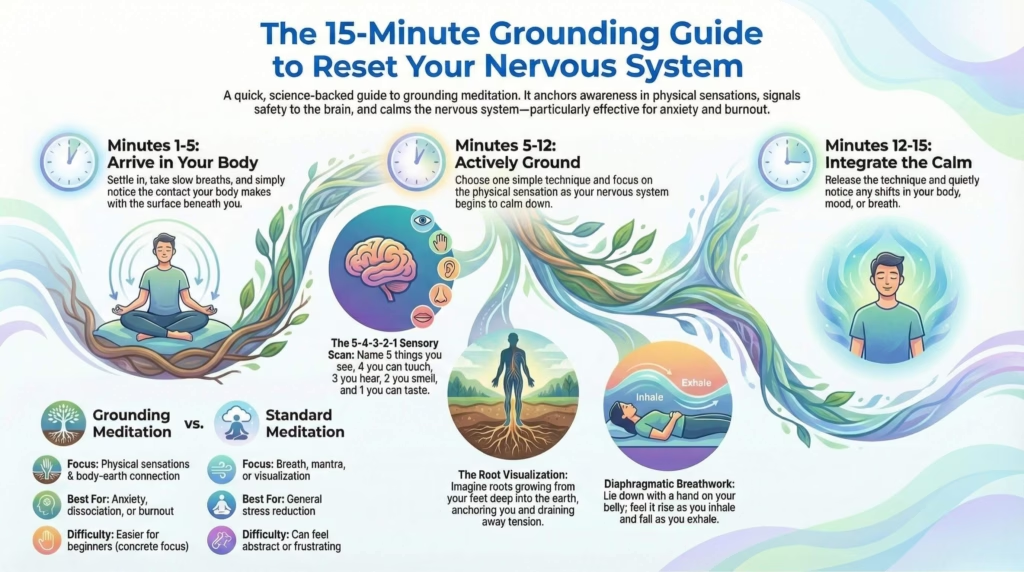
The 15-Minute Relaxation Meditation Framework
Here’s how to structure your practice:
- Minutes 1–5: Arriving in the body.
Sit or lie down. Close your eyes. Take three slow breaths. Notice where your body makes contact with the surface beneath you. Don’t try to relax. Just observe. - Minutes 5–12: Active grounding techniques.
Choose one of the seven techniques below. Stay with it. If your mind wanders, gently bring your attention back to the physical sensation. - Minutes 12–15: Integration.
Release the technique. Sit quietly. Notice any shifts in your body, breath, or mood. Open your eyes slowly.
This structure works whether you’re practicing a 15 minute mindfulness meditation in the morning or using grounding to decompress after a hard day.
7 Grounding Meditation Techniques for a Profound Reset
These seven practices are tools, not rules. Try each one at least once. Notice which one helps you feel most present.

1. The 5-4-3-2-1 Sensory Scan
This technique is immediate and requires no props.
Sit comfortably. Name five things you can see. Four things you can touch. Three things you can hear. Two things you can smell. One thing you can taste.
Move slowly through each sense. If you can’t identify something for a category, stay with what you notice. The point is not to complete the list. The point is to pull your attention out of your head and into the world around you.
This is one of the most effective mindfulness exercises for anxiety because it interrupts rumination and redirects your focus to concrete, neutral stimuli.
2. The Root Visualization
Close your eyes. Imagine roots growing from the base of your spine or the soles of your feet. Visualize them extending deep into the earth, anchoring you.
With each inhale, imagine drawing stability up from the ground. With each exhale, let tension drain down through the roots.
This practice works well for women who feel scattered or overwhelmed. The image of roots provides a mental anchor when your thoughts are racing.
3. The “Barefoot” Body Scan
This is a grounding technique that focuses specifically on your feet.
Sit or stand barefoot. Bring all your attention to the soles of your feet. Notice the temperature of the floor. The texture. The points of contact between your skin and the surface.
Slowly move your awareness up through your ankles, calves, knees, thighs. Pause at each area. Notice any sensations without trying to change them.
The body scan is a staple of mindful activities because it trains you to inhabit your body instead of thinking about your body.
4. Diaphragmatic Breathwork
Lie on your back. Place one hand on your chest and one on your belly. Breathe in slowly through your nose, letting your belly rise. Exhale slowly through your mouth, letting your belly fall.
Focus on the weight of your body sinking into the floor with each exhale. Imagine gravity pulling you down, anchoring you.
This technique calms the vagus nerve and signals safety to your nervous system. It’s especially helpful when you’re feeling disconnected or floating.
5. Weighted Awareness
Use a blanket, a stone, or even your own hands to create physical feedback.
Sit or lie down. Place a weighted blanket over your body or hold a smooth stone in your palm. Focus on the sensation of weight pressing against your skin.
Notice how the pressure feels. Let your body relax into the weight. This practice is grounding because it provides external input that reminds you where your body ends and the world begins.
6. The Micro-Walk
Walking meditation is grounding in motion.
Find a quiet space where you can walk slowly for 15 minutes. Focus on the sensation of each step. Notice how your heel touches the ground first, then the ball of your foot, then your toes.
Walk at about one-quarter of your normal pace. This is not a stroll. This is a deliberate, focused practice.
The micro-walk is a 15 minute mindfulness meditation for people who struggle to sit still. It combines movement with awareness, which can be easier to sustain than seated meditation.
7. Earth-Element Affirmations
Grounding through spoken word works for verbal processors.
Sit comfortably. Close your eyes. Speak one of these affirmations aloud, slowly, three times:
- “I am here.”
- “I am safe in this body.”
- “I am connected to the earth.”
Let the words land in your body. Notice how they feel in your throat, your chest, your belly.
This technique combines grounding with the power of language. Speaking aloud activates a different part of your brain than thinking, which can help break the loop of anxious thoughts.

How to Practice Grounding During a Life Reset
Grounding meditation is especially valuable during transitions. When you’re starting over after burnout, navigating a career change, or rebuilding your sense of self, your nervous system needs stability more than ever.
I used grounding practices extensively during my own life reinvention. When I moved countries and left a stable career, I felt untethered. Grounding meditation gave me a ritual that reminded me I was still whole, even when everything else was changing.
Here’s how to integrate grounding into your daily life during a reset:
- Morning anchor: Start your day with 5 minutes of barefoot body scan. This sets a calm baseline before you check your phone or dive into tasks.
- Midday reset: Use the 5-4-3-2-1 sensory scan when you notice your mind spinning. This works in your car, at your desk, or in a bathroom stall.
- Evening release: End your day with diaphragmatic breathwork. Lie in bed and focus on the weight of your body sinking into the mattress.
These practices become part of your life, not something you do when you’re already falling apart. Consistency is what rewires your nervous system over time.
Combining grounding meditation with daily mindfulness and gratitude practices creates a foundation that holds you during the hardest moments.
Quick Guide: Standard Meditation vs. Grounding Meditation
| Aspect | Standard Meditation | Grounding Meditation |
|---|---|---|
| Focus | Breath, mantra, or visualization | Physical sensations and body-earth connection |
| Goal | Mental clarity or relaxation | Nervous system regulation |
| Best for | General stress reduction | Anxiety, dissociation, burnout |
| Duration | Variable | 5–15 minutes for effectiveness |
| Difficulty | Can feel abstract or frustrating | Easier for beginners due to concrete focus |
Beyond the Cushion: Making it a Daily Habit
Grounding meditation works best when it becomes part of your routine, not something you do only when you’re in crisis.
Start small. Commit to one technique for 5 days in a row. Notice what changes. Do you sleep better? Feel less reactive? Have more patience with yourself?
Track your practice. Use a simple journal or a tracker on your phone. Write down which technique you used and one sentence about how you felt afterward.
Link it to an existing habit. Practice grounding meditation right after you brush your teeth in the morning or before you make your coffee. Habit stacking makes consistency easier.
The goal is not perfection. Some days you’ll practice for 15 minutes. Other days you’ll manage 3. Both count.
Over time, grounding becomes a reflex. When you notice tension rising, your body knows how to return to center. You don’t need to think about it. Your nervous system remembers.
Reflective Questions
- When was the last time you felt truly grounded in your body?
- What does it feel like when you’re disconnected or floating?
- Which of these seven techniques feels most accessible to you right now?
- How would your day change if you started with 5 minutes of grounding each morning?
Conclusion: Reclaiming Your Center
Grounding meditation teaches you that calm is not something you chase. It’s something you build, one breath at a time.
The 5-4-3-2-1 sensory scan pulls you out of rumination. The root visualization anchors you when life feels chaotic. The barefoot body scan reminds you that you exist in a physical form, not just a racing mind. Diaphragmatic breathwork signals safety to your nervous system. Weighted awareness provides tangible feedback. The micro-walk grounds you in motion. Earth-element affirmations speak stability into your body.
Each technique is a thread. Together, they weave a net that catches you when you fall.
You don’t need more time. You don’t need a retreat or a perfect setup. You need 15 minutes and the willingness to show up for yourself.
Start today. Choose one technique. Set a timer. Notice what happens.
Your nervous system is waiting for you to come home.
What’s your experience with grounding meditation? Which technique are you going to try first? Leave a comment below or share this article with someone who needs a reset.
⬇⬇⬇Pin or save to read later ⬇⬇⬇




0 Comments