
In This Article

Discover what working on yourself truly means beyond self-help clichés. Learn grounded, science-backed ways to build self-trust, emotional clarity, and lasting change without burnout or overwhelm.
You’re doing everything the self-help world tells you to do. You read the books. You listen to the podcasts. You set the intentions. You try to be more disciplined, more consistent, more positive.
And still, something feels off.
You’re trying so hard to work on yourself, but the effort feels exhausting rather than expansive. You wonder if you’re improving or just coping better with the same old patterns dressed in new language.
Here’s what I’ve learned after years of chasing my own version of “better”: most advice about how to work on yourself is built on a foundation of pressure, not growth. We’re told to optimize, fix, hustle our way into wholeness. We’re rarely told the truth—that real change begins with honest self-awareness, not another morning routine.
This article isn’t about adding more to your plate. It’s about understanding what self improvement actually looks like when it’s grounded in emotional safety, self-trust, and sustainable inner shifts. These are seven truthful ways to better yourself that don’t require you to become someone else first.
What “Working on Yourself” Really Means (And What It Doesn’t)
Let’s start by clearing the fog around what it means to work on yourself.
Most of us arrive at self improvement with the wrong map. We think working on yourself means fixing what’s broken. We believe it’s about becoming more productive, more likable, more put-together. We confuse it with constant optimization, as if we’re projects to be completed rather than people to be known.
But working on yourself is not about fixing yourself. You’re not a problem to solve.
Real self improvement is about building self-trust. It’s about learning to hear your own voice beneath the noise of external expectations. It’s about emotional honesty, not emotional performance. It’s about creating sustainable inner change, not forcing yourself into behaviors that feel like a costume.
When you genuinely work on yourself, you’re not trying to become someone the world approves of. You’re trying to become someone you recognize. Someone whose choices align with their values rather than their fear of judgment.
The difference is subtle but seismic. One path leads to burnout. The other leads to clarity.
The Misconceptions That Keep You Stuck
Most ways to self improve are rooted in three core misconceptions:
You need to be fixed. This assumes you’re fundamentally flawed rather than fundamentally capable of growth. It keeps you in a loop of shame-based self-improvement where nothing you do ever feels like enough.
You need to be more productive. This ties your worth to your output. It makes rest feel like failure and turns every moment of stillness into an opportunity for guilt.
You need to constantly optimize. This keeps you chasing an imaginary finish line. There’s always another habit to add, another weakness to strengthen, another version of yourself to become.
Real self improvement begins when you stop trying to become acceptable and start trying to become honest.

Why You Feel Stuck When You Try to Work on Yourself
You’re not stuck because you lack discipline or willpower. You’re stuck because most self improvement advice treats symptoms rather than patterns.
Here’s what keeps intelligent, capable women spinning in place:
You’re consuming advice instead of integrating it. You read the books. You save the Instagram posts. You listen to the podcasts while doing laundry. But consuming information isn’t the same as creating change. Without emotional integration—without pausing to ask “does this resonate with my actual life?”—all that advice becomes noise.
You’re confusing discipline with self-punishment. Discipline should feel like self-respect, not self-torture. If your version of working on yourself involves forcing behaviors that make you feel worse, you’re not building discipline. You’re building resentment.
You’re living by “shoulds” instead of values. When you try to improve based on what you think you should do rather than what you actually value, every effort feels hollow. You might achieve the goal and still feel empty because it was never yours to begin with.
You’re trying to change everything at once. The brain resists massive overhauls. It perceives sudden transformation as a threat to stability. Real change happens in small, consistent shifts that your nervous system can integrate without triggering resistance.
Research shows self-compassion—not self-criticism—predicts sustainable behavior change by creating inner safety for growth. When we approach self improvement from a place of inner safety rather than inner pressure, our capacity for growth expands.
7 Truthful Ways to Work on Yourself (That Actually Help)
1. Stop Trying to Be Better—Start Being Honest
The foundation of real growth is radical self-awareness, not forced positivity.
Before you can change anything, you need to see it clearly. Most of us skip this step. We jump straight to solutions without understanding the problem. We try to be more confident without acknowledging why we feel small. We try to set boundaries without examining why we’ve been saying yes when we mean no.
Honesty looks like asking yourself uncomfortable questions: Why do I feel resentful in this relationship? Why does Sunday night fill me with dread? What am I pretending is okay when it’s really not?
Journaling is one of the most effective tools for building this kind of clarity. But not the performative kind where you write affirmations you don’t believe. The raw kind where you let your thoughts spill onto the page without editing them for an imaginary audience.
When I started journaling without performance, I realized I’d been living by a set of rules I never consciously chose. I was saying yes to things that drained me because I believed being helpful made me worthy. That awareness didn’t fix everything overnight, but it gave me something to work with. You can’t change what you can’t see.
Try this: Set a timer for 10 minutes. Write one truth you’ve been avoiding. Just one. No fixing required.
2. Learn How to Be Better to Yourself Before You Improve Anything
Most advice about how to better yourself focuses outward—new skills, new habits, new achievements. But the quality of your relationship with yourself determines the quality of everything else.
How you talk to yourself matters more than what you accomplish. If your inner dialogue is harsh, critical, and unforgiving, no amount of external success will make you feel secure. You’ll just become someone who achieves things while feeling terrible about yourself.
Self-compassion is not a personality trait you either have or don’t have. It’s a skill you practice. It’s the decision to speak to yourself the way you’d speak to a friend who’s struggling.
Research from Dr. Kristin Neff at the University of Texas shows that self-compassion is strongly linked to emotional resilience, lower anxiety, and greater life satisfaction. When we treat ourselves with kindness, we create the internal safety necessary for growth.
Reflective questions:
- How would I speak to a close friend if she made the same mistake I just made?
- What would change if I believed I was worthy of rest without earning it?
- Am I trying to improve because I genuinely want to grow, or because I believe I’m not acceptable as I am?
3. Identify the Patterns You Keep Repeating (Not the Goals You Keep Setting)
Goals are important, but patterns are more powerful.
You can set the same goal fifty times and still not achieve it if you haven’t addressed the pattern beneath the behavior. You can decide to stop overworking, but if you haven’t examined why you equate rest with laziness, you’ll just find new ways to stay busy.
Patterns show up everywhere: in your relationships, your work habits, your stress responses, your Sunday night dread. They’re the cycles you keep running even when you consciously want to stop.

Identifying patterns requires slowing down long enough to notice. When do you feel most anxious? What triggers your people-pleasing? When do you say yes when you mean no? Where do you feel stuck on repeat?
For me, the pattern was clear once I stopped moving fast enough to outrun it. I was always the one who held things together. I prided myself on being reliable, helpful, indispensable. But underneath that pride was exhaustion. I was saying yes to everything because I believed being useful made me worthy of love.
Once I saw the pattern, I could interrupt it. Not perfectly, not every time. But enough to start building something different.
Try this: Write down three situations where you felt resentful this month. Look for the common thread. That’s your pattern.
4. Improve Your Boundaries, Not Your Discipline
Discipline without boundaries is just burnout with a prettier name.
We’re taught to believe willpower is the answer. If you want to work on yourself, just try harder. Be more consistent. Push through the resistance. But all that pushing leads to is exhaustion.
Boundaries create energy. When you protect your time, your space, and your emotional bandwidth, you stop leaking capacity into things that don’t serve you. You’re not managing your energy better—you’re respecting it in the first place.
A boundary is simply the realization of where you end and someone else begins. It’s saying no to the late-night work email. It’s telling your friend you can’t take on another emotional crisis right now. It’s recognizing that your rest is not negotiable.
Most of us fear boundaries because we’ve been taught they’re selfish. But boundaries are an act of self-respect, not an act of war.
Reflective questions:
- Where in my life do I feel “leaky”—like my energy is constantly draining into other people’s needs?
- What am I saying yes to that I actually want to decline?
- What would change if I protected my time as fiercely as I protect other people’s feelings?
5. Stop Chasing Motivation—Build Emotional Safety
Motivation is unreliable. It shows up when things are exciting and disappears when they’re hard. If you’re waiting to feel motivated before you start working on yourself, you’ll be waiting a long time.
What you need is not motivation. What you need is emotional safety.
Growth happens when your nervous system feels safe enough to change. When you’re constantly stressed, anxious, or operating in survival mode, your brain prioritizes keeping you alive over helping you evolve. This is why you can know what you need to do and still not do it. Your body is protecting you from what it perceives as a threat.
Building emotional safety means learning to regulate your nervous system. It means creating routines that signal to your body that you’re not in danger. It means giving yourself permission to rest without earning it first.

Simple practices that build emotional safety: spending time in nature, moving your body gently, limiting social media, creating quiet mornings, talking to people who don’t require you to perform.
When I finally understood this, I stopped forcing myself through another productivity system and started asking a different question: What do I need to feel safe enough to change?
Try this: Before you add another self improvement habit, ask yourself: Does this make me feel more safe or more pressured?
6. Replace Pressure with Daily Self-Reflection
Real change doesn’t come from massive life overhauls. It comes from small, consistent moments of self-awareness.
Daily self-reflection is not about judging yourself for what you didn’t accomplish. It’s about noticing patterns, celebrating small wins, and adjusting course when something isn’t working.
Reflection looks like asking yourself at the end of the day: What felt aligned today? What felt forced? Where did I honor my boundaries? Where did I ignore my needs? What do I want to carry into tomorrow?
This is where journaling becomes a tool rather than a task. You’re not writing to impress anyone. You’re writing to know yourself better.
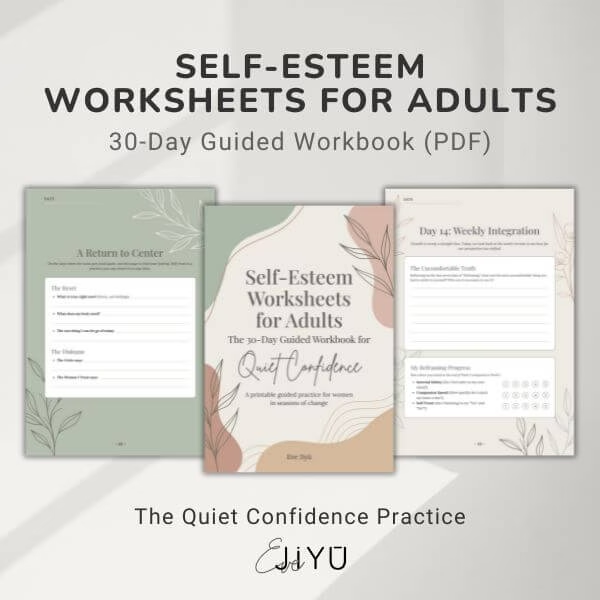
If you’re looking for structured support in building this practice, my Self-Esteem Worksheets for Adults offers a 30-day guided journal designed specifically for women navigating seasons of change. It’s not about fixing yourself. It’s about building quiet confidence through honest reflection.
Reflective questions:
- What pattern showed up today that I want to interrupt tomorrow?
- What choice today felt most aligned with who I want to be?
- What am I avoiding that I need to look at?
7. Measure Progress by Inner Stability, Not External Results
We’ve been taught to measure growth by what we produce, achieve, or accomplish. But real progress is internal.
You’re making progress when you feel calmer in situations that used to trigger you. When you trust your own decisions without needing constant validation. When you can sit with discomfort without immediately trying to fix it or escape it.
Growth looks like emotional consistency, not constant hustle. It looks like choosing rest without guilt. It looks like setting a boundary even when it’s uncomfortable. It looks like telling the truth even when it’s easier to say you’re fine.
External results will come, but they’re the byproduct of inner stability, not the goal.
Reflective question:
- What evidence do I have that I’m more emotionally stable now than I was six months ago?
What Self Improvement Looks Like When It’s Actually Working
You’ll know you’re working on yourself in a way that actually helps when the process feels grounding rather than exhausting.
You feel calmer, not more pressured. You’re not adding tasks to prove your worth. You’re removing things that don’t belong.
You trust your decisions. You’re not constantly asking for outside validation before you move forward. You listen to yourself first.
You stop chasing constant validation. Your sense of worth becomes more internal. You still care what people think, but their opinions no longer define your choices.
Growth feels grounded, not dramatic. You’re not waiting for the big breakthrough moment. You’re noticing small shifts in how you respond to stress, how you speak to yourself, how you honor your boundaries.

Common Mistakes Women Make When Trying to Work on Themselves
Even when we know better, we still make predictable mistakes.
Doing too much too fast. You decide to overhaul your entire life on Monday. By Wednesday, you’re exhausted and back to your old patterns. Real change is slow and sustainable, not sudden and dramatic.
Using self-help to avoid emotions. Sometimes we bury ourselves in self improvement advice to avoid feeling what we actually feel. We read about healing instead of doing the healing. We consume content instead of sitting with discomfort.
Comparing progress. Someone else’s transformation timeline is not your own. Growth is not linear, and comparing your chapter three to someone else’s chapter twenty will only make you feel behind.
Expecting instant transformation. You’ve been living with these patterns for years, maybe decades. They won’t disappear after one good journaling session. Be patient with the process.
How to Work on Yourself Starting Today (Without Overwhelm)
You don’t need a perfect plan. You need one honest step.
One journal question: What’s one thing I’ve been pretending is okay when it’s really not?
One boundary to notice: Where did I say yes today when I meant no?
One habit to release: What am I doing out of obligation rather than alignment?
Start there. That’s enough.
If you want more structure, my Self-Reflection Journal walks you through a honest prompts designed to help you recognize patterns, interrupt cycles, and rebuild your relationship with yourself. It’s grounded, gentle, and built for real life.
You’re Not Broken—You’re Just Ready for a Different Approach
Working on yourself is not about becoming someone new. It’s about becoming someone you recognize again.
The version of self improvement that actually works is grounded in emotional honesty, self-trust, and sustainable inner shifts. It’s not about fixing yourself or forcing discipline. It’s about building a relationship with yourself where growth feels safe rather than pressured.
You don’t need another productivity hack. You need permission to slow down, tell the truth, and trust your own voice.
That’s where real change begins.
What’s one truth about yourself you’ve been avoiding? Share it in the comments, or keep it private in your journal. Either way, naming it is the first step.
⬇⬇⬇Pin or save to read later ⬇⬇⬇





0 Comments