
InThis Article
Discover how to love yourself more through 7 quiet, intentional practices. Move beyond toxic positivity and learn to achieve self-love that feels authentic and sustainable.
You’ve read the books and tried the affirmations. You’ve stared at sticky notes on your bathroom mirror that say “You are enough” while feeling absolutely nothing.
If you’re in your 30s or 40s, the phrase “love yourself” might sound less like wisdom and more like another task you’re failing at. Another box you can’t check while already running on empty.
Here’s what I’ve learned after years of trying to figure out how to love yourself without the Instagram filters: Self-love requires building a quiet, steady alliance with yourself. The kind that doesn’t abandon you when things get messy.
This article walks through seven grounded practices that helped me move from chronic self-critique to something closer to self-advocacy. No manifestation required. No overnight transformations promised.
Just honest tools for women who are tired of performing wellness while feeling empty inside.
Why Learning How to Love Yourself Matters More Than You Think
Before we dive into the how, let’s talk about the why.
When you don’t know how to achieve self love, everything else becomes harder. Your burnout deepens because you push through exhaustion instead of honoring your limits. You stay stuck in careers or relationships that drain you because leaving feels like admitting failure. You silence your creative voice because expressing yourself feels selfish.
I spent my late 20s in this exact pattern. High-achieving on paper but completely disconnected from myself in reality. I thought self-love meant being narcissistic or soft. I didn’t realize it was the foundation for every meaningful change I wanted to make.
Research published in Psychology Press shows that self-compassion strongly links to psychological resilience and emotional well-being. When you learn to treat yourself with the same kindness you extend to others, you build internal resources that help you navigate stress, uncertainty, and change.
Self-love provides the tool that makes reinvention possible, not the reward you get after fixing yourself.
Step 1: Audit Your Inner Dialogue
Most of us walk around with a voice in our heads that sounds like a disappointed parent or a harsh boss. It narrates our day with constant criticism. You’re so lazy. Why can’t you get this right? Everyone else has it together except you.
Learning how to start loving yourself begins with noticing this voice.
I call it the “second voice” because these aren’t your actual thoughts. They’re a collection of old beliefs, internalized criticism, and fear masquerading as truth. The first step in changing your relationship with yourself involves distinguishing between the Inner Critic and the Inner Observer.
The Inner Critic judges everything you do. The Inner Observer notices without attack.

How to Catch Your Inner Critic
Set a timer for five minutes and write down every critical thought that shows up about yourself today. Don’t edit or censor, just notice.
You’ll probably see patterns emerge quickly. Words like “should,” “always,” “never,” “stupid,” or “not enough” appear frequently. These aren’t neutral observations but internalized judgments you’ve been carrying for years.
Now ask yourself: Would I say this to my best friend? Would I tell her she’s lazy, pathetic, or failing? Probably not. You’d offer her understanding, perspective, and compassion instead.
That’s the voice you’re learning to build.
Reflective Questions for Inner Dialogue Work
- What does my Inner Critic say most often to me?
- Where did I first learn to speak to myself this way?
- What would change if I treated my mistakes with curiosity instead of shame?
- Who benefits when I stay small and self-critical?
Step 2: Practice Micro-Boundaries
Here’s something no one tells you about how to learn to love yourself: Self-love requires protective action, not just reflective journaling.
You can journal until your hand cramps and meditate daily. But if you don’t protect your energy, time, and peace, self-love stays theoretical.
Micro-boundaries are small, consistent choices that honor your capacity. They’re not dramatic declarations but quiet decisions that add up over time.
Saying no to a lunch you don’t want to attend counts as a micro-boundary. Turning off your phone after 8 PM protects your peace. Letting the dishes sit overnight because you’re exhausted honors your limits. Declining to explain your choices to people who don’t need to understand them maintains your autonomy.
I used to think boundaries made me difficult, selfish, and too much. What I didn’t realize was that every time I said yes when I meant no, I was teaching myself that my needs didn’t matter.
How to Start Setting Micro-Boundaries
Choose one area where you consistently override your own needs. Work emails after hours drain many people. Social obligations that exhaust you take a toll. Conversations that leave you feeling worse deserve examination.
This week, set one micro-boundary in that area. Just one. Notice what happens when you protect your energy instead of sacrificing it.
You might feel guilty at first, which remains completely normal. Guilt is what happens when you start choosing yourself after years of choosing everyone else.
Reflective Questions About Boundaries
- Where do I consistently say yes when I mean no?
- What am I afraid will happen if I set a boundary?
- Who in my life respects my boundaries and who doesn’t?
- What would my life look like if I protected my energy as fiercely as I protect other people’s feelings?
Step 3: Ground Yourself in Your Body
Burnout doesn’t just live in your mind. It lives in your tight shoulders, your clenched jaw, your shallow breath, and your constant exhaustion.
One of the most overlooked aspects of how to self love involves learning to listen to your body again. Most of us spend years ignoring physical signals until our bodies start screaming.
I didn’t realize how disconnected I was until I moved to Bali and started paying attention. I noticed I was holding my breath during work calls and clenching my jaw while answering emails. I ate without tasting and moved without feeling.
Somatic presence means coming back into your body instead of living entirely in your head. The practice doesn’t require complicated techniques, just attention.

A Simple Grounding Practice
Right now, wherever you are, pause for a moment. Take three slow breaths and feel your feet on the ground. Notice where you’re holding tension. Soften your jaw and drop your shoulders.
Do this three times today without requiring a meditation app or yoga mat. Just three moments of coming back to yourself.
Neuroimaging research shows mindfulness practices strengthen prefrontal cortex regulation while reducing amygdala stress responses, rewiring your nervous system for safety. When you practice returning to your body, you literally rewire your nervous system to feel safer.
Reflective Questions About Body Awareness
- Where am I holding tension right now?
- What physical sensations do I ignore most often?
- When was the last time I moved my body because it felt good, not because I should?
- What does my body need more of and what does it need less of?
Step 4: Reclaim Your Creative Voice
For years, I told myself I wasn’t creative anymore. I used to paint murals with my brother and write poems. I got lost in stories. Then somewhere between university and career pressure, I stopped.
I didn’t stop because I wasn’t talented. I stopped because creativity felt indulgent and impractical. Something you do after the real work is done.
But here’s what I’ve learned about how do i love myself: Creative expression serves as an act of self-devotion. When you silence your creative voice, you silence the part of you that sees beauty, asks questions, and creates meaning.
You don’t need to be a professional artist to reclaim this part of yourself. You need permission to create without purpose, to paint badly, to write messy, to sing off-key, and to make things that will never be monetized or validated by anyone but you.
How to Start Creating Again
Choose one creative medium you used to love or always wanted to try. Painting, writing, dancing, photography, cooking, or gardening all work well.
Spend ten minutes this week creating something with zero expectation. Don’t share it and don’t judge it. Just make it.
The goal involves remembering what it feels like to express yourself without needing approval, not producing art.
If you’re looking for more guidance on reconnecting with your creative self, I wrote a detailed guide on how to find your creative voice after years of silence.
Reflective Questions About Creativity
- What creative activity did I love before the world told me it wasn’t valuable?
- What would I make if no one would ever see it?
- Where do I silence my creative impulses because they feel impractical?
- What part of me comes alive when I create?
Step 5: Forgive the Past Version of You
One of the hardest parts of learning how to love yourself more involves forgiving the version of you who made choices you now regret.
The job you stayed in too long. The relationship where you ignored red flags. The years you spent performing instead of living. The creative dreams you abandoned. The boundaries you didn’t set.
I used to carry so much guilt about my 20s. I felt like I wasted time, made wrong choices, and should have known better.
But here’s what changed everything for me: Every version of you was doing their best to survive with the tools they had. You weren’t broken or stupid or weak. You were navigating the best you could with the awareness you had at the time.
Self-forgiveness doesn’t excuse harmful behavior. It releases the story that you should have been someone different than who you were.
A Forgiveness Practice
Write a letter to your past self, the version of you from five years ago, ten years ago, or even last year.
Tell her what you understand now that you didn’t understand then. Thank her for surviving, for trying, and for getting you here even when everything felt messy.
You don’t have to send this letter anywhere. Just write it and let her know she did enough.
Reflective Questions About Self-Forgiveness
- What choice am I still punishing myself for?
- What was I trying to protect when I made that decision?
- What would forgiveness make possible that guilt is preventing?
- If my future self could see me now, what would she forgive me for?
Step 6: Curate Your Environment Intentionally
Your environment shapes your internal world more than you realize. The people you follow online, the conversations you participate in, the spaces you spend time in, and the media you consume all affect your ability to learn how to love yourself.
Learning how to achieve self love means protecting yourself from comparison culture and curated perfection.
I used to scroll social media and feel like everyone had their life figured out except me. Everyone was traveling more, creating more, achieving more, and looking better. I didn’t realize I was measuring my messy reality against their highlight reel.
Research shows social media fuels self-esteem-damaging comparison cycles; limiting exposure reduces these triggers. When you limit exposure, you limit opportunities for unfavorable comparisons.
How to Curate Your Digital Space
This week, audit your social media accounts. Unfollow anyone who makes you feel worse about yourself. Mute accounts that trigger comparison. Follow people whose content feels grounding instead of aspirational.
Set app limits and use screen time tracking. Notice how you feel after scrolling. If it leaves you anxious or inadequate, that provides valuable data.
You’re allowed to protect your peace, even from strangers on the internet.
For more on dealing with feelings of inadequacy in our comparison-driven culture, read my article on feeling not enough in a world that always wants more.
Reflective Questions About Your Environment
- Who makes me feel worse about myself when I see their content?
- What spaces drain my energy instead of filling it?
- When was the last time I made a choice based on my values instead of someone else’s expectations?
- What would change if I spent less time consuming other people’s lives and more time living my own?
Step 7: Choose Consistency Over Intensity
Self-love requires a practice you return to repeatedly, especially on the days when it feels hardest. You don’t achieve it once and then maintain it forever.
I used to think loving myself meant having it all figured out. Feeling confident every day. Never doubting myself. Never falling back into old patterns.
That’s not how learning how to start loving yourself actually works.
Some days you’ll catch your Inner Critic and choose a different thought. Other days you’ll believe every harsh word it says. Some days you’ll set boundaries. Other days you’ll override your needs because saying no feels too hard.
Both experiences are part of the process.
The goal centers on showing up for yourself more often than you abandon yourself. Choosing yourself more consistently than you sacrifice yourself. Speaking to yourself with a little more kindness than you did yesterday.
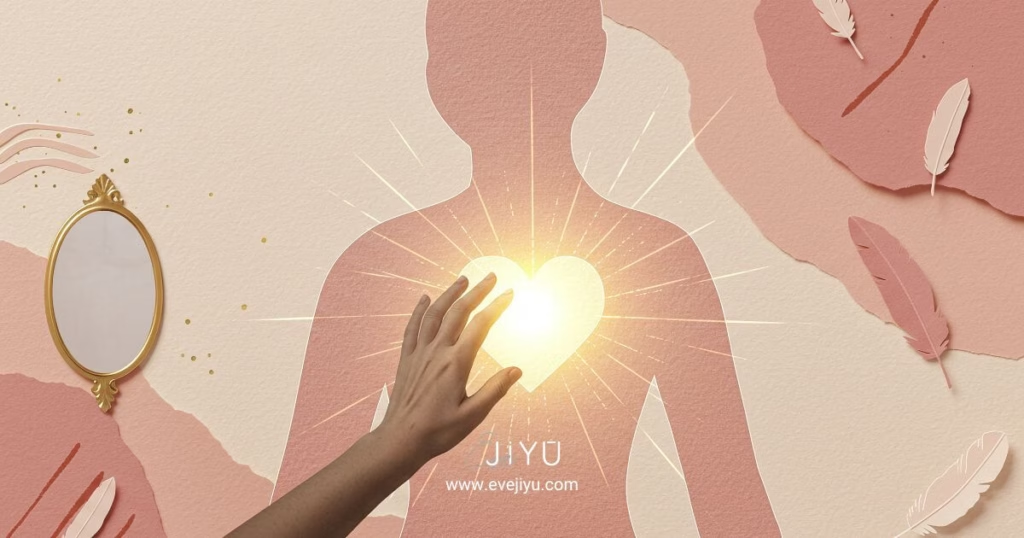
A Daily Self-Love Practice
Every night before bed, ask yourself one question: Did I choose myself today, even once?
Maybe you took five minutes to breathe deeply. Maybe you said no to something draining. Maybe you created something small. Maybe you forgave yourself for a mistake.
That’s enough and it counts.
Over time, these small choices compound into a completely different relationship with yourself.
Reflective Questions About Daily Practice
- What does “loving myself” actually look like in my daily life?
- Where am I demanding perfection instead of accepting progress?
- What one small thing can I do today to choose myself?
- What becomes possible when I stop waiting to feel ready and just start anyway?
The Quiet Power of Being on Your Own Side
Learning how to start loving yourself doesn’t require becoming someone new. It requires remembering who you were before the world told you who to be.
The process involves noticing your inner dialogue and choosing compassion over criticism. Setting micro-boundaries that protect your energy. Grounding yourself in your body. Reclaiming your creative voice. Forgiving your past self. Curating your environment. And showing up consistently, even imperfectly.
Self-love won’t fix everything or make hard decisions easy or remove life’s challenges. But it will give you the internal foundation to navigate those challenges without abandoning yourself in the process.
You don’t need to be perfect to deserve your own kindness. You don’t need to have it all figured out to treat yourself with respect. You don’t need to wait until you’ve changed to start loving the person you are right now.
You’re allowed to be on your own side, even when things get messy. Especially when things get messy.
Start small and start today. Start by noticing one critical thought and choosing a different response. That’s how transformation begins.
Not with grand declarations but with quiet, consistent choices to finally be kind to yourself.
When you learn how to love yourself more deeply, you create space for the life you actually want. You build the courage to reinvent yourself when staying the same becomes unbearable. You develop the inner strength to navigate self-discovery without needing all the answers first.
The journey of how to self love never really ends. It just gets easier to return to yourself when you’ve wandered away.
Want more grounded guidance on self-discovery and life reinvention? Subscribe to my weekly newsletter for honest reflections, practical tools, and reminders that you’re not alone in the messy middle of change.
⬇⬇⬇Pin or save to read later ⬇⬇⬇




0 Comments