
In This Article

Real emotional regulation strategies for women who tried traditional practice and needed something different. Seven neuroscience-approved methods that work.
Science-backed meditation alternatives exist for everyone who tried sitting still and wanted to scream. I know because I spent three months forcing myself through morning meditation sessions that left me more anxious than when I started.
Every morning at 5:30 AM I’d light a candle, cross my legs, close my eyes, and immediately begin mentally composing grocery lists while reviewing yesterday’s work mistakes. Twenty minutes later I’d open my eyes feeling agitated and convinced something was fundamentally wrong with my brain.
Then something changed. I started practicing meditation differently—in the evening, when my nervous system naturally winds down, for thirty minutes without any pressure to achieve specific states. Now I genuinely love my practice. But that doesn’t mean traditional seated meditation works for everyone, and pretending otherwise ignores both neuroscience research and lived experience.
My friend Emily refuses to try meditation at all. She’s not anti-wellness or dismissive of mental health practices. She’s a person who needs evidence-based approaches, and watching people describe meditation in mystical terms makes her skeptical. When I showed her the neuroscience research on science-backed meditation alternatives, everything changed. She discovered that the neural benefits she wanted were accessible through completely different methods.
This article examines what actually happens neurologically during mindfulness practices, explores why adverse effects of meditation affect roughly one quarter of practitioners, and provides seven science-backed meditation alternatives that target identical neural pathways through completely different methods.
Why Your Brain Rebels Against Traditional Practice (And Why That Makes Perfect Sense)
Research on contemplative practices demonstrates measurable neurological changes, including reduced stress markers, improved attentional control, and enhanced emotional regulation, with multiple neuroscience studies replicating these findings.
But looking closely at study designs reveals something the wellness industry rarely highlights: many influential trials ask participants to practice about 30–45 minutes a day for 8–12 weeks, often within structured programs that also include group sessions and retreat days, and they frequently recruit people already motivated to try mindfulness.
Comparing those conditions to squeezing ten minutes between coffee and work emails is a category error—you’re not failing at meditation; you’re simply not replicating intensive research protocols that require substantial time and a particular kind of commitment.
Science-backed alternatives like structured journaling and other contemplative practices can engage overlapping neural circuits for emotion regulation and self-awareness, offering different routes to similar benefits without requiring anyone to sit in uncomfortable silence.

Temporary States Versus Permanent Traits
Neuroscience distinguishes between state changes and trait changes in brain function. State changes are temporary. Trait changes reflect lasting structural or functional modifications.
Running produces a temporary state change. Your mood improves, stress hormones decrease, endorphins increase. But those effects dissipate within hours. Developing actual cardiovascular adaptations requires months of consistent training that gradually reshapes your heart and circulatory system.
Brain changes follow similar patterns. Feeling calmer after a twenty-minute guided meditation represents a state shift. Your parasympathetic nervous system temporarily dominated your sympathetic nervous system. Various brain regions showed altered activity patterns for that specific session.
More durable modifications to how your default mode network behaves at rest, how your amygdala responds to threat, and how your prefrontal cortex regulates emotion tend to emerge with repeated practice over months and years, and are especially pronounced in long‑term meditators. Studies of practitioners with thousands of hours of meditation show genuine structural and connectivity differences—such as altered gray‑matter measures and distinct network dynamics—compared with non‑meditators.
Expecting those outcomes from brief daily sessions sets up impossible standards that guarantee frustration. Exploring science-backed meditation alternatives removes that pressure entirely. Mindfulness without meditation practices can produce similar state changes with potentially greater accessibility for many nervous systems.
Research Nobody Mentions in Wellness Marketing
A large-scale PLOS ONE study found that more than ~25% of regular meditators reported unpleasant psychological effects, including anxiety, depersonalization, panic, and resurfacing trauma without resources to process it. These adverse effects of meditation included increased anxiety, depersonalization experiences, panic attacks, and resurfacing of traumatic memories without adequate psychological resources to process them.
Research also shows heightened anxiety and intrusive thoughts in those with trauma histories during meditation, as internal focus can trigger threat responses. For these nervous systems, extended periods of internal focus without external anchoring can trigger threat responses rather than relaxation.
Your anxiety spiking during meditation doesn’t indicate personal failure. You might be experiencing a documented phenomenon that affects millions of practitioners but gets conveniently ignored in app marketing and Instagram quotes about inner peace.
Some nervous systems need grounding and external anchoring before they can safely turn inward. Some brain chemistries respond better to movement-based regulation strategies. Some psychological histories require professional therapeutic support rather than solo contemplative practice.
That’s where science-backed meditation alternatives become essential tools for emotional regulation neuroscience supports multiple pathways to nervous system regulation.
What Your Nervous System Actually Needs (According to Brain Research)
Forget the goal of achieving a silent mind. That concept misrepresents both traditional contemplative teachings and contemporary neuroscience.
The actual objective involves shifting which neural networks dominate your consciousness at any given moment. Moving activation away from rumination circuits and toward present-moment sensory processing. Engaging your ventral vagal parasympathetic system to counterbalance chronic sympathetic activation.
Understanding the neuroscience of mindfulness reveals that science-backed meditation alternatives provide multiple pathways to the same neural shifts. You don’t need one specific practice.
The Default Mode Network and Rumination Loops
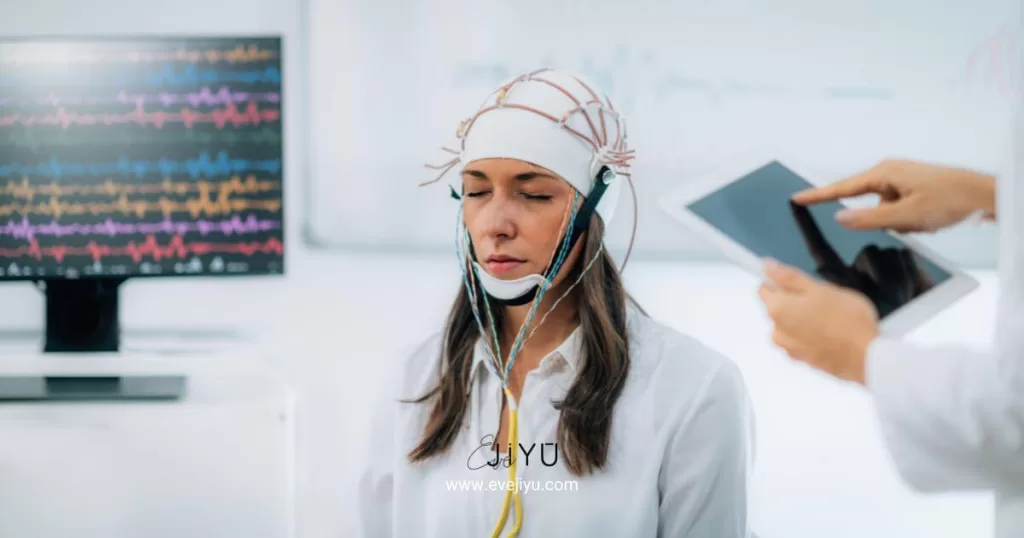
Your brain contains a network called the default mode network (DMN), which activates most strongly when you’re not focused on external tasks. The DMN governs self-referential thinking, autobiographical memory, imagining the future, and mental simulation of social scenarios.
This network also houses rumination. Those repetitive thought loops about past conversations, potential future disasters, personal inadequacies, and unsolvable problems all represent DMN activity running unchecked.
Brain imaging studies show that experienced meditators demonstrate reduced DMN activity during practice. They’re not achieving some transcendent state of no-thought. They’re temporarily shifting dominant activity from internal narrative generation to immediate sensory experience.
You don’t need formal seated practice to accomplish this shift. Any activity that genuinely captures attention and anchors awareness in present-moment sensory input will reduce DMN dominance. Research published in Frontiers in Human Neuroscience demonstrates that mindfulness without meditation practices—activities like focused walking, intentional movement, and sensory awareness exercises—produce comparable DMN deactivation.
Interoception and Emotional Regulation
Neuroscience of mindfulness research increasingly focuses on interoception, which describes your ability to sense internal bodily states. Can you detect tension building in your shoulders before it becomes painful? Notice the specific physical sensations that accompany anxiety versus anger? Distinguish between physical hunger and emotional hunger?
Studies link poor interoceptive awareness to depression, anxiety disorders, and emotion dysregulation. People who can’t accurately sense their internal states struggle to identify what they’re feeling emotionally, which prevents appropriate responses.
Traditional meditation builds interoception by directing sustained attention to breath sensations, body positioning, and subtle physical responses. But any practice requiring systematic attention to bodily sensations trains the same neural pathways.
Body scanning, progressive muscle relaxation, mindful movement, and somatic awareness exercises all strengthen connections between your insula (the brain region processing interoceptive signals) and your prefrontal cortex (the region that interprets and responds to those signals).
Strengthening this connection changes how you experience and regulate emotions. When you can name the specific physical sensations accompanying anxiety—tight chest, shallow breathing, muscle tension—your brain shifts from reactive threat response to assessment mode. That shift alone creates space for conscious choice rather than automatic reaction.
7 Proven Science-Backed Meditation Alternatives That Really Work
These science-backed meditation alternatives target identical neural mechanisms through different methods. Each one reduces default mode network activity, enhances present-moment awareness, and supports nervous system regulation without requiring seated stillness.
1. Open Monitoring Awareness Practice
Instead of concentrating intensely on a single focus object like breath, open monitoring involves noticing whatever arises in your awareness without trying to control, change, or hold onto anything.
Sit or lie comfortably and set a timer for five minutes. Notice sounds as they appear and disappear. Notice physical sensations as they arise and fade. Notice thoughts emerging and dissolving. Don’t judge any of it as good or bad. Just observe the flow of sensory experience.
Research in Scientific Reports shows that open monitoring produces similar brain state changes as focused attention meditation but often feels more accessible for people who struggle with sustained concentration. You’re not forcing attention onto one object. You’re allowing attention to rest naturally on the constantly changing field of sensory experience.
When a thought appears, note “thinking.” When a sound occurs, note “hearing.” That simple labeling helps maintain the observer perspective without getting absorbed in mental content.
Three to five minutes daily builds the neural capacity for this practice. Duration matters far less than regular engagement. This represents genuine grounded self-care that doesn’t require special equipment or extensive time commitments.

2. Body Scan Practice (Similar to Yoga Nidra)
Body scanning shares significant overlap with yoga nidra, though traditional yoga nidra includes additional elements like intention setting and visualization. The core mechanism—systematic attention to body regions—remains identical.
Lie on your back in a comfortable position. Starting with your left foot, slowly move awareness through each body part: foot, ankle, calf, knee, thigh. Notice temperature, pressure, tension, tingling, or absence of sensation. Don’t try changing anything. Simply observe what you find.
A complete body scan takes ten to twenty minutes depending on how slowly you move attention through each region. YouTube offers excellent guided versions. Search for “body scan meditation” or “yoga nidra for stress relief” to find guided audio that follows evidence-based protocols.
Research in Psychiatry Research shows regular body scanning improves interoceptive awareness and breaks habitual thought patterns. You’re literally training your brain to shift from mental narrative to physical sensation.
People dealing with chronic pain or trauma sometimes find body scanning challenging because directing attention to the body surfaces uncomfortable sensations. If this applies to you, start with very brief scans (just hands and feet) and gradually expand as your nervous system builds tolerance.
Among science-backed meditation alternatives, body scanning offers unique quick stress relief activities that work in three to five minutes.
3. Micro-Practice of Loving Kindness
Traditional loving kindness meditation (metta) involves extended sessions directing goodwill toward yourself, loved ones, neutral people, difficult people, and eventually all beings. Research supports this practice for enhancing positive emotions and social connection.
The abbreviated version works as one of the most accessible quick stress relief activities when you need immediate nervous system regulation.
Think of someone you care about naturally and easily. Silently repeat: “May you be safe, may you be peaceful, may you be healthy.” Spend thirty seconds with that person in mind. Then direct identical phrases toward yourself: “May I be safe, may I be peaceful, may I be healthy.”
Total time investment: sixty to ninety seconds.
Studies in Social Cognitive and Affective Neuroscience demonstrate that even brief loving kindness practice activates brain regions associated with emotional processing and social bonding. You’re giving your limbic system a quick reset, shifting from threat-oriented reactivity toward connection-oriented calm.
This practice works particularly well before difficult conversations or in moments of self-criticism. You’re not forcing artificial positivity. You’re engaging neural circuits that support self-compassion and social connection through one of the most validated science-backed meditation alternatives available.

4. Mindful Walking (Deliberate Kinesthetic Awareness)
Walking meditation provides one of the most accessible science-backed meditation alternatives for people who struggle with seated stillness.
Walk at your natural pace in any location—around your neighborhood, through a park, even back and forth in your living room. Direct full attention to the physical sensations of walking. Notice your feet making contact with the ground. Feel the weight shifting from heel to toe. Observe the swing of your arms, the movement of your legs, the balance adjustments your body makes continuously.
No podcast, no phone, no planning. Just walking and noticing the direct physical experience of walking.
Ten to fifteen minutes produces measurable effects on rumination and mood according to research. The repetitive physical movement provides a natural anchor for attention. Your body does something rhythmic and familiar while your mind settles into sensory awareness rather than narrative thinking.
You can apply this same principle to any repetitive physical activity. Washing dishes becomes a practice when you attend fully to water temperature, soap texture, the sensation of your hands moving. The key factor remains quality of attention rather than the specific activity chosen.

5. Cognitive Reappraisal Pause (Active Thought Examination)
When anxiety spikes or difficult emotions surface, pause for sixty seconds and ask three specific questions:
What interpretation am I making about this situation right now? What evidence actually supports that interpretation? What alternative explanations might also be valid?
This technique comes directly from cognitive behavioral therapy research but functions as mindfulness practice because you’re bringing conscious awareness to automatic thought patterns.
Studies show cognitive reappraisal—consciously reinterpreting situations—reduces negative affect via prefrontal control over limbic reactivity. You’re examining interpretations, not denying problems. Anxiety often stems from brain readings, not circumstances alone—questioning them fosters flexibility.
Anxiety frequently stems from your brain’s interpretation of circumstances rather than the circumstances themselves. Creating space to question those interpretations interrupts automatic reactivity and engages more flexible thinking.
The American Psychological Association provides detailed information on cognitive reappraisal techniques and their neurological basis.

6. Nature Exposure (Environmental Nervous System Regulation)
Spending fifteen to twenty minutes in nature produces measurable physiological changes supporting emotional regulation.
Research shows that nature exposure reduces cortisol levels, lowers blood pressure, decreases heart rate, and improves self-reported mood. Brain imaging shows reduced activity in the subgenual prefrontal cortex, a region associated with rumination and depression.
Your nervous system evolved in natural environments. The fractal patterns in tree branches, the particular light quality filtering through leaves, the sounds of wind and bird calls—all signal safety to your autonomic nervous system at a level that bypasses conscious thought.
This represents genuine grounded self-care that requires minimal time investment and zero special equipment. Walk to the nearest green space. Sit on the ground. Notice colors, textures, sounds, the feeling of air on your skin.
Even viewing nature photos/videos produces small positive effects per Health & Place research—real exposure works better. Real outdoor exposure works better, but any nature contact beats none.
Among all science-backed meditation alternatives, nature exposure requires the least technique knowledge while providing measurable benefits.

7. Expressive Writing (Externalizing Internal Experience)
Write continuously for five to ten minutes about whatever you’re feeling, thinking, or experiencing. Don’t edit, organize, or worry about coherence. Just transfer internal experience onto paper or screen.
You might write the same sentence repeatedly: “I feel overwhelmed and I don’t know where to start.” That counts. You might produce stream-of-consciousness fragments that barely qualify as sentences. Also counts.
Research spanning decades shows that expressive writing about stressful experiences improves both psychological and physical health outcomes. A meta-analysis found writing about emotions reduces anxiety, depression, and immune benefits.
The mechanism involves what neuroscientists call “affect labeling”—putting feelings into words. Brain imaging studies show that verbally labeling emotions reduces amygdala activity (the threat-response center) while increasing prefrontal cortex activity (the reasoning and regulation center).
Writing also frees cognitive resources. When you hold multiple worries simultaneously in working memory, those thoughts consume mental energy. Externalizing them onto paper signals your brain that it no longer needs to keep actively maintaining those thoughts in awareness.
This practice interrupts rumination particularly effectively. If you keep mentally cycling through the same thoughts, writing them down breaks the loop and allows your brain to move forward.

Finding Your Actual Path to Nervous System Regulation
Traditional meditation works extraordinarily well for certain people. I practice thirty minutes every evening now and experience profound benefits. Many people find seated practice deeply supportive and wouldn’t trade it for anything.
But insisting that everyone should meditate in one specific way ignores both neuroscience research and lived experience. The neural changes that support emotional regulation and stress reduction can be accessed through multiple pathways.
These science-backed meditation alternatives provide options for everyone who needs different approaches. What matters is finding techniques you’ll actually use consistently rather than forcing yourself through practices that increase your stress instead of reducing it.
My friend Emily now uses mindful walking and cognitive reappraisal daily. She gets the emotional regulation benefits she wanted without ever sitting on a meditation cushion. Her nervous system needed movement and active cognitive engagement rather than stillness and internal focus.
If seated stillness triggers anxiety, try mindful walking. If silence feels uncomfortable, try open monitoring with environmental sounds as anchor points. If you need immediate relief during difficult moments, try the cognitive reappraisal pause or sixty-second loving kindness as quick stress relief activities.
Begin with one practice from this list. Experiment for seven days. Notice what happens in your body and mind. Adjust based on your direct experience rather than what you think you should be doing. These science-backed meditation alternatives work because they target the same neural pathways through different methods.
Building a relationship with your own nervous system requires honest observation rather than rigid adherence to someone else’s prescription. Your brain knows what it needs. Learning to listen and respond to those needs matters far more than following popular wellness trends.
The National Center for Complementary and Integrative Health offers evidence-based information about various mindfulness approaches and their research backing.
These science-backed meditation alternatives represent genuine paths to the emotional regulation neuroscience confirms as possible through multiple methods. The neuroscience of mindfulness reveals that your brain cares about the neural shift, not the specific technique you use to achieve it.
What practices help you when traditional meditation doesn’t work? Share your experience in the comments below, or explore the Stuck in Life Quiz to identify which patterns might be keeping you stuck in overwhelm.
Remember that science-backed meditation alternatives aren’t lesser substitutes for traditional practice. They’re equally valid approaches to nervous system regulation, each supported by peer-reviewed research. Your job is simply finding which method matches your unique nervous system and lifestyle.

0 Comments