
In This Article

Discover what a junk journal really is and learn 10 practical ways to start creating your own messy, mindful creative sanctuary today.
Last month, I found myself sitting on my living room floor surrounded by scraps. Old train tickets from Peru. A torn piece of fabric from a market in Bali. Receipts with coffee stains. My first instinct was to toss it all into recycling.
Instead, I grabbed some glue.
That pile of “trash” became the start of something I didn’t know I needed. A space to process feelings without perfection. A place where memories could live outside my phone. A practice that asked nothing of me except honesty.
Today we’re diving into the beautiful, messy world of junk journaling, and answering the central question: what is a junk journal?
If you’ve been craving a creative outlet that doesn’t require talent, expensive supplies, or a perfect aesthetic, this guide is for you. You’ll learn what junk journaling actually means, how it differs from traditional journaling or scrapbooking, and 10 genius ways to start your own practice today.
No rules, no pressure. Just you, some paper scraps, and permission to create something imperfect.
What is a Junk Journal, Really? (Beyond the Scrapbook)
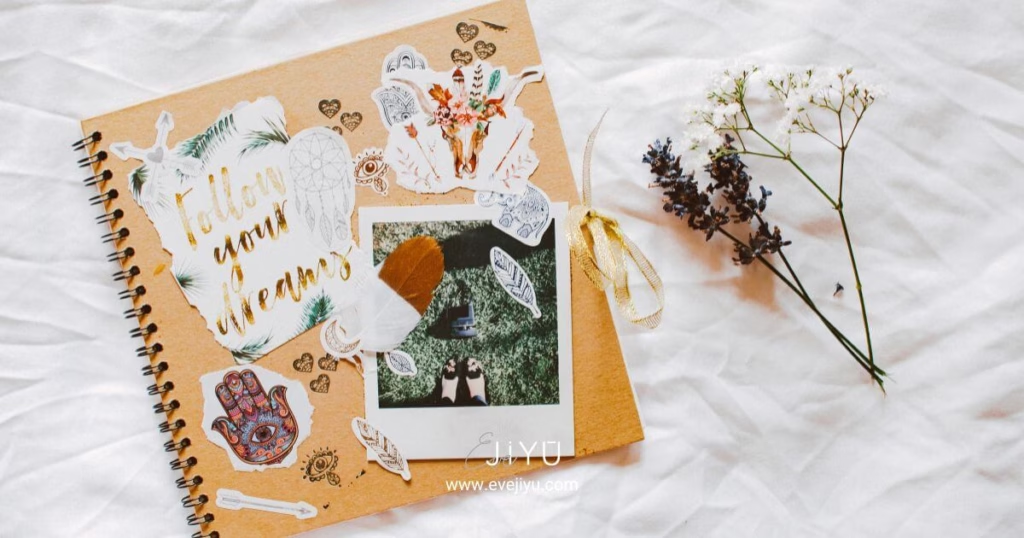
A junk journal is a handmade book created from salvaged, recycled, or found paper and materials. Think old envelopes, ticket stubs, torn book pages, fabric scraps, packaging, receipts, brochures, maps, and anything else you’d normally throw away.
The word “junk” doesn’t mean poor quality. It means reclaimed. Repurposed. Given new life.
Unlike traditional scrapbooking, which often focuses on documenting life events in neat chronological order, junk journaling embraces chaos. There’s no timeline to follow. No need for matching colors or perfect placement.
And unlike art journaling, which centers on painting, drawing, and visual techniques, junk journaling blends collage, writing, found objects, and mixed media into one layered, textured experience.
The core philosophy: Embrace imperfection. Let go of perfection. Create sustainably with what you already have.
Junk journaling is process over product. The act of assembling scraps, gluing textures, and writing fragments becomes a form of emotional processing. It’s memory keeping without the pressure of preservation. Stress relief disguised as play.
You don’t need artistic skill. You need willingness to sit with your hands and let something emerge.
Why Junk Journals Matter for Women Navigating Change
For women in their late twenties to forties who feel disconnected from their creative voice, junk journaling offers something rare: permission to be messy.
You’ve spent years producing polished work, managing expectations, keeping it together. Junk journaling asks you to stop performing and start playing.
Research in Art Therapy shows creative activities like collage-making reduce cortisol levels. Journaling aids emotional regulation and stress relief. Hands-on creativity promotes a rest-and-create state. When you work with your hands, your nervous system shifts from fight-or-flight into rest-and-create mode.
This isn’t about making something Instagram-worthy. It’s about reconnecting with the part of yourself that existed before you learned to hide your rough edges.
Junk Journals for Beginners: 3 Must-Know Starting Steps
If you’re new to junk journaling, the biggest barrier isn’t lack of supplies. It’s the voice in your head that says, “But I’m not creative.”
That voice is wrong.
Here are the three essential steps for junk journals for beginners that will get you started without overwhelm.
Step 1: Lower the Bar (The Mindset Shift)
The most important step for junk journals for beginners isn’t about materials or technique. It’s about mindset.
Your first junk journal doesn’t have to be beautiful. It doesn’t have to be finished. It just has to exist.
Lower your expectations so far down that starting feels easy. Use the cheapest materials you can find. Give yourself permission to make something ugly. The goal is momentum, not mastery.
I started my first junk journal using pages torn from an old paperback I found at a thrift store. The cover was held together with duct tape. Some pages had coffee rings. It was perfect.
Reflective pause: What would you create if you knew no one would ever see it?
Step 2: Gather Your “Junk” (The Scavenger Hunt)
You don’t need to buy a single thing to start junk journaling. Look around your house and gather materials you’d normally throw away.
Here’s what to collect:
- Old envelopes and junk mail
- Receipts and grocery lists
- Tea bag wrappers and packaging labels
- Pages from damaged books or old calendars
- Ticket stubs, boarding passes, and event programs
- Maps, brochures, and travel guides
- Fabric scraps, ribbon, or torn clothing
- Dried flowers, leaves, or pressed petals
- Newspaper clippings and magazine pages
- Stamps, stickers, and washi tape (if you have them, but not required)
Set up a small box or drawer as your collection space. When something catches your eye, toss it in. Within a week, you’ll have more than enough to start.
Step 3: Choose Your Base (No Need to Buy)
The best journal for junk journaling is often one you already own or can make for free.
You don’t need a pristine blank journal. In fact, starting with something imperfect removes pressure.
Easy base options:
- An old paperback novel (remove some pages, keep the cover)
- A small three-ring binder with mixed paper
- A cereal box cut down and folded into signatures
- A stack of assorted paper held together with binder clips or rubber bands
- An abandoned notebook with half-used pages
- A manila folder folded accordion-style
The beauty of junk journaling is that the container doesn’t matter. What matters is what you put inside it.
Reflective pause: What’s one thing sitting in your recycling bin right now that could become part of your journal?
How to Make a Junk Journal Base (Simple Construction Tutorial)
If you want to create your own junk journal from scratch, here are two beginner-friendly methods. Neither requires special skills or expensive tools.
Method 1: The Simple Signature (The Absolute Easiest)
A signature is a stack of folded pages sewn or stapled together. This is the simplest way to construct a junk journal base.
What you need:
- 10 to 15 pieces of different-sized paper (mixed textures, colors, weights)
- Scissors
- Stapler or needle and thread
- One piece of sturdy cardstock or an old manila folder for the cover
How to make it:
- Fold each piece of paper in half. Don’t worry about making them perfect or the same size. Uneven edges add character.
- Stack all the folded papers together, nested inside one another, with the folds aligned.
- Use a stapler to secure the spine with two or three staples. Or use a needle and thread to sew a simple running stitch down the fold.
- Fold your cover piece in half and wrap it around the stacked pages.
- Secure the cover with glue, more staples, or decorative string.
That’s it. You now have a handmade journal base ready to fill.
Method 2: Altering an Existing Book
If you have an old hardcover book you’re willing to sacrifice, you can transform it into a junk journal with a few modifications.
What you need:
- An old hardcover book (thrift stores are perfect for this)
- Craft knife or scissors
- Glue stick or PVA glue
- Wax paper (to prevent pages from sticking)
How to make it:
- Remove about half the pages from the book. This creates space for the bulk you’ll add later with collage and pockets.
- Glue the remaining pages together in small clusters of three to five pages. This adds stability and prevents the book from falling apart.
- Place wax paper between glued sections while they dry to avoid accidental sticking.
- Once dry, you have a sturdy base with thick “pages” ready for layering, gluing, and stitching.
You can leave the book cover as is or alter it with paint, fabric, or more paper scraps.
The Essentials: Basic Tools You Already Have
You don’t need fancy supplies to start. Here’s what actually helps:
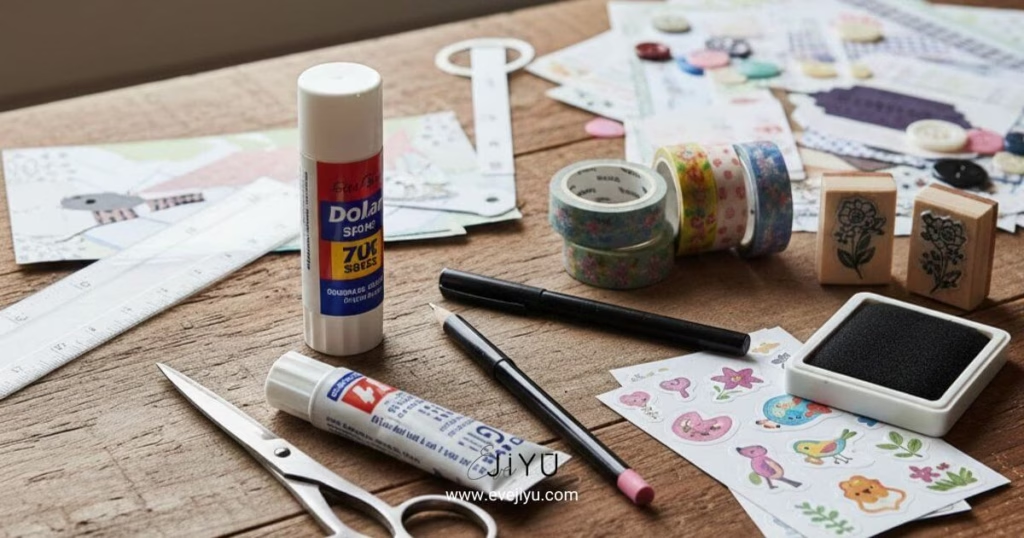
- Glue stick or white glue (dollar store works fine)
- Scissors
- Ruler (optional, for those who like clean edges)
- Pen or pencil for writing
- Optional: washi tape, stamps, ink pads, stickers (but truly optional)
That’s all. The rest is just paper and curiosity.
10 Genius Junk Journal Ideas to Spark Your Creativity
This section is your idea well. Use it when you feel stuck or uninspired. Pick one idea and start today.
1. Memory Book: One Trip, Month, or Season
Dedicate your journal to a specific time period. Collect everything from that experience: ticket stubs, napkins with restaurant names, pressed flowers from a hike, photos printed on regular paper, handwritten notes.
Glue them in without overthinking placement. Add captions when you feel like it. Leave some pages blank for memories you haven’t made yet.
2. Gratitude and Intention Journal
Each day, write one thing you’re grateful for on a small scrap of paper. Tuck it into a pocket page or glue it onto a collage background.
At the end of the month, flip through and see patterns emerge. Notice what brought you joy. What grounded you. What surprised you.
3. Pocket Pages for Hidden Treasures
Create pockets throughout your journal using old envelopes, folded paper, or library card pockets glued on three sides.
Use these pockets to store journal cards, notes to yourself, quotes, or small mementos. Pulling items out and tucking them back in becomes part of the ritual.
4. Tuck Spots and Flips
Glue a piece of paper on three sides only, leaving one edge open. This creates a “flip” where you can tuck another piece of paper, a photo, or a hidden message.
Layers create depth. They also give you permission to change your mind, add more later, or keep some thoughts private.
5. Collage Chaos: No Plan Required
Tear pages from old magazines, newspapers, and catalogs. Layer them randomly on a page with no plan. Overlap colors, textures, and images until something feels right.
Add one line of text on top. Or don’t. Let it exist as pure texture and color.
This technique quiets the perfectionist voice because there’s no wrong way to do it.
6. Vintage and Steampunk Aesthetic
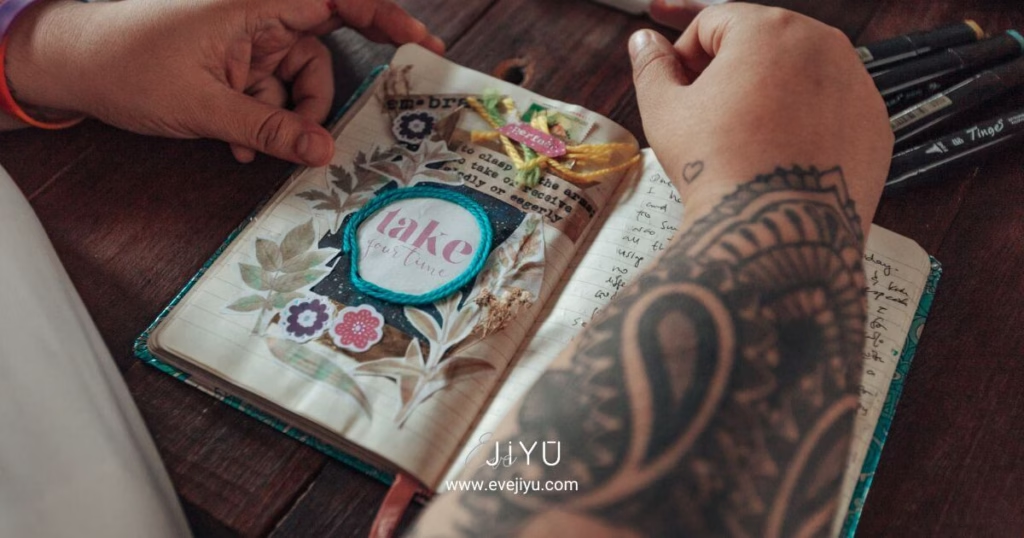
Use old maps, clock faces, gears, keys, and distressed paper to create a vintage or steampunk-inspired journal.
Tea-stain pages for an aged look. Add metal embellishments if you have them. Focus on earth tones, sepia, and mechanical imagery.
This style feels grounded and nostalgic, perfect for processing the past while honoring where you’ve been.
7. Nature Journal
Press flowers, leaves, and petals between pages. Sketch birds you see on walks. Glue in bark rubbings or feathers you find.
Add nature observations: moon phases, weather patterns, seasonal shifts. Let your journal become a record of the natural world around you.
Research in Frontiers in Psychology shows 10-50 minutes in nature reduces stress in college students. Integrating nature into your journal harnesses this benefit, as time in nature is also proven to enhance creativity via attention restoration.
8. List Keeper
Dedicate a signature or section to lists. Books to read, goals that matter, to-do items, grocery lists. Things you want to remember.
Lists feel productive without pressure. They’re also satisfying to cross off and revisit months later.
9. My Day in Ephemera
At the end of one day, collect everything you touched: the coffee sleeve, receipt, sticky note, subway ticket, business card, wrapper from lunch. Glue it all into one spread. Add a short caption: “Tuesday, April 29. Ordinary and enough.”
This practice teaches you to see beauty in the mundane. Your regular life becomes worth documenting.
10. Altered Photo Play
Print a small photo (regular printer paper is fine). Glue it into your journal, then alter it. Paint over parts of it. Add scribbles, doodles, or collage elements on top.
This technique breaks the rule that photos must be preserved perfectly. It gives you permission to play with memory instead of protecting it.
Reflective pause: Which of these ideas makes you feel excited? Which one scares you a little? Start with that one.
Finding the Best Journal for Junk Journaling (It’s Not What You Think)
When people ask about the best journal for junk journaling, they’re usually expecting a product recommendation. A specific brand. A link to buy.
But the truth is simpler and cheaper than that.
The best journal for junk journaling is the one you already have. Or the one you make yourself. Or the one you find at a thrift store for less than two dollars.
The Un-Journal Philosophy
Junk journaling rejects consumerism. It’s anti-purchase. Anti-perfect. Anti-new.
If you go out and buy an expensive blank journal specifically for this purpose, you’ve already missed the point. You’ll feel pressure to make it beautiful. To not waste the “good” pages.
Start with something free, ugly, or damaged. This removes pressure and invites experimentation.
Key Traits to Look For
If you do want guidance on what makes a good base, here’s what actually matters:
- Sturdy cover: It needs to handle bulk and weight. Hardcover books, thick cardstock, or binder covers work well.
- Loose or removable pages: The ability to add and remove sections gives you flexibility. Binders, spiral notebooks with torn-out pages, or handmade signatures all work.
- Unique or varied paper: Don’t stick to plain white. Look for ledger paper, music sheets, graph paper, old book pages, or kraft paper. Texture matters more than perfection.
- Affordable or free supplies: The best supplies are ones that cost nothing. Thrift store finds, dollar store glue, free printables, and paper you already own.
When I moved to Bali three years ago, I left most of my belongings behind. I started a new junk journal using pages from a damaged Indonesian cookbook, envelopes from my visa paperwork, and fabric scraps from a sarong I tore.
That journal holds some of my most honest reflections. Not because it was beautiful, but because it cost me nothing and asked for nothing.
Your Invitation to Messy, Mindful Creation
Junk journaling isn’t about becoming an artist. It’s about remembering that you already are one. You don’t need permission to create. You don’t need the right supplies or the perfect aesthetic or a large following. You just need one piece of “junk” and a glue stick.
Here’s what we covered:
- What a junk journal really is: a handmade book created from salvaged materials that embraces imperfection and process over product.
- The three essential steps for beginners: lower your expectations, gather materials from your recycling bin, and choose an imperfect base.
- How to construct a simple journal: fold and staple a signature, or alter an existing book to create a sturdy foundation.
- Ten genius ideas to spark creativity: from memory books to collage chaos, nature journals to ephemera collections.
- Why the best journal is the one you already have: junk journaling rejects consumerism and invites you to create with what you have.
Now it’s your turn.
Stop planning. Stop researching. Stop waiting for the right moment. Grab one scrap of paper, glue it to another piece of paper, write one sentence about how you feel today. That’s it. You’ve started.
Your junk journal doesn’t need to be impressive. It needs to be yours. A reflection of your unique journey, your messy feelings, your imperfect days.
No rules. No judgment. Just you and the quiet permission to create something that didn’t exist before.
Final reflective pause: What’s stopping you from starting right now?
If you found this guide helpful, I’d love to hear what you create. Share your first junk journal page or tell me which idea you’re trying first. And if you want more grounded guidance on reconnecting with your creative voice, read my article on how to find your creative voice after years of silence.
For more practices that help you slow down and listen to yourself, explore my guide on self-reflection journaling or learn how to navigate life transitions with clarity and courage.
⬇⬇⬇Pin or save to read later ⬇⬇⬇










0 Comments