
In This Article

Key Takeaways
- The Goal of a Cleanse: A social media cleanse isn’t about deleting your digital life; it’s a Life Reset to break the dopamine loop and reclaim your “Internal Voice.”
- The 24-Hour Rule: Start with a total 24-hour disconnect to reset your nervous system before moving into a longer social media detox.
- Curate for Peace: An Instagram detox should focus on removing “aspirational” accounts that trigger comparison and replacing them with those that offer genuine Self-Discovery.
- Actionable Boundaries: Learn how to stay off social media by using “Greyscale mode” and physical phone boundaries to reduce the urge to scroll.
- Identify Stuck Patterns: Constant scrolling is often a symptom of being stuck in a loop; use your newfound time for Self-Reflection and journaling.
Feeling burnt out by endless scrolling? Discover 7 powerful steps for a social media cleanse that help you reclaim mental clarity and reconnect with yourself.
You know that feeling when you pick up your phone to check one thing and suddenly twenty minutes have disappeared? You’re lying in bed, telling yourself you’ll scroll for just five more minutes, and then the alarm goes off. Or you’re sitting with your coffee, the morning light coming through the window, and instead of noticing it, you’re watching someone’s highlight reel from a life that has nothing to do with yours.
I used to do this every single day. The reach for my phone was automatic, almost invisible. I didn’t even realize I was doing it until I started tracking my screen time and saw that I was spending nearly three hours a day on social media. Three hours. That’s twenty-one hours a week. Almost a full day of my life, every week, gone.
A social media cleanse isn’t about demonizing technology or pretending we can live in a world without it. What we’re talking about here is creating space between you and the noise so you can hear yourself think again. This article walks you through seven grounded steps to reclaim your attention, protect your mental energy, and rediscover what it feels like to be present in your own life.
Why Your Brain Needs a Social Media Cleanse Right Now
Let’s start with what a social media cleanse actually means. In simple terms, a social media cleanse is a deliberate period of reduced or eliminated social media use designed to reset your relationship with digital platforms and restore your mental clarity. This can range from a 24-hour break to a month-long hiatus, depending on what you need.
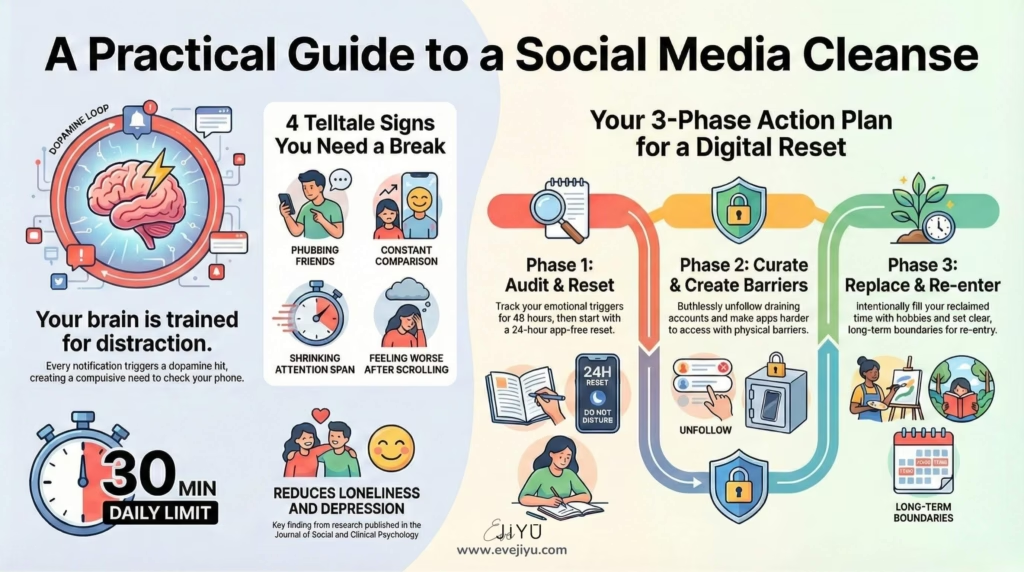
The reason this matters goes deeper than just “screen time is bad.” Our brains are wired to seek novelty and social validation. Every notification, every like, every comment triggers a small dopamine hit. Over time, this creates a feedback loop where we compulsively check our phones not because we want to, but because our brains have been trained to expect that reward.
Research published in the Journal of Social and Clinical Psychology found that limiting social media use to 30 minutes per day led to significant reductions in loneliness and depression over a three-week period. The connection between social media and mental health is well-documented, but what we often miss is how gradually it erodes our sense of self.
When you’re constantly consuming other people’s curated realities, you stop asking what you actually want. You start measuring your worth against someone else’s vacation photos, career milestones, or perfect kitchen renovation. The comparison becomes background noise in your mind, so constant you forget it’s even there.
Signs You Need a Social Media Detox
Not sure if you need a break? Here are some telltale signs your relationship with social media has crossed from casual use into something that’s draining you:
- Phubbing without realizing it. You’re physically present with friends or family, but your attention keeps drifting to your phone. You check it during conversations, during meals, during moments that deserve your full presence.
- Comparison has become your default setting. You scroll through Instagram and feel that familiar tightness in your chest. Someone else is further ahead, doing more, looking better, living the life you thought you’d have by now.
- Your attention span has shrunk. You used to love reading books or working on creative projects for hours. Now, you can barely make it through a single article without picking up your phone.
- You feel worse after using it. You open the app feeling neutral and close it feeling anxious, inadequate, or vaguely depressed. The platform promised connection but delivered comparison instead.
- Morning and night bookends. Your phone is the first thing you reach for when you wake up and the last thing you look at before sleep. Your day is framed by other people’s content instead of your own thoughts.
If any of these sound familiar, you’re not broken or weak-willed. You’re responding exactly as these platforms were designed to make you respond. The difference now is that you’re noticing it, and noticing is always the first step toward change.
Step 1: Audit Your Emotional Triggers
Before you delete anything or set any boundaries, you need to understand what you’re actually dealing with. A social media cleanse that lasts is built on awareness, not willpower.
Spend the next two days paying attention to how you feel before, during, and after using each platform. Don’t judge it. Don’t try to change it yet. Just notice.

The Emotional Audit Exercise
Grab a notebook or open a notes app on your phone. Every time you use social media over the next 48 hours, write down three things:
- What prompted you to open the app? (Boredom? Anxiety? Genuine curiosity about someone’s update?)
- How did you feel while scrolling? (Entertained? Envious? Numb? Inspired?)
- How did you feel after closing the app? (Energized? Drained? Restless? Guilty?)
When I did this exercise couple years ago, I discovered that I opened Instagram most often when I was avoiding something uncomfortable. A difficult work email. A decision I didn’t want to make. A feeling I didn’t want to sit with. The app wasn’t giving me connection or inspiration. It was giving me a convenient place to hide from myself.
You might find that certain platforms drain you more than others. Maybe LinkedIn makes you feel behind in your career. Maybe Facebook fills you with political anxiety. Maybe TikTok is genuinely fun for you, while Instagram leaves you feeling like your life isn’t interesting enough.
The goal here isn’t to vilify social media as a whole. The goal is to see clearly which parts of it serve you and which parts are slowly eroding your peace.
Reflection Questions
- What specific accounts or types of content consistently make you feel inadequate or anxious?
- Are you using social media to connect with people you care about, or to distract yourself from your own life?
- If you had an extra hour in your day, what would you want to do with it that you’re not doing now?
Step 2: Start With a 24-Hour Reset
The idea of a month-long social media detox can feel overwhelming, especially if you use these platforms for work or to stay in touch with loved ones. That’s why I recommend starting small. Give yourself one full day without social media and see what happens.
Pick a day when you don’t have major obligations that require you to be online. A Saturday or Sunday usually works well. Tell a few close friends or family members what you’re doing so they don’t worry if you don’t respond to messages right away.

The 24-Hour Reset Protocol
- The night before: Delete social media apps from your phone. Not just moving them to a different screen, but actually deleting them. You can always reinstall them later, but the extra friction of having to download the app again will help break the automatic reach.
- Morning routine: Notice the impulse to check your phone as soon as you wake up. Instead, do one small thing that feels grounding. Make your coffee slowly. Sit by a window. Write three sentences in a journal about how you’re feeling right now.
- Fill the gaps: You’re going to have more time than you realize. Have a plan for what you’ll do with it. Go for a walk. Call a friend (an actual phone call, not a text). Read a book. Cook something that requires your attention. The point isn’t to be productive. The point is to be present.
- Evening reflection: Before bed, spend five minutes writing about what you noticed. Did you feel anxious without access to your feeds? Did you feel relief? Did you realize how often you were reaching for your phone without even thinking about it?
When I did my first 24-hour reset, I was shocked by how many times I picked up my phone on autopilot. I’d unlock it, stare at the home screen for a second because the apps I usually opened weren’t there, and then put it back down. This happened at least twenty times throughout the day. I had no idea how deeply the habit had embedded itself.
That single day of noticing was more valuable than any lecture or article about screen time could have been. I saw, in real time, how much of my attention had been quietly stolen without my consent.
Step 3: The Instagram Detox Strategy
Let’s talk specifically about Instagram, because for many of us, this is the platform that does the most damage to our sense of self. An Instagram detox doesn’t necessarily mean deleting your account. What it means is actively curating your feed so that it serves your mental health instead of draining it.
The problem with Instagram isn’t the platform itself. The problem is that we follow accounts that make us feel like we’re failing at life. The fitness influencer with the perfect body. The entrepreneur who seems to have it all figured out. The travel blogger whose life looks like a never-ending vacation. These accounts trigger what psychologists call “upward social comparison,” where we measure ourselves against people who appear to be doing better than we are.
The Curate and Protect Method
- Unfollow ruthlessly. Go through your following list and ask yourself one question for each account: Does this person’s content make me feel better or worse about my own life? If the answer is worse, or even neutral, unfollow. You don’t owe anyone your attention.
- Mute instead of unfollowing. If there are people in your life whose content bothers you but unfollowing would create awkwardness (a colleague, a family member, an old friend), use the mute function. They’ll never know, and you’ll stop seeing their posts.
- Follow accounts that ground you. Look for people who share honest, unfiltered content. Artists who show their messy studios. Writers who talk about rejection. People who are living lives similar to yours and doing it without pretending everything is perfect. Authenticity is rare on Instagram, but when you find it, protect it.
- Turn off all notifications. You don’t need to know the second someone likes your photo or comments on your post. These interruptions fragment your attention and keep you tethered to the app throughout the day.
I unfollowed over 200 accounts during my first Instagram detox. At first, it felt uncomfortable, almost rude. But then something shifted. My feed became quieter. Calmer. When I opened the app, I wasn’t immediately hit with a wave of inadequacy. I saw art I genuinely appreciated. Essays that made me think. Photos from friends I actually cared about.
The detox wasn’t about leaving Instagram. It was about reclaiming it as a space that added something to my life instead of taking something away.
Step 4: Detoxing From Facebook and the News Cycle
If Instagram is where we compare our lives, Facebook is where we lose our minds over things we can’t control. The platform has become a relentless stream of political outrage, sensationalized news, and heated arguments between people who will never change each other’s minds.
Detoxing from Facebook doesn’t mean you stop caring about the world. What it means is recognizing that scrolling through an endless feed of anxiety-inducing headlines isn’t activism, and it’s not keeping you informed. It’s just keeping you agitated.
The Facebook Boundary System
- Set a daily time limit. Most phones allow you to set app usage limits. Give yourself 15 minutes a day on Facebook, maximum. When the timer goes off, the app locks. This forces you to be intentional about what you’re looking at instead of passively consuming whatever the algorithm decides to show you.
- Unfollow news pages. You don’t need to get your news from Facebook. Subscribe to one or two trusted news sources and check them once a day on your own terms. This gives you control over when and how you engage with difficult information.
- Leave groups that drain you. Facebook groups can be valuable, but they can also become echo chambers of negativity. If a group consistently leaves you feeling angry, anxious, or exhausted, leave it. Your mental health is more important than being part of every conversation.
- Use the “take a break” feature. If certain people in your life post content that bothers you but unfriending them would cause problems, use Facebook’s “take a break” feature. You’ll stop seeing their posts without the drama of an unfriend.
I haven’t opened Facebook in over a year, and I can’t tell you how much lighter I feel. I thought I’d miss it. I thought I’d feel disconnected from important news or lose touch with people. What actually happened is that I started reading longer, more thoughtful articles about topics I cared about. I called friends instead of commenting on their posts. I stopped feeling like I had to have an opinion on every single thing happening in the world.
The break from the news cycle didn’t make me less informed. It made me more discerning about what information I let into my mind.
Step 5: Create Physical Barriers
One of the most effective strategies for staying off social media is making it physically harder to access. Willpower alone won’t work because the habit is too deeply ingrained. You need to introduce friction into the process.

The Physical Barrier Toolkit
- Delete apps from your phone. If you need to access social media for work, use the desktop versions through a web browser. The extra steps required to log in each time create enough resistance that you’ll only do it when it’s truly necessary.
- Keep your phone in another room at night. Buy an old-fashioned alarm clock so you don’t need your phone next to your bed. This single change will transform your mornings. You’ll wake up to silence instead of notifications. You’ll have a few precious minutes before the world rushes in.
- Turn on grayscale mode. Go into your phone’s accessibility settings and switch the display to grayscale. Social media apps are designed to be visually stimulating, with bright colors and eye-catching images. When everything is gray, the apps become much less appealing, and you’re less likely to mindlessly open them.
- Use a physical timer for focused work. When you need to concentrate on something important, set a timer for 25 or 50 minutes and put your phone in a drawer. Don’t just silence it. Put it somewhere you can’t see it. Out of sight really does mean out of mind.
- Charge your phone outside your bedroom. This one takes commitment, but it works. If your phone isn’t within arm’s reach, you can’t grab it the second you feel bored, anxious, or restless. You have to sit with those feelings for a moment, and that pause is where the healing begins.
When I first started charging my phone in the kitchen at night, I was surprised by how much I missed it. Not because I needed it for anything practical, but because it had become a security blanket. A way to avoid being alone with my thoughts. After a week, though, I started sleeping better. My mind felt quieter. I stopped waking up in the middle of the night and reaching for my phone to check the time or scroll for a few minutes.
Those physical barriers gave me back something I didn’t even realize I’d lost: the ability to be bored without immediately reaching for a distraction.
Step 6: Fill the Void With Intention
Here’s the part that most social media detox advice skips over. If you simply delete the apps and don’t replace that time with something meaningful, you’ll end up right back where you started within a week. Boredom is uncomfortable, and we’ve been trained to medicate it instantly with our phones.
The average person spends two to three hours a day on social media. When you reclaim that time, you suddenly have 14 to 21 hours a week to fill. That’s a lot of empty space, and if you don’t have a plan for it, the apps will creep back in.
The Intentional Replacement Practice
- Morning pages. Spend the first 20 minutes of your day writing three pages of stream-of-consciousness thoughts. This practice, popularized by Julia Cameron in The Artist’s Way, clears mental clutter and helps you reconnect with your own voice. You can learn more about building a consistent reflection practice through mindful activities that support this kind of inner work.
- Move your body without an agenda. Go for walks where you’re not listening to a podcast or trying to hit a step goal. Just walk. Notice the light. Notice the sounds. Let your mind wander. This kind of movement is restorative in a way that gym workouts aren’t.
- Read physical books. Not articles on your phone or Kindle books that ping you with notifications. Actual paper books that require you to sit still and focus. Fiction is especially good for this because it pulls you into another world and gives your anxious mind a break.
- Create something with your hands. Paint. Knit. Cook. Garden. Build something. The tactile experience of making something physical is grounding in a way that digital consumption never is.
- Have real conversations. Call someone you care about and talk for more than five minutes. Ask them how they’re really doing. Tell them how you’re really doing. Connection doesn’t happen in comment threads. It happens in the vulnerable spaces where we let people see us.
When I stopped scrolling and started writing every morning, I discovered thoughts I didn’t know I had. Ideas that had been buried under layers of other people’s content. My own voice, which had been drowned out by the noise, started to come back. If you’re trying to reconnect with your creative expression or authentic self, this reclaimed time becomes sacred space for that work.
Reflection Questions
- What did you used to love doing before social media took over so much of your time?
- What’s one creative or physical activity you’ve been telling yourself you don’t have time for?
- If you had two extra hours in your day, what would bring you genuine joy?
Step 7: The Slow Re-Entry and Long-Term Boundaries
You’ve made it through the cleanse. You’ve spent days or weeks with reduced social media use, and you’re starting to feel more like yourself again. Your attention span has improved. You’re sleeping better. You’re noticing small moments of beauty that you used to scroll past.
The question now is: how do you stay off social media long-term without isolating yourself or falling back into old patterns?
The answer isn’t to swear off social media forever. For most of us, that’s not realistic or even desirable. The answer is to re-enter these spaces with clear boundaries and a commitment to protecting what you’ve reclaimed.
The Sustainable Social Media System
- Set intentional access times. Decide in advance when you’ll check social media, and stick to those windows. Maybe it’s 20 minutes during lunch and 15 minutes in the evening. Maybe it’s only on weekends. Whatever you choose, make it a conscious decision rather than a reflex.
- Have a purpose before you open the app. Ask yourself: why am I opening this right now? Am I looking for something specific? Am I trying to avoid a feeling? If you don’t have a clear reason, don’t open it.
- Check in with yourself after each session. Before you close the app, pause for five seconds and notice how you feel. Energized? Drained? Neutral? If the answer is consistently “drained,” that’s information you need to pay attention to.
- Revisit your audit quarterly. Every three months, go back to the emotional audit you did in Step 1. Are there new accounts you need to unfollow? New boundaries you need to set? Your relationship with social media will evolve, and your boundaries should evolve with it.
- Know your warning signs. What does it look like when you’re starting to slip back into old habits? For me, it’s when I pick up my phone first thing in the morning before I’ve even made coffee. When I notice that pattern starting again, I know it’s time for another reset.
Some days, you’ll scroll more than you planned. You’ll compare yourself to someone and feel that familiar tightness in your chest. You’ll waste an hour looking at content that doesn’t matter. That’s fine. You’re human. What matters is that you notice when it happens and course-correct without beating yourself up about it.
The work of staying off social media isn’t about perfection. It’s about building awareness and practicing small acts of resistance against a system designed to capture your attention and sell it to advertisers.
Understanding Your Stuck Patterns
If you find yourself repeatedly falling back into unhealthy social media habits despite your best intentions, there may be deeper patterns at play. Many women struggle with cycles of people-pleasing, perfectionism, or seeking external validation through likes and comments. Understanding these patterns that keep women stuck can help you address the root cause rather than just the symptoms.
Reclaiming Your Calm, One Day at a Time
A social media cleanse isn’t a one-time event that fixes everything forever. It’s a practice, like meditation or journaling, that you return to whenever you notice yourself drifting away from your own life.
The steps we’ve covered—auditing your emotional triggers, starting with a 24-hour reset, curating your Instagram feed, detoxing from Facebook’s news cycle, creating physical barriers, filling the void with intention, and establishing long-term boundaries—these aren’t rigid rules. They’re tools you can adapt based on what you need right now.
Some weeks, you’ll need a complete break. Other weeks, you’ll find a rhythm that feels sustainable. The goal isn’t to hate technology or pretend we can live without it. The goal is to use it consciously instead of letting it use you.
When you reclaim your attention from social media, you reclaim your life. You notice the quality of light at different times of day. You have thoughts that aren’t interrupted every three minutes. You remember what it feels like to be bored, and then to move through that boredom into something creative or restful on the other side.
You stop measuring your worth against highlight reels and start asking what you actually want from your days.
What has your relationship with social media been like lately? Have you tried a cleanse before, or is this something you’re considering for the first time? I’d love to hear about your experience in the comments below, or if you found this guide helpful, share it with someone who might need to hear it right now.
⬇⬇⬇Pin or save to read later ⬇⬇⬇












0 Comments