
In This Article
Key Takeaways
- What is Self Care Sunday? A conscious, non-performative practice of regulating the nervous system to recover from burnout and prevent the “Sunday Scaries.”
- Internal Replenishment: Real restoration happens by shifting from “doing” to “being,” moving away from the consumerist aesthetic of popular self-care images.
- Nervous System Regulation: For women 28–42, intentional rest is a biological necessity that interrupts chronic stress cycles and lowers cortisol levels.
- Grounded Rituals: Authentic self-care involves digital sunsets, reflective journaling, and sensory grounding to reconnect with your creative voice.
- The “One Thing” Rule: Avoid the “hustle” of a 10-step routine; start with a single micro-ritual to build sustainable emotional resilience.
- Core Goal: Moving from external validation and productivity toward internal self-worth and mindful presence.
Discover how self care Sunday practices help women reconnect with themselves and prevent burnout through intentional rest and reflection.
Redefining the Sunday Reset
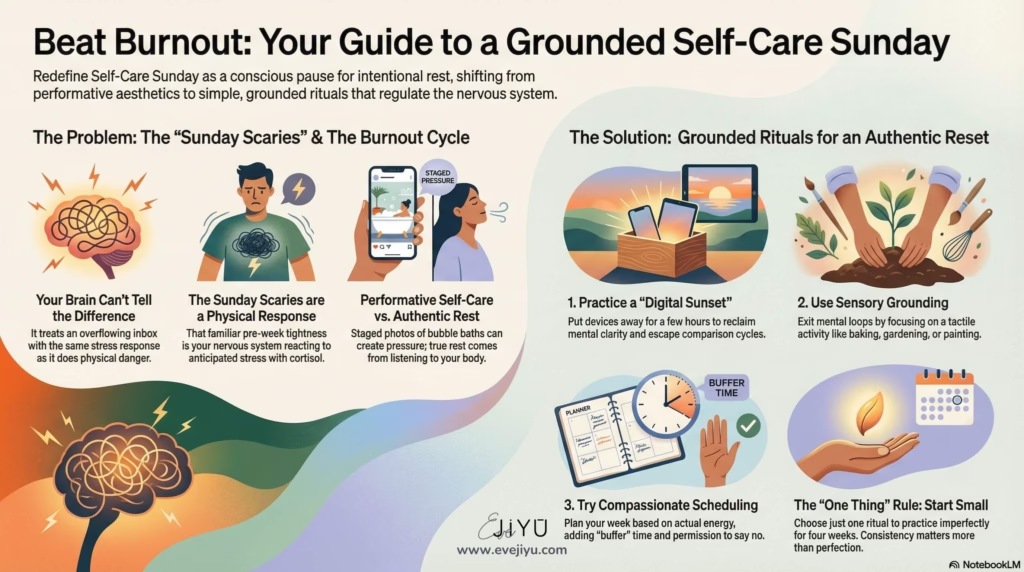
That familiar tightness starts around 4:00 PM. Your chest constricts slightly. The week ahead begins flooding your mind with meetings, deadlines, and the emotional labor you’ve been pushing aside. You reach for your phone, scrolling through polished self care sunday images of bubble baths and candles, wondering why your version of rest never looks that serene.
Most advice about sunday self care treats it like a shopping list. Buy the right products. Follow the right routine. Achieve the right aesthetic. But real restoration doesn’t happen in a perfectly staged photo. It happens in the quiet moments when you stop performing and start listening to what your body actually needs.
Self care Sunday is a dedicated practice of intentional rest and mental clearing, designed to help women reconnect with their creative voice and recover from the depletion of the week. It’s not about adding more tasks to your calendar. It’s about creating space for your nervous system to remember what calm feels like.
Why Your Nervous System Craves a “Sunday Self Care” Practice
Women between 28 and 42 carry a specific kind of exhaustion. You’re navigating career transitions, relationship shifts, and the ongoing question of who you are beyond your roles and responsibilities. Research including from the American Psychological Association shows chronic stress in women—often heightened during career and family transitions—is linked to competing work, family, and identity demands.
Your nervous system doesn’t distinguish between physical danger and the anxiety of an overflowing inbox. It responds to both with cortisol, shallow breathing, and that persistent hum of tension in your shoulders. Self care sundays offer a weekly checkpoint to interrupt this cycle before it becomes your baseline.
The goal isn’t productivity. It’s presence. Moving from the constant doing into moments of simply being. When you build genuine self-worth, you start believing you deserve this time without justification or guilt.
7 Grounded Rituals for an Authentic Reset
1. The Digital Sunset: Reclaiming Mental Clarity
Scrolling through curated self care sunday images creates a strange paradox. You’re seeking rest while consuming content that makes you feel behind. The comparison cycle activates the same stress response you’re trying to calm.
The Practice:
- Set a specific time Sunday afternoon when devices go into another room (not just face-down on the table).
- Tell people you’ll be unreachable for a few hours.
- Notice the initial discomfort without trying to fix it.
- Use the freed attention to look at something real: trees, your own hands, the actual light in your space.
This isn’t about demonizing technology. It’s about recognizing when digital connection replaces the internal kind.
Reflection Questions:
- What am I avoiding by staying constantly connected?
- When I reach for my phone out of habit, what feeling am I trying to bypass?
2. Reflective Journaling: Finding Your Creative Voice
Most journaling advice pushes gratitude lists or morning pages. Those work for some people. For others, they feel like another obligation. Sunday journaling should help you locate yourself again after a week of meeting everyone else’s needs.
The Practice:
- Open a notebook without a plan.
- Write the sentence: “Right now, I feel…” and let whatever follows spill onto the page.
- Don’t edit. Don’t make it pretty.
- If nothing comes, describe the room you’re in with painful detail until something shifts.
- End with one question you’re sitting with this week, even if you don’t have an answer.
This process isn’t about finding solutions. It’s about making contact with the parts of yourself that got buried under the week’s demands.
Reflection Questions:
- What truth am I avoiding writing down?
- If this journal were only for me and would never be read by anyone else, what would I admit?
3. The “Slow Morning” Habit: Eliminating Urgency
The alarm pulls you into performance mode before you’re fully conscious. Even on Sundays, many women wake with an immediate mental checklist. The slow morning practice teaches your body that not every day requires emergency-level alertness.

The Practice:
- Set no alarm Saturday night (or set it 90 minutes later than usual).
- When you wake, stay in bed for five minutes doing nothing.
- Make your first beverage with full attention to the process.
- Eat breakfast sitting down, away from screens.
- Delay checking email or messages until after this sequence completes.
This creates a physiological message: today has space. Today allows softness.
Reflection Questions:
- What would change if I treated my energy as valuable rather than infinite?
- Where did I learn that rest requires justification?
4. Sensory Grounding: Exiting the Burnout Headspace
Burnout lives primarily in your head. Endless mental loops about what you should be doing, who you should be, how far behind you’ve fallen. Sensory experiences pull you back into your body, which is the only place recovery actually happens.
The Practice:
- Choose one tactile activity: gardening, baking bread, painting, folding laundry with full attention.
- Notice textures, temperatures, smells without labeling them as good or bad.
- If you’re outside, let your bare feet touch grass or earth.
- Spend at least 15 minutes on this with no goal beyond the sensation itself.
When researchers at the University of Derby studied nature exposure, they found that even brief contact with natural environments significantly reduced cortisol levels and improved mood. But the key is presence, not duration.
Reflection Questions:
- What does my body need that my mind keeps overruling?
- When did I last do something purely because it felt good, with no productive outcome?
5. Compassionate Scheduling: Planning from Capacity
Sunday evening often becomes a battlefield with your calendar. You fill the week ahead with commitments your future self will resent. Compassionate scheduling means looking at the week through the lens of your actual energy, not your aspirational productivity.
The Practice:
- Open your calendar for the coming week.
- Identify three non-negotiable appointments or deadlines.
- Add one “white space” block each day labeled “buffer” with no specific task.
- Look at optional commitments and ask: “Does this serve me, or am I trying to prove something?”
- Give yourself permission to decline, postpone, or delegate anything that makes your chest tighten.
This practice often brings up guilt. That’s expected. You’ve been trained to measure your worth by your output. Authentic self-care means choosing your well-being even when it disappoints others.
Reflection Questions:
- Which commitments am I keeping out of obligation rather than choice?
- What would it cost me to say no? What does it cost me to say yes?
6. Savoring Silence: The Power of Stillness
Guided meditations. Podcasts. Music. Constant input keeps your nervous system in receiving mode. Ten minutes of complete silence feels uncomfortable because it removes all the buffers between you and yourself.

The Practice:
- Set a timer for 10 minutes.
- Sit somewhere comfortable with no audio input.
- Don’t try to empty your mind or achieve a specific state.
- When thoughts come (they will), notice them like clouds passing.
- If emotions surface, let them exist without fixing or explaining them.
The goal isn’t to feel peaceful. It’s to practice being with yourself without distraction, which is the foundation of all sustainable self-care.
Reflection Questions:
- What am I afraid I’ll discover if I sit in silence?
- What does my internal voice say when no external voices are competing for attention?
7. Affirming Your Path: Integrating Wisdom into Your Space
Self care sundays can include reminders of what matters to you. Not Instagram-worthy quote boards, but actual words that ground you when the week gets loud. Physical reminders help you remember who you’re becoming when external pressure tries to pull you back into old patterns.
The Practice:
- Choose 2-3 phrases that feel true to you right now (not aspirational, but real).
- Write them on paper and place them where you’ll see them during vulnerable moments: bathroom mirror, wallet, car dashboard.
- Read them once during your Sunday ritual.
- Notice which ones still resonate and which feel like they belong to an earlier version of you.
If you need starting points, explore authentic self-care quotes that speak to genuine rest rather than performative wellness.
Reflection Questions:
- What truth do I need to remember when I’m overwhelmed?
- Which part of my identity am I trying not to forget?
Overcoming the “Guilt” of Resting
The internal critic appears the moment you stop moving. It tells you rest is selfish. That other people are working while you’re “wasting time.” That you haven’t earned stillness yet.
This voice isn’t showing you reality. It’s showing you conditioning. Somewhere along the way, you learned that your value depends on your productivity. That rest is a luxury reserved for after all the work is done. But the work is never done.
Reframing self-care as burnout recovery helps shift this perspective. You’re not being indulgent. You’re maintaining the basic systems that keep you functional. Just as you wouldn’t feel guilty about sleeping or eating, you don’t need to apologize for protecting your mental and emotional capacity.
The women who resist self care sundays most fiercely are usually the ones who need them most. If resting feels impossible, that’s information about how depleted you’ve become.

How to Curate Your Own Sunday Experience
You don’t need all seven rituals. You don’t need a perfectly orchestrated routine. Start with the one practice that made your shoulders drop while reading about it. The one that felt like relief instead of another assignment.
The “One Thing” Rule:
Choose a single ritual for the next four Sundays. Do it imperfectly. Notice what changes, not in your productivity or achievement, but in the quality of your internal weather. Does Monday morning feel different? Does your body carry less residual tension? Are you slightly more present with yourself?
If nothing shifts, try a different ritual. This isn’t a prescription. It’s an invitation to experiment with what actually restores you, not what looks good in a self care sunday images gallery.
Some weeks, your Sunday ritual will be 10 minutes of silence. Other weeks, it’ll be three hours of journaling and a slow walk. Both are valid. The goal is consistency in the intention, not rigidity in the format.
From Sunday to Every Day
Self care sundays aren’t a fix for a life that requires complete restructuring. If every week leaves you so depleted that Sunday barely makes a dent, that’s information about larger patterns that need attention. But the Sunday practice creates a weekly touchpoint where you can notice when you’re slipping back into unsustainable rhythms before they become your new normal.
These rituals teach your nervous system that rest is safe. That you can stop performing and still exist. That your worth isn’t contingent on your output. Over time, that knowing starts influencing your weekday choices too.
You begin setting boundaries on Tuesday because you remember how good Sunday felt. You decline an obligation on Thursday because you’re protecting the capacity you’ll need for your weekend reset. The practice ripples outward.
The coming week will ask things of you. Some requests will be reasonable. Others will try to take more than you have to give. Sunday self care helps you enter that week as a whole person with boundaries, not a resource waiting to be depleted.
You don’t need permission to rest. You need practice believing you’re allowed to.
What does your version of self care sunday look like? Share one ritual that helps you reset in the comments, or explore more grounded practices for building a life that doesn’t require constant recovery.
⬇⬇⬇Pin or save to read later ⬇⬇⬇












0 Comments