
In This Article
Discover what self love meaning truly encompasses and learn practical, grounded ways to build love in yourself that transform your daily life, not just your social media feed.
You know that feeling when you’ve done everything “right” for self-care but still wake up feeling hollow? You’ve bought the candles, written the affirmations, taken the bath. You’ve posted the quotes about loving yourself. But when you’re alone with your thoughts, something still feels missing.
That disconnection isn’t your fault. Most of what we’ve been taught about self-love is surface-level performance designed for an audience. Real love in yourself doesn’t announce itself with hashtags or perfect morning routines. It lives in the quiet moments when nobody’s watching. In how you speak to yourself after a mistake. In whether you trust your own voice when making decisions.
This article offers 11 practical, honest ways to build genuine self-love. Not the kind that looks good online, but the kind that actually changes how you experience your life.
Self Love Meaning — What It Really Is (And What It’s Not)
Let’s start with clarity. Self love meaning gets distorted in wellness culture. It’s treated like a skill you master through positive thinking or a state you achieve after enough therapy sessions.
Self-love is not confidence. It’s not believing you’re better than others or pretending you have no flaws. It’s not treating yourself to expensive things or taking bubble baths when you’re burnt out.
Real self-love is the practice of treating yourself with the same patience and respect you’d offer someone you deeply care about. It’s creating internal safety so you can stop abandoning yourself every time things get hard.
In psychological terms, self-love encompasses self-compassion, self-acceptance, and self-trust. Research in mindfulness shows that self-compassion, a core component of self-love, significantly reduces anxiety and depression while increasing life satisfaction. Self-love means you don’t require perfection from yourself to deserve kindness.
What does this look like in real life? It looks like telling the truth about how you feel instead of performing fine. It looks like setting a boundary even when you’re worried about disappointing someone. It looks like choosing rest when your body asks for it, not when you’ve “earned” it.
Reflection: When did you last choose what you needed over what you thought you should do? What made that possible?
Why Loving Yourself Feels So Hard for Women
If building love in yourself feels nearly impossible some days, you’re not broken. You’re responding to decades of conditioning that taught you your value comes from what you produce, how you look, and how well you take care of everyone else.
Women are socialized to seek external validation. From childhood, many of us learned that being “good” meant being liked, being helpful, being accommodating. We absorbed the message that our worth depends on achievement and approval.
Add burnout to that foundation. When you’re exhausted from years of overgiving, you don’t have energy left to notice what you actually need. The comparison trap tightens the cycle. Social media shows you curated versions of other women’s lives, making your messy reality feel like failure.
Productivity culture treats rest as laziness and self-care as indulgence. You’re told to hustle harder, do more, be better. No wonder self-love feels like a luxury you can’t afford.
The struggle to love yourself isn’t personal weakness. It’s a predictable outcome of systems that benefit from your self-doubt. When you don’t trust yourself, you keep seeking answers outside yourself. You keep buying solutions, chasing validation, staying stuck.
Understanding this helps you stop blaming yourself for feeling disconnected. The work isn’t about fixing what’s wrong with you. The work is about unlearning what was never true in the first place.

“How Do I Love Myself?” Start Here
This question, “how do I love myself?” shows up in my inbox more than almost any other. Women ask it with genuine confusion, sometimes desperation. They want a clear answer, a step-by-step guide, proof that they’re doing it right.
But self-love isn’t a destination you reach after completing certain tasks. It’s a relationship you build with yourself over time. Like any relationship, it requires attention, honesty, and patience.
The first step isn’t trying to change how you feel about yourself. The first step is awareness. Notice how you currently treat yourself. Notice the voice in your head when you make a mistake. Notice whether you honor your needs or override them to keep the peace.
Most women discover they’ve been abandoning themselves for years without realizing it. They say yes when they mean no. They silence their intuition to avoid conflict. They push through exhaustion because stopping feels selfish.
Building love in yourself starts with seeing these patterns clearly. Not to judge them, but to understand them. Once you see how you’ve been treating yourself, you can begin choosing differently.
Small internal shifts to practice:
- Pause before automatically saying yes to requests
- Ask yourself what you actually want in a given situation
- Notice when you’re performing for others versus being honest
- Track moments when you override your gut feeling
Start treating yourself like someone whose feelings matter. Like someone worth listening to. That’s where real self-love begins.
How to Self Love Without Becoming Self-Absorbed
One fear that stops women from practicing self-love is the worry that it makes them selfish. They’ve been taught that good women prioritize others, that boundaries are unkind, that self-focus is narcissistic.
Let’s clarify this. Healthy self-love and self-absorption are completely different.
Self-absorption is ego-driven. It’s needing to be right, better, or more important than others. It lacks empathy and dismisses other people’s experiences. Self-absorbed people use others to validate their worth.
Self-love is rooted in self-respect. It recognizes that your needs matter as much as anyone else’s. It builds boundaries not to reject people, but to create sustainable relationships where you can show up authentically.
When you love yourself, you stop requiring constant external validation. You become more generous because you’re not depleted. You can be present for others because you’re not abandoning yourself to do so.
Boundaries are not walls. They’re agreements about how you want to be treated and what you’re available for. Setting boundaries is an act of respect for yourself and the other person. It creates clarity instead of resentment.
Letting go of guilt when choosing yourself takes practice. You’ve been rewarded for self-sacrifice your whole life. Of course it feels uncomfortable to prioritize your own needs. But discomfort doesn’t mean you’re doing something wrong. It means you’re doing something new.
Reflection: Where in your life do you sacrifice your needs to avoid being seen as selfish? What would change if you believed your needs were equally important?
11 Powerful Ways to Build Love in Yourself
These practices aren’t theoretical. They’re what actually works when you’re tired of surface-level self-care and ready for something that changes how you live.

1. Learn How You Speak to Yourself Under Stress
Pay attention to your internal dialogue when things go wrong. When you spill coffee, miss a deadline, or say something awkward, what voice appears?
Most women have an inner critic that sounds nothing like how they’d speak to a friend. It’s harsh, dismissive, relentless. Noticing this voice is the first step to changing your relationship with yourself.
Try this: For one week, write down the exact words you say to yourself during stressful moments. Notice the tone, the accusations, the judgments. Then rewrite each one as if you’re speaking to someone you love.
2. Stop Outsourcing Your Worth to Outcomes
When your value depends on achieving certain results, you’re building your sense of self on unstable ground. Jobs change. Bodies change. Relationships shift. If your worth is tied to these external markers, you’ll always feel insecure.
Building love in yourself means recognizing that you have inherent value simply because you exist. Not because of what you accomplish or how you look or who approves of you.
Start separating outcomes from identity. You can fail at something without being a failure. You can be rejected without being unlovable. You can have a bad day without being a bad person.
3. Practice Self-Trust Before Self-Confidence
Confidence is believing you can do something well. Self-trust is knowing you’ll take care of yourself regardless of the outcome.
Self-trust develops when you keep small promises to yourself. When you say you’ll rest and you actually rest. When you set a boundary and you maintain it. When you listen to your gut and you act on it.
Each time you honor your own word, you build evidence that you’re someone you can rely on. This foundation of self-trust creates more lasting change than any affirmation ever will.
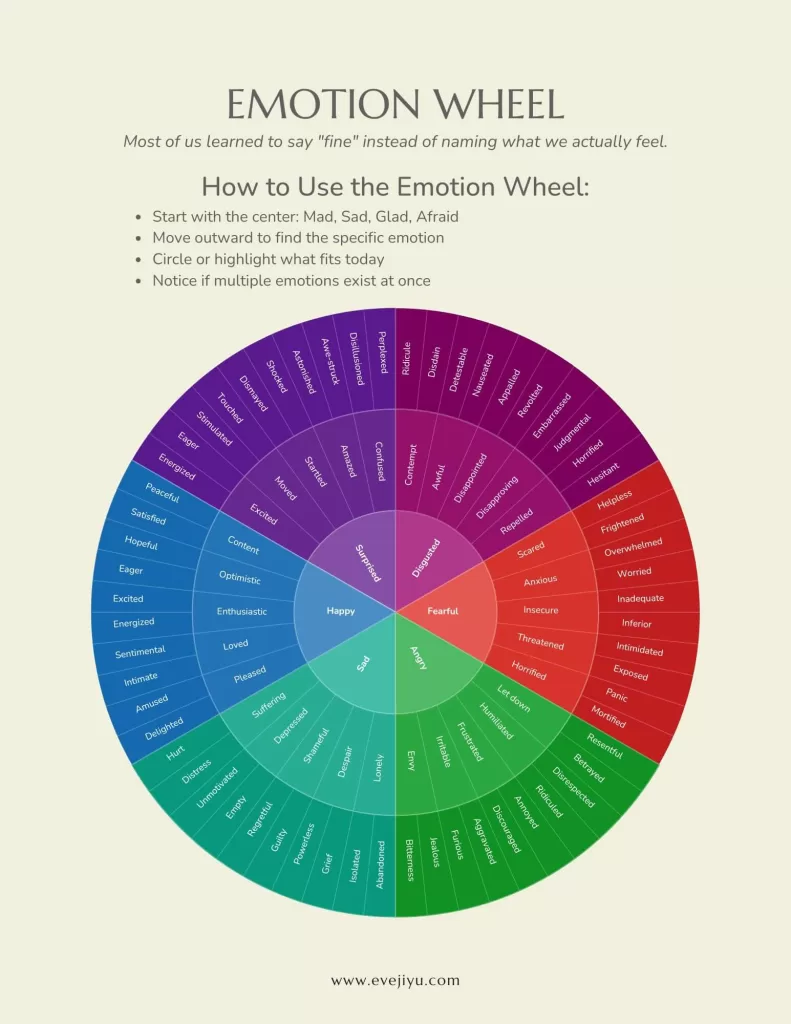
4. Allow Emotions Without Immediately Fixing Them
Self-love doesn’t mean feeling happy all the time. It means having enough internal safety to feel whatever arises without immediately trying to make it go away.
When you feel sad, anxious, or angry, your instinct might be to distract yourself, minimize the feeling, or push through it. But emotions carry information. They’re telling you something about your needs, your boundaries, or your values.
Practice sitting with uncomfortable emotions for just five minutes. Notice where you feel them in your body. Breathe. Let them exist without needing to solve them immediately.
This builds emotional resilience and self-compassion. You learn that feelings won’t destroy you. You learn that you can trust yourself to handle whatever comes up.
5. Build Boundaries That Protect Your Energy
Boundaries aren’t about controlling other people. They’re about honoring your own limits and needs.
If you consistently feel drained, resentful, or overwhelmed, you’re probably operating without clear boundaries. You might be saying yes to requests that don’t align with your values. You might be allowing treatment that doesn’t respect your worth.
Start small. Identify one area where you regularly feel resentful. What boundary would protect your energy there? Practice saying no without over-explaining. Practice ending conversations that deplete you. Practice choosing your own needs even when it disappoints someone else.
Psychological research shows individuals with healthy boundaries report higher well-being and more satisfying relationships, creating space for authentic connection. Boundaries don’t push people away. They create space for authentic connection.
6. Keep Promises to Yourself (Small Ones Count)
Every time you tell yourself you’ll do something and then don’t follow through, you erode self-trust. This happens with big promises and tiny ones.
You say you’ll go to bed early, then scroll for another hour. You commit to taking a walk, then skip it for one more work task. These small betrayals add up.
Building love in yourself means treating your commitments to yourself as seriously as your commitments to others. Start with promises you know you can keep. Say you’ll drink water and drink it. Say you’ll write for ten minutes and write.
Each kept promise rebuilds the relationship you have with yourself. You become someone you can count on.
7. Redefine Rest as a Necessity, Not a Reward
Productivity culture treats rest as something you earn after working hard enough. This mindset keeps you perpetually exhausted, always chasing permission to stop.
Rest is not a luxury. It’s a biological requirement. Your nervous system needs downtime to regulate. Your mind needs space to process. Your body needs stillness to repair.
When you reframe rest as essential rather than optional, you stop feeling guilty for taking it. You stop waiting until you’re completely burnt out to allow yourself to pause.
Practice resting before you’re desperate. Take breaks during the day. Honor your energy levels instead of pushing through them. Treat your need for rest with the same respect you’d give anyone else’s needs.

8. Choose Alignment Over Approval
Approval feels good in the moment. But building your life around what others think of you creates disconnection from who you actually are.
Self-love means choosing what aligns with your values even when it disappoints people. It means making decisions based on your own truth instead of on who will like you for them.
This doesn’t mean being reckless or dismissive of feedback. It means trusting your internal compass more than external validation. It means believing your perspective matters even when it’s different from the people around you.
Reflection: Where in your life are you choosing approval over alignment? What would you do differently if you trusted your own judgment more?
9. Let Go of Who You “Should” Be by Now
Comparison steals joy. So does the timeline you created years ago about who you should be at this age.
Maybe you thought you’d be married by now. Maybe you expected a different career. Maybe you imagined yourself more confident, more successful, more put together.
Those expectations were based on who you thought you were supposed to become. They weren’t based on who you actually are or what you actually want.
Building love in yourself requires releasing the fantasy version you’ve been chasing. It requires accepting where you are right now without labeling it as behind or wrong.
You’re exactly where you need to be for the growth you’re experiencing. Trust that.
10. Create Space for Reflection (Journaling, Walking, Silence)
Self-love requires knowing yourself. You can’t love someone you don’t understand.
Most women move through life so quickly they rarely pause to check in with themselves. They don’t know what they’re feeling, what they need, or what they actually want because they never stop long enough to ask.
Create intentional space for reflection. This might look like morning pages, evening journal prompts, walks without your phone, or simply sitting in silence for ten minutes.
Use this time to ask yourself honest questions. How am I really feeling? What do I need right now? What’s true for me in this situation? What am I pretending is okay when it’s not?
These moments of stillness reconnect you to your inner voice. They help you distinguish between what you’ve been conditioned to want and what you genuinely desire.
11. Act Like Someone Who Already Respects Herself
You don’t have to wait until you feel completely confident or healed to start treating yourself well. You can practice respect and care right now, even when it feels unfamiliar.
Ask yourself: How would someone who loves herself respond in this situation? What choice would she make? How would she speak to herself?
Then do that thing. Make that choice. Use those words.
Acting as if creates new neural pathways. Your brain begins to recognize these new patterns as normal. Over time, the acting becomes authentic. You become the person you’ve been practicing being.
This is how you learn to love yourself more. Not through affirmations or wishful thinking, but through repeated choices that honor your worth.

How to Achieve Self Love in Everyday Life (Not Just on Good Days)
Understanding how to achieve self love isn’t about waiting for perfect conditions. Real self-love shows up in the messy, hard moments more than the easy ones.
When you fail at something important, self-love sounds like: “This hurts, and I’m going to be kind to myself through it.” Not: “I’m worthless and always mess everything up.”
When you’re uncertain about a decision, self-love looks like trusting that you’ll figure it out rather than berating yourself for not already knowing. It looks like asking for help instead of pretending you have all the answers.
When life feels overwhelming, self-love means lowering your expectations instead of pushing harder. It means choosing one thing instead of everything. It means saying, “I’m doing the best I can with what I have right now.”
Self-love during emotional lows doesn’t require you to feel positive. It requires you to stay present with yourself instead of abandoning yourself when things get hard.
The practice isn’t about intensity. It’s about consistency. Small, repeated acts of self-respect build the foundation of genuine love in yourself. You don’t need dramatic transformation. You need daily choices that reinforce your worth.
Simple daily practices:
- Check in with yourself three times a day: morning, midday, evening
- Ask “What do I need right now?” and actually listen to the answer
- Speak to yourself the way you’d speak to your best friend
- Honor at least one need per day, even if it’s small
Signs You’re Already Learning to Love Yourself
Building love in yourself doesn’t always feel like progress. The shifts are often subtle, easy to overlook when you’re focused on how far you think you still have to go.
Here are signs you’re already changing:
- You catch yourself mid-spiral and choose a different thought. You notice the inner critic and respond with gentleness instead of agreement.
- You set a boundary without apologizing for it. You say no and don’t spend the next three days feeling guilty.
- You make decisions based on what feels right for you rather than what will please others. You trust your gut more than you used to.
- You allow yourself to rest without earning it first. You take breaks because you need them, not because you’ve worked hard enough to deserve them.
- You stop betraying yourself to keep the peace. You speak your truth even when it’s uncomfortable.
- You feel safer inside your own mind. The constant self-criticism quiets down. You experience moments of genuine self-acceptance.
These shifts don’t happen all at once. They accumulate slowly, almost invisibly, until one day you realize you’re treating yourself differently than you used to.
Reflection: What’s one small way you’ve started choosing yourself lately? What made that possible?
Love in Yourself Is a Practice, Not a Personality Trait
If you’re reading this and thinking you’re behind, you’re not. Self-love isn’t a trait some people have and others lack. It’s not something you’re born with or without.
Love in yourself is a practice. A daily decision. A relationship you build through small, repeated choices.
Some days you’ll get it right. You’ll listen to your needs, honor your boundaries, speak to yourself with kindness. Other days you’ll slip back into old patterns. You’ll people-please, push through exhaustion, criticize yourself harshly.
Both are part of the process. Both are allowed.
What matters is that you keep coming back. That you notice when you’ve abandoned yourself and choose differently next time. That you extend the same grace to yourself that you’d offer anyone else learning something new.
Self-love isn’t about perfection. It’s about returning to yourself with patience each time you drift away.
You’re allowed to be a work in progress. You’re allowed to have bad days. You’re allowed to struggle with this. None of that means you’re failing.
It means you’re human. And that humanity deserves love too.
The Quiet Power of Choosing Yourself
Real self-love doesn’t announce itself. It lives in the choices you make when nobody’s watching. In how you treat yourself on ordinary Tuesday afternoons. In whether you trust your own voice when everyone else is saying something different.
Building love in yourself changes everything, but not in the ways wellness culture promises. You won’t suddenly feel confident all the time. You won’t stop having hard days. You won’t become immune to self-doubt.
What changes is your relationship with yourself. You become someone you can rely on. Someone who shows up for you even when things are messy. Someone who treats your needs as important instead of optional.
That internal shift transforms how you move through the world. You stop seeking permission for your choices. You stop shrinking to make others comfortable. You stop betraying yourself to keep the peace.
You start living from your center instead of from everyone else’s expectations. That’s the quiet power of self-love. Not in what it makes you look like, but in how it lets you exist.
Final reflection: What’s one small way you can choose yourself today? Not tomorrow, not when things calm down. Today. What would that look like?
If this article resonated with you, I’d love to hear what landed. Leave a comment sharing one practice you’re committing to, or explore more grounded guidance on rediscovering your creative voice or navigating the chaos of self-discovery.
⬇⬇⬇Pin or save to read later ⬇⬇⬇













0 Comments