
In This Article
Anxiety can feel like a storm inside your head—thoughts racing, chest tight, breath shallow. You know the feeling. That low hum of worry that never quite turns off, the way your mind spins worst-case scenarios while you’re trying to fall asleep or sit through a meeting.
I used to think mindfulness was just another buzzword. Something people who had their lives together posted about on Instagram while drinking matcha. But when my own anxiety peaked a few years ago, I needed something that didn’t require a therapist’s waiting list or another prescription. I needed a tool I could use right then, in the middle of a panic spiral at 2 AM.
That’s when I discovered that mindfulness isn’t about becoming zen or emptying your mind. It’s about learning to stay present when your brain wants to catastrophize. Research consistently shows that mindfulness practices reduce anxiety by interrupting the mental loops that keep us stuck. A 2014 study published in JAMA Internal Medicine found that mindfulness meditation programs showed moderate evidence of improving anxiety and depression.
This article will give you seven practical mindfulness exercises for anxiety—techniques you can start using today, whether you’re new to mindfulness or already have a practice. No incense required. No pretending you’re suddenly calm when you’re not.
What Is Mindfulness and Why It Helps Anxiety
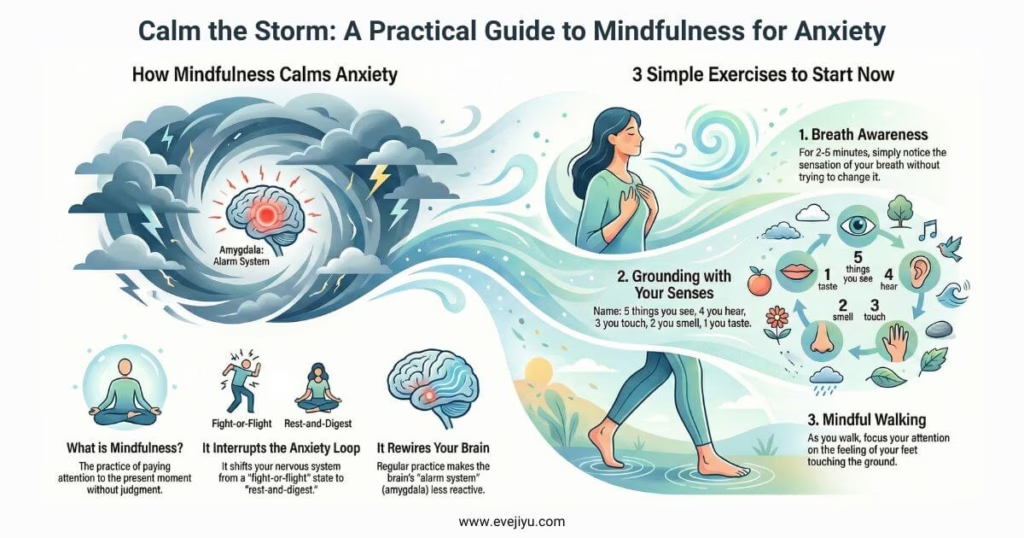
Mindfulness is the practice of paying attention to the present moment without judgment. Not trying to fix your thoughts or push them away, just noticing them. Observing what’s happening right now instead of replaying yesterday or rehearsing tomorrow.
When you practice mindfulness, you’re training your brain to distinguish between real threats and imagined ones. Anxiety loves to blur that line. It treats a difficult conversation the same way it treats a burning building. Your body responds with the same stress hormones either way.
But here’s what mindfulness does: it helps you recognize when your mind is creating a story about danger rather than responding to actual danger. You learn to observe anxious thoughts without getting pulled into their narrative. This doesn’t make the thoughts disappear, but it changes your relationship with them.
The science behind this is solid. Brain imaging studies show that regular mindfulness practice actually changes the structure of your brain. The amygdala—your brain’s alarm system—becomes less reactive. The prefrontal cortex—the part responsible for rational thinking—gets stronger. (If you’re skeptical about meditation claims, I wrote about the neuroscience that convinced me meditation wasn’t just woo-woo.)
Understanding how do you practice mindfulness starts with recognizing that it’s not about achieving a perfect mental state. You don’t need to sit cross-legged for an hour or clear your mind completely. You just need to practice directing your attention deliberately, again and again, when it wanders.
How Mindfulness Exercises Calm the Mind
Your nervous system has two modes: fight-or-flight and rest-and-digest. Anxiety keeps you stuck in fight-or-flight, even when there’s nothing to fight or flee from. Your heart races. Your muscles tense. Your thoughts loop.
Mindfulness exercises activate your parasympathetic nervous system—the rest-and-digest mode. When you focus on your breath or scan through your body, you’re sending your brain a signal: you’re safe right now. This moment is okay.
There’s a difference between meditation and mindfulness exercises, though people use the terms interchangeably. Meditation is usually a formal practice—you set aside time, sit down, and focus your attention in a specific way. Mindfulness exercises can happen anywhere. You can practice mindfulness while washing dishes, walking to your car, or waiting in line at the grocery store.
Both work because they interrupt the automatic patterns your anxious brain runs. Instead of letting your thoughts spiral unchecked, you redirect your attention to something concrete: your breath, your body, the sounds around you. This redirection is like hitting pause on a recording that’s been playing on loop.
Meta-analyses find that mindfulness-based interventions significantly reduce anxiety symptoms across different populations. The effectiveness comes from consistent practice, not perfection. You don’t need to be good at it. You just need to keep doing it.
7 Mindfulness Exercises for Anxiety
1. Breath Awareness Exercise
This is the foundation of most mindfulness practices, and it’s deceptively simple. You’re not trying to change your breath or breathe a certain way. You’re just noticing it.
How to do it:
Find a comfortable position, sitting or lying down. Close your eyes if that feels okay, or soften your gaze toward the floor. Bring your attention to your breath. Notice where you feel it most—maybe the coolness at your nostrils, the rise and fall of your chest, the expansion of your belly.
Follow one full breath from beginning to end. Inhale, pause, exhale, pause. Your mind will wander. That’s normal. When you notice it’s wandered, gently bring it back to your breath. No judgment, no frustration. Just return.
Start with two to five minutes. Set a timer so you’re not checking the clock. This is how to do mindfulness meditation at its most basic: notice, wander, return.
I do this every morning while my coffee brews. Those four minutes used to feel impossible, my mind racing through my to-do list. Now my brain knows this is breath time, and the resistance has softened. Some mornings are still restless. That’s fine. The practice is in the returning, not in achieving perfect focus.
2. Body Scan for Tension Release
Anxiety lives in your body as much as your mind. Tight shoulders, clenched jaw, knotted stomach. A body scan helps you notice where you’re holding tension and release it.
How to do it:
Lie down or sit comfortably. Close your eyes. Start at the top of your head. Notice any sensation there—tension, tingling, warmth, nothing. No need to change anything, just notice.
Move slowly down through your body: forehead, eyes, jaw, neck, shoulders, arms, hands, chest, belly, hips, legs, feet. Spend a few seconds on each area. When you find tension, breathe into that spot. Imagine the tension releasing on your exhale.
This takes about 10 to 15 minutes. I use it before bed when my body is wired but exhausted. The systematic attention helps my nervous system downshift from the day.
3. Grounding with the Senses
When anxiety pulls you into future worries or past regrets, grounding brings you back to right now. This exercise uses your five senses to anchor you in the present moment.
How to do it:
Look around and name five things you can see. Be specific. Not just “a chair,” but “a wooden chair with a green cushion.” Then four things you can hear. Three things you can touch (notice the texture). Two things you can smell. One thing you can taste.
You can do this anywhere—at your desk, in your car, standing in your kitchen. It takes less than two minutes and immediately interrupts anxious spiraling. I’ve done this in bathroom stalls during work events, in parking lots before difficult conversations, sitting on my couch when my thoughts start looping at night.
The specificity matters. It forces your brain to engage with concrete details instead of abstract worries.
4. Mindful Journaling
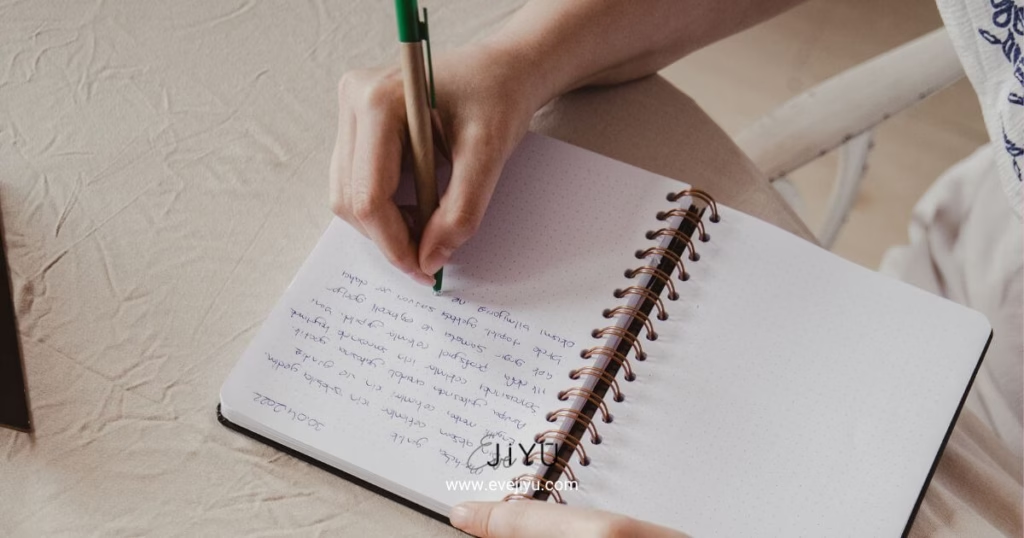
Journaling becomes a mindfulness practice when you write without censoring, without trying to sound smart or solve problems. You’re just noticing what’s true right now and putting it on paper.
How to do it:
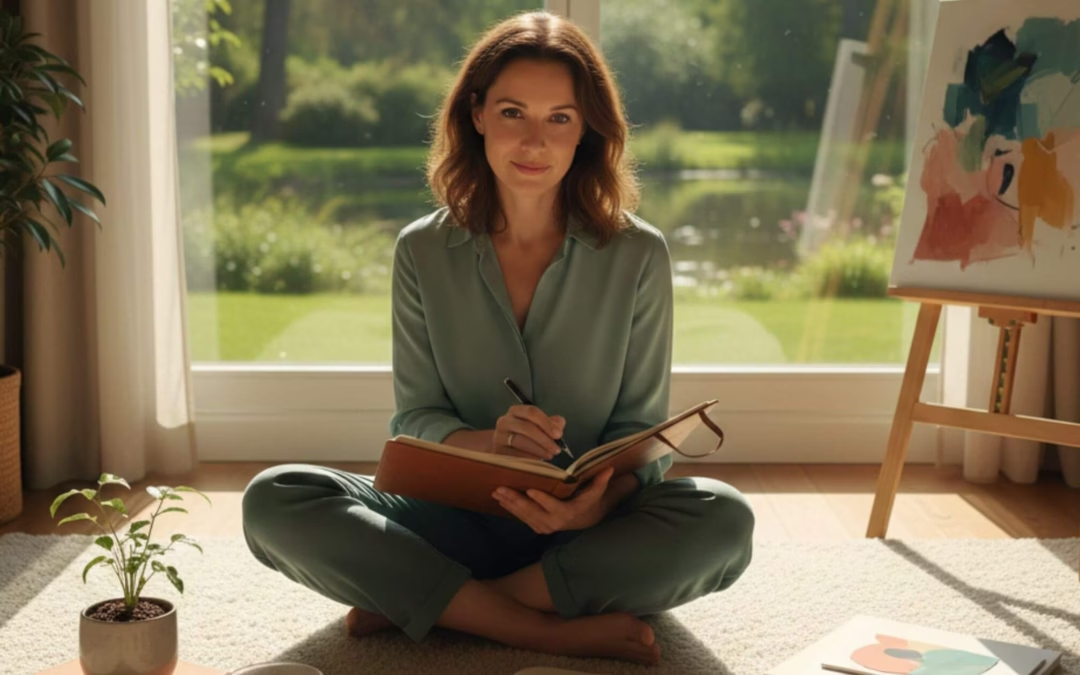
Set a timer for five to ten minutes. Write about how you’re feeling in this moment. Not how you felt yesterday or how you think you should feel. Right now. What sensations are in your body? What thoughts keep circling? What emotions are present?
Don’t edit. Don’t worry about grammar or making sense. This isn’t for anyone else. Let your hand move across the page even if what comes out is messy or repetitive.
I keep a notebook by my bed for this. Some nights I write half a page. Some nights I fill three pages with the same anxious thought written different ways until it loses some of its power. (If you’re new to journaling or want to deepen your practice, here’s a complete guide to starting a journaling practice.)
5. Walking Meditation
Movement can be meditative when you pay attention to the physical experience of walking instead of using walks to think through problems or plan your day.
How to do it:
Walk at a natural pace, indoors or outside. Notice the sensation of your feet touching the ground. Feel the shift of weight from heel to toe. Notice the movement of your legs, the swing of your arms, the rhythm of your breath as you walk.
When your mind wanders to your to-do list or a conversation you need to have, bring your attention back to the physical sensation of walking. The pressure in your feet. The air on your skin.
Start with just five minutes. You can do this in your hallway, around your block, through a park. I walk to my mailbox this way most days. It’s 200 feet from my front door, and turning that short walk into a mindfulness practice changed how I transition from work mode to evening.
6. Visualization for Calm
Your brain responds to imagined scenarios almost like real ones. That’s why anxious thoughts about future events can make your heart race. You can use this same mechanism intentionally to create calm.
How to do it:
Close your eyes and imagine a place where you feel completely safe and relaxed. Maybe it’s a beach, a forest, a room in your grandmother’s house, a favorite café. Build the scene with sensory details. What do you see? What sounds are there? What does the air feel like on your skin? What can you smell?
Stay in this imagined space for a few minutes, noticing how your body responds as you visualize calm and safety.
I return to the same spot each time—a specific beach in Croatia I visited years ago. The memory has become a shortcut for my nervous system. When I picture the sound of waves and the warm stone under my feet, my shoulders drop and my breathing slows.
7. Progressive Muscle Relaxation
This technique systematically releases physical tension, which signals to your brain that you’re safe. Anxiety creates muscle tension. Releasing that tension interrupts the anxiety feedback loop.
How to do it:
Start with your hands. Make tight fists. Hold the tension for five seconds, then release completely. Notice the difference between tension and relaxation. Move through your body: tense your arms, shoulders, face, jaw, stomach, legs, feet. Tense each area for five seconds, then release.
The contrast is important. You’re teaching your body what relaxation feels like by first creating tension. This takes about 10 minutes and works particularly well before sleep or when you notice your body is tight and uncomfortable.
Tips for Making Mindfulness a Daily Habit
Consistency matters more than duration. Five minutes every day builds the neural pathways that help you return to calm. An hour once a month doesn’t.
Start small. Pick one exercise from this list. Do it for five minutes. Same time each day if possible, because routine reduces decision fatigue. You’re not adding mindfulness to your schedule—you’re building it into something you already do.
Some people practice mindfulness exercises while their coffee brews. Some do breath awareness before getting out of bed. Some do a body scan while lying down at night. Find the moment in your day that already exists and attach the practice to it.
Track your practice without judgment. Notice patterns. When do you skip? What gets in the way? When do you remember? What makes it easier? This information helps you adjust rather than abandon the practice when motivation dips.
Micro-moments count. You don’t need a formal practice session to benefit from mindfulness. Take three conscious breaths before a meeting. Notice the sensations in your hands while washing dishes. Pay attention to the taste of your lunch instead of eating while scrolling. These small moments train the same mental muscle as longer practices.
For more ideas on building daily mindfulness habits that actually stick, I’ve written about the small shifts that compound over time.
Overcoming Challenges With Mindfulness
Your mind will wander constantly at first. You’ll sit down to focus on your breath and immediately start thinking about emails, groceries, that thing someone said last week. This doesn’t mean you’re bad at mindfulness. A wandering mind is normal. The practice is in noticing it wandered and bringing it back.
Some days will feel pointless. You’ll finish your five minutes and think nothing happened, you’re still anxious, this isn’t working. But mindfulness isn’t about immediate relief. You’re training a skill. Results compound slowly.
You might feel more anxious at first. When you stop distracting yourself and actually pay attention to what’s happening in your body and mind, you might notice uncomfortable things you’ve been avoiding. This is part of the process. You’re not creating new anxiety—you’re finally noticing what was already there.
Consistency without perfection is the goal. You’ll miss days. You’ll resist. You’ll judge yourself for not being better at this. None of that matters. What matters is whether you come back tomorrow.
Mindfulness isn’t a cure. It’s a tool. Some days it will help tremendously. Some days it will just take the edge off. Some days you’ll need other support—therapy, medication, talking to a friend. That’s okay. Mindfulness exists alongside other forms of care, not instead of them.
Mindfulness and Self-Love
Practicing mindfulness is an act of self-care. You’re choosing to spend time with yourself without distraction, without performing, without trying to be anyone other than who you are right now. That’s radical in a world that constantly asks you to do more, be more, produce more.
The more you practice noticing your thoughts without judgment, the more you develop compassion for yourself. You see how hard your mind works to keep you safe, even when its methods create suffering. You understand that your anxiety isn’t a character flaw—it’s a nervous system trying to protect you.
Pairing mindfulness with other practices deepens both. After a body scan, you might journal about what you noticed. During breath awareness, you might repeat a simple affirmation: “I am here. This moment is enough.” After visualization, you might write a few sentences about what safety feels like.
These practices reinforce each other. Mindfulness creates space for self-reflection. Self-reflection builds self-awareness. Self-awareness leads to self-acceptance. Building love for yourself becomes easier when you’ve practiced being present with yourself without criticism.
Conclusion
You don’t need to master all seven of these mindfulness exercises for anxiety. Pick one. Try it today. Give it five minutes. Notice what happens.
Mindfulness is a skill, not a personality trait. You’re not naturally good or bad at it. You just practice. Some days will feel easier than others. That’s normal. What matters is whether you keep returning, even when it feels pointless or uncomfortable.
The results compound slowly. A month from now, you might notice you catch your anxious thoughts sooner. Six months from now, you might realize that spiral you used to fall into weekly hasn’t happened in a while. A year from now, mindfulness might be so integrated into your day that you barely remember what it felt like to live without these tools.
Start small. Be patient with yourself. Let the practice be imperfect. Your anxiety didn’t develop overnight, and it won’t disappear with one meditation session. But each time you practice bringing yourself back to the present moment, you’re building a skill that will serve you for the rest of your life.
Bookmark this article. Come back to it when you forget. Try one exercise per day, or rotate through all seven. There’s no wrong way to begin, only the choice to start.
⬇⬇⬇Pin or save to read later ⬇⬇⬇










0 Comments