
In This Article
How do people express their creative side? Discover 7 powerful, real-life ways people express their creative side—with simple self-expression activities and examples that work even if you don’t feel creative.
I used to think creativity belonged to other people. The ones who painted murals, wrote novels, or built businesses from scratch. I thought you either had it or you didn’t, and I had convinced myself I fell into the second category.
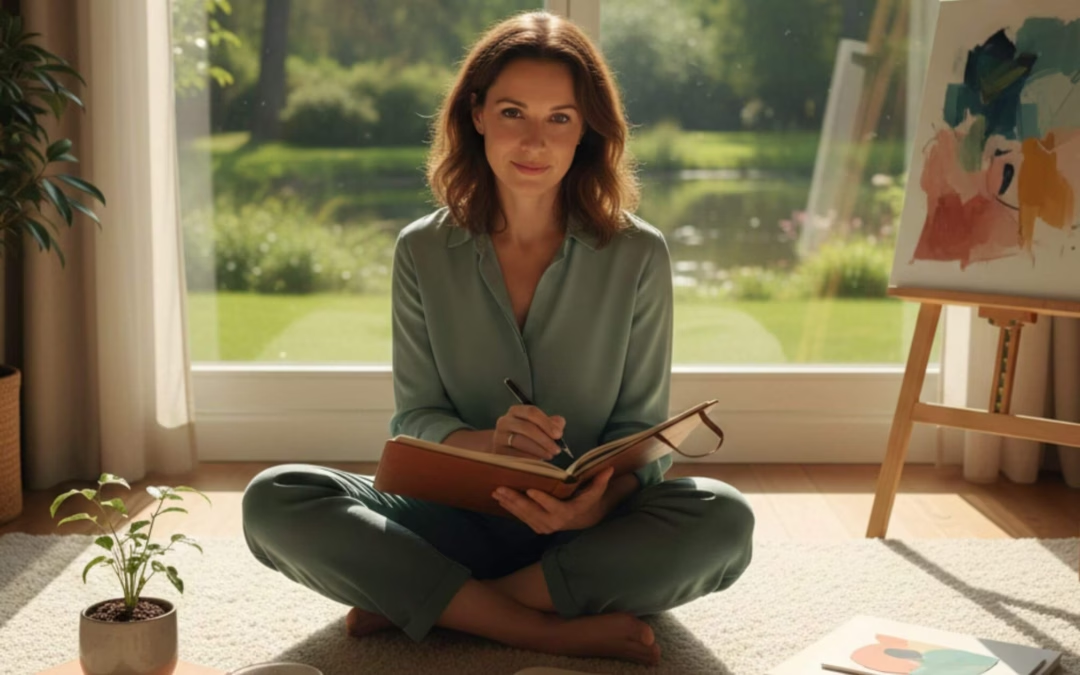
Then one afternoon in Bali, I found myself sitting on my balcony with a cup of tea and a blank journal. I wasn’t trying to create anything profound. I just started writing about how I felt that day. The words came slowly at first, then faster. When I looked up, an hour had passed. I felt lighter, clearer, more like myself than I had in months.
That’s when I realized creativity isn’t what we’ve been told it is. It’s not about talent or visibility or making something “good enough” to share. Creativity is how we make sense of our internal world and express it in ways that feel true.
If you’ve ever wondered how people express their creative side, the answer is simpler and more varied than you think. This article explores seven real-life ways creative expression examples, along with practical activities you can try today. No art degree required.
Why Creative Expression Matters (More Than Productivity or Success)
We live in a world that rewards output over authenticity. You check the boxes, meet the deadlines, and still end up feeling empty at the end of the day. That emptiness isn’t laziness or ingratitude. It’s what happens when you stop listening to the part of yourself that needs to create.
Creative expression matters because it reconnects you with your internal experience. When you write, move, design, or speak from a place of honesty, you’re not performing for anyone else. You’re making meaning from your life.
Research published in the American Journal of Public Health shows that engaging in creative arts like music therapy, visual arts, movement-based expression, and writing reduces stress and depression, improves mood and emotional balance, and promotes overall health and well-being. Multiple studies reviewed indicate these benefits through lowered anxiety, cortisol, and physiological stress responses, positioning creative activities as tools for emotional healing.
But here’s what the research doesn’t always capture: creativity helps you remember who you are. It gives you a language for feelings you can’t name. It lets you process experiences without having to explain them to anyone else.
When creativity is suppressed, the cost shows up in subtle ways. You feel disconnected from yourself. You second-guess your instincts. You stop trusting your own voice because you’ve spent so long listening to everyone else’s. Finding your creative voice becomes an act of reclaiming that trust.
Creative expression isn’t a luxury reserved for artists. It’s a basic human need that shows up differently for everyone.
How Do People Express Their Creative Side? (The Real-Life Answer)
There’s no single way to be creative, and that’s the point. Some people create through color and canvas. Others create through the way they arrange their morning routine or the questions they ask in difficult conversations.
Creativity shows up differently depending on your personality, your nervous system, and your current life stage. An extroverted person might express creativity through storytelling or hosting gatherings. Someone more introverted might find it in solitary activities like journaling or curating playlists.
Expression also doesn’t require an audience. You don’t need to post your work online, show it to friends, or turn it into a side hustle. Some of the most meaningful creative acts happen in private, where you’re free to explore without judgment.
What matters is that you give yourself permission to create in ways that feel natural to you. The goal isn’t to become someone else’s version of creative. The goal is to find the forms of expression that help you stay connected to yourself.
7 Powerful Ways People Express Their Creative Side
1. Writing What You’re Afraid to Say Out Loud
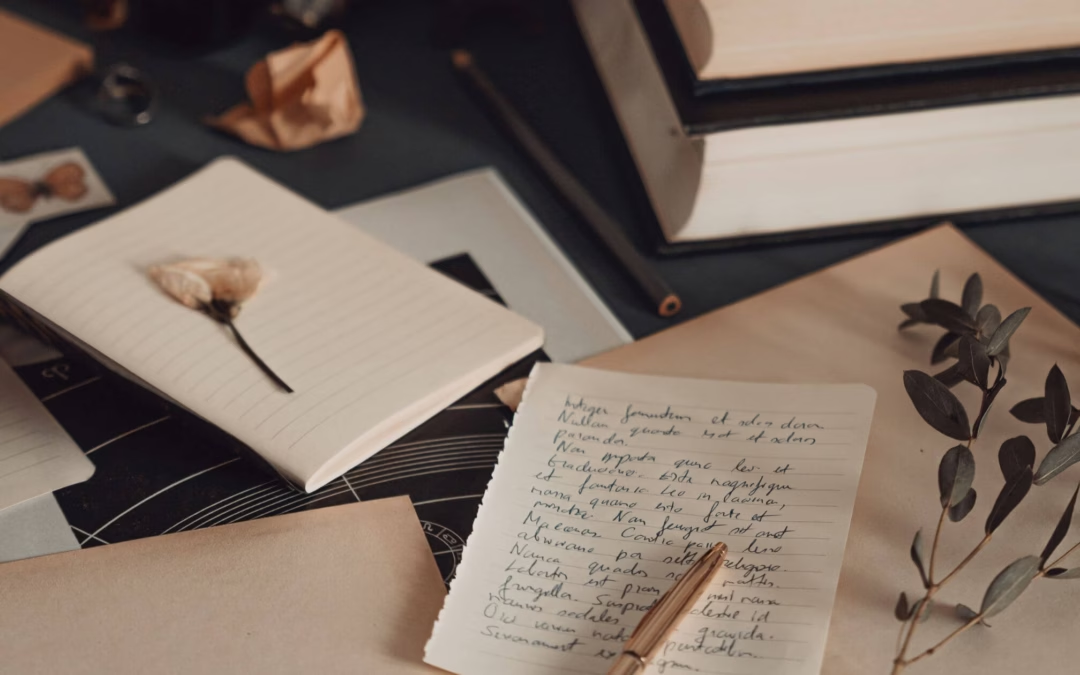
Writing is one of the most accessible forms of creative expression, and it doesn’t require you to be “a writer.” You’re not composing essays or crafting perfect sentences. You’re simply putting words to the thoughts and feelings that swirl around in your head all day.
This could look like journaling in the morning before the rest of the house wakes up. It could be typing into your notes app late at night when you can’t sleep. It could be writing unsent letters to people you’re angry with, scared of, or miss deeply.
The power of writing lies in its ability to externalize what’s internal. When you write something down, you create distance between yourself and the thought. You can look at it more objectively. You can ask yourself if it’s true, helpful, or something you want to keep carrying.
Simple self-expression activity: The Unfiltered Page
Set a timer for ten minutes. Write without stopping, without rereading, and without editing. Let the words come as they are. If you don’t know what to write, start with “Right now I feel…” and follow the thread wherever it leads. When the timer goes off, close the notebook. You don’t have to read it again if you don’t want to.
2. Creating Without an Audience (And Keeping It Private)
One of the most liberating creative acts is making something with zero intention of sharing it. This removes the pressure to be good, impressive, or understood. You’re creating purely for the experience of creating.
This might look like painting abstract shapes with colors that match your mood. It might be recording voice memos where you talk through a problem as if you’re explaining it to a friend. It might be building a private playlist that captures the emotional arc of your week.
When you create without an audience, you give yourself permission to experiment, to be messy, to try things that don’t work. You’re not performing. You’re exploring. Overcoming imposter syndrome becomes easier when you remove the need for external validation.
Simple self-expression activity: Create and Keep
Choose one creative medium this week and make something with a firm rule: you will not share it with anyone. Paint, write, photograph, cook, or design something that exists only for you. Notice how it feels to create without the weight of someone else’s opinion.
3. Turning Emotions Into Movement
Your body holds emotions that words can’t always reach. Movement is a form of creative expression that lets you process feelings through your physical self rather than your thinking mind.
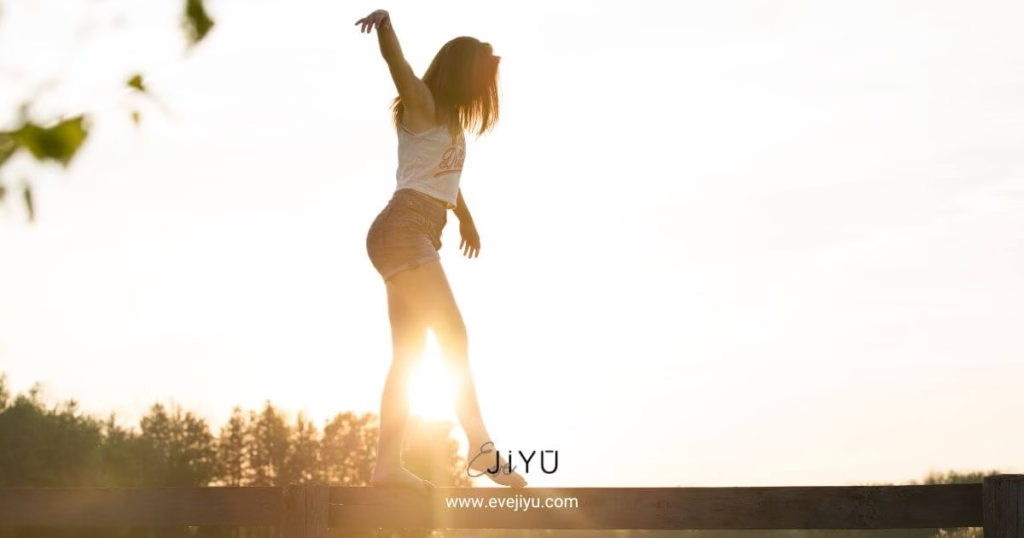
This doesn’t mean you need to take a dance class or follow a yoga video. Intuitive movement means moving in ways that feel right for your body in that moment. If you’re anxious, you might pace or shake out your arms. If you’re sad, you might curl up small or sway gently. If you’re angry, you might stomp or push against a wall.
Walking can be a creative act when you do it with intention. You’re not walking to get somewhere or burn calories. You’re walking to think, to feel, to let your body move through whatever emotional weather you’re experiencing.
Simple self-expression activity: Match Your Movement to Your Mood
Set aside five minutes. Ask yourself how you feel right now. Then move your body in a way that matches that feeling. If you feel sharp and restless, let your movements be quick and angular. If you feel heavy and tired, let yourself move slowly or lie on the floor. There’s no right way to do this. You’re just letting your body speak.
4. Designing a Life That Reflects You
Creativity isn’t only about making art. It’s also about how you design the structure and aesthetics of your daily life. The way you arrange your living space, the rituals you build into your morning, the small details you choose to pay attention to are all forms of creative expression.
Someone who lights a candle every evening before dinner is creating an intentional moment. Someone who rearranges their workspace to face a window is designing their environment to support their well-being. Someone who writes in the same chair with the same mug of tea is crafting a ritual that signals to their nervous system: this is time for you.
These choices might seem small, but they add up. They create a life that feels like yours rather than one you’re just moving through on autopilot. Setting creative goals often starts with these quiet design decisions.
Simple self-expression activity: Redesign One Ritual
Choose one part of your day and redesign it to feel more aligned with who you are. Maybe your morning coffee becomes a ten-minute sit on the porch instead of a rushed gulp at the counter. Maybe your evening wind-down includes five minutes of stretching instead of scrolling. The act of designing your day is creative work.
5. Speaking Honestly (Even When Your Voice Shakes)
Verbal expression is one of the most vulnerable forms of creativity. It requires you to translate your internal experience into words and then speak those words out loud to another person. There’s no edit button. There’s no time to polish the message. You’re offering your truth in real time.
This could look like setting a boundary with someone who’s been overstepping. It could be naming a need in a relationship instead of hoping the other person will guess. It could be admitting you’re struggling instead of saying you’re fine.
Speaking honestly doesn’t mean you have to be perfectly articulate or emotionally composed. It means you find the courage to say what’s true for you, even if your voice shakes or your words come out clumsy. The act of speaking is the creative expression. Learning how to express yourself authentically in conversation is a skill that deepens over time.
Simple self-expression activity: Write the Sentence You’ve Been Avoiding
Think of one thing you’ve been holding back from saying to someone. Write it down as a single sentence. Then practice saying it out loud to yourself. Notice what comes up in your body. You don’t have to say it to the other person today. You’re just practicing giving voice to your truth.
6. Curating What You Consume
Creativity isn’t only about what you make. It’s also about what you choose to take in. The books you read, the music you listen to, the podcasts you subscribe to, the images you save are all part of how you shape your internal world.
When you curate intentionally, you’re creating an environment that reflects your values and supports your growth. You’re saying: this is what I want to feed my mind and heart.
This might mean unfollowing accounts that trigger comparison and following ones that inspire genuine curiosity. It might mean building a playlist for each emotional state you move through. It might mean keeping a running list of quotes, articles, or images that resonate with something deep inside you.
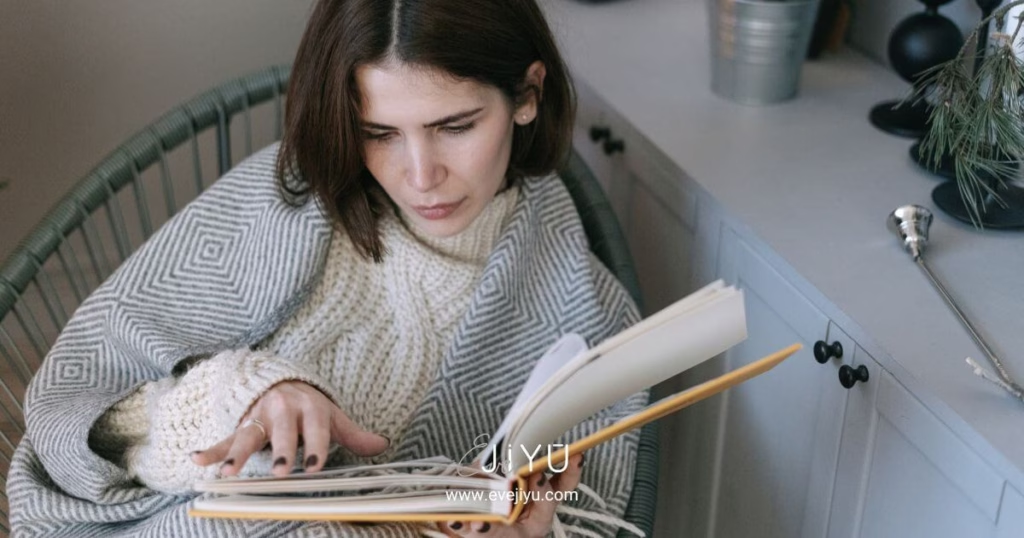
Curation is an underrated form of creative expression because it requires discernment. You’re actively choosing what gets your attention and what doesn’t.
Simple self-expression activity: Create a “This Feels Like Me” Collection
Start a digital or physical collection of things that feel aligned with who you are or who you’re becoming. This could be a Pinterest board, a playlist, a folder on your phone, or a physical notebook where you paste images and quotes. Add to it whenever something resonates. Over time, patterns will emerge that show you what your creative voice sounds like.
7. Making Meaning From Your Story
One of the most powerful ways people express their creative side is by turning their lived experiences into meaning. This doesn’t mean you have to write a memoir or become a motivational speaker. It means you take time to reflect on what you’ve lived through and ask yourself what it taught you.
This could look like journaling about a difficult chapter and identifying the strengths you developed because of it. It could be talking with a trusted friend about a pattern you keep repeating and finally seeing it from a new angle. It could be writing a letter to your younger self about what she didn’t know yet.
When you make meaning from your story, you reclaim agency over your narrative. You’re not just reacting to what happened to you. You’re actively deciding what it means and how it shapes who you’re becoming. Finding your artistic voice often involves this reflective work of making sense of your own journey.
Simple self-expression activity: Complete This Sentence
Write a short paragraph starting with: “This chapter taught me…” Choose any recent period of your life—a month, a season, a year. Write about what you learned, what you lost, what you’re still figuring out. You’re not looking for tidy conclusions. You’re just making meaning from what you’ve lived.
“But I’m Not Creative” — The Belief That Keeps Women Stuck
If you’ve made it this far and you’re still thinking “This all sounds nice, but I’m just not a creative person,” you’re not alone. That belief is one of the most common blocks I hear from women in their late twenties to forties.
Where does this belief come from? Often, it starts in childhood. Maybe you had a teacher who praised someone else’s art and ignored yours. Maybe you were told that creative pursuits weren’t practical. Maybe you internalized the message that creativity was for people with natural talent, and you didn’t see yourself as one of them.
As adults, the belief gets reinforced by comparison. You scroll through social media and see people creating beautiful, polished work. You tell yourself their creativity is real and yours isn’t. You don’t see the hours of practice, the messy drafts, the projects that never got shared.
The truth is that creativity isn’t a fixed trait some people have and others don’t. It’s a practice. It’s a way of being in relationship with your own experience. Every time you choose to express yourself honestly rather than perform for approval, you’re being creative.
Creativity also feels unsafe for many adult women because it requires vulnerability. When you create something, you’re revealing a part of yourself that could be judged, dismissed, or misunderstood. That risk feels especially high if you’ve spent years learning to be palatable, easy, and low-maintenance.
But here’s what I’ve learned after years of my own creative recovery: the risk of not expressing yourself is higher than the risk of being seen. When you suppress your creative impulses, you lose touch with the part of yourself that knows what you want, need, and value.
You don’t have to become someone else’s version of creative. You just have to find the forms of expression that help you stay connected to who you are.
How to Start Expressing Your Creative Side (Without Overhauling Your Life)
You don’t need to quit your job, move to Bali, or dedicate hours each day to creative practice. You just need to start small and stay consistent.
Pick one form of expression from this article that resonates with you. Maybe it’s the unfiltered page every morning. Maybe it’s redesigning one daily ritual. Maybe it’s curating a playlist that captures how you feel this week.
Commit to trying it for seven days. Not to be good at it. Not to produce something impressive. Just to practice the act of expressing yourself without judgment.
Focus on feeling rather than outcome. Creative expression isn’t about the end product. It’s about the process of externalizing your internal world. If you write three messy paragraphs in your journal and feel lighter afterward, that’s success.
Let creativity be seasonal. Some months you’ll feel drawn to write every day. Other months you’ll express yourself through movement or curating your space. Both are valid. Creativity doesn’t have to look the same all the time.
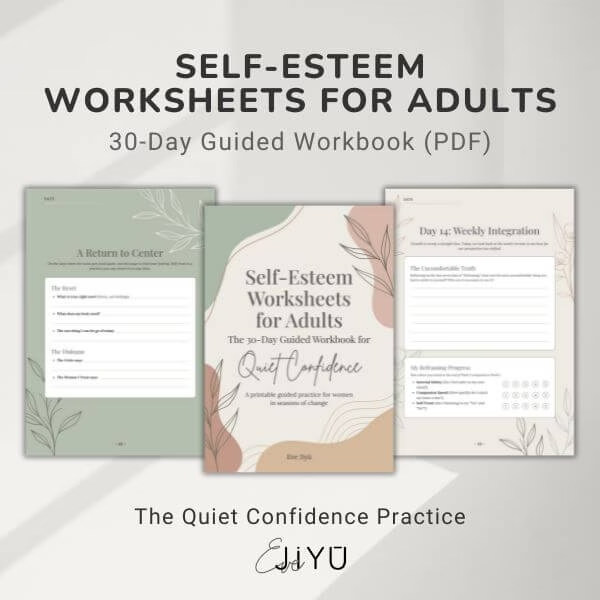
If you find yourself drawn to deeper exploration, consider tools that support reflection and self-discovery. Journaling prompts, reflective exercises, and guided practices can help you develop a more consistent creative practice without pressure or performance.
Creativity Is How You Stay in Relationship With Yourself
The seven ways people express their creative side aren’t rigid categories. They’re invitations to experiment with different forms of self-expression until you find what feels true for you.
You might write for a month, then shift to movement. You might spend a season redesigning your rituals, then return to speaking your truth more boldly. The form matters less than the intention: to stay connected to yourself through honest expression.
Creative expression isn’t about becoming someone new. It’s about remembering who you’ve always been underneath the expectations, the performance, and the need to be palatable.
You don’t need permission to be creative. You don’t need talent, time, or the perfect conditions. You just need the willingness to express what’s true for you in ways that feel honest.
Start small. Start messy. Start today.
What’s one way you express your creative side that doesn’t look like traditional art? I’d love to hear about it in the comments.
⬇⬇⬇Pin or save to read later ⬇⬇⬇







0 Comments