
In This Article
Key Takeaways
How can you fall asleep fast? To drift off quickly, you must lower your body’s core temperature and shift your nervous system from “alert” to “rest” using these proven methods:
- The 4-7-8 Technique: A rhythmic breathing pattern that deactivates the “fight or flight” response.
- Progressive Muscle Relaxation (PMR): Systematically releasing physical tension to signal the brain it is safe to sleep.
- Cognitive Shuffling: A mental exercise to scramble “anxious loops” that keep you awake.
- Environment Optimization: Keeping the room at 65°F (18°C) and removing blue light 60 minutes before bed.
- Mindful Transition: Moving from “doing mode” to “being mode” through intentional mindful activities.
Discover 7 science-backed techniques to fall asleep fast and improve sleep quality. Learn how to quiet your mind and reclaim restorative rest tonight.
You’re lying in bed, staring at the ceiling. Your body feels heavy with exhaustion, but your mind won’t stop replaying tomorrow’s meeting, last week’s conversation, or that decision you’ve been avoiding for months. You check your phone: 1:47 AM. Again.
This experience—feeling “tired but wired”—has become the silent epidemic among women navigating their late twenties through early forties. We juggle demanding careers, relationships that require emotional labor, and the constant hum of self-discovery work. Our nervous systems stay in overdrive long after we’ve closed our laptops and dimmed the lights.
The question “how can you fall asleep fast” isn’t just about speed. It’s about finding a way to gently shepherd your overstimulated mind into a state where rest becomes possible. This guide offers seven proven methods grounded in neuroscience, somatic practices, and the kind of compassionate self-awareness that honors where you are right now.
You won’t find hustle-culture rhetoric here. No “optimizing” your sleep like it’s another project to manage. Just honest, tested techniques that help you move from doing mode into being mode so your body remembers how to rest.
The Physiology Behind Falling Asleep: Why You Can’t Force Rest
Before we explore techniques, let’s understand what’s actually happening when you try to fall asleep.
Your brain produces a chemical called adenosine throughout the day. Think of it as your body’s natural sleep debt tracker. The longer you stay awake, the more adenosine accumulates, creating what scientists call “sleep pressure.” When adenosine levels get high enough, your brain starts signaling that it’s time to rest.
At the same time, your pineal gland releases melatonin in response to darkness. This hormone doesn’t knock you out like a sleeping pill. Instead, it whispers to your body that nighttime has arrived and opens the biological door for sleep to walk through.
But here’s where things get complicated for those of us managing chronic stress or burnout. When your cortisol levels remain elevated—from work pressure, emotional processing, or the mental load of managing everyone else’s needs—your nervous system stays in a state of low-grade activation. Your body can’t distinguish between a looming work deadline and an actual physical threat.
This means you can be physiologically exhausted while simultaneously too alert to sleep. The adenosine is there, the melatonin is flowing, but your sympathetic nervous system hasn’t received the memo that it’s safe to power down.
Learning how to fall asleep fast starts with recognizing that you’re not forcing sleep to happen. You’re creating the conditions that allow your body to remember it’s safe enough to let go.
Three Immediate Techniques to Fall Asleep Fast
When you need to fall asleep and your mind won’t cooperate, these evidence-based methods can help interrupt the anxiety loop and guide your nervous system toward rest.
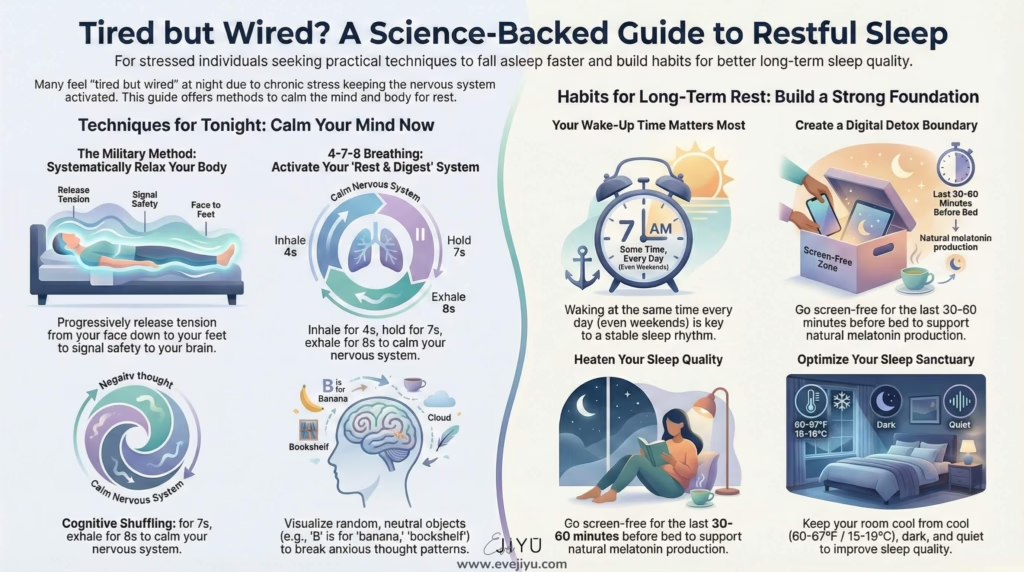
The Military Method: Systematic Physical Relaxation
The U.S. Navy developed this technique to help pilots fall asleep in less than two minutes, even in stressful conditions. The method works because it systematically releases tension from every muscle group, signaling to your brain that the body is entering a safe, rest-appropriate state.
Here’s the practice:
- Lie on your back in a comfortable position. Close your eyes and take three slow, deep breaths.
- Relax every muscle in your face. Start with your forehead. Let your eyebrows soften, your eyelids grow heavy, and your jaw go slack. Allow your tongue to rest at the bottom of your mouth.
- Drop your shoulders as far down as they’ll go. Release the tension in your neck by gently rolling your head side to side.
- Breathe out and let your chest sink. Relax your arms, starting from your shoulders down to your fingertips. Do one arm, then the other.
- Move down to your legs. Relax your thighs, calves, and feet. Imagine your legs getting heavier, sinking into the mattress.
- Clear your mind for ten seconds. Picture yourself lying in a canoe on a calm lake under a clear blue sky. Or imagine you’re in a black velvet hammock in a completely dark room. If thoughts intrude, whisper “don’t think” to yourself repeatedly for ten seconds.
The first few times you try this, it might take longer than two minutes. Your mind will wander. That’s expected. The practice is training your body to recognize this sequence as a signal for sleep.
The 4-7-8 Breathing Technique: Calming the Nervous System
Dr. Andrew Weil popularized this breathwork pattern based on ancient yogic practices. The 4-7-8 technique works by activating your parasympathetic nervous system—the branch responsible for “rest and digest” responses.
When you extend your exhale longer than your inhale, you trigger the vagus nerve, which sends a direct message to your brain that danger has passed and it’s safe to relax.
The practice:
- Position the tip of your tongue against the ridge of tissue behind your upper front teeth. Keep it there throughout the exercise.
- Exhale completely through your mouth, making a gentle whooshing sound.
- Close your mouth and inhale quietly through your nose for a count of four.
- Hold your breath for a count of seven.
- Exhale completely through your mouth for a count of eight, making the same whooshing sound.
- This completes one cycle. Repeat for four full cycles.
You might feel slightly lightheaded the first time you practice this. That’s normal as your body adjusts to increased oxygen flow. If the 4-7-8 count feels too long, try a 3-5-6 pattern instead. The key is maintaining the ratio: your exhale should be roughly twice as long as your inhale.
I use this technique on nights when my mind keeps generating “to-do” lists or replaying conversations. The counting gives my brain something specific to focus on, interrupting the anxious thought spiral.
Cognitive Shuffling: Scrambling the Worry Loop
This technique might sound odd, but the neuroscience behind it is solid. When you’re lying awake, your brain often gets stuck in what psychologists call “perseverative cognition”—repetitive thoughts about problems or stressors.
Cognitive shuffling deliberately disrupts this pattern by giving your mind a boring, non-threatening task that prevents it from latching onto anxiety-producing thoughts.
The method:
- Choose a neutral word with at least five letters. Something like “bedtime” or “garden.”
- For each letter in that word, start visualizing random objects that begin with that letter. For “B,” you might picture: butterfly, bookshelf, basketball, banana, bicycle.
- Spend about five to ten seconds visualizing each object in detail. Notice its color, texture, size.
- When you run out of B-words, move to the next letter in your original word.
- If your mind wanders to worries or planning, gently notice that and return to visualizing objects.
The key is choosing objects that have no emotional charge. Don’t picture your work laptop or your ex-partner’s car. Stick to mundane, neutral items.
This practice works because you’re occupying the same mental machinery that would otherwise be generating anxious thoughts, but you’re pointing it toward something that can’t trigger a stress response. Your brain interprets this scattered, low-stakes mental activity as a sign that you’re in a safe environment where deep thinking isn’t required.
Building Your Pre-Sleep Ritual: Setting the Stage for Rest
While the techniques above offer immediate tools for nights when sleep won’t come, improving sleep quality over time requires what I call a “grounding ritual”—a consistent sequence of activities that signal to your nervous system that the day is ending.

The Digital Detox Boundary
The blue light from screens suppresses melatonin production, but the real problem goes deeper. Scrolling through social media, checking work emails, or consuming news keeps your mind in a state of active engagement. Your brain doesn’t distinguish between “just one more story” and active problem-solving.
Research shows that using screens within an hour of bedtime delays sleep onset and impairs sleep quality; experimental studies of light‑emitting devices before bed find significantly longer time to fall asleep compared with non‑screen conditions.
Create a firm boundary: no screens for the final hour before bed. If that feels impossible, start with thirty minutes and gradually extend it.
What do you do instead? This is where mindful activities become essential. Reading physical books, gentle stretching, writing in a journal, or having an unhurried conversation with someone you care about all allow your mind to downshift naturally.
Somatic Release: Moving Energy Out of Your Head
Many of us spend our days living almost entirely in our minds. We think, analyze, plan, and worry. By bedtime, we’re carrying hours of accumulated mental tension with no physical outlet.
A brief somatic practice helps move that energy from your head into your body, where it can be released rather than recycled into more thoughts.
Try this fifteen-minute sequence:
- Sit comfortably on the floor or on your bed. Close your eyes and take three deep breaths, noticing where you feel tightness or holding in your body.
- Gently roll your shoulders backward five times, then forward five times. Let your arms hang loose.
- Tilt your head slowly from side to side, bringing your ear toward your shoulder. Hold each side for five breaths.
- Place one hand on your heart and one on your belly. Breathe deeply into your hands for two minutes, feeling your chest and abdomen rise and fall.
- Lie down and spend the final ten minutes in a grounding meditation, using body scan or breath awareness to anchor your attention in the present moment.
This practice doesn’t need to be perfect or sophisticated. The goal is simply to inhabit your physical body again after a day of living primarily in your thoughts.
Environmental Optimization: Temperature, Light, and Sound
Your bedroom environment directly affects your ability to fall asleep and stay asleep. Small adjustments can make a significant difference.
- Temperature: Your core body temperature needs to drop slightly for sleep to occur. The ideal room temperature for most people falls between 60-67°F (15-19°C), with 65°F (18°C) considered optimal. If you run warm, aim for the cooler end of that range.
- Light: Complete darkness signals your brain to produce melatonin. If you can see your hand in front of your face, your room isn’t dark enough. Use blackout curtains or a sleep mask. Cover any LED lights from electronics with tape.
- Sound: Some people sleep better in complete silence; others prefer white noise or nature sounds to mask sudden noises that might wake them. Neither is wrong. Experiment to find what works for your nervous system.
- Bedding: Invest in what touches your skin. Natural fibers like cotton or linen allow your body to regulate temperature better than synthetic materials. A weighted blanket can provide gentle pressure that some people find calming, particularly if you experience anxiety.
These adjustments create what sleep researchers call “sleep hygiene,” but I prefer to think of it as creating a sanctuary—a space that your nervous system recognizes as safe and dedicated to rest.
How to Improve Sleep Quality Over Time
Falling asleep fast on difficult nights helps, but sustained improvements require looking at the patterns and habits that shape your relationship with sleep.

The Consistency Principle: Why Your Wake Time Matters More Than Bedtime
Most sleep advice focuses on going to bed at the same time every night. While consistency helps, neuroscience suggests that your wake time matters more.
Your circadian rhythm—your body’s internal 24-hour clock—resets each morning when light hits your eyes. When you wake at the same time every day (yes, even weekends), you anchor your body’s biological rhythms to a predictable pattern.
Choose a wake time you can maintain seven days a week. Set it and honor it for at least two weeks. Your body will gradually adjust, and you’ll likely find yourself naturally feeling sleepy at an appropriate bedtime.
This approach requires patience. You might feel tired initially if you’re currently sleep-deprived. That’s the sleep pressure building, which is exactly what you need to fall asleep more easily at night.
The Caffeine and Alcohol Truth
Caffeine has a half-life of about five to six hours, meaning that half the caffeine from your 3 PM coffee is still in your system at 9 PM. If you’re struggling with sleep, move your last caffeinated drink to before 2 PM and observe what changes.
Alcohol presents a trickier problem. Yes, it can make you feel drowsy initially. But as your body metabolizes alcohol during the night, it disrupts your sleep architecture, particularly your REM cycles. You might fall asleep easily after wine, but the quality of that sleep will be poor.
I’m not suggesting you never have an evening drink. I am suggesting you notice the connection between what you consume and how you sleep. Track it for two weeks. The data might surprise you.
Movement and Light: Anchoring Your Circadian Rhythm
Your body’s internal clock responds to two primary signals: light exposure and physical activity.
Getting bright light (ideally natural sunlight) within thirty minutes of waking tells your brain that day has started. This helps regulate melatonin production later. Even ten minutes outside makes a difference.
Physical movement during the day increases adenosine accumulation (that sleep pressure we discussed earlier). You don’t need intense workouts. A twenty-minute walk, gentle yoga, or dancing in your kitchen all count.
The timing matters less than the consistency. Find what fits your life and do it regularly.
Troubleshooting the 3 AM Wake-Up
You fall asleep fine, but you wake at 3 AM with your heart racing and your mind spinning. This pattern often indicates elevated nighttime cortisol or unprocessed emotional material surfacing when your mental defenses are down.

What Your Midnight Anxiety Is Telling You
Those 3 AM thoughts—the spiraling worries, the replayed conversations, the planning that feels urgent—often point to daytime concerns you’ve been pushing aside. Your unconscious mind uses the quiet of night to bring them forward.
Rather than fighting these wake-ups, try treating them as information. Keep a small notebook by your bed. When you wake, jot down what your mind is circling. Tell yourself: “I’ve captured this. I’ll think about it tomorrow.” This simple act of externalizing the thought often allows your brain to let go.
The Get-Out-of-Bed Rule
If you’ve been awake for more than twenty minutes, get out of bed. Sitting in bed frustrated trains your brain to associate your mattress with wakefulness and anxiety.
Go to another room. Keep the lights dim. Do something genuinely boring—fold laundry, read something unstimulating, sit quietly. Wait until you feel sleepy again, then return to bed.
This might feel counterintuitive when you’re exhausted and want to stay under the covers. But the goal is retraining your brain to link your bed exclusively with sleep, not with lying awake worrying.
Processing Before Sleep
If you consistently wake with anxious thoughts, you might need a dedicated time earlier in the evening to process what’s on your mind. Set aside fifteen minutes around 7 or 8 PM to write about whatever is bothering you or to make lists of what needs attention tomorrow.
This “worry time” gives your concerns a designated space, reducing the likelihood they’ll hijack your sleep. You’re not ignoring them; you’re containing them.
Questions to Deepen Your Sleep Practice
As you experiment with these methods, these reflective questions can help you understand your unique relationship with sleep:
- What does my body feel like when I’m genuinely ready for sleep, versus when I think I “should” be tired? Learning to distinguish actual sleepiness from exhaustion helps you time your bedtime more accurately.
- Which technique feels most natural to my temperament? Some people respond better to physical practices like progressive muscle relaxation, while others prefer mental techniques like cognitive shuffling. Notice what resonates.
- What am I typically doing in the hour before I try to sleep? Track your pre-sleep activities for a week. Do you notice patterns between what you do and how easily you fall asleep?
- Am I using my bed for activities other than sleep? Working, watching TV, or scrolling in bed can weaken your brain’s association between your mattress and rest.
- What thoughts or worries most commonly keep me awake? Identifying patterns helps you address root causes during daytime hours.
- How does my sleep change with my menstrual cycle? Many women find their sleep needs and patterns shift throughout the month. Tracking this can reduce frustration when sleep feels more elusive during certain phases.
A Gentle Exercise: Your Personal Sleep Audit
Take ten minutes this week to complete this brief assessment:
- Step 1: For seven nights, note what time you get into bed, approximately when you fall asleep, and when you wake up. Don’t aim for perfect timing—just notice your current patterns.
- Step 2: Each morning, rate your sleep quality from 1-5 and note any factors that might have affected it (caffeine timing, stress level, exercise, screen time before bed).
- Step 3: Review your notes after seven days. Look for connections. Does your sleep quality improve on days when you exercise? Does it worsen after evening screen time? Does staying up past a certain hour make falling asleep harder?
- Step 4: Choose one small change based on what you noticed. Just one. Implement it consistently for two weeks and observe the effects.
This isn’t about achieving perfect sleep immediately. You’re gathering data about your unique nervous system and sleep needs. That information becomes the foundation for sustainable improvement.
Sleep as Self-Respect
Learning how to fall asleep fast and how to improve sleep quality isn’t really about sleep at all. It’s about honoring the fact that your body needs rest to function, your mind needs darkness to process the day, and you are not a machine designed for endless productivity.
The women I work with often discover that their sleep struggles stem from a deeper discomfort with being “unproductive.” We’ve been conditioned to value ourselves based on what we accomplish, how much we do, and how little we need. Rest feels like weakness. Sleep feels like time wasted.
But rest is the foundation for everything else you want to create, feel, or become. Your creative voice, your capacity for joy, your ability to make clear decisions, your emotional resilience—all of these depend on your nervous system getting adequate recovery time.
The seven methods in this guide work because they address the actual mechanisms that prevent sleep: nervous system dysregulation, environmental factors, circadian disruption, and the mental habits that keep your mind spinning. They’re not hacks or shortcuts. They’re practices that help your body remember what it already knows how to do.
You don’t need to implement all of them tonight. Start with the technique that feels most accessible. Practice it for a week. Notice what shifts. Then, if you want, add another element.
Your relationship with sleep can change. It requires patience, consistency, and a willingness to prioritize your rest as seriously as you prioritize everything else demanding your attention. But the women who make this shift consistently report that better sleep changes everything: their mood, their decision-making, their relationships, their creative capacity.
Your body wants to sleep. Sometimes it just needs your help remembering how.
For more grounded approaches to nervous system regulation and burnout recovery, explore the comprehensive guide on sleep optimization for women, which goes deeper into the long-term patterns that support sustainable rest.
What’s one change you’re willing to try this week? What’s been your biggest barrier to falling asleep? Share your experience in the comments.
⬇⬇⬇Pin or save to read later ⬇⬇⬇













0 Comments