
In This Article
A grounded guide to creative voice for beginners who feel they haven’t earned the right to create—but know something inside them needs to be said.
You stare at the blank page. Or the empty canvas. Or that voice memo app you opened three weeks ago and haven’t touched since.
There’s something you want to say. A feeling that needs shape. An idea that keeps circling back at 2 AM when you can’t sleep.
But the word “artist” sticks in your throat like swallowed glass.
Artists have degrees, right? Studios with good lighting, galleries, followers. Natural talent that announced itself in childhood. They’re the people who always knew. The ones who never stopped creating while you were busy building a career, managing a household, being responsible.
You’re just someone who sometimes wants to write. Or paint. Or take photos that mean something beyond proof you were there.
Here’s what I need you to understand before we go any further: finding your artistic voice when you don’t feel like an artist isn’t about earning credentials or discovering some hidden genius. Your voice already exists, sitting quietly under the noise of what you thought you should be doing.
This article offers seven grounded steps to help you hear what’s already inside you. Your artistic voice is simply your unique way of seeing the world, filtered through everything you’ve lived and felt and survived. Not a professional title. Not a badge you have to qualify for.
Just you, choosing to express what only you can express.
Step 1: Recognize That Your Creative Voice Already Exists
I spent years believing creativity belonged to other people – the talented ones. The naturally gifted. The kids who won art contests while I was memorizing multiplication tables and trying to be good.
At 30, I was a project manager in a big town, staring at funding documents and slowly suffocating. I’d loved writing as a child. Drew constantly. Made up stories. Then somewhere along the way, I learned that serious people don’t waste time on things that don’t produce results.
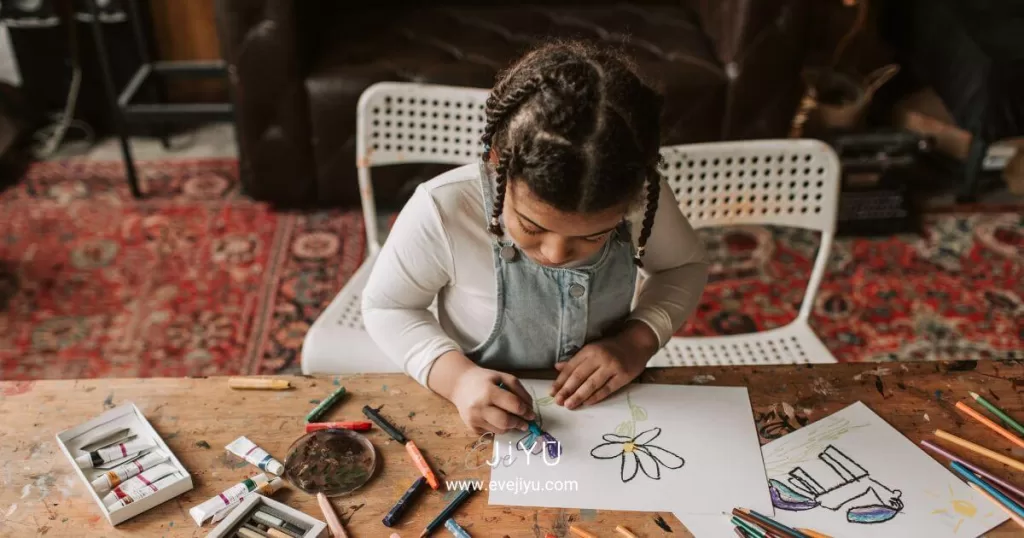
The myth of the “Capital A” Artist turns creative expression into an exclusive club. You need the right background, the right training, the right kind of mind. You need to produce work that other people recognize as Art with a capital A.
Research on creative development shows that everyone has creative capacity, but socialization often teaches us to suppress it in favor of more “practical” pursuits. We learn to color inside the lines, both literally and metaphorically.
Your artistic voice isn’t something you find or create from scratch. You already carry your unique constellation of life experiences, beliefs, wounds, joys, and perspective. The search for authentic creative expression is really the process of un-muting your natural way of seeing and expressing.
Think about how you describe a bad day to your best friend. The specific words you choose. The details that matter to you. The way you frame the story so it makes sense of the chaos you felt.
That’s voice showing up in everyday conversation.
You already have opinions about what makes a room feel safe. What colors sit wrong in your gut. Which stories make you cry and which ones make you angry. What music sounds like loneliness. What faces tell you someone’s pretending to be fine.
All of that is voice. You’re not looking for something new, you’re listening for something that’s been there all along, buried under years of learning to be acceptable.
When I quit my corporate job to move to Bali, I thought I needed to become someone different to be creative. Turns out I just needed to stop performing and start listening to what I actually thought about my life.
Action step for recognizing your existing voice:
For the next three days, pay attention to how you naturally describe things. Notice the specific words and phrases you use when you’re not trying to sound smart or professional. Write them down. Those patterns are your voice announcing itself.
Step 2: Understand the Perfectionism Block That Stops Creative Voice for Beginners
Here’s the real block to finding your artistic voice when you don’t feel like an artist: you’ve trained yourself that worth is tied to perfect output.
If you’re reading this, you’re probably someone who succeeded by being good at things. School, work, relationships. You learned early that mistakes have consequences. That messy first drafts get red marks. That showing up unprepared means embarrassment.
So you apply the same rules to creativity. You sit down to write and the inner critic immediately starts grading. Real writers don’t struggle like this. Real artists know what they’re doing.
The burned-out achiever and the blocked creator share the same wound. You’ve spent decades proving your worth through performance. Creativity requires vulnerability without guaranteed outcomes.
Your inner critic demands a masterpiece before you’ve written the first sentence. It wants proof you’re allowed to take up space in the creative world.
That voice isn’t protecting you from failure. That voice is keeping you silent while your real creative voice suffocates.
I know this pattern intimately because I lived it. After I moved to Bali with $20,000 and zero business experience, I tried to launch an e-commerce venture. Failed spectacularly. Lost most of my savings in eight months.
But somewhere in the wreckage, I started writing. Just writing. Not for clients or marketing or proving anything. Writing to figure out what I actually thought about my life.
The change happened when I stopped asking “is this good enough?” and started asking “is this true?”
Action step for understanding your perfectionism block:
Write down the last time you wanted to create something but stopped yourself. What thoughts came up? What did your inner critic say? Whose voice does it sound like—yours, a parent’s, a teacher’s? Name the specific fear underneath the perfectionism.
Step 3: How to Quiet the Inner Critic for Creativity Through Intentional Play
Overcoming creative blocks starts with giving yourself permission to make something intentionally ugly.
Today, if you have ten minutes, create something with the explicit goal of making it weird, bad, or deliberately off-putting. Write a paragraph describing your morning in the most overwrought, melodramatic language possible. Doodle something grotesque. Take photos of the ugliest corner of your apartment.
This practice rebuilds your relationship with creative play. Low-stakes experimentation gives you access to flow state without the pressure of producing something valuable. The goal isn’t a finished piece that proves you’re talented. The goal is feeling what happens in your body and mind when you’re making something for pure pleasure.
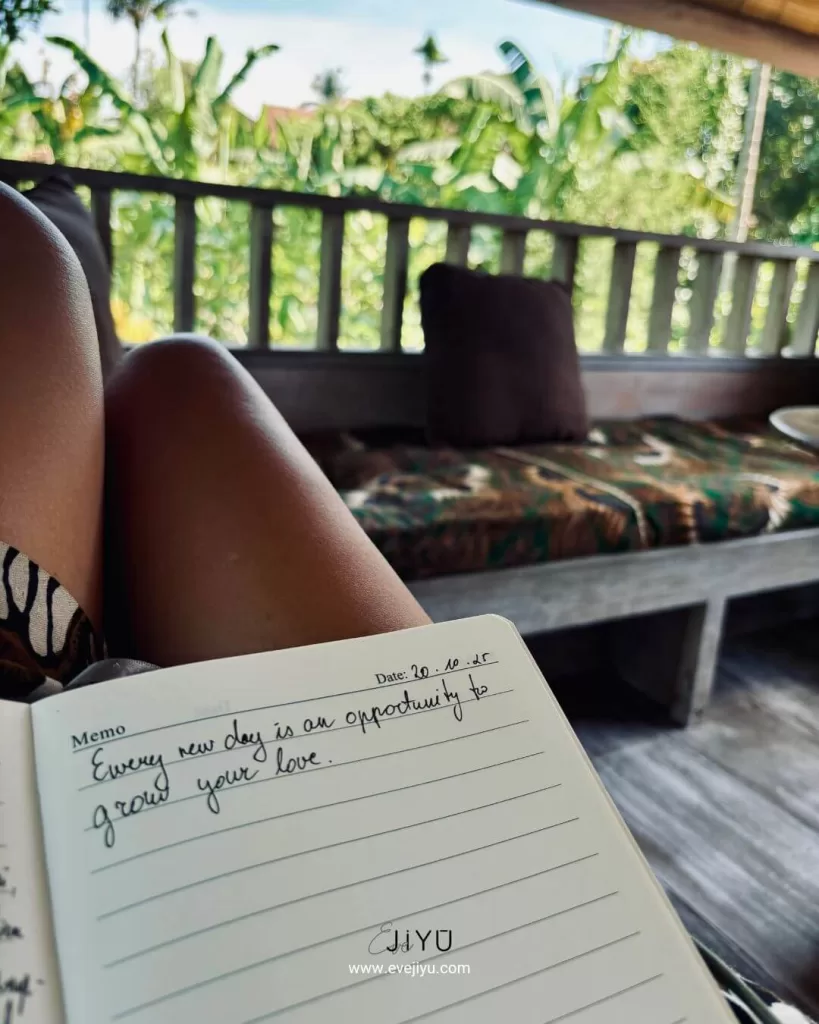
When I was broke in Bali, taking random Fiverr gigs at five dollars an hour, I started keeping a daily writing practice. Some days I wrote three pages. Some days three sentences. Quality didn’t matter. Showing up mattered.
That practice taught me something crucial about authentic creative expression: your voice emerges through volume, not perfection. You can’t think your way there. You have to create your way there, one messy attempt at a time.
Play gives you permission to suck. Sucking is the prerequisite for discovering what’s real.
Action step for intentional play:
Set a timer for ten minutes. Create something with the goal of making it as weird, ugly, or off-putting as possible. Write badly on purpose. Draw something intentionally grotesque. Take photos of things you’d normally ignore. Notice how it feels to remove the pressure of making something good.
Step 4: Discover Your Creative Signature Through What You Already Love
Your creative voice is already reflected in your tastes and attractions. This is how you begin trusting creative intuition instead of looking for external validation.
What subjects do you linger over? What colors make your chest feel open? What themes show up repeatedly in the books you love, the art you save on your phone, the conversations you replay in your head?
These patterns aren’t random. They’re clues pointing directly to your authentic creative expression.
Start paying attention to what attracts you without trying to justify why. Maybe you’re obsessed with images of empty rooms. Or stories about women who disappear. Or that specific shade of blue-gray that feels like late autumn.
Your taste is a map to your voice waiting to be read.
I started noticing patterns in what I was drawn to. Stories about women leaving everything behind. Articles about people who chose authenticity over security. Photos of spaces that felt both isolated and peaceful.
Those patterns told me something about what I needed to express. My writing voice emerged from paying attention to what already resonated, then asking why those things mattered to me specifically.
Questions to explore your creative signature:
- What topics or themes do you find yourself returning to in conversations, even when they’re not directly relevant?
- If you could spend three hours in a museum, which room would you stay in longest and why?
- What kind of story or art makes you feel seen in a way that’s almost uncomfortable?
- What do you wish someone would create that you haven’t found yet in the world?
Action step for discovering your signature:
Open a note on your phone or grab a cheap notebook. For the next two weeks, capture anything that catches your attention. A phrase someone said. A color combination that stopped you. A mood you can’t name. Don’t analyze it. Just collect the raw data of what moves you. At the end of two weeks, read through your notes. What patterns emerge? What shows up more than once? Those patterns are your signature trying to announce itself.
Step 5: Create Without an Audience to Protect Your Emerging Voice
The fastest way to kill your creative voice is creating for other people’s approval before you’ve found what you actually want to say.
I know the temptation. You want to share what you make, get feedback, prove you’re doing it right. But seeking validation before you’ve found your voice is like asking someone else to tell you what you think.
For now, create in private – no posting, no sharing, no showing drafts to your partner or your best friend.
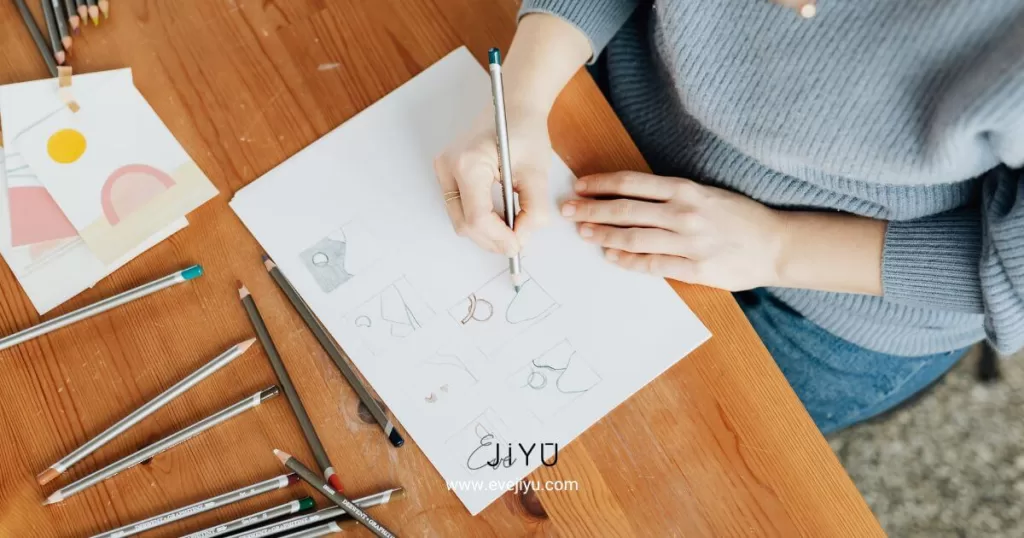
This practice creates safety for creative voice for beginners. When you know no one will see what you’re making, you stop performing. You stop editing yourself mid-sentence. You stop asking “will they like this?” and start asking “is this true?”
My morning writing practice is just for me. No one reads it. Some of it’s garbage. Some of it’s raw and embarrassing. But finding my artistic voice when I don’t feel like an artist happens there, in that private space where I don’t have to defend or explain myself.
The “no witnesses” rule removes the fear of judgment, which is the biggest block between you and authentic creative expression.
Action step for creating without an audience:
Create something today that will never leave your notebook. Write a page that no one will ever read. Draw something you’ll never post. Take a photo you won’t share. Notice how that changes what you allow yourself to say and express.
Step 6: Learn from Others Without Losing Your Own Voice
Here’s permission to study other creators without guilt or confusion about finding your artistic voice when you don’t feel like an artist.
Look at work that attracts you. Work that disturbs you. Work that makes you angry or envious or desperately curious. Those reactions are data about what your creative voice wants to explore.
But don’t copy one source exclusively. Copy many sources and mix them badly on purpose.
Your voice emerges in how you integrate influences, not in trying to sound original from scratch. Read the writers who make you want to write. Study the artists whose work makes you feel something you can’t name. Then sit down and create something that’s your weird, imperfect synthesis of everything you’ve absorbed.
Austin Kleon’s book “Steal Like an Artist” taught me this principle. Your influences are building blocks, not blueprints. The way you combine them—what you keep, what you reject, what you exaggerate—that combination is your voice emerging.
I’ve read hundreds of essays about women reinventing their lives. I’ve studied writers who are brutally honest about failure. I’ve absorbed storytelling techniques from fiction and journalism and personal blogs. My voice is the messy collision of all those influences, filtered through my specific experiences in Bali, Lithuania, burnout, and financial disaster.
Your voice is what happens when you stop trying to sound like one person and start sounding like yourself, informed by everyone who taught you something valuable.
Action step for learning from others:
Choose three creators whose work you admire or envy. Study what specifically draws you to their work. Is it their honesty? Their rhythm? Their subject matter? Their use of color or language? Then create something that attempts to combine elements from all three in your own messy way. The combination is where your voice lives.
Step 7: Build Creative Momentum Through the Five-Minute Practice
The biggest lie about creativity is that you need huge blocks of time and perfect conditions to do meaningful work. This final step shows you how overcoming creative blocks happens through consistency, not inspiration.
You need five minutes and permission to make a mess.
Set a timer. Five minutes. Write one paragraph about how your body feels right now. Sketch the view from your window. List ten things you noticed today that no one else probably saw. Describe a color using only sensory details, no color names allowed.
Five minutes total. Nothing more required.
The goal isn’t to create something meaningful in that moment. The goal is momentum over mastery. You’re building the habit of showing up, which is infinitely more valuable than waiting for inspiration or the right moment or enough skill.
I started my writing practice with five minutes every morning. Some days I wrote more. Some days I stopped at five and felt nothing special. But the consistency taught my brain that creating was safe, low-stakes, and didn’t require performance or perfection.
Finding your artistic voice when you don’t feel like an artist doesn’t emerge from grand gestures. It emerges from small, repeated acts of showing up and saying what’s true right now.
Research on habit formation shows that consistency matters more than intensity. Small daily actions compound into significant change over time. Five minutes every morning builds more creative stamina than occasional three-hour sessions when inspiration strikes.
Your artistic voice is like a muscle. It gets stronger and more reliable the more you use it through trusting creative intuition.
Five-minute creative prompts for this week:
- Write about the last time you felt completely yourself. Where were you? What were you doing? What made that moment different from your usual experience?
- Describe your perfect Tuesday. Not vacation Tuesday. Regular Tuesday. What does it look like from morning to night if you designed it?
- Make a list of things you believed at 20 that you don’t believe anymore. Pick one belief and write three sentences about when it shifted.
- Draw or describe your current emotional state as a weather pattern. What’s the temperature? Is there sun? Storm clouds? Fog?
- Write a letter to yourself at 18. One thing you wish you’d known. One thing you’re proud of. One thing that surprised you about who you became.
Action step for building momentum:
Commit to five minutes of creative practice every morning for the next seven days. Set a timer. When it goes off, you’re done. No pressure to continue. No judgment about what you made. Just seven days of showing up.
The Long Game: Finding Your Artistic Voice as an Ongoing Practice
Your artistic voice isn’t a destination you find and then you’re done forever. It’s a presence you cultivate. It evolves as you evolve, as your life changes, as you learn new things about yourself and the world.
The woman I was at 31, suffocating in an office, had a different voice than the woman at 34, writing from Bali after three years of figuring things out the hard way. Both voices were real. Both were mine at those specific moments in time.
You don’t arrive at a final version of your creative voice. You deepen your relationship with it. You get better at hearing it under the noise. You learn to trust what it tells you, even when it doesn’t sound like what you think you should be saying.
These seven steps for finding your artistic voice when you don’t feel like an artist aren’t a linear path you complete once. They’re practices you return to again and again, each time discovering something new about authentic creative expression.
Some days you’ll need step three, giving yourself permission to play badly. Other days you’ll need step five, creating without an audience. Sometimes you’ll cycle back to step two, recognizing how perfectionism is blocking you again.
The blank page isn’t judging you. The canvas isn’t demanding credentials. The creative voice inside you isn’t asking for proof you’re worthy of taking up space.
It’s just asking to be heard and given permission to speak.
Questions for the long creative journey:
- What would you create if you knew no one would ever see it or judge it harshly?
- What’s one thing you’ve always wanted to try creatively but talked yourself out of? What story do you tell yourself about why you can’t?
- If you gave yourself permission to be a beginner at something creative for six months, no pressure to be good, what would you choose?
- What does your inner critic sound like when you’re trying to create? Whose voice is it really—yours, or someone else’s you internalized years ago?
Start today with step one. Recognize that your creative voice already exists. You’re not searching for something you lack. You’re uncovering something that’s been there all along.
Five minutes. No witnesses watching over your shoulder. No pressure to be good or original. Just you and whatever wants to come through you right now.
Finding your artistic voice when you don’t feel like an artist begins there. Not in talent or training or earning the right title. In showing up and letting yourself speak your truth, even if your voice shakes.
The world doesn’t need more perfect art made by people who already feel like artists. The world needs your specific, imperfect, deeply human perspective expressed in your own weird way.
That’s what authentic creative expression really means. That’s what trusting creative intuition looks like in practice. That’s how you quiet the inner critic for creativity and start making work that matters to you.
Your voice is already there. You just have to stop long enough to listen.
What’s your relationship with creativity right now? Are you giving yourself permission to create, or still waiting to feel like you’ve earned it? I’d love to hear where you’re stuck. Leave a comment below or explore my guide on overcoming perfectionism and people-pleasing for more grounded practices on breaking free from the patterns that keep you stuck.







0 Comments