
In This Article
Key Takeaways
- The Intentional Shift: Moving from “productive” hobbies to soul-nourishing activities is the antidote to burnout. Real hobbies for women should create space, not obligations.
- Top Recommendations: Pottery, forest bathing, and intuitive painting rank as top female hobbies for mental clarity and emotional recovery.
- Lifelong Growth: Discovering hobbies for women over 50 focuses on legacy, community, and neurological health rather than performance or productivity.
- Low Pressure: The best hobbies for women require zero “hustle” and no social media posting. They exist for you alone.
Discover grounded hobbies for women that restore creative energy instead of adding pressure. From pottery to forest bathing, these female hobbies honor your need for connection, not content.
Most lists of hobbies for women read like aspirational Instagram captions. Learn calligraphy. Start a side business selling macrame. Document your sourdough journey for followers who don’t actually exist yet.
The problem isn’t the activities themselves. The problem is the underlying message: your free time should be monetizable, Instagrammable, or at minimum, impressive at dinner parties.
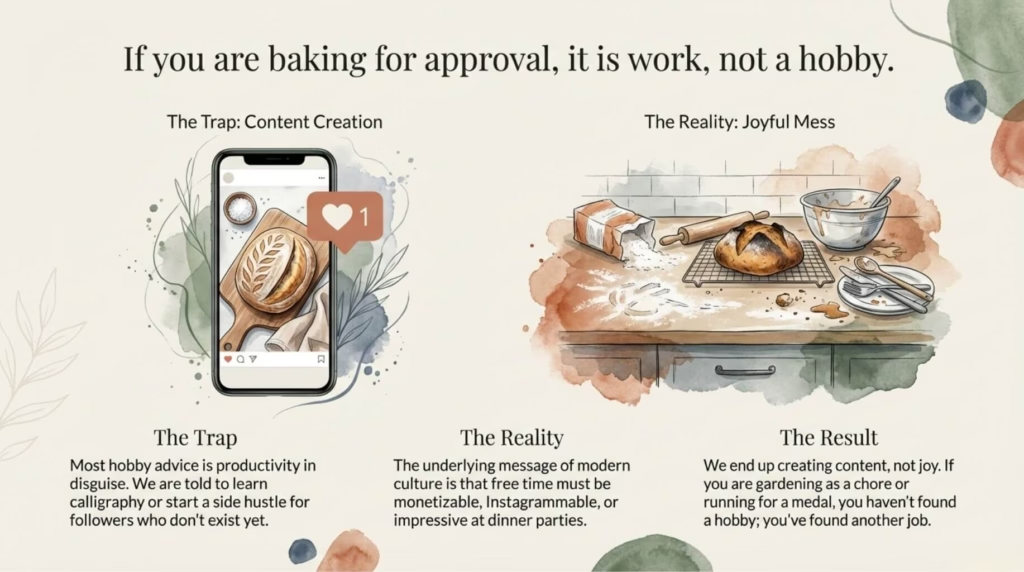
I spent my twenties trying hobbies that looked good on paper. I took up running because it seemed like something accomplished women did. I tried bullet journaling because the spreads were beautiful. I started a food blog that lasted exactly three posts before I realized I was creating content, not joy.
What actually changed things for me was moving to Bali and buying cheap watercolors with no plan to show anyone. I painted my moods onto paper while sitting on my balcony. Some days it was just muddy brown swirls. Other days, bright reds that didn’t mean anything except that I felt something. No followers. No likes. Just me and the act of making something that didn’t need to serve anyone else.
That’s when I understood what a real hobby actually is. Not another performance. Not another thing to optimize. Just a space where you remember how to be human.
When you’re searching for hobbies for women, you’re often looking for permission to stop producing and start existing. This guide offers twelve activities designed not to add to your resume but to help you recover the parts of yourself that got buried under everyone else’s expectations.
The Science of Play: Why Hobbies for Women Matter Now
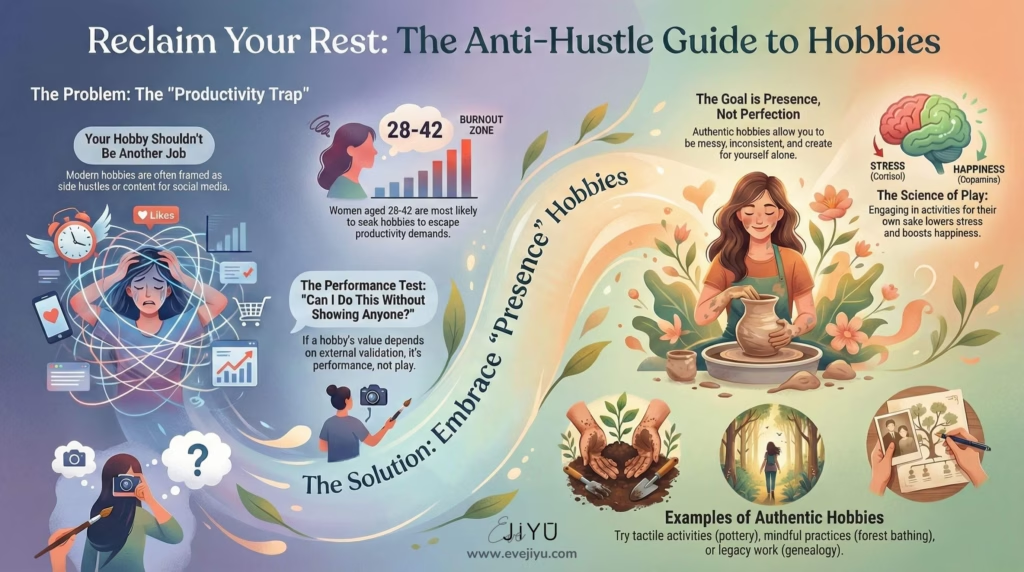
There’s a specific age bracket where women start Googling “what is a good hobby for a woman?” and it usually happens somewhere between 28 and 42. This is the burnout zone. You’ve been productive for a decade. You’ve built something. You’ve shown up. And now your nervous system is quietly begging for activities that don’t involve output metrics.
Neuroscience research shows that creative play lowers cortisol and increases dopamine production in ways that traditional “relaxation” often doesn’t. When you engage in activities purely for the sake of the activity itself, your brain shifts from survival mode to regenerative mode. This isn’t about bubble baths or vision boards. This is about giving your mind permission to wander without a destination.
The problem with most lists of female hobbies is that they perpetuate the same productivity trap they claim to solve. Baking sounds soothing until you realize you’re baking for other people’s approval. Gardening sounds grounding until it becomes another chore on your list. Even yoga can become performance art if you’re constantly measuring progress.
Real hobbies for women over 50, over 30, or any age are the ones where you can show up messy and incomplete. They’re the activities where “good enough” is actually good enough. They’re the spaces where you don’t have to explain why you’re doing it or justify the time spent.
Research shows women experience disproportionate burnout from being conditioned to stay ‘on’ for others. The antidote isn’t more self-care routines. It’s finding activities that exist solely for your own internal world. When you’re struggling with what feels like constant overwhelm, sometimes the most radical thing you can do is engage in low-pressure activities for women when overwhelmed that ask nothing of you except presence.
The hobbies in this guide aren’t chosen because they’re trendy or because they photograph well. They’re chosen because they create space for you to remember who you are when nobody’s watching.
4 Tactile Hobbies for Creative Expression
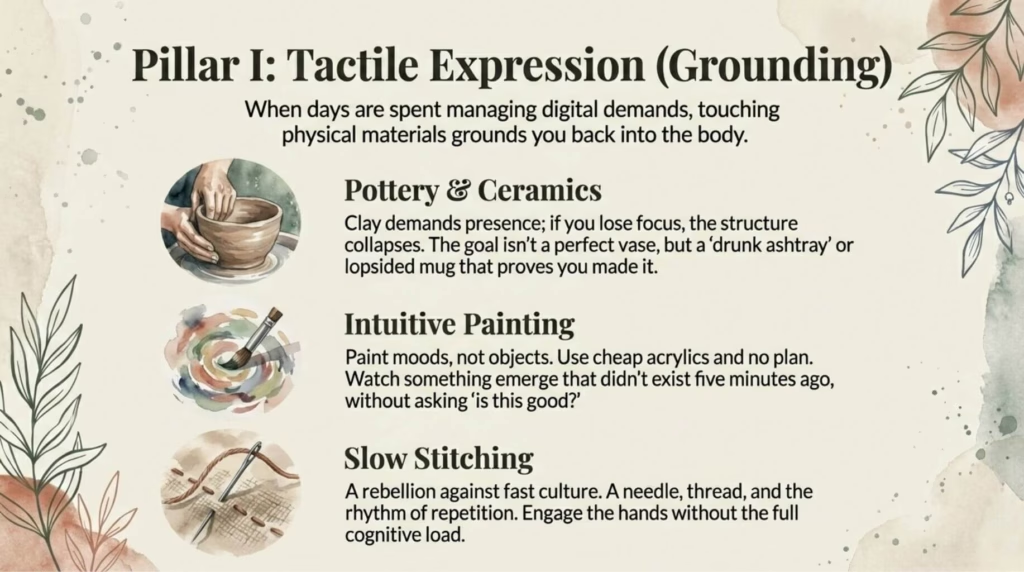
There’s something deeply restorative about working with your hands. When your days are spent managing emails, schedules, and other people’s needs, touching physical materials grounds you back into your body.
1. Pottery and Ceramics: The Grounding Nature of Clay
Pottery is one of those hobbies for women that sounds intimidating until you actually sit down at a wheel. I tried it once at a community studio in Bali. My first bowl looked like a drunk ashtray. My second attempt collapsed entirely. And I left feeling lighter than I had in months.
Clay doesn’t care about your credentials. It responds to pressure and presence. When you’re working with your hands in wet earth, your mind stops running the same anxious loops. You’re forced into the present moment because the clay will literally fall apart if you’re not paying attention.
You don’t need to become a ceramicist. You just need to find a local studio that offers drop-in sessions. Most cities have beginner-friendly pottery classes where you can show up, make something imperfect, and leave without taking it too seriously.
What makes pottery one of the best female hobbies is that you can see immediate results without pressure for perfection. Every lopsided mug is proof that you made something with your own hands.
2. Intuitive Painting: Moving Away From “Fine Art”
I spent years believing I wasn’t “good enough” to paint because my high school art teacher told me painting wasn’t a viable profession. So I stopped. For over a decade, I didn’t touch a brush.
When I finally started again, I didn’t paint anything recognizable. I painted feelings. I let colors bleed into each other. I didn’t aim for gallery walls or Instagram likes. I aimed for the feeling of moving a brush across paper and watching something emerge that didn’t exist five minutes ago.
Intuitive painting is one of the most liberating hobbies for women because it removes the question “is this good?” You’re not trying to reproduce reality. You’re trying to express something that words can’t hold.
Buy cheap acrylics and poster board. Set a timer for 20 minutes. Paint without planning. Let yourself make something ugly. The point isn’t the finished product. The point is that for 20 minutes, you existed outside of judgment. This practice is central to finding your artistic voice through creative expression, which isn’t about becoming a professional artist but about reclaiming your right to create without apology.
3. Slow Stitching and Embroidery: A Meditative Alternative to Fast Fashion
Embroidery is one of those women hobbies that got dismissed as “grandma craft” for decades. Then somewhere in the past few years, younger women started reclaiming it as a form of quiet rebellion against a culture that demands we always be fast and loud.
Slow stitching is exactly what it sounds like. You take a needle, thread, and fabric. You make small, deliberate stitches. There’s no app to download. No algorithm to feed. Just the rhythm of thread moving through cloth.
What I love about embroidery is that you can do it while listening to music, sitting in a park, or waiting for water to boil. It asks for your hands but not your full cognitive load. This makes it one of the best hobbies for women who want to stay creatively engaged without the pressure of starting something from scratch.
You can find beginner embroidery kits online that come with pre-printed patterns. Or you can just buy fabric and make it up as you go. Either way, you’re creating something tangible at a pace that feels human.
4. Bookbinding and Journal Making: Creating Containers for Your Thoughts
There’s something deeply satisfying about making the book you’ll write in. Not buying a journal off the shelf, but actually binding the pages yourself, choosing the paper, deciding how thick or thin it should be.
Bookbinding sounds complicated, but the simplest forms are remarkably accessible. A pamphlet stitch takes about 15 minutes to learn and requires nothing more than paper, thread, and a needle. You fold sheets of paper in half, stack them, and sew them together along the spine. That’s it.
I started making my own journals after years of buying beautiful notebooks that felt too precious to write in. When you make the journal yourself, you remove that pressure. It’s just paper you stitched together. You can write messy thoughts, draw terrible sketches, or paste in ticket stubs without worrying about “ruining” something expensive.
This is one of the most meaningful hobbies for women because it creates a physical container for your internal world. Each journal you bind becomes a space for the thoughts and feelings that don’t fit anywhere else. You’re not just making a book. You’re making permission to take yourself seriously.
You can find basic bookbinding tutorials on YouTube or take a beginner class at local art centers. Start with simple pamphlet binding, then explore Japanese stab binding or coptic stitching if you want to go deeper. The goal isn’t to become a professional bookbinder. The goal is to create something that holds your words.
Finding Your Artistic Voice
These tactile hobbies aren’t about becoming an artist. They’re about remembering that you already are one. Before the world told you to be productive, you were creative. You drew on walls. You made mud pies. You built imaginary worlds out of nothing.
The goal isn’t mastery. The goal is to reconnect with the part of you that creates because it feels good to make something. When you work with your hands, you’re not just making objects. You’re making space for yourself to exist without explaining why.
4 Mindful Hobbies for Emotional Healing
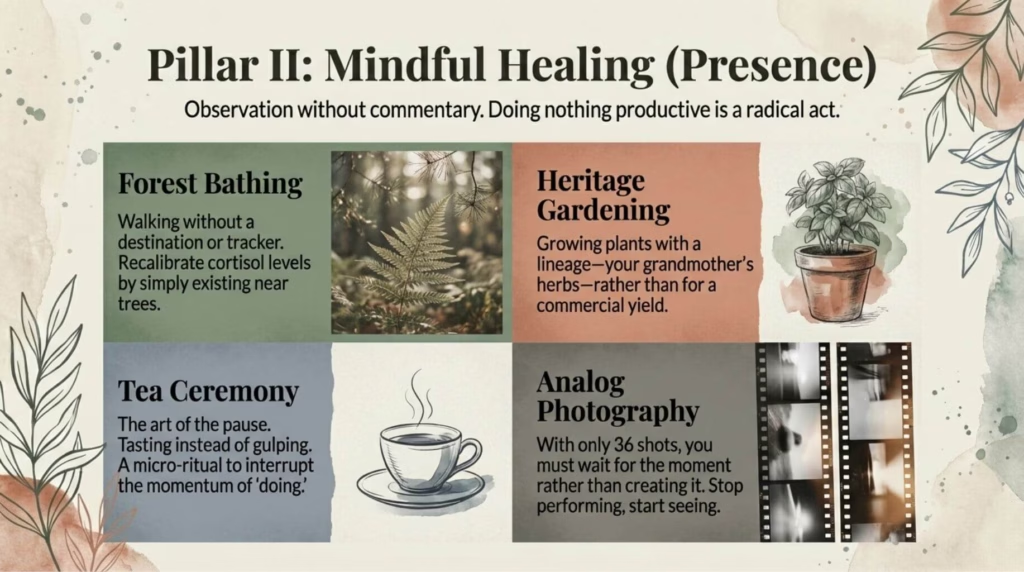
Not all hobbies for women need to produce something visible. Some of the most powerful activities are the ones that simply allow you to be present in your own experience without commentary.
5. Forest Bathing (Shinrin-yoku): The Non-Exercise Way to Be in Nature
Forest bathing is the practice of walking slowly through nature without a destination. You’re not hiking. You’re not burning calories. You’re just letting your nervous system recalibrate in the presence of trees.
Research from Japan, where this practice originated, shows that spending time in forests reduces cortisol, lowers blood pressure, and improves mood in ways that other forms of exercise don’t replicate. The difference isn’t just movement. It’s presence.
Find a park or trail. Leave your phone in your bag. Walk slowly. Notice the sound of leaves. Touch tree bark. Sit on the ground if you feel like it. The only rule is that you’re not trying to get anywhere.
This is one of those female hobbies that sounds too simple to work. And that’s exactly why it does. We’re so conditioned to believe that rest has to be earned or structured that just existing in nature without purpose feels radical.
6. Heritage Gardening: Growing Plants With a Story
Not all gardening is created equal. Commercial gardening can become another chore. But heritage gardening is different. This is the practice of growing plants that have a story, a history, or a connection to your ancestry.
Maybe it’s the herbs your grandmother used in her cooking. Maybe it’s vegetables that originated in the region your family comes from. Maybe it’s flowers that bloom in a color that makes you feel something you can’t name.
Heritage gardening is one of the best hobbies for women over 50 because it connects you to lineage and legacy in a tangible way. You’re not just growing tomatoes. You’re growing the same variety your great-grandmother grew. There’s a continuity in that act that feels grounding.
Start small. One plant. One pot. See what happens when you care for something living without expectations.
7. Tea Sommelier and Ceremony: The Art of the Pause
Tea ceremony sounds formal and intimidating. But at its core, it’s just the practice of slowing down enough to notice what you’re drinking.
You don’t need expensive equipment or training. You just need tea, hot water, and the willingness to sit for five minutes without multitasking. Pour the water slowly. Watch the leaves unfold. Smell the steam. Take your first sip and actually taste it instead of gulping it down while checking email.
What makes this one of the most accessible hobbies for women is that it requires almost no setup and can be practiced daily. It’s a micro-ritual that interrupts the constant momentum of doing and reminds you that pausing is productive in its own way.
8. Analog Photography: Learning to See the World Without a Filter
Digital photography lets you take 500 photos and delete 499. Analog photography gives you 36 shots per roll. You have to be intentional. You have to actually look before you press the shutter.
I started shooting film a few years ago because I was exhausted by the endless scroll of identical images online. Film forces you to slow down. You can’t immediately see what you captured. You have to wait. And in that waiting, you stop performing and start observing.
You don’t need an expensive camera. You can find used film cameras for under $50. Buy one roll of film. Shoot it over a month. Get it developed. Look at the images with curiosity instead of judgment.
This is one of those top female hobbies that shifts how you see everything. When you know you only have 36 shots, you start noticing light differently. You start waiting for moments instead of creating them.
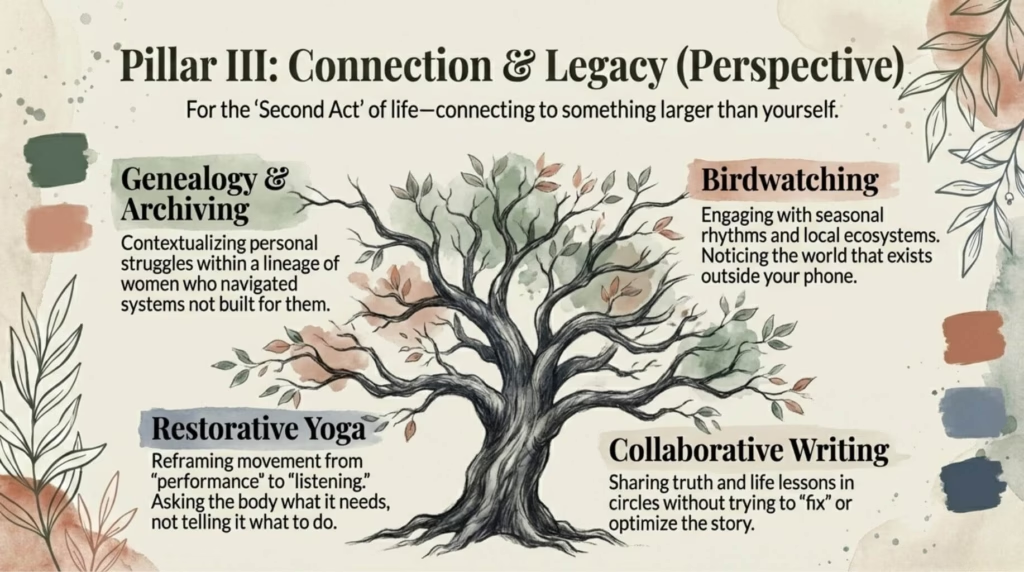
4 Power Hobbies for Women Over 50: The Second Act
There’s a particular freedom that comes with age. You care less about what people think. You trust your instincts more. The hobbies for women over 50 that feel most meaningful are often the ones that connect you to something larger than yourself.
9. Community Archiving and Genealogy: Connecting the Past to the Future
Genealogy isn’t just about building a family tree. It’s about understanding the women who came before you and the choices they made with the limited options they had.
When you research your ancestry, you often find stories that were never told. Women who immigrated alone. Women who divorced in eras when that meant social exile. Women who worked in fields dominated by men decades before anyone called it empowerment.
This is one of the most emotionally rich hobbies for women because it gives context to your own life. You start seeing your struggles not as personal failures but as part of a longer narrative of women navigating systems that weren’t built for them.
You can start with free resources like FamilySearch or Ancestry.com trial periods. Interview older relatives. Digitize old photos. Create a record not for strangers but for the younger women in your family who will someday want to know where they came from.
10. Birdwatching and Conservation: Engaging With the Local Ecosystem
Birdwatching is one of those female hobbies that seems stereotypically old-fashioned until you actually try it. Then you realize it’s just paying attention to the world around you instead of the world inside your phone.
You don’t need expensive binoculars or field guides. You just need to notice which birds visit your yard or local park. Learn their names. Notice their patterns. Watch them build nests in spring and migrate in fall.
What makes this one of the best hobbies for women over 50 is that it connects you to seasonal rhythms and local ecosystems in ways that feel grounding. You start noticing things that were always there but that you’d been too busy to see.
Many communities have local birdwatching groups that meet for early morning walks. These are often intergenerational spaces where knowledge gets passed down not through formal teaching but through shared observation.
11. Restorative Yoga or Tai Chi: Movement That Honors the Body’s Wisdom
Yoga and tai chi get marketed as fitness, but at their core, they’re practices of presence. Restorative yoga in particular is designed not to push your body but to let it rest in supported positions.
This is one of the most important hobbies for women over 50 because it reframes movement away from performance and toward listening. Your body has spent decades doing what was asked of it. These practices create space for you to ask your body what it needs instead of telling it what to do.
Find a local class or follow YouTube videos at home. The point isn’t flexibility or strength. The point is spending 30 minutes noticing sensation without judgment.
12. Collaborative Writing: Sharing “Life Lessons” in a Circle
Writing doesn’t have to be solitary. Collaborative writing groups are spaces where women gather to share stories, offer prompts, and witness each other’s experiences without trying to fix or optimize them.
This is one of the most powerful women hobbies because it gives you permission to speak truths that don’t fit into polite conversation. You can write about regret, anger, grief, or joy without needing to tie it up with a lesson or silver lining.
Look for local writing circles, memoir groups, or even online communities focused on life writing. The goal isn’t to publish. The goal is to be heard.
How to Choose Your Next Hobby
When you’re searching for what is a good hobby for a woman, the real question underneath is usually: what activity will help me feel like myself again?
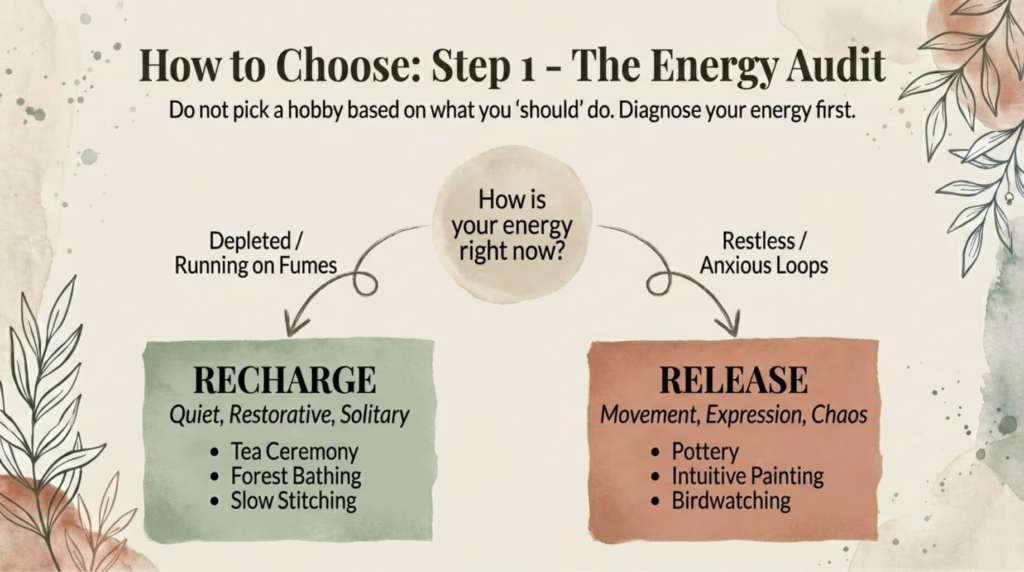
Step 1: Audit Your Energy
Before choosing a hobby, get honest about what kind of energy you’re working with.
Are you seeking recharge or release? Recharge activities are quiet and restorative. Release activities let you move emotion through your body.
If you’re depleted and running on fumes, you need hobbies for women that restore, not ones that require performance. If you’re full of restless energy with nowhere to put it, you need activities that let you move and express.
Step 2: Remove the “Output” Pressure
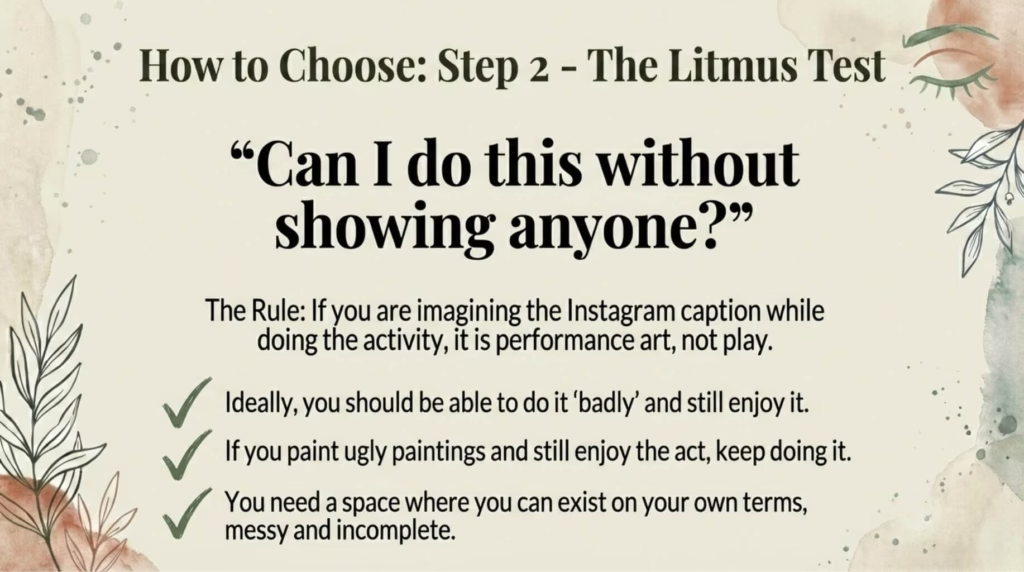
Ask yourself: can I do this without showing anyone?
If the answer is no, if you immediately imagine posting about it or explaining it to friends, that’s a sign the activity is more about external validation than internal nourishment.
The best hobbies for women are the ones you can do badly, messily, and inconsistently without feeling like you’ve failed. If you can paint ugly paintings and still enjoy the act of painting, that’s your hobby. If you can only enjoy it when the result is Instagram-worthy, that’s performance art, not play.
Step 3: The 3-Session Rule
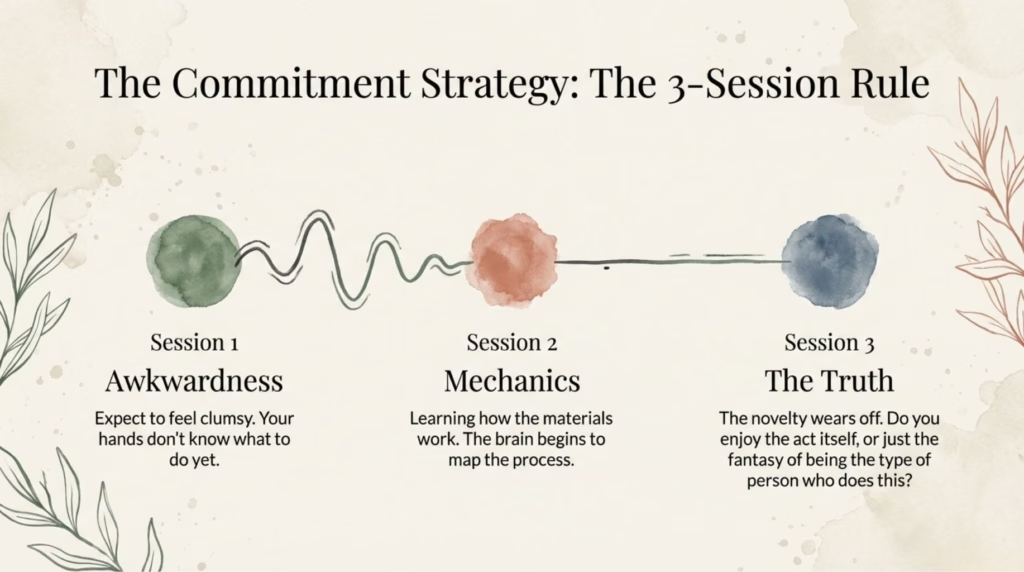
Don’t judge a hobby by your first attempt. Most activities feel awkward the first time. Your hands don’t know what to do. Your mind is judging instead of participating.
Give any new hobby three sessions before deciding if it fits. By the third time, the novelty wears off and you can feel whether the activity itself brings you joy or whether you were just excited by the idea of it.
This rule helps you differentiate between genuine interest and the fantasy of becoming a certain type of person.
Reflection: What Does Rest Actually Feel Like for You?
Here are some questions to help you choose hobbies for women that actually serve you:
- When was the last time you felt genuinely absorbed in an activity where you lost track of time?
- What did you love doing as a child before anyone told you whether you were “good” at it?
- Do you crave solitude or community when you imagine your ideal free time?
- Would you rather work with your hands, your body, or your mind?
These questions matter more than any curated list because they point you toward activities that match your actual temperament instead of the person you think you should be.
Beyond the “Hobby” Label: What This Is Really About
The truth is that most articles about top female hobbies are trying to sell you something. A class. A kit. A lifestyle brand that promises you’ll finally feel fulfilled if you just buy the right supplies.
But what you’re actually looking for isn’t a hobby. It’s permission to exist without producing. Permission to spend time on something that serves no one but yourself. Permission to be average at something and still find it worthwhile.
The hobbies in this guide work because they’re designed around presence, not performance. They’re activities you can do badly and still benefit from. They’re spaces where you can show up as you are, not as you think you should be.
You don’t need a “creative life” that looks like someone else’s highlight reel. You need a few hours each week where you remember what it feels like to be human instead of productive.
When I think about the women I know who seem genuinely at peace, they’re not the ones with the most impressive hobbies. They’re the ones who’ve figured out how to create small pockets of time where they don’t have to explain themselves. Where they can paint ugly paintings, grow imperfect vegetables, or sit quietly in the woods without apologizing for not turning it into content.
That’s what hobbies for women should actually be. Not another performance. Just a space where you get to exist on your own terms.
Choose Presence Over Productivity
Tactile hobbies like pottery and intuitive painting help you reconnect with your body and creative instincts without the pressure of producing something perfect.
Mindful hobbies like forest bathing and tea ceremony teach you that doing nothing productive is actually the most important thing you can do for your nervous system.
Hobbies for women over 50 like genealogy and birdwatching connect you to lineage, legacy, and the larger ecosystems you’re part of.
The goal isn’t to become good at any of these. The goal is to remember that you’re allowed to exist for your own sake.
If you’re reading this and feeling the pull to start something new, don’t overthink it. Pick one activity from this list. Give it three honest tries. Notice how you feel afterward, not during.
And if none of these resonate, that’s fine too. The point isn’t to find the perfect hobby. The point is to start asking yourself what you actually want instead of what you think you should want.
What hobby are you most curious about trying? What’s been stopping you? Let me know in the comments below, or explore more grounded guidance on reconnecting with your creative self.
⬇⬇⬇Pin or save to read later ⬇⬇⬇
0 Comments