
In This Article
Key Takeaways
- Art meditation is a process-oriented practice, not an outcome-oriented one; no artistic “skill” is required.
- Mindful drawing activates the parasympathetic nervous system, lowering cortisol levels.
- Starting with relax drawing easy patterns (like neurographic art) can bypass the “inner critic.”
- Combining art with existing practices (like a 15-minute meditation) deepens the grounding effect.
Discover how art meditation helps exhausted minds find calm through mindful drawing, calming drawings, and relax drawing easy techniques backed by neuroscience.
When Words Aren’t Enough
You know that feeling when your thoughts move faster than you can process them? When journaling feels too structured and sitting meditation makes your mind race harder?
I remember sitting on my living room floor one afternoon, notebook open, pen hovering. I’d tried everything to manage the burnout creeping through my days. Morning pages felt performative. Guided meditations made me fidget. My nervous system was running on fumes, and I needed something that didn’t require more thinking.
That’s when I picked up a pen and started drawing lines. Not shapes or pictures. Just lines that followed my breath. Ten minutes later, my shoulders had dropped two inches.
Art meditation sits at the intersection of creative expression and mindfulness practice. You’re not trying to make something beautiful or meaningful. You’re using visual movement to anchor your attention in the present moment. The paper becomes a place where your nervous system can finally exhale.
For women navigating the particular exhaustion of their late twenties through early forties, this matters. You’re managing careers, relationships, aging parents, shifting identities, and an internal pressure to have it all figured out. Traditional meditation asks you to sit still with that chaos. Art meditation gives your hands something to do while your mind untangles itself.
This practice doesn’t demand artistic talent. It asks for honesty and a willingness to move a pen across paper without judgment. That’s all.
The Science of Drawing to Relax
Your brain processes visual creation differently than verbal thought. When you engage in meditation drawing, you activate the default mode network, the same neural pathway that lights up during rest and self-reflection. The repetitive motion of pen on paper triggers what psychologists call “flow state,” a mental zone where self-criticism quiets and time seems to slow.
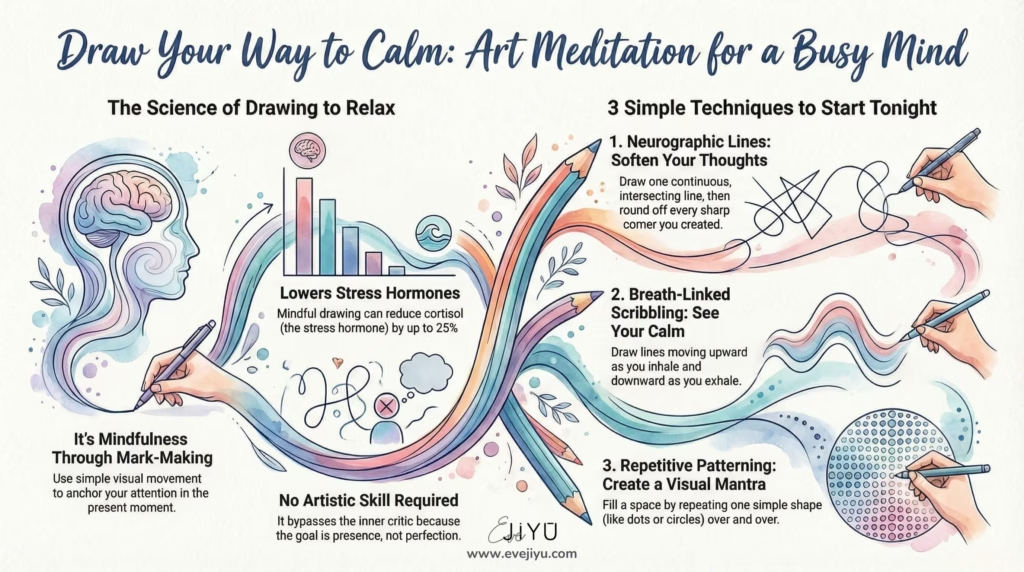
A 2016 study published in Art Therapy found that 45 minutes of creative activity significantly lowered cortisol levels in participants, regardless of artistic experience or skill level. The act of making marks on paper calms the amygdala, your brain’s threat-detection center, while strengthening connections in the prefrontal cortex responsible for emotional regulation.
Drawing also creates a feedback loop that sitting meditation often lacks. You see the marks appear on paper. Your hand moves in response to what you see. This visual-motor connection gives your mind something concrete to follow, which helps if you find yourself constantly distracted during traditional practice.
When paired with daily mindfulness and gratitude practices, visual journaling becomes a way to anchor abstract intentions in physical form. You’re not just thinking about what you’re grateful for. You’re drawing it, even if that drawing is just a color or a shape that represents the feeling.
The beauty of this approach is its accessibility. You don’t need special materials or training. A pen and paper are enough. The barrier to entry is low, but the nervous system benefits run deep.
5 Calming Drawings to Reset Your Nervous System
Technique 1: Neurographic Lines (The Path to Clarity)
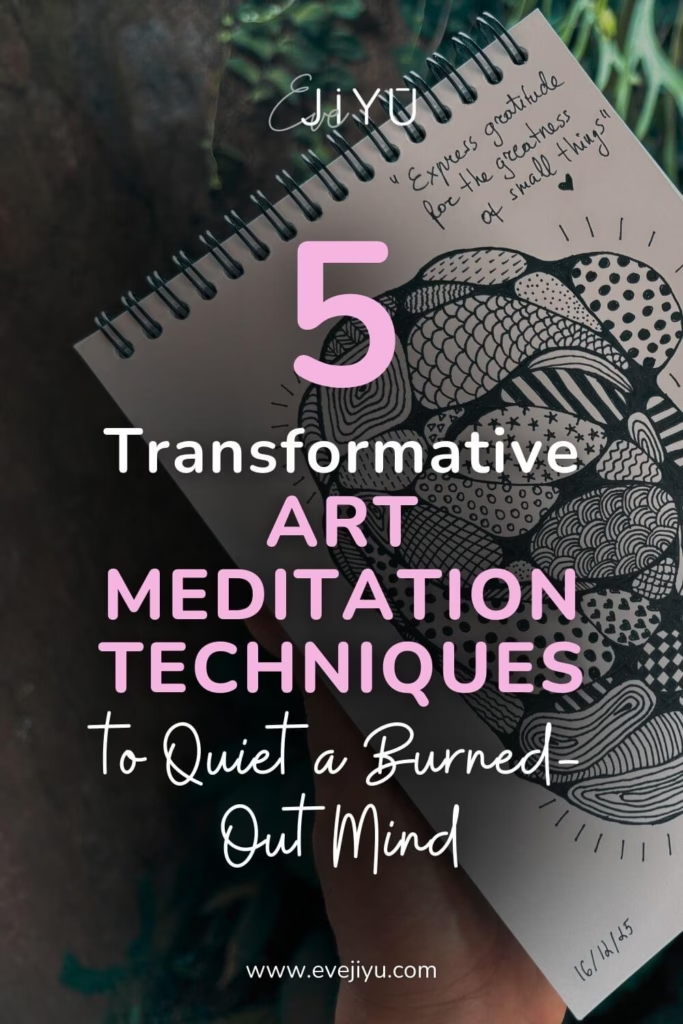
Neurographic art was developed by psychologist Pavel Piskarev in 2014 as a way to work with subconscious patterns through visual expression. The practice involves drawing continuous lines across a page until they intersect, then rounding the sharp corners to create organic shapes.
The relax drawing easy version starts with a single line. Let your pen move across the paper without lifting it. Don’t plan where it goes. When you reach an edge, turn and keep going. After a minute or two, you’ll have a network of intersecting lines.
Now comes the calming part. Wherever two lines cross and create a sharp angle, round it off. Soften every corner into a curve. This physical act of smoothing edges seems to do the same thing internally. Your breathing slows. Your jaw unclenches.
You can stop there, or you can fill some of the shapes you’ve created with simple patterns: dots, lines, cross-hatching. The repetition becomes meditative. There’s no right or wrong way to do this. The practice is the point.
Reflective questions to explore:
- What does it feel like to draw without a plan?
- Which part of the process feels most calming: creating the lines or softening the corners?
- When you look at the finished page, what do you notice about the patterns you created?
Technique 2: Breath-Linked Scribbling
This technique combines the principles of grounding meditation 15-minute techniques with simple mark-making. You’re not drawing anything recognizable. You’re translating your breath into visual form.
Sit with a blank page and a pen. Close your eyes if that feels comfortable. Take a deep breath in. As you inhale, draw a line moving up the page. As you exhale, draw a line moving down. The line doesn’t have to be straight. It can curve, spiral, or zigzag. Let it follow the natural rhythm of your breathing.
Continue for five to ten minutes. You’ll end up with a page full of rising and falling marks that map the pattern of your breath. Some will be smooth and even. Others might be jagged or erratic, especially if you started this practice feeling anxious.
That visual record of your nervous system is valuable information. You can literally see the moment your breathing deepened and your lines became more fluid. This creates a tangible sense of progress that internal meditation sometimes lacks.
Simple exercise to try today:
- Set a timer for 5 minutes
- Place your pen on the paper
- Inhale and draw upward
- Exhale and draw downward
- Notice when your breath shifts
Technique 3: Repetitive Patterning (Zen-Doodling)
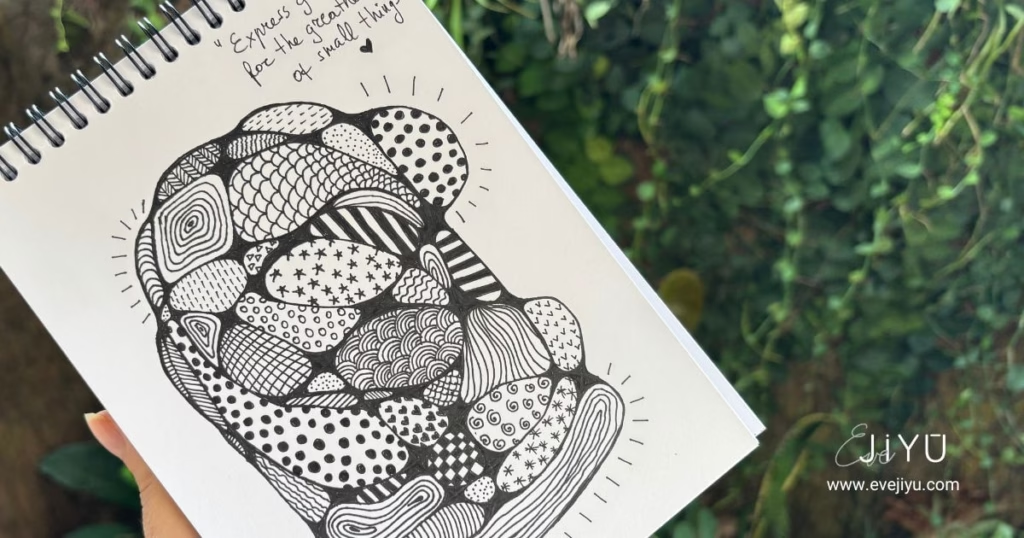
Repetitive patterning is the practice of filling a space with the same mark over and over. This could be circles, dots, short lines, or simple shapes. The key is consistency and presence.
Choose one small, easy shape. Draw it. Then draw it again. And again. Fill a page, or just a small section. Let your hand find a rhythm. Your mind will wander, and when it does, gently bring your attention back to the motion of your pen.
This is relax drawing easy in its purest form. There’s no expectation of beauty or meaning. You’re creating a visual mantra, a place where your attention can rest.
Research on repetitive creative tasks shows they activate the same neural pathways as traditional mantra-based meditation. The difference is that your hands are occupied, which can make it easier to stay present if you struggle with stillness.
I keep a small notebook on my desk specifically for this. When I feel my thoughts spinning, I open it and draw dots. Five minutes later, the page is covered and my mind is quieter. The dots don’t mean anything. They just give me a place to land.
Reflective questions:
- What simple shape feels most natural to repeat right now?
- Does your mind quiet faster with this practice or with silent meditation?
- How does your body feel before and after five minutes of patterning?
Technique 4: Intuitive Color Washes
Sometimes emotions don’t have names yet. They’re just sensations, colors, textures that live under the surface. Intuitive color washes give those feelings a place to exist outside your body.
You’ll need watercolors, markers, or even colored pencils for this. The material matters less than the intention. Start with a feeling you’re carrying today. Don’t overthink it. Just notice what’s present.
Choose a color that represents that feeling. It doesn’t have to make logical sense. If anxiety feels like yellow-green to you, use yellow-green. Spread that color across the page however you want. Washes, strokes, dots, layers. Let your hand move without direction.
Add other colors as they feel right. You’re not making a picture. You’re making a mood visible. When you’re done, step back and look at what you created. Sometimes naming the feeling becomes easier once you see it outside yourself.
This practice pairs well with other techniques in meditation that focus on emotional awareness. You’re not pushing feelings away or trying to fix them. You’re giving them form and space.
Exercise to try tonight:
- Gather any coloring materials you have
- Name one feeling you’re carrying right now
- Choose a color that matches that feeling
- Fill a page with that color in whatever way feels right
- Notice if the feeling shifts after it’s on paper
Reflective questions:
- What emotion did you choose to express, and what color did it become?
- Did the feeling change once you saw it on the page?
- What would it be like to do this practice weekly as part of your self-care routine?
Technique 5: Blind Contour Self-Portraits
This technique teaches you to let go of perfectionism in the most direct way possible. A blind contour drawing means you keep your eyes on your subject (in this case, your reflection) while your hand draws, never looking at the paper.
Sit in front of a mirror with a pen and paper. Look at your face. Choose a starting point, maybe your hairline or the curve of your ear. Place your pen on the paper without looking down. Now trace what you see in the mirror with your pen while keeping your eyes on your reflection the whole time.
The result will be distorted, strange, often comical. That’s the point. You’re practicing the art of showing up without needing to control the outcome. You’re making something imperfect on purpose and discovering that imperfection doesn’t equal failure.
This is the antidote to the “I’m not creative” block. You’re not trying to be good. You’re trying to be present. The messy, wonky drawing you create is proof that you can make something without judgment getting in the way.
I do this practice once a month as a reset. It reminds me that my worth isn’t tied to producing something polished. I can exist in the act of creating without needing to justify or defend what emerges.
Simple steps to begin:
- Find a mirror and a comfortable seat
- Place paper beside you, but don’t look at it
- Put pen to paper
- Look at your face in the mirror
- Draw what you see without glancing down
- When finished, look at the drawing and laugh a little
Overcoming the “I’m Not Creative” Block
The belief that you’re not creative is one of the most common barriers to art meditation. Let me tell you something true: creativity is not a talent you either have or don’t have. It’s a muscle you stopped using somewhere between childhood and adulthood when someone told you your drawing wasn’t “good enough.”
Art meditation sidesteps this entire problem because it removes the requirement for “good.” You’re not creating art for an audience. You’re creating marks on paper to regulate your nervous system. The outcome doesn’t matter. The process is the medicine.
If the voice in your head still insists you can’t do this, try naming it. “There’s the inner critic again. Thanks for trying to protect me from embarrassment, but I’m safe here.” Then pick up your pen anyway.
You can also integrate art meditation with other mindfulness practices you already use. If you have a 15-minute meditation routine, add five minutes of breath-linked scribbling at the end. If you practice gratitude journaling, sketch a simple shape that represents what you’re grateful for instead of writing it out.
Building a personalized toolkit means experimenting with what works for your specific nervous system. Some people need the structure of repetitive patterning. Others need the freedom of color washes. There’s no hierarchy. All of these techniques belong to you.
Setting up your calm corner:
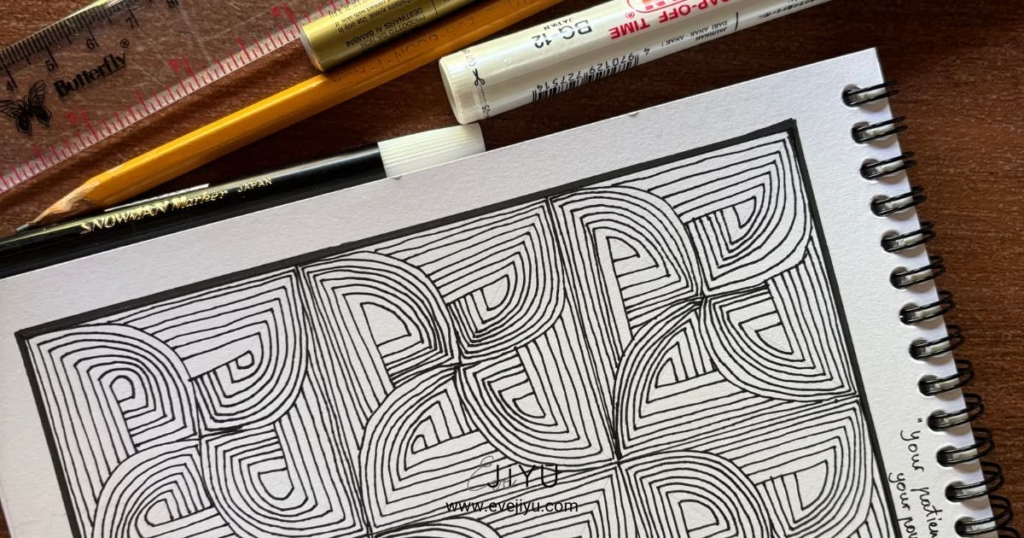
You don’t need an art studio or expensive supplies. A small basket with a notebook, a few pens, and maybe some colored pencils is enough. Keep it somewhere visible so you remember it’s an option when your mind feels loud. I keep mine on the coffee table. It’s the first thing I see when I sit down in the evening.
The barrier to entry is low by design. You’re not investing in a new hobby. You’re giving yourself a tool for days when everything feels too much.
Your Creative Voice is Waiting
Art meditation doesn’t fix burnout. It gives you a place to pause in the middle of it. These five techniques offer different pathways to the same destination: a quieter mind, a softer relationship with yourself, and proof that you can create without needing to perform.
Neurographic lines teach you to soften sharp edges. Breath-linked scribbling shows you the rhythm of your own nervous system. Repetitive patterning gives your thoughts a place to rest. Color washes make invisible feelings visible. Blind contour portraits remind you that imperfection is permission, not failure.
You don’t need to master all of these. Choose one. Try it tonight after dinner or before bed. Give yourself ten minutes to draw without purpose. Notice what happens in your body when you stop trying to make something meaningful and just let your hand move.
Self-discovery is slow, messy, and often doesn’t look the way you thought it would. That’s what makes it real.
What technique will you try first? Leave a comment and let me know which one called to you.
⬇⬇⬇Pin or save to read later ⬇⬇⬇



0 Comments