
In This Article

Key Takeaways
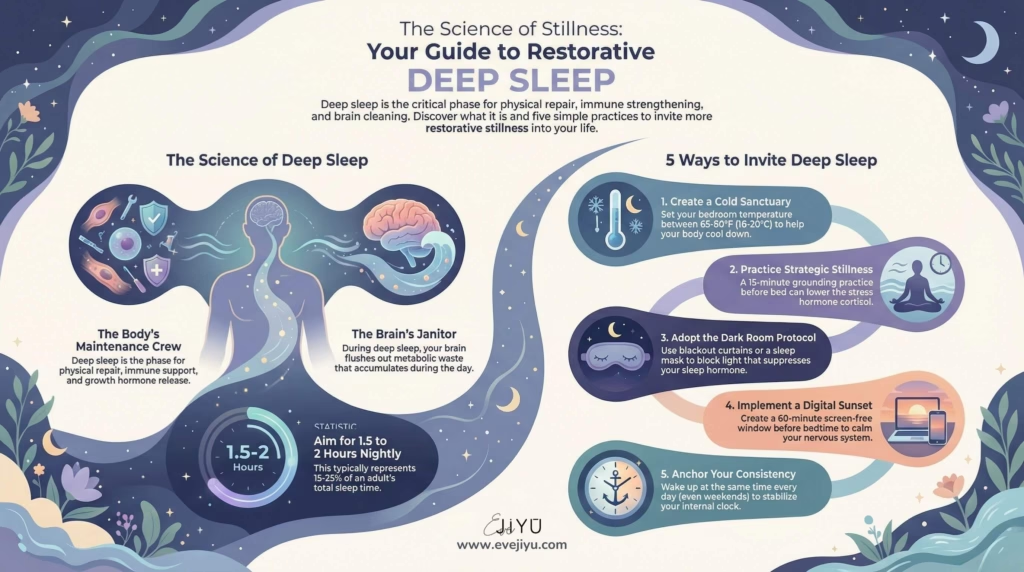
- Definition: Deep sleep (Stage 3 NREM) is the “physical repair” phase where the body heals and the brain flushes toxins.
- The “Magic” Number: Most adults need 1.5–2 hours of deep sleep per night (roughly 15–25% of total sleep).
- The REM Difference: While deep sleep repairs the body, REM sleep (Rapid Eye Movement) processes emotions and creativity.
- Optimization Tip: You cannot “force” deep sleep, but you can invite it through temperature regulation and mindful evening rituals.
Discover what is deep sleep, why it matters for your wellbeing, and five grounded practices to reclaim restorative rest without the productivity hype.
I spent years waking up exhausted. Not the kind of tired that comes from a late night or a busy week, but the bone-deep fatigue that sits behind your eyes and makes every decision feel heavy. I slept seven hours most nights. I went to bed at reasonable times. On paper, I was doing everything right.
What I didn’t know then: I wasn’t getting enough deep sleep.
Most conversations about sleep focus on quantity. Eight hours becomes the magic number, the goal we chase. But the real question isn’t how long you sleep. The question is how well your body is actually restoring itself during those hours. For women navigating burnout, life transitions, or creative blocks, understanding what is deep sleep can be the difference between surviving your days and actually inhabiting them.
This guide explains the science of deep sleep in plain language, breaks down how much deep sleep you actually need, and offers five realistic practices to invite more of it into your life. No biohacking. No performance metrics. Just honest information and gentle tools for rest that feels like rest.
What Is Deep Sleep? The Science of Stillness
Deep sleep is the third stage of non-rapid eye movement (NREM) sleep, also called slow-wave sleep. This is when your brain produces delta waves, the slowest brainwave pattern we experience while alive. Your body becomes still. Your breathing slows. Your muscles relax completely.
Think of deep sleep as the maintenance crew that arrives after everyone leaves the building. While you’re unconscious, this phase handles physical repair, immune system strengthening, and memory consolidation. Your brain also activates the glymphatic system during deep sleep, flushing out metabolic waste that accumulates during waking hours.

The Stages of Sleep: A Nightly Journey
Your sleep moves through predictable cycles, each lasting roughly 90 minutes. Within each cycle, you pass through distinct stages of sleep:
- Stage 1 NREM (Light Sleep): The transition phase. You drift between wakefulness and sleep, easily awakened by small sounds or movements. This lasts just a few minutes.
- Stage 2 NREM (Light Sleep): Your heart rate slows, body temperature drops, and eye movements stop. You spend about half your night here. This stage prepares your body for the deeper restoration ahead.
- Stage 3 NREM (Deep Sleep): The destination. Your brain produces delta waves. This is where physical healing happens, where growth hormone releases, where your immune system strengthens. Waking someone from deep sleep leaves them disoriented and groggy.
- REM Sleep (Rapid Eye Movement): Your brain becomes active again, processing emotions and consolidating memories. This is where most vivid dreams occur. The rem cycle lengthens as the night progresses.
Most people cycle through these stages of sleep four to six times per night. Deep sleep dominates the first half of the night, while REM sleep takes over in the early morning hours. This natural rhythm matters because interrupting it, even if you get “enough” total hours, can leave you depleted.
How Much Deep Sleep Should You Get?
Many adults spend roughly 10–20% (sometimes up to about 25%) of the night in deep sleep, which often works out to about 1–2 hours when you sleep 7–9 hours.
This number shifts with age. Young children spend a much larger share of the night in deep sleep than adults do, while by older adulthood deep sleep can fall to a relatively small fraction of total sleep. For women in their late 20s through early 40s, the target remains consistent, but stress, hormonal fluctuations, and mental load can interfere with reaching it.
The question “how much deep sleep should you get per night” doesn’t have a one-size answer because sleep needs vary. Some people function well at the lower end of that range. Others need closer to two full hours to feel restored. Your body knows what it needs. The practice is learning to listen.
Why Deep Sleep Acts as the Brain’s Janitor
Your brain produces waste. Throughout the day, as neurons fire and cells metabolize energy, proteins and toxins accumulate in the spaces between brain cells. One of those proteins is beta-amyloid, linked to cognitive decline when it builds up over time.
During deep sleep, the glymphatic system activates. Cerebrospinal fluid flows through the brain, washing away metabolic debris. This cleaning process is most active during deep sleep and is dramatically reduced when you’re awake. Without enough of it, waste accumulates, affecting memory, focus, and emotional regulation.
I didn’t understand this when I was burning out. I thought my brain fog came from too much work or not enough coffee. I blamed my inability to make decisions on stress. What I didn’t see: my brain literally couldn’t clean itself because I wasn’t giving it the conditions it needed to do that work.
This matters for anyone trying to navigate mindful activities or engage in reflective practices. You can journal all you want, but if your brain is cluttered with unprocessed waste, the insights won’t come. Clarity requires a clean slate, and that slate gets wiped during deep sleep.
The Connection to Emotional Resilience
Deep sleep doesn’t just repair your body. It stabilizes your emotional baseline. Research shows that sleep deprivation, particularly a lack of deep sleep, amplifies negative emotional responses and reduces your ability to regulate stress.
When you’re deep-sleep deprived, small frustrations feel enormous. You snap at people you care about. You cry over things that wouldn’t normally touch you. The world feels sharper, harsher, less forgiving.
For women already carrying the invisible weight of people-pleasing or perfectionism, this lack of emotional buffer makes everything harder. You’re not weak for feeling overwhelmed. Your nervous system is just running on a deficit.
5 Best Ways to Increase Your Deep Sleep Quality
You can’t force your body into deep sleep. You can’t hack it or hustle your way to better rest. What you can do is create conditions that invite it. These five practices are grounded in neuroscience and designed for real life, not laboratory conditions.
1. The Cold Sanctuary: Optimize Your Sleep Temperature
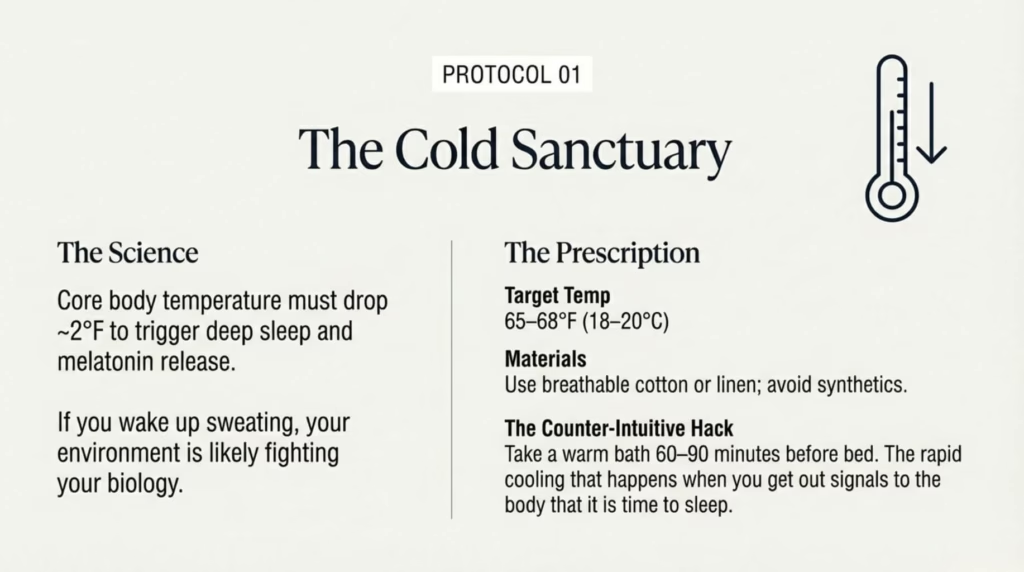
Your body needs to cool down to enter deep sleep. Core body temperature drops by about two degrees Fahrenheit during the night, and this cooling process triggers the release of melatonin and the onset of deeper sleep stages.
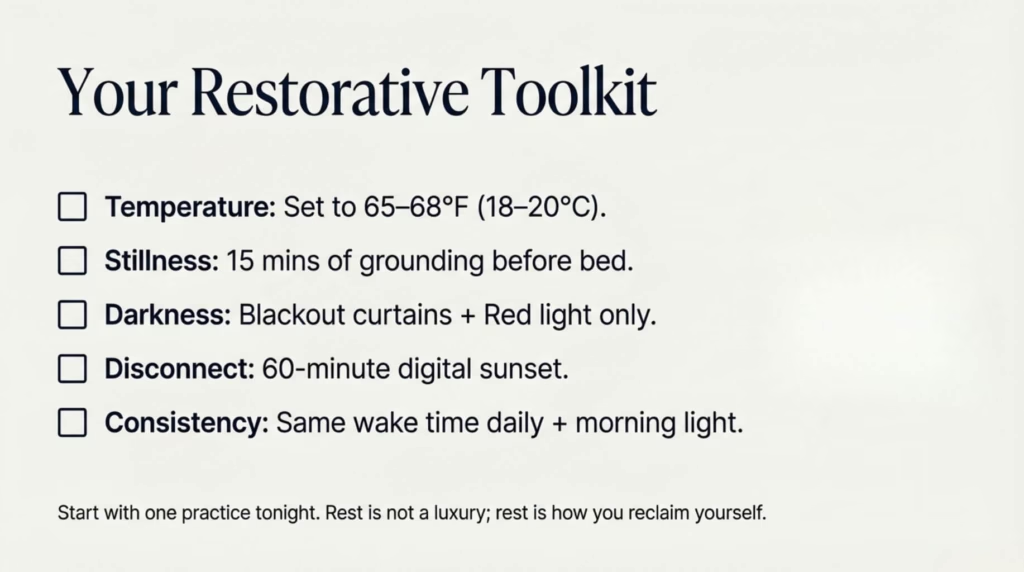
Most adults sleep best around 65°F, with many doing well in the 65–68°F (about 18–20°C) range. This range supports the natural drop in body temperature your system needs.
How to practice this:
- Set your thermostat to 67 degrees before bed
- Use breathable cotton or linen sheets instead of synthetic fabrics
- Take a warm bath or shower 60 to 90 minutes before sleep (the subsequent cooling helps trigger drowsiness)
- Keep your room well-ventilated, even in winter
If you wake up sweating or struggle to fall asleep in a warm room, your sleep environment is likely working against your biology. I spent months wondering why I couldn’t stay asleep until I measured my bedroom temperature. It was consistently 73 degrees. When I dropped it to 66, the difference was immediate.
2. Strategic Stillness: Use Grounding Practices to Lower Cortisol
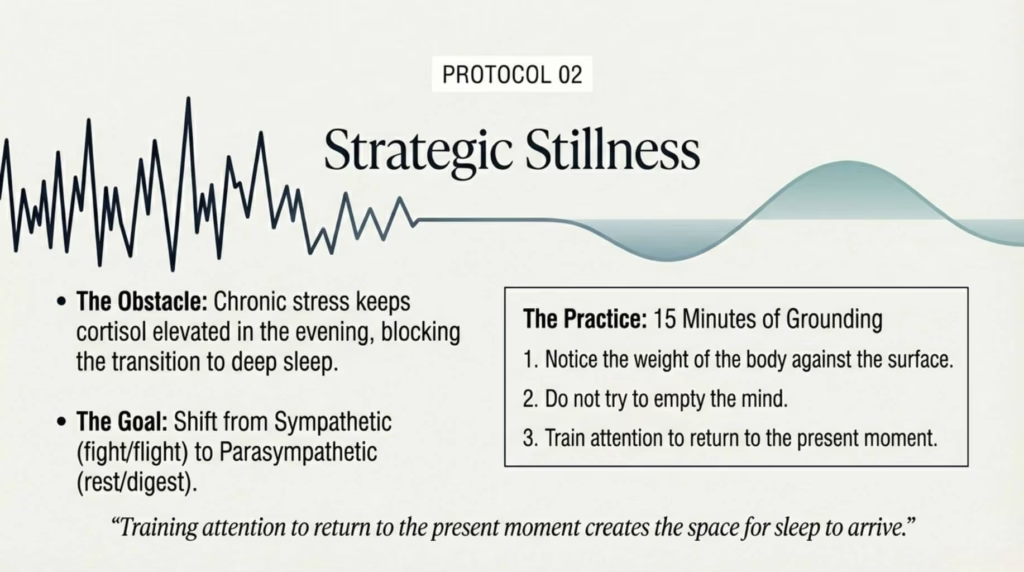
Cortisol, your stress hormone, naturally peaks in the morning and declines throughout the day. By evening, it should be at its lowest point, allowing melatonin to rise and sleep to begin. But chronic stress keeps cortisol elevated, blocking the transition into deep sleep.
Grounding meditation offers one of the most accessible ways to lower cortisol before bed. This doesn’t require an hour of practice or perfect conditions. Fifteen minutes of intentional stillness can shift your nervous system from sympathetic (fight or flight) to parasympathetic (rest and digest).
A simple grounding practice:
- Sit or lie down in a comfortable position
- Close your eyes and bring attention to your breath
- Notice the weight of your body against the surface beneath you
- When thoughts arise, acknowledge them without judgment and return to the sensation of contact
- Continue for 10 to 15 minutes
This practice isn’t about emptying your mind. It’s about training your attention to return to the present moment instead of rehearsing tomorrow’s tasks or replaying today’s conversations. That mental quieting creates space for sleep to arrive naturally.
3. The Dark Room Protocol: Protect Your Melatonin Production
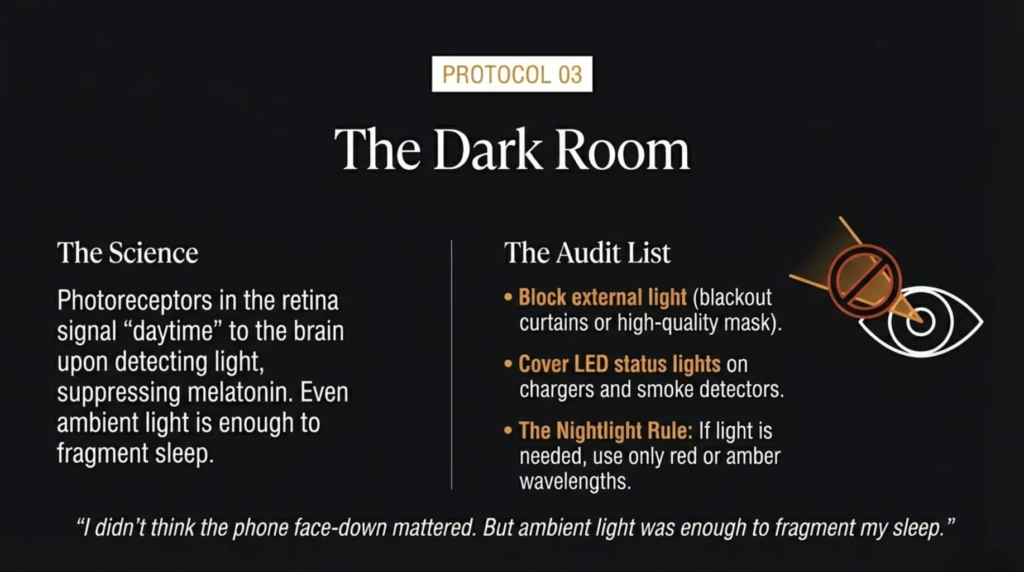
Melatonin is your sleep hormone, produced by the pineal gland in response to darkness. Even small amounts of light, particularly blue light from screens or LED bulbs, can suppress melatonin production and delay the onset of deep sleep.
Your retinas contain photoreceptors that detect light and signal your brain about whether it’s day or night. Artificial light after sunset confuses this system, essentially telling your brain it’s still time to be awake.
How to create genuine darkness:
- Use blackout curtains or a sleep mask to block external light
- Cover or remove LED lights from electronics (even the small ones on chargers and smoke detectors)
- Avoid overhead lights in the hour before bed; use dim lamps with warm bulbs instead
- If you need a nightlight, choose red or amber wavelengths, which interfere less with melatonin
I used to fall asleep with my phone face-down on the nightstand. The screen would light up with notifications throughout the night. I didn’t think it mattered because I wasn’t looking at it. But that ambient light was enough to fragment my sleep. When I started charging my phone in another room, the quality of my rest shifted within days.
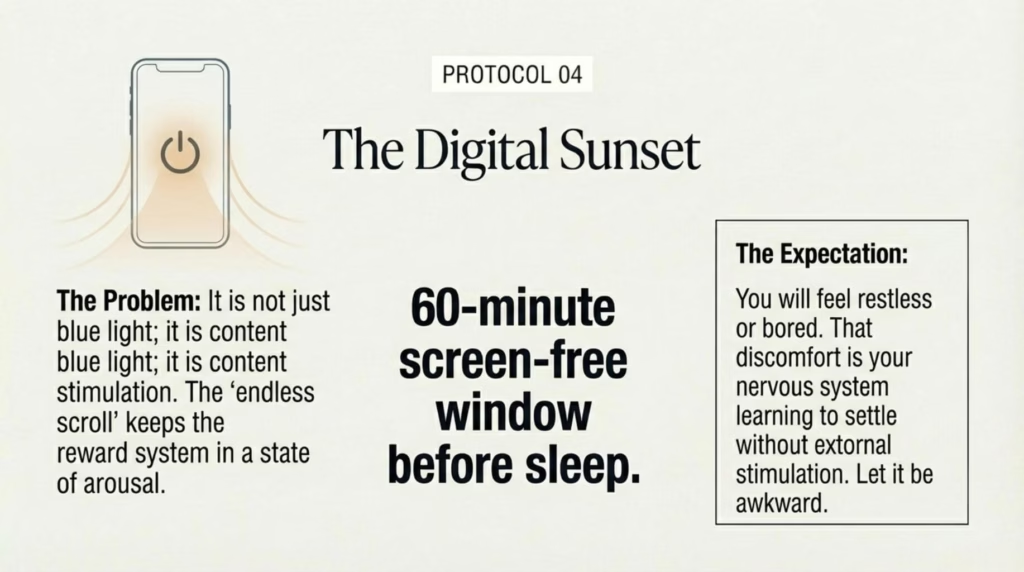
4. Digital Sunset: Implement a 60-Minute Screen-Free Window
Blue light isn’t the only problem with screens before bed. The content you consume, the notifications that demand attention, the endless scroll that activates your reward system—all of it keeps your brain in a state of arousal incompatible with sleep.
If you’ve ever noticed how falling asleep feels impossible after a long evening on your phone, this is why. Your nervous system is still processing information, still anticipating the next stimulus.
Creating a digital sunset:
- Set a timer for one hour before your target bedtime
- Put your phone in another room or a drawer
- Turn off the television and laptop
- Replace screen time with analog activities: reading a physical book, journaling, stretching, listening to music
The first few nights feel uncomfortable. You’ll reach for your phone out of habit. You’ll feel restless or bored. That discomfort is your nervous system learning to settle without external stimulation. Let it be awkward. The practice is in returning to stillness anyway.
If you need more structure around this transition, the article on sleep optimization for women offers additional frameworks for building sustainable evening routines.
5. The Consistency Anchor: Wake at the Same Time Every Day
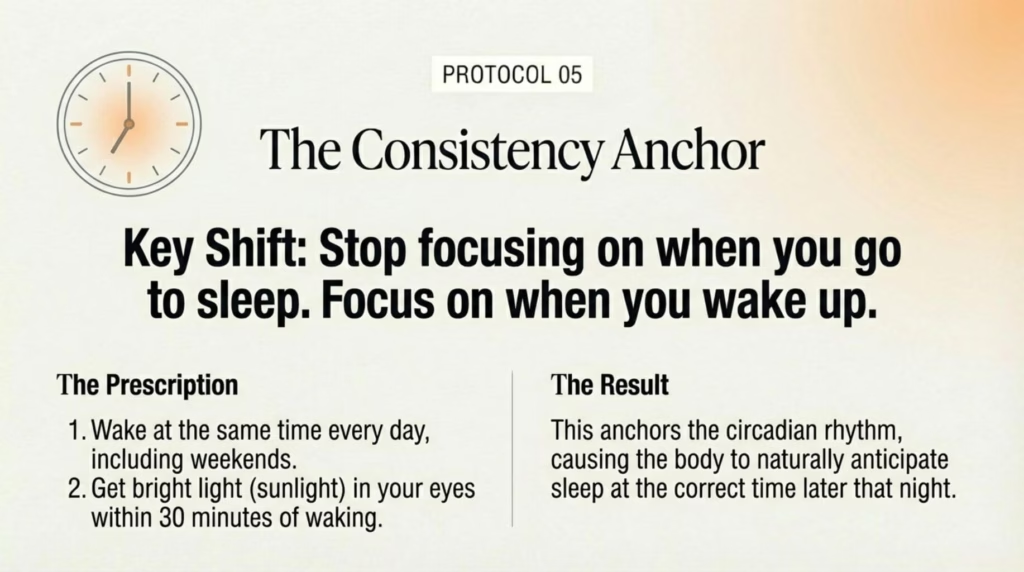
Your circadian rhythm, the internal clock that regulates sleep and wakefulness, thrives on consistency. When you wake at the same time each morning, you reinforce this rhythm, making it easier to fall asleep at night and cycle through the stages of sleep efficiently.
Most people focus on bedtime consistency. But wake time matters more. You can’t always control when you fall asleep, but you can control when you get out of bed. That decision anchors your entire sleep-wake cycle.
The practice:
- Choose a wake time that allows for 7.5 to 9 hours of sleep based on when you realistically fall asleep
- Set an alarm for that time every day, including weekends
- Get out of bed within 15 minutes of waking, even if you feel tired
- Expose yourself to bright light (ideally natural sunlight) within 30 minutes of waking
This consistency trains your body to anticipate sleep at the same time each night. After a few weeks, you’ll often find yourself naturally tired around bedtime without needing to force it. Your deep sleep will also consolidate into the early part of the night more reliably.
I resisted this for months because I valued weekend sleep-ins. But once I started waking at 6:30 every morning, including Saturdays, my overall sleep quality improved so noticeably that the trade felt worth it.
Deep Sleep vs. REM Sleep: Decoding the Balance
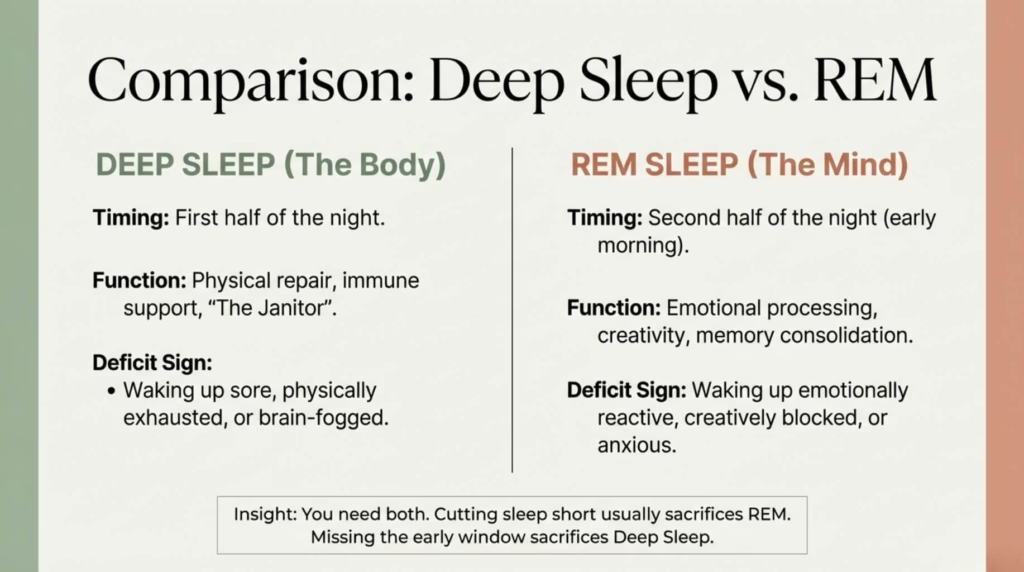
Deep sleep and REM sleep serve different purposes, and your body needs both. Understanding the distinction helps you recognize what type of rest you might be missing.
The Core Differences
| Primary Function | Physical repair, immune support, growth hormone release | Emotional processing, memory consolidation, creativity |
| Brain Activity | Slow delta waves | High-frequency waves similar to waking state |
| Timing in Night | Concentrated in first half of sleep | Concentrated in second half of sleep |
| Percentage of Total Sleep | 15-25% | 20-25% |
| Dreaming | Rare and vague if it occurs | Vivid, narrative dreams |
How Much REM Sleep Should You Get?
Adults need about 90 to 120 minutes of REM sleep per night, or 20 to 25 percent of total sleep time. The rem cycle lengthens as the night progresses, meaning you get most of your REM sleep in the hours before waking.
If you’re someone who constantly wakes up just before your alarm or cuts sleep short, you’re likely interrupting your REM cycles. This can leave you emotionally reactive, creatively blocked, or struggling to process experiences even when you feel physically rested.
When to Prioritize Which Type
If you’re recovering from illness, injury, or intense physical exertion, your body will naturally prioritize deep sleep. You’ll feel the pull toward longer, heavier sleep in the early part of the night.
If you’re navigating emotional transitions, processing grief, or working through creative projects, you might need more REM sleep. This is when your brain makes sense of experiences and forms the connections that lead to insight.
You don’t get to choose which type of sleep you get more of on any given night. But understanding the balance helps you notice patterns. If you’re waking at 5 a.m. and feeling emotionally fragile, you’re probably cutting into REM time. If you’re sleeping through the night but waking sore and unrefreshed, you might not be reaching deep sleep at all.
Troubleshooting: When Sleep Feels Impossible
Sometimes the problem isn’t staying asleep. The problem is falling asleep in the first place. If you lie awake for 30, 40, 60 minutes each night, your nervous system is stuck in a state of hypervigilance.
The Anxiety of Wakefulness
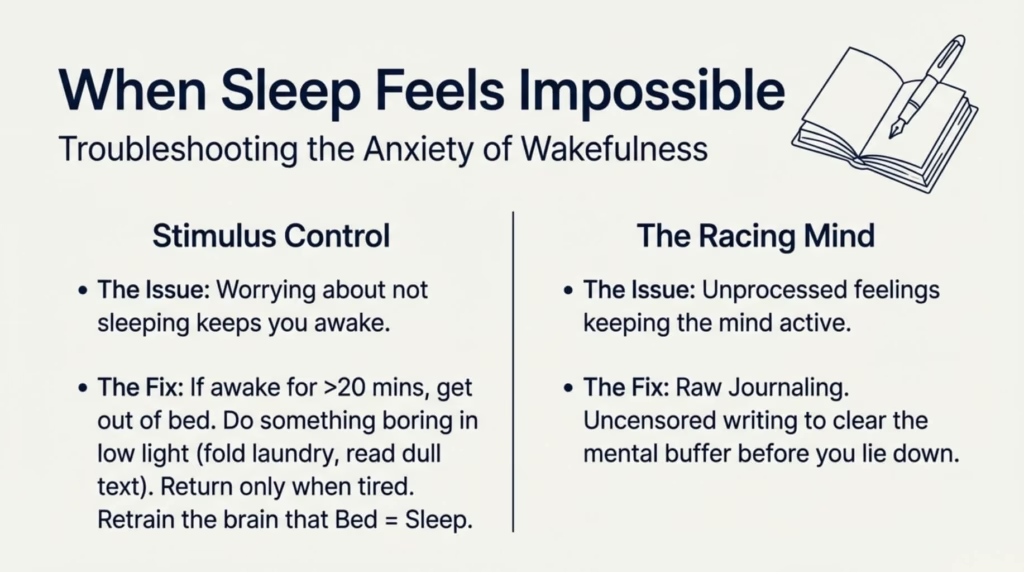
Insomnia often feeds on itself. You can’t sleep, so you worry about not sleeping, which keeps you awake longer. The bedroom becomes associated with frustration instead of rest.
If this pattern sounds familiar, the worst thing you can do is stay in bed trying to force sleep. Instead, get up. Move to another room. Do something calm and boring in low light. Read a few pages of something unexciting. Fold laundry. Listen to quiet music. When you feel drowsy again, return to bed.
This practice, called stimulus control, retrains your brain to associate your bed with sleep instead of wakefulness.
The “Stuck in Life” Connection
For many women, the inability to fall asleep isn’t just about stress. It’s about unprocessed feelings, unresolved questions, or the weight of living a life that doesn’t quite fit. Your mind won’t settle because there are things you haven’t let yourself think about during the day.
Journaling before bed can help. Not the gratitude-list kind. The raw, unfiltered kind where you write exactly what you’re feeling without censoring or solving. Sometimes sleep resistance is just your inner voice demanding to be heard.
If you’re struggling with the initial transition into sleep, the guide on how to fall asleep fast offers specific techniques for that particular challenge.
Sleep as an Act of Self-Respect

I used to think sleep was the thing I did when I ran out of things to do. The rest that came after the work was finished, the emails answered, the house cleaned. I treated it like a reward I had to earn.
What I understand now: sleep is the foundation everything else is built on. Not the reward. The requirement.
When you prioritize deep sleep, you’re not being indulgent. You’re giving your body the conditions it needs to repair itself, your brain the space to process and clean, your nervous system the chance to recalibrate. You’re choosing to show up for your life with clarity instead of fog.
This matters for anyone navigating life reinvention, creative pursuits, or self-discovery. You can’t hear your inner voice when you’re too tired to think. You can’t make thoughtful decisions when your prefrontal cortex is compromised by lack of rest. Your creative voice isn’t lost. It might just be exhausted.
The five practices in this guide are starting points, not rigid rules. Try the temperature adjustment first if that feels easiest. Experiment with a digital sunset if screens are your biggest obstacle. Notice what changes when you wake at the same time for a week straight.
Rest is not a luxury. Rest is how you reclaim yourself.
Frequently Asked Questions About Deep Sleep
How much deep sleep should you get per night?
Most adults need 1.5 to 2 hours of deep sleep per night, which represents about 15 to 25 percent of total sleep time. If you sleep eight hours, aim for 75 to 120 minutes of deep sleep. This amount can vary slightly based on age, stress levels, and overall health.
Can you catch up on deep sleep?
Not really. Your body will prioritize deep sleep when you’re sleep-deprived, often getting extra slow-wave sleep on recovery nights. But chronic sleep debt can’t be fully erased with weekend catch-up sleep. Consistent, adequate sleep every night is more effective than occasional long sleep sessions.
What causes a lack of deep sleep?
Several factors can reduce deep sleep: chronic stress keeping cortisol elevated, alcohol consumption (which fragments sleep architecture), blue light exposure before bed, irregular sleep schedules, sleeping in a room that’s too warm, and certain medications. Addressing these factors can improve deep sleep quality.
Is REM sleep the same as deep sleep?
No. Deep sleep (NREM Stage 3) focuses on physical restoration and immune function, occurring mostly in the first half of the night. REM sleep handles emotional processing and memory consolidation, increasing in the second half of the night. Both are essential but serve different purposes.
How do I know if I’m getting enough deep sleep?
Without a sleep tracker, it’s difficult to know for certain. But signs of adequate deep sleep include waking feeling physically refreshed, maintaining steady energy through the day, recovering well from exercise, and having a strong immune system. If you wake exhausted despite sleeping enough hours, you may be missing deep sleep.
Does exercise improve deep sleep?
Yes, but timing matters. Regular physical activity, especially in the morning or afternoon, can increase deep sleep duration. Intense exercise too close to bedtime can raise core body temperature and cortisol, making it harder to fall asleep. Aim to finish vigorous workouts at least three to four hours before bed.
What’s one change you’ll make tonight to support your deep sleep? Share in the comments, or explore the complete sleep optimization guide for more grounded rest practices.
⬇⬇⬇Pin or save to read later ⬇⬇⬇






0 Comments