
In This Article
A grounded guide to building a vision board rooted in self-discovery, not wishful thinking—for women ready to stop decorating their dreams and start living them.
I used to roll my eyes at vision boards.
The whole concept felt like Pinterest met manifestation culture and had a baby made of glitter and vague intentions. I’d see them in Instagram posts with captions about “calling in abundance” and “attracting my dream life,” and I’d think: pretty pictures don’t pay bills or fix burnout or tell you what you actually want when you’ve spent a decade living someone else’s definition of success.
Then I made one that changed everything. Not the aspirational kind filled with luxury cars and tropical vacations. The honest kind that forced me to confront uncomfortable truths.
The kind that made me admit I’d been chasing a life that looked good on paper but felt hollow in practice. That board didn’t manifest anything magical, but it did something more valuable: it became a mirror for the woman I was pretending to be versus the woman I was becoming.
A 2026 vision board that drives transformation functions as more than decoration. Psychologists describe this as a form of mental simulation and implementation planning: when you repeatedly see and emotionally engage with specific images, your brain starts encoding those futures as more attainable and easier to act on. Research on visualization and goal-setting suggests that pairing vivid imagery with concrete actions increases follow-through more than vague dreaming alone.
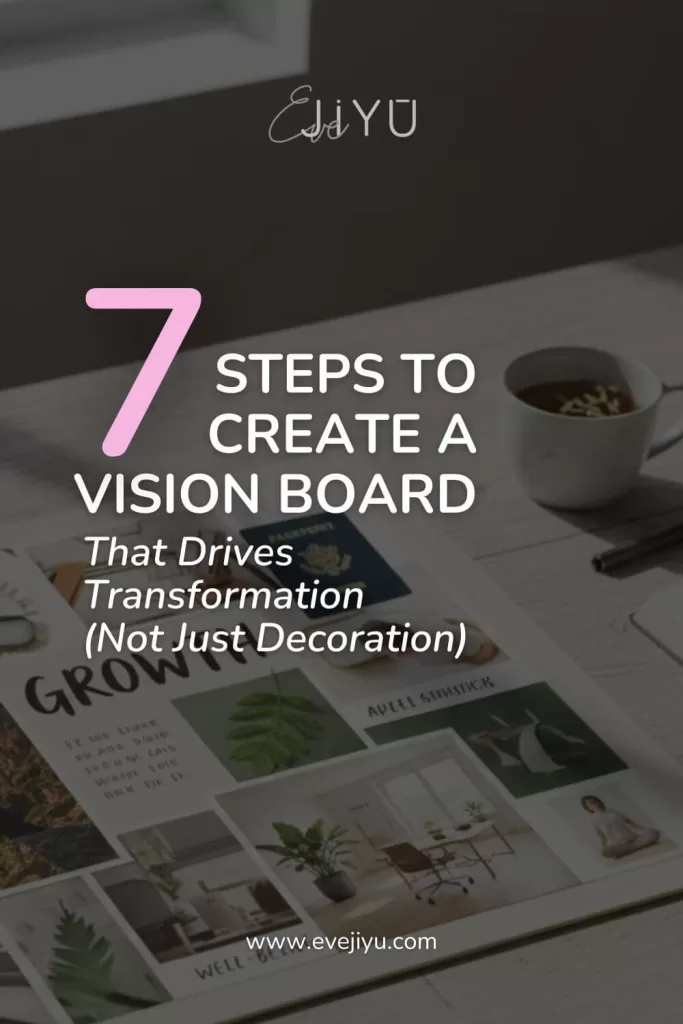
When you learn how to make a vision board that works, you create a reflective tool that helps you map the gap between where you are and where you want to be, then reverse-engineer the daily choices that close that gap. This guide walks you through seven concrete steps for building an actionable 2026 vision board, starting with the hardest part: getting honest about what you want in the first place.
Step 1: Audit Your Life to Define Success Outside the ‘Shoulds’
Before you touch a single magazine or open Pinterest, you need to audit your life with the same ruthless honesty you’d bring to cleaning out a closet. Creating a self-discovery vision board requires answering uncomfortable questions first, which means sitting with truths about the life you’ve been performing versus the life you actually want.
Grab a notebook and set a timer for fifteen minutes. Answer this question without editing yourself: If no one ever knew about my life choices, what would I change right now?
Write quickly and resist the urge to make your answers sound reasonable or defensible. The goal involves capturing raw data about the gap between your performed life and your actual desires, not crafting a polished essay about who you think you should become.
When I did this exercise four years ago, my list included: quit the project manager job that paid well but drained me, stop pretending I enjoyed networking events, admit I wanted to write instead of manage people, spend less time optimizing my productivity and more time staring out windows without guilt.
None of those admissions fit the narrative I’d been selling to myself and everyone else. But they carried truth, and truth provides the only foundation that holds weight when you’re building something new. Every vision board for skeptics must start here because skepticism usually masks fear of admitting what we really want.
Now ask yourself: Which goals on my current mental to-do list aren’t even mine?
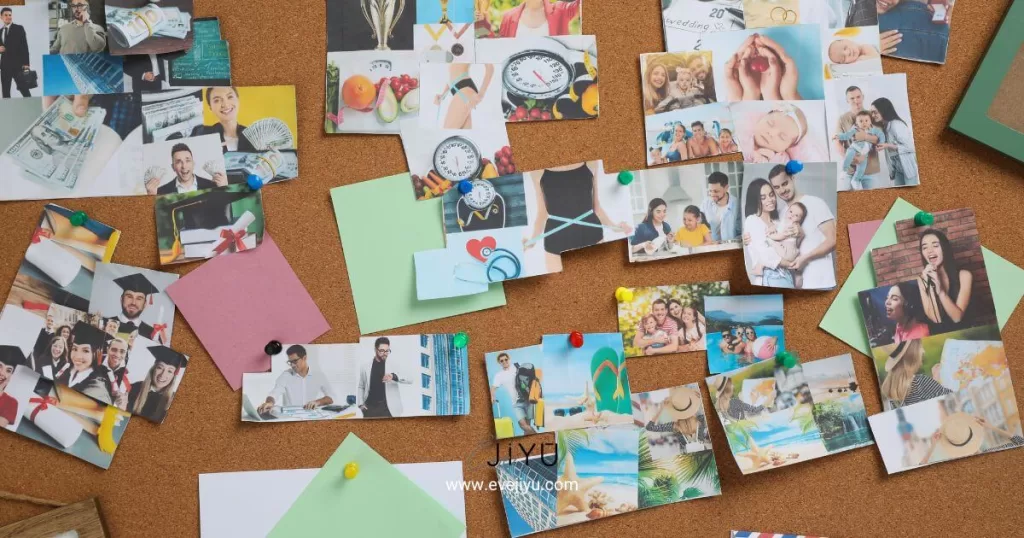
Most vision boards fail because they’re cluttered with inherited ambitions. The promotion your parents want. The body your Instagram feed suggests you should have. The entrepreneurial empire hustle culture says you’re lazy without. Your self-discovery 2026 vision board begins by eliminating everything that sounds impressive but feels empty when you imagine actually achieving it.

Step 2: Identify Your Core Desired Feelings (Not Material Goals)
One shift changed my entire approach to creating a vision board that drives transformation: I stopped focusing on what I wanted to have and started focusing on what I wanted to feel on a daily basis.
Material goals seduce us because they provide concrete targets. You can point to them and measure progress. A new apartment. A six-figure salary. A published book. But achieving every single one of those goals while still feeling misaligned, exhausted, and hollow teaches you the hard way that external markers rarely create internal peace.
Before you collect images for your actionable vision board, collect feelings instead. Spend ten minutes writing down your core desired feelings, not the feelings you think you should want or the ones that sound evolved and spiritual. Write the ones you actually crave when you’re alone and honest with yourself.
Mine were: grounded, spacious, honest, creative, calm.
Yours might include bold or energized or connected or free or peaceful. Whatever they are, these feelings become your filter for every decision moving forward. Every image you add to your board should evoke at least one of these feelings when you look at it. If an image doesn’t create that emotional resonance, it functions as decoration rather than direction.
Learning how to make a vision board that works means understanding that your board should reflect your inner landscape, not what you think success is supposed to look like based on external validation.
What to Exclude: The Anti-Cliché Checklist
Let’s talk about what doesn’t belong on a vision board that drives transformation.
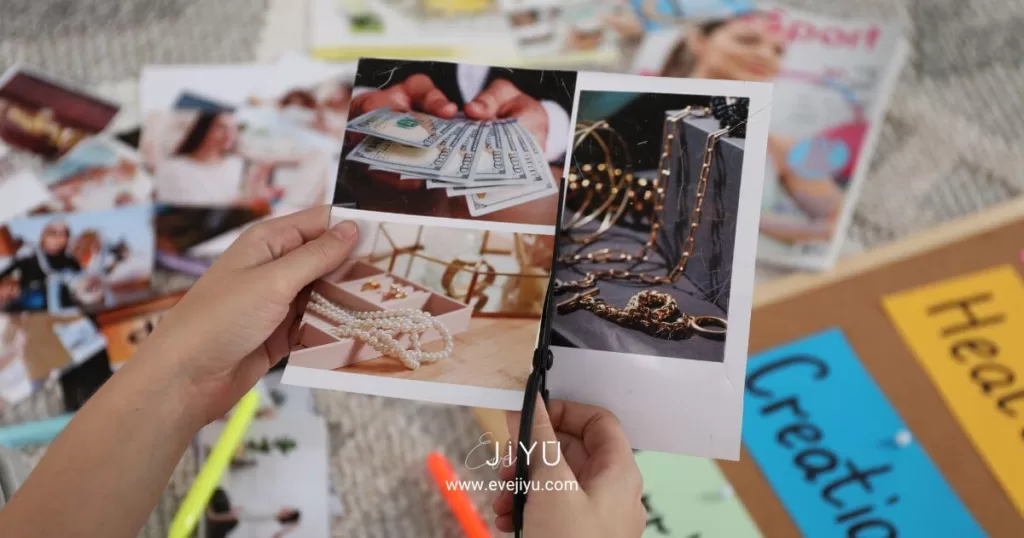
Generic motivational quotes that could apply to anyone bypass the specificity that creates actual change. Luxury items you don’t actually want but think you should want clutter your board with someone else’s dreams. Images of other people’s lives that you’re trying to copy instead of building your own version waste valuable space. Aesthetic choices that look good but don’t resonate emotionally serve Instagram feeds, not internal growth.
I learned this through trial and error over multiple board iterations. My first attempt at a self-discovery vision board included a picture of a woman doing yoga on a mountaintop at sunrise. The image was stunning, professionally shot, perfectly composed. It also had nothing to do with my actual life or desires because I don’t like waking up early and I don’t enjoy performative fitness rituals that look better in photos than they feel in practice.
What I actually wanted was the feeling that image represented: calm and presence and connection to my body. So I replaced it with a photo of an empty notebook beside morning coffee in my favorite mug. Same feeling, completely different image, but one that actually reflected my reality instead of someone else’s highlight reel.
Your actionable vision board should feel like looking at a version of your life that’s more aligned with your values, not like browsing a catalog of aspirational lifestyles designed to sell products.
Step 3: Collect Images That Evoke Your Core Feelings (Authentically)
Now comes the creative part, but approach it differently than you’ve seen on social media. If your mind goes blank at this stage and you have no idea what images or themes belong on your board, it might not be a vision problem but a voice problem. Learning how to find your creative voice—especially after years of performing rather than expressing—can help you generate honest ideas instead of recycling Pinterest aesthetics.
Making your vision board that drives transformation functions as more than arts and crafts. The process itself becomes an act of authentic expression.
Visualization vs. Vision-Setting
Let’s clarify something that gets confused constantly in mainstream advice about how to make a vision board that works: visualization and vision-setting are not the same thing, and understanding the difference determines whether your board gathers dust or drives change.
Visualization operates passively. You close your eyes, imagine your ideal life in vivid detail, then hope the universe delivers based on the energy you’ve put out into the world. Vision-setting operates actively. You use the creative process to map out your ideal future state, then identify the specific actions that move you toward it one decision at a time.
A vision board that drives transformation requires the second approach. When you select an image for your self-discovery vision board, you’re not manifesting or attracting or calling anything in. You’re making a conscious decision about who you want to become and what life you want to build through daily choices. That decision then requires action, follow-through, and course correction.
The Authentic Expression Rule
Pinterest overflows with vision boards that look professionally designed. Clean lines. Perfect color palettes. Minimalist layouts that could be framed and sold in boutique shops. Forget all of that when creating your actionable vision board.
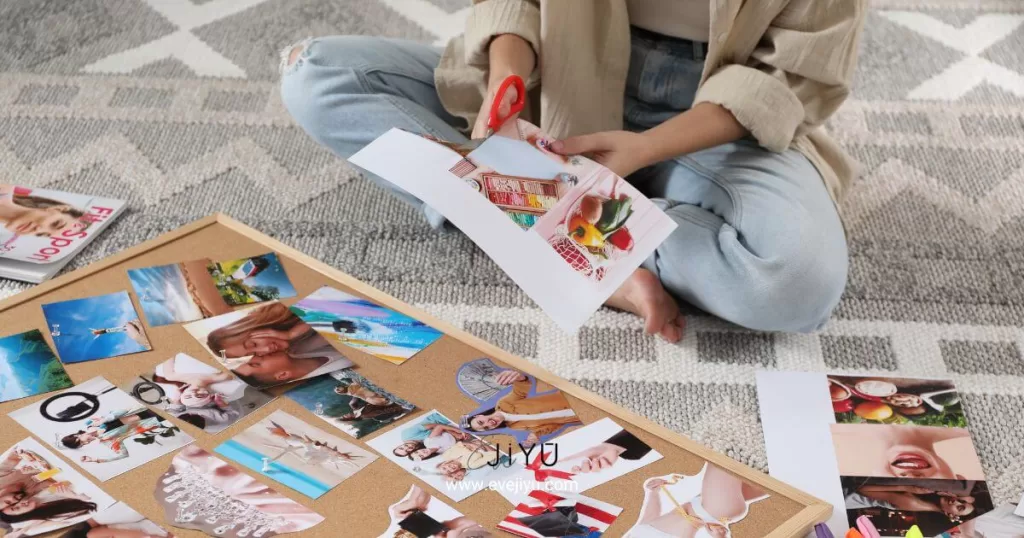
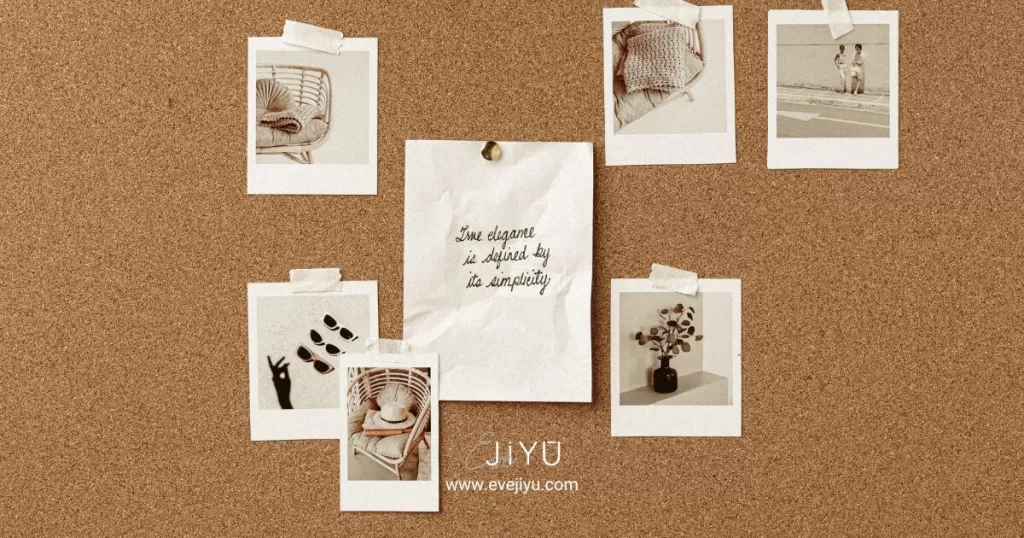
Your board should look like you made it with your own hands, not like you hired a graphic designer or tried to win a competition. It should reflect your aesthetic preferences, your handwriting, your imperfect cutting skills, your personal symbolism that makes sense to no one but you because it connects to memories and moments only you experienced.
I have a friend whose vision board that drives transformation includes a photo of her grandmother’s garden from twenty years ago, a receipt from a bookstore in Portugal she visited alone, and a paint swatch in a specific shade of blue she can’t explain but feels deeply connected to through childhood memories. None of those images would make sense on anyone else’s board, and all of them are perfect on hers because they speak directly to her core desired feelings.
Step 4: Add Words as Anchor Points for Precision
Images carry emotional weight and evoke feelings. Words carry precision and clarify intentions.
The most effective examples of how to make a vision board that works combine both elements strategically. A photo that evokes the feeling, paired with a word or short phrase that names the specific intention behind including that image.
Not generic affirmations borrowed from motivational speakers. Not inspirational slogans that sound good but mean nothing specific. Short, private statements that ground the image in your specific reality and connect it to your core desired feelings.
Under a photo of a quiet workspace, you might write: focused mornings without guilt. Under an image of friends laughing around a table: people who actually know me. Under a picture of an open road stretching into distance: choose the detour when it feels right.
These anchor words exist for you alone. They function as reference points that remind you what the image actually represents beyond surface aesthetics. They transform decoration into direction and turn your self-discovery vision board into a tool for daily decision-making.
Step 5: Reverse-Engineer Each Image Into Micro-Actions
Most people stop after making their board look pretty. They hang it up, feel proud of the creative project, and wait for something magical to happen. The board becomes wallpaper within weeks, pretty but functionally useless for creating actual change.
Creating a vision board that drives transformation requires reverse-engineering each image into specific, actionable steps you can take starting today.
Every image on your actionable vision board represents a goal or a feeling you want to cultivate. Your job involves working backward from that destination and identifying the micro-actions that build toward it through consistent daily or weekly practice.
Let’s say you included an image of a calm, organized home office with natural light and plants. That represents the destination, but how do you actually get there? Reverse-engineer it by asking: What daily or weekly actions create and maintain that environment?
Maybe it involves spending ten minutes at the end of each workday clearing your desk completely. Maybe it means setting a boundary that work emails don’t get checked after 6 PM so the space can return to being just a room. Maybe it requires finally dealing with the pile of papers that’s been sitting in the corner for three months, creating visual clutter that prevents the calm feeling you’re seeking.
Write those micro-actions down on sticky notes and place them next to the corresponding image. Suddenly your vision board for skeptics stops being aspirational and starts being instructional, a practical guide for daily choices rather than a collection of pretty pictures.
I did this reverse-engineering process with every single image on my board. The picture of a published book became: write for thirty minutes before checking email each morning. The photo of a quiet morning ritual became: move my phone charger out of the bedroom so I’m not scrolling before coffee. The image representing creative work became: block two hours every Thursday for projects that aren’t client work, and protect that time like a doctor’s appointment.
Those micro-actions transformed my self-discovery vision board from someday thinking to today doing. The board stopped representing a distant future and started guiding present choices.
This action-first approach also mirrors what behavior and motivation research repeatedly finds: goals paired with specific “when–then” plans are far more likely to happen than goals you only think about or visualize.
Step 6: Place Your Board Where Decisions Happen (Strategic Placement)
Where you physically place your board matters as much as what images appear on it for how to make a vision board that works in daily life.
Some people hang vision boards in places they barely look throughout their normal routines. Above a desk they avoid. In a bedroom closet they open once a day. Behind a door that stays open. The board becomes invisible within two weeks, which makes it useless for driving transformation through consistent engagement.
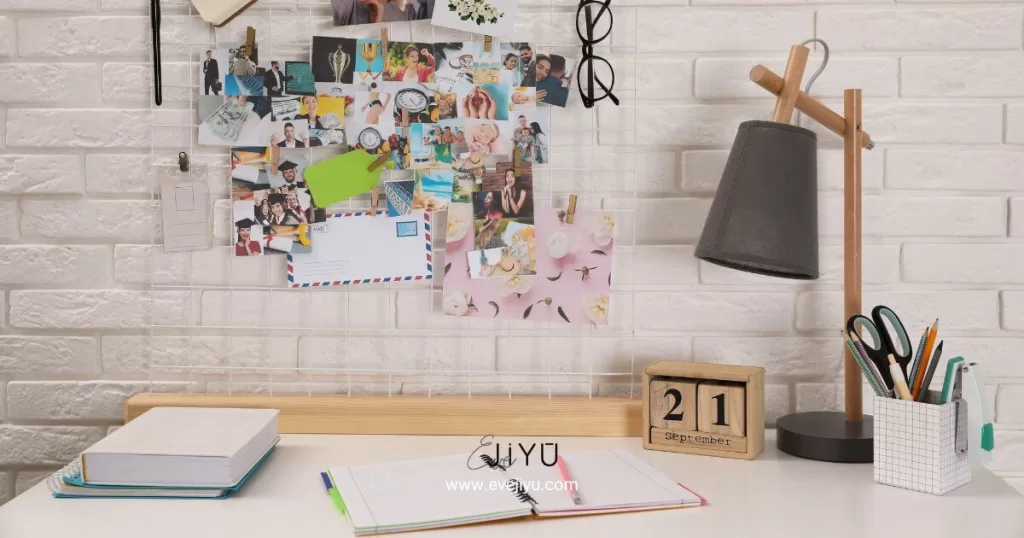
Instead, place your actionable vision board somewhere you see it during moments of decision-making or stress. Not just where you’ll glance at it passively while walking by, but where you’ll actively engage with it when you need redirection away from old patterns.
I keep mine above my workspace where I see it every single time I sit down to work or check email. When I’m tempted to say yes to a project that pays well but drains my energy, I look at the board and remember my core desired feeling of spaciousness. When I’m about to spiral into perfectionism and rewrite something for the fifth time, I look at the board and see the reminder about choosing progress over polish.
The board functions as a burnout buffer, a visual interruption that redirects me toward the life I’m intentionally building instead of the patterns I’m actively breaking. Some people use their vision board that drives transformation as a phone background so they see it dozens of times daily. Others photograph it and keep it in a notes app they check during morning routines. Find the placement that makes the board unavoidable during the moments when you’re most likely to default to old decision-making patterns.
Step 7: Implement Weekly Check-Ins (Accountability Over Manifestation)
One practice turned my vision board from decoration into transformation catalyst: the weekly review ritual.
Every Sunday evening, I spend ten minutes with my board and my journal. I ask myself four specific questions that create accountability without judgment:
Which image did I move toward this week? Name one specific action you took that aligned with something on your board. Even tiny actions count because they build momentum.
Which image did I avoid or ignore? Get honest about the goals or feelings you resisted, postponed, or pretended didn’t matter. Notice the pattern without shame.
What got in the way of progress? Identify the specific pattern, fear, obligation, or external circumstance that blocked forward movement. Understanding obstacles helps you plan around them.
What’s one micro-action for next week? Choose the smallest possible step toward one image. Make it so small that you can’t talk yourself out of it.
This weekly practice transforms your self-discovery vision board from a manifestation tool into an accountability partner. Some weeks you’ll have taken zero action toward any image, and that becomes data rather than failure. Notice it, ask why without judging yourself, adjust your approach.
Knowing When to Retire an Image
Your board shouldn’t remain static because you’re not static. Two reasons exist for removing an image from your 2026 vision board that drives transformation: you achieved the goal it represented, or you realized it was never authentically yours to begin with.
Both scenarios deserve celebration rather than guilt.
I had a picture of myself giving a speaking engagement on my board for eight months. Then I got the opportunity and said yes. I spoke at an event to a room full of people. And I realized immediately that I hated everything about the experience. The preparation drained me for weeks. The performance felt inauthentic to my introverted nature. The whole experience confirmed that public speaking wasn’t part of my actual vision but something I thought I should want because other successful people in my field did it regularly.
I removed that image without guilt or feeling like I’d failed. The board showed me the truth about a goal that looked good but felt wrong, and that information was exactly what I needed. Your actionable vision board should help you eliminate misaligned goals as much as it helps you pursue authentic ones.
The ‘Unstuck’ Protocol
Sometimes looking at your board creates anxiety instead of clarity. You see all the images representing goals you haven’t reached and feelings you haven’t cultivated, and the gap between where you are and where you want to be feels insurmountable rather than inspiring.
When that overwhelm happens, stop looking at the specific goals and redirect your attention to the feeling words instead.
Remember those core desired feelings you identified during the self-discovery audit? Grounded. Spacious. Honest. Creative. Calm. You don’t need to achieve any goal on your board to access those feelings right now in this moment.
Ask yourself: What’s one small way I can feel [your core feeling] today, in the next ten minutes?
If your word is calm, maybe it involves five minutes of silence before you start checking work messages. If your word is creative, maybe it means doodling in a notebook without any purpose or goal. If your word is grounded, maybe it requires saying no to one thing you don’t actually want to do but feel obligated to accept.
Your vision board for skeptics functions as a compass that orients you toward your values, not a report card that measures your worthiness. When you feel stuck or overwhelmed, use it to reconnect with what matters rather than tally what you haven’t accomplished yet.
What a Vision Board That Drives Transformation Actually Does
An actionable 2026 vision board doesn’t make things happen through mysterious universal forces. It makes things clear through consistent reflection and intentional decision-making.
It clarifies which goals authentically belong to you versus which ones you inherited from family expectations or cultural pressure. It translates vague desires into specific feelings you can cultivate through daily choices. It reverse-engineers big dreams into manageable micro-actions that build momentum. It serves as a decision-making tool during moments of stress, temptation, or uncertainty. It evolves as you do because transformation is never a linear path.
Four years ago, I made my first honest self-discovery vision board following these seven steps. It wasn’t pretty by Pinterest standards. It included images that embarrassed me because they revealed how much I’d been performing instead of living authentically. But that board became the map I desperately needed when I was too burned out to trust my own judgment about what mattered.
I didn’t manifest a new life through positive thinking or vision board magic. I built one through thousands of small choices guided by clarity about what I actually wanted. The board reminded me every single day what I was building toward when external pressure tried to pull me back into old patterns.
Your turn to begin this process. Start with Step 1 and audit your life with brutal honesty about what you actually want versus what you think you should want. Identify your core desired feelings with specificity in Step 2. Then work through the remaining steps to build a vision board that reflects those truths instead of someone else’s definition of success.
When you look at your board tomorrow morning, don’t wait for magic or manifestation. Take one micro-action instead and notice how that small choice moves you closer to the life you’re intentionally creating.

0 Comments