
In This Article
You’ve been staring at the same email for ten minutes. Your shoulders are up near your ears, your jaw is clenched, and somewhere in the back of your mind, there’s a running tally of everything you haven’t finished yet. You know you need a break, but the thought of adding “self-care” to your already impossible list feels like just another thing you’re failing at.
Here’s what actually helps: science-backed stress relief techniques for high-achieving women that don’t require you to overhaul your entire life or pretend everything’s fine when it’s not. These twenty activities aren’t about forcing positivity or grinding through one more productivity hack. They’re designed to work with your nervous system, not against it, offering real 30-minute stress relief in the actual pockets of time you have available.
This guide organizes proven science-backed stress relief techniques for high-achieving women by time commitment—5, 15, and 30 minutes—so you can match the tool to the moment. Some will interrupt an acute stress spiral, others will help you recalibrate when you’re running on empty. All of them are drawing from American Psychological Association and National Institutes of Health endorsed methods like breathing, mindfulness, and movement to match the tool to your moment.
What Makes Science-Backed Stress Relief Techniques for High-Achieving Women Different
Reframing What Relief Actually Means
Most stress management advice treats stress like an enemy to eliminate. But stress itself isn’t the problem. Your body’s stress response evolved to keep you alive, to mobilize energy when you face genuine threats. The trouble starts when that emergency system never gets a chance to stand down.
For burned-out achievers, stress often isn’t dramatic. There’s no bear chasing you. Instead, it’s the constant hum of deadlines, the mental load of keeping track of everything, the pressure to prove your worth through output. Your nervous system doesn’t distinguish between physical danger and the fear of disappointing people. It responds the same way: cortisol spikes, heart rate climbs, muscles tense.
Research in the Journal of Occupational Health Psychology shows women often experience higher workplace stress and strain than men, compounded for high-achievers by gender role expectations and work-family demands. Sustainable relief means learning to regulate that response. Not bypassing your feelings or pretending you’re not stressed, but actively signaling to your body that right now, in this moment, you’re safe enough to rest.
Why 30-Minute Stress Relief Actually Works
When you’re already overwhelmed, open-ended self-care advice creates more anxiety. “Just relax” or “take time for yourself” sounds reasonable until you’re staring at your calendar with no idea where that time would come from.
The 30-minute stress relief structure gives you permission to be specific. Thirty minutes doesn’t require major life changes. You’re not quitting your job or abandoning your responsibilities. You’re creating a container—a defined beginning and end—that makes rest feel achievable rather than indulgent.
Research from Harvard Medical School on burnout recovery consistently shows that small, repeated interventions outperform sporadic grand gestures. Your nervous system learns through repetition. When you practice downregulating stress for even brief periods, you’re building neural pathways that make it easier to access that calm state over time.

Building Your Internal Evidence Log
Each time you use one of these science-backed stress relief techniques for high-achieving women and actually feel your body shift—shoulders drop, breathing deepens, thoughts slow—you’re collecting evidence. Evidence that your system can change states. Evidence that the relentless tension isn’t permanent.
This matters more than you might think. When you’re deep in burnout, your brain starts to believe that stress is your default setting, that you’ve forgotten how to feel anything else. These activities serve as proof points, small demonstrations that your parasympathetic nervous system still works, that calm isn’t something you’ve lost access to forever.
The 5-Minute Reset: Quick Science-Backed Stress Relief Techniques for High-Achieving Women
Sometimes you don’t need deep recovery. You need a circuit breaker. These science-backed stress relief techniques for high-achieving women create rapid physiological shifts that interrupt stress spirals before they take over your entire day. They’re most effective when stress is acute—when you can feel your heart racing, when your thoughts are speeding up, when you’re about to snap at someone who doesn’t deserve it.
1. 4-7-8 Breathing
Sit somewhere relatively quiet. Close your eyes if that feels comfortable. Breathe in through your nose for a count of four. Hold that breath for seven counts. Then exhale slowly through your mouth for eight counts, making a soft whooshing sound. Repeat this cycle four times.
The magic here is in the long exhale. When you extend your out-breath beyond your in-breath, you activate your vagus nerve, which runs from your brainstem to your abdomen and directly influences your parasympathetic nervous system. Research from the Cleveland Clinic confirms this technique can lower heart rate and blood pressure within minutes. This isn’t abstract wellness language. This is your body’s built-in mechanism for signaling safety. The long exhale tells your brain that you’re not running from anything, that it’s okay to stand down from high alert.
2. The Hand Massage
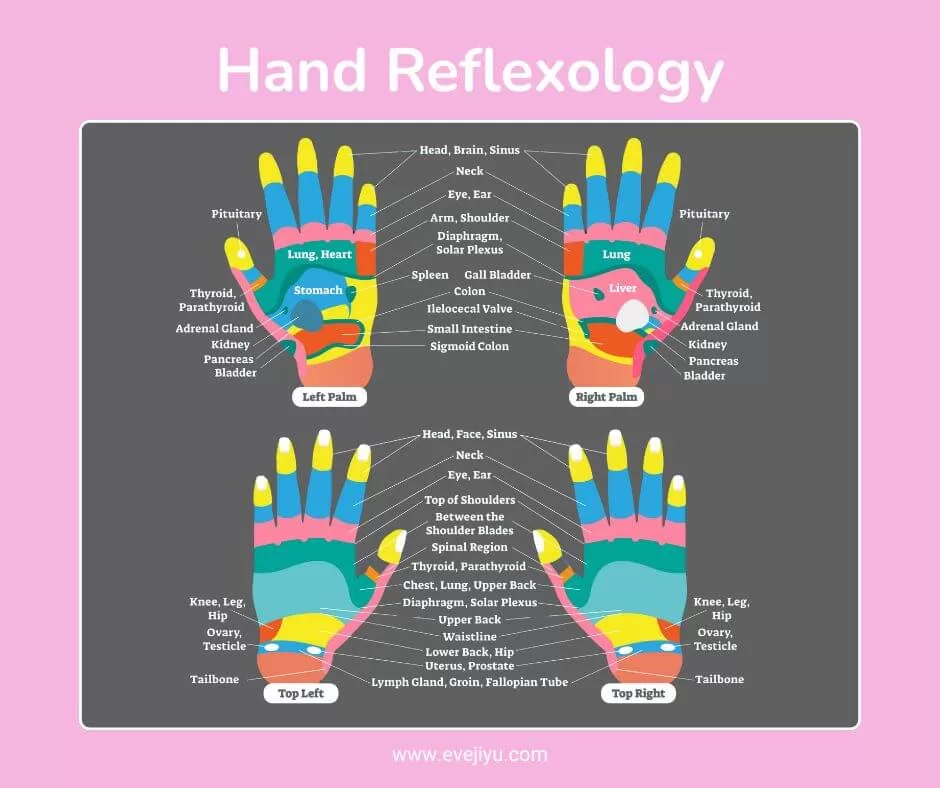
Take a dollop of lotion or a few drops of oil. Start at the base of your thumb, where it meets your palm, and apply firm, circular pressure for thirty seconds. Move to the webbing between thumb and forefinger, then work your way across your palm and down each finger. Spend at least sixty seconds on one hand before switching.
Your hands hold surprising amounts of tension. Targeted pressure on these areas can lower your heart rate within minutes. Studies on acupressure and stress reduction show that hand massage activates pressure points connected to your nervous system. There’s also something about caring for your own body with deliberate touch that creates a sense of self-compassion. You’re not just managing stress—you’re actively soothing yourself the way you might comfort someone you love.
3. 5-4-3-2-1 Grounding
Name five things you can see. Four things you can physically feel (the chair beneath you, your feet on the floor, the weight of your phone). Three things you can hear. Two things you can smell. One thing you can taste.
Rumination keeps you trapped in stories about the past or anxious projections about the future. This technique, widely used in cognitive behavioral therapy, anchors you to what’s actually happening right now. Your senses only work in present tense. When you engage them fully, you pull your mind out of the narrative loop and back into your immediate reality, which is almost always more manageable than the catastrophe your thoughts were spinning.
4. Deep Power Pose
Stand with your feet wide, hands on your hips, chin slightly lifted. Hold this stance for two full minutes. If you’re somewhere private, you can spread your arms wide above your head like you’ve just won something.
The research on power posing has been debated, but the basic premise holds: your body posture influences your internal state. When you take up physical space, when you adopt a posture associated with confidence rather than defeat, something shifts. You might feel slightly ridiculous at first, but that’s fine. Two minutes of standing like a superhero can genuinely alter your perception of what you’re capable of handling next.
5. Aromatherapy Anchor
Keep a small bottle of essential oil in your bag or at your desk. When stress hits, unscrew the cap and take three slow, deep inhales. Lavender and citrus oils are particularly effective for most people, though the specific scent matters less than your personal association with it.
Your olfactory system connects directly to your limbic system—the emotional processing center of your brain. Research published in Frontiers in Psychology shows that smell bypasses the thinking, reasoning parts of your mind and goes straight to memory and emotion. If you consistently pair a particular scent with moments of genuine calm, your brain will start to recreate that calm when you smell it again. You’re essentially training your nervous system to respond to a simple sensory cue.
The 15-Minute Re-Center: Science-Backed Stress Relief Techniques for High-Achieving Women
When you need more than a quick interrupt but don’t have time for deep recovery, these science-backed stress relief techniques for high-achieving women redirect your mental energy into low-stakes activities that create a sense of productive flow without adding pressure. These 30-minute stress relief options (or less) work by engaging your attention fully enough that your mind stops churning through worry, while remaining gentle enough not to spike cortisol further.
6. Binaural Beats
Put on headphones and find a binaural beats track designed for relaxation. These are audio files that play slightly different frequencies in each ear, creating a subtle pulsing effect that can guide your brainwaves toward calmer states.
The science here involves entrainment—your brain’s tendency to synchronize with rhythmic external stimuli. According to studies on brainwave entrainment, theta wave frequencies are associated with the deeply relaxed state you enter during meditation or just before sleep. Fifteen minutes of listening can shift you out of the beta waves of active stress and into something closer to rest, even if you’re not fully meditating.
7. Progressive Muscle Relaxation
Starting with your toes, deliberately tense the muscles as tightly as you can for five seconds, then release completely. Move up to your calves, thighs, glutes, abdomen, chest, hands, arms, shoulders, neck, and face. The entire sequence takes about twelve minutes.
Most of us carry chronic tension without realizing it. We’re so adapted to tight shoulders and clenched jaws that we’ve forgotten what relaxation actually feels like. Progressive Muscle Relaxation (PMR), shown in systematic reviews to significantly reduce stress, anxiety, and muscle tension by creating contrast between deliberate tensing and release, teaches your body the distinction—making true letting go more noticeable and effective.
8. The 1-Page Brain Dump
Take a blank piece of paper and write down every single thing occupying space in your mind. Tasks, worries, random thoughts, resentments, half-formed ideas. No editing, no organizing, no judgment about what makes the list. Just get it all out of your head and onto the page.
This works because your brain wasn’t designed to hold dozens of open loops simultaneously. Every unfinished task, every unresolved worry, takes up working memory. When you externalize all of it, you create distance. The problems don’t disappear, but they stop taking up quite so much internal real estate. You can look at the page and see that the chaos has edges, that it’s finite, that it’s manageable in ways it never felt when it was swirling around inside your skull.
9. Non-Goal-Oriented Movement
Put on comfortable clothes and move your body for ten minutes with absolutely no agenda. Stretch whatever feels tight. Roll your neck and shoulders. Lie on the floor and pull your knees to your chest. Try a few gentle yoga poses if you know any. The only rule is that this isn’t exercise. You’re not trying to burn calories or get stronger. You’re just inviting your body to release some of what it’s been holding.
Movement releases endorphins, which are natural mood elevators. But unlike intense exercise, which can actually spike cortisol in the short term, gentle movement soothes. Research from Johns Hopkins Medicine shows that your body was designed to shift between activity and rest. When you’ve been sitting in stress for hours, even minimal movement helps metabolize some of that stuck energy.
10. Guided Imagery
Find a guided imagery recording—there are thousands available for free. Close your eyes and let the voice walk you through a detailed visualization of a peaceful place. Maybe it’s a beach, a forest, a mountain meadow. The specifics matter less than the sensory detail. What do you hear? What does the air feel like? What can you smell?
Your brain doesn’t fully distinguish between imagined and actual experiences, especially when those experiences are richly sensory. Studies on visualization (guided imagery) show that vividly imagining safe, calm scenes triggers physiological relaxation responses—slowed heart rate, deeper breathing, and muscle relaxation—as the brain activates similar neural pathways as real experiences, engaging the parasympathetic nervous system. This isn’t escapism but a deliberate cognitive technique used in stress management to create needed physiological states.
The 30-Minute Re-Calibration: Deep 30-Minute Stress Relief
These activities require the full half-hour and provide the deepest relief. Use them when you’re truly depleted, when the smaller interventions aren’t enough, when you need something that feels like genuine restoration rather than just damage control. This is 30-minute stress relief that doesn’t just pause the stress but actively repairs some of what burnout has worn down.
11. Listen to ASMR
If you’re someone who finds ASMR (Autonomous Sensory Meridian Response) soothing rather than irritating, spend thirty minutes with headphones listening to your preferred triggers. For many people, soft speaking, tapping sounds, or gentle personal attention scenarios create a tingling, deeply calming sensation.
Early studies from universities studying ASMR show it activates neural pathways similar to social bonding and gentle touch. If it works for you, it can drop you into a state of relaxation that’s hard to achieve any other way. If it doesn’t work for you or feels unpleasant, skip it entirely. This is deeply individual.
12. The Warm Bath Reset
Draw a bath as warm as you can comfortably tolerate. Add Epsom salts if you have them. Set a timer for twenty-five minutes and just soak. No phone, no book unless you really want one, just you and the warmth.
Heat promotes vasodilation, relaxing and expanding blood vessels to lower blood pressure and ease muscle tension. Magnesium sulfate (Epsom salt) absorption through skin supports nervous system relaxation. Research on hydrotherapy and stress confirms these physiological benefits, showing reduced anxiety, pain, and stress hormones like cortisol during immersion. But beyond the biochemistry, there’s something profoundly soothing about being held by warm water, about giving yourself permission to do absolutely nothing except exist in comfort for a defined period.
13. Creative Coloring or Doodling
Get an adult coloring book or just a blank piece of paper and some colored pencils. Spend thirty minutes filling in patterns or making marks with no goal beyond the act itself. This isn’t about creating art. This is about engaging your hands and eyes in something repetitive, low-stakes, and mildly absorbing.
Activities like this quiet your prefrontal cortex—the part of your brain responsible for executive function, planning, and self-criticism. Studies on art therapy and stress reduction show art-making significantly reduces stress by quieting the prefrontal cortex (overthinking region), inducing meditative-like states with lower cortisol and enhanced alpha brain waves similar to mindfulness. Your mind wanders but doesn’t spiral. You’re focused but not striving. It’s the mental equivalent of stretching out a cramped muscle.
14. Focused Nature Exposure
Go outside without your phone. Sit somewhere you can see trees, sky, or water if possible. For thirty minutes, just observe. Count how many different bird songs you hear. Watch how light moves through leaves. Notice the temperature of the air on your skin. Find ten specific details you’ve never noticed before.
Humans evolved in natural environments. Our nervous systems are calibrated to respond to natural patterns—the fractal geometry of tree branches, the sound of wind, the movement of water. Research supporting the biophilia hypothesis shows that even brief nature exposure lowers blood pressure, reduces salivary cortisol levels, and improves heart rate variability by activating parasympathetic responses and reducing sympathetic nervous activity. You don’t need a wilderness trek. You need sustained, attentive presence with the living world, even if that world is a park bench.
15. The Rest Nap
Set an alarm for twenty to thirty minutes maximum. Lie down somewhere comfortable, close your eyes, and rest. You might fall asleep, you might not. Either way, you’re giving your body permission to power down.
Short naps improve alertness, cognitive performance, and emotional regulation without leaving you groggy. Research from NASA on strategic napping confirms the benefits. The key is staying under thirty minutes so you don’t enter deep sleep cycles. This is strategic rest, not giving up. When you’re running on empty, thirty minutes of horizontal time can mean the difference between barely functioning and having enough reserves to get through the evening.
16. Write a Gratitude Letter
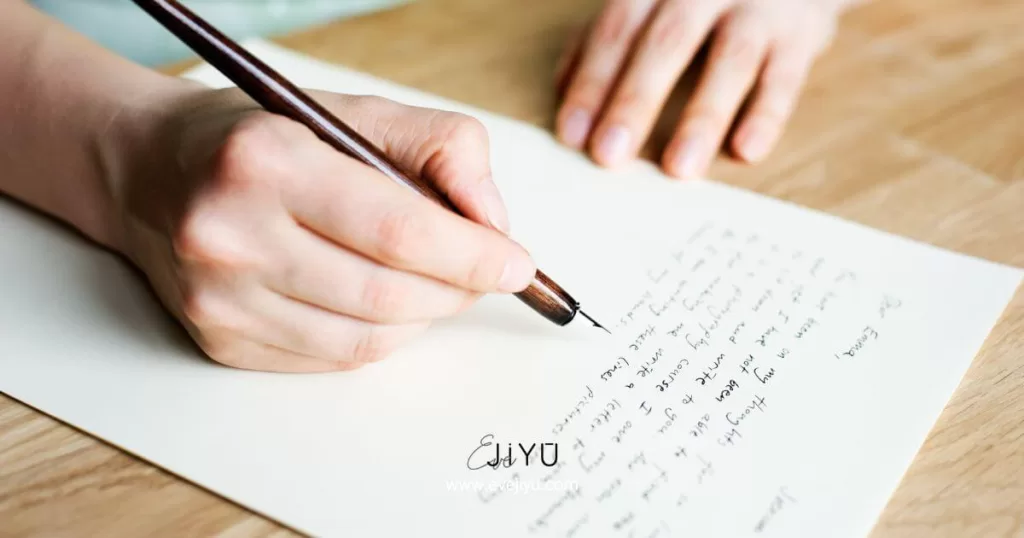
Think of someone who has genuinely helped you, supported you, or made your life better in some way. Spend thirty minutes writing them a letter—not an email, an actual letter—telling them specifically what they did and what it meant to you. You don’t have to send it, though doing so often deepens the positive effect.
Gratitude practices get dismissed as toxic positivity, but genuine gratitude is different. Research from UC Berkeley’s Greater Good Science Center shows this isn’t about forcing yourself to feel thankful when you’re struggling. This is about deliberately shifting your attention toward connection and appreciation. When you write about someone else’s kindness, your brain releases dopamine and serotonin. You move out of threat-based thinking and into something that feels more like safety.
17. Listen to Uplifting Music
Create a playlist of songs that genuinely lift your mood—not necessarily happy songs, but songs that make you feel something good. Lie down, close your eyes, and listen for thirty minutes without multitasking.
Music activates your brain’s reward centers and releases dopamine. According to neuroscience research on music, it can lower cortisol and regulate emotional states more effectively than many other interventions. The key is choosing music that resonates with you personally. What matters isn’t the genre or the lyrics but the way your body responds. Let yourself feel whatever the music brings up. Sometimes sadness is as healing as joy.
18. Mindful Cooking or Baking
Choose something simple—a batch of muffins, a pot of soup, a loaf of bread. Focus entirely on the sensory experience. The sound of chopping, the smell of garlic hitting hot oil, the texture of dough under your hands. Move slowly. Make this about the process, not the result.
Cooking engages multiple senses simultaneously, which naturally draws you into the present moment. There’s also something deeply satisfying about creating something tangible and nourishing. When so much of life feels abstract or overwhelming, making food you can actually eat grounds you in basic, mammalian care. You’re not fixing everything. You’re feeding yourself. That’s enough.
19. A Gentle Digital Detox
Turn off all notifications. Put your phone in another room or in a drawer. For thirty minutes, exist without the constant pull of messages, updates, and alerts.
Digital hyperconnectivity keeps your nervous system in a state of low-grade vigilance. Research on digital wellness shows that every notification is a tiny interruption, a small demand on your attention. Even when you’re not actively looking at your phone, knowing it’s there and might buzz creates background tension. Removing that source of stimulation for just half an hour allows your nervous system to settle in ways it can’t when you’re perpetually on call.
20. Meaningful Social Connection
Reach out to someone you trust and genuinely enjoy. Have a ten-minute video call or exchange a few thoughtful text messages. Not small talk, not logistics, but actual connection. Ask how they really are. Tell them something true about how you’re doing.
Social support is one of the most powerful buffers against stress. Studies on social connection and health show that when you connect with someone who sees you, who cares about you without needing you to perform or produce, your body releases oxytocin. This hormone counteracts cortisol, lowers blood pressure, and creates a felt sense of safety. You’re reminding your nervous system that you’re not alone, that you belong, that you matter beyond what you accomplish.
Implementing Science-Backed Stress Relief Techniques for High-Achieving Women in Your Life

You don’t need to abandon your ambitious life or pretend you’re not tired. You don’t need to gaslight yourself into believing that everything’s fine when it clearly isn’t. What you need is evidence—repeated, embodied evidence—that your nervous system can still shift gears, that rest is accessible, that you haven’t permanently broken your ability to feel okay.
These twenty science-backed stress relief techniques for high-achieving women aren’t magic. They won’t solve burnout by themselves, and they won’t change the external circumstances creating stress in the first place. But they will give you tools that actually work, practices grounded in how your body and brain actually function, ways to interrupt the cycle before it consumes everything.
Start with whichever 30-minute stress relief technique feels most doable right now. Maybe that’s sixty seconds of hand massage before your next meeting. Maybe that’s thirty minutes in a warm bath this evening. The specific starting point matters less than the act of starting, of proving to yourself that you can still influence your own state, that you’re not entirely at the mercy of circumstance and demand.
Your worth isn’t conditional on your exhaustion. The best thing you can do—for your work, for the people who depend on you, for your own survival—is remember that you’re allowed to be a person who rests, who regulates, who occasionally puts down the weight and just breathes.
What’s one technique from this guide you’ll try today? Let me know in the comments, or if you’re looking for deeper support with sustainable self-care and long-term burnout recovery, explore our comprehensive resource: The Busy Woman’s Guide to Stress Management & Burnout Recovery. For more on reclaiming your creative voice and life reinvention, visit our core content pillars.
0 Comments