
Journey Map
Five years ago, if someone told me I’d wake up at 7 AM to meditate for 15 minutes before checking my phone, I would have laughed. I would have asked if they also believed in crystal healing. I was one of those people who rolled their eyes at anything “woo-woo.” Meditation? That was for people wrapped in scarves and prayer beads. They sat cross-legged while burning incense and chanting about chakras.
I was wrong. Here’s how neuroscience changed my mind. And my life.
My Journey from Eye-Roller to Early Morning Meditator
My relationship with spirituality has been messy. There were phases when I believed in the mystical world. Times when I dismissed it. I was convinced only our human intellect determined everything.
Looking back, I leaned most heavily into mystical practices when I felt least stable in my life. I searched for answers in tarot cards, horoscopes, fortune telling. When I felt happy and grounded, I based my life on intellect and scientific knowledge.
This back-and-forth continued until I moved to Bali. I started meeting people who had a spiritual side but were also incredibly down-to-earth. These weren’t the stereotype I’d built in my mind. Not disconnected hippies with no material foundation. They were what I’d call “normal people” who happened to meditate. This made me think: maybe there’s a middle ground? Maybe a balance between the spiritual and material worlds is possible. Maybe more interconnected than I’d imagined?
That’s when my consistent, three-year meditation practice began.

The Science That Changed Everything
What shifted my perspective wasn’t a mystical revelation. It was listening to podcasts with scientists, psychologists, and neuroscientists talking about meditation. I became interested in what researchers like Tom Campbell, Dr. K (HealthyGamerGG), and others were saying about mindfulness and meditation. When I discovered how meditation relates to quantum physics and neuroscience – how it changes our brains – everything clicked.
As Jon Kabat-Zinn, the founder of Mindfulness-Based Stress Reduction (MBSR), puts it: “Mindfulness is often spoken of as the heart of Buddhist meditation. It’s not about Buddhism, but about paying attention. That’s what all meditation is, no matter what tradition or particular technique is used.”
The scientific world is intersecting with metaphysics and spirituality. It shows that you don’t need to burn incense, light candles, or wear prayer beads to get a clear, bright mind. It’s simpler than that. Meditation stops the chaos in your head so you can hear and understand what’s real.
What the Research Actually Shows
Recent neuroscience research has revealed mind-blowing discoveries about meditation’s impact on the brain:
- Immediate Brain Changes: A 2025 study from Mount Sinai found that loving-kindness meditation is “associated with changes in the strength and duration of certain types of brain waves called beta and gamma waves.” These brain waves are affected in mood disorders like depression and anxiety, so “the possibility of being able to willfully control these through meditation is pretty amazing, and may help explain the positive impact that these practices have on individuals.”
- Structural Brain Changes: Neuroscientific research shows that “when we learn how to juggle or play a musical instrument, the brain undergoes changes through a process called neuroplasticity. A brain region that controls the movement of a violinist’s fingers becomes progressively larger with mastery of the instrument. A similar process appears to happen when we meditate.”
- Real Health Benefits: Scientific reviews consistently show that “mindfulness practice improves emotion regulation and reduces stress” and that “fronto-limbic networks involved in these processes show various patterns of engagement by mindfulness meditation.”
This isn’t pseudoscience or wishful thinking. This is peer-reviewed research from institutions like Harvard, Mount Sinai, and Stanford showing measurable changes in brain structure and function.

My Practical, No-Nonsense Start
I began my meditation journey the way any skeptical person should: by stripping away all the mystical elements and focusing purely on what worked.
I downloaded the Balance mindfulness app to my phone. First, I read the reviews (of course), took advantage of the free trial period, and started with 5-minute challenges morning and evening. What I loved about Balance was that it offered nothing about spirituality—it was about mindfulness and being present in the moment, not about religious or mystical practices.
Those 5 minutes gradually became 10, then 15 minutes each morning and evening. And you know what? It hooked me—not just the daily challenges Balance offered, but the fact that I began noticing my mind becoming calmer. I started appreciating simple, everyday things in my life more. I found it easier to concentrate on my daily tasks.
When Balance was no longer enough and I wanted longer, deeper practices, I moved to guided meditations on YouTube. I still use them sometimes, especially for Yoga Nidra before sleep or when I don’t have a quiet environment for my meditation.
The Real Results (No Mystical Claims Here)
After three years of consistent practice, I can say my life has changed. I’m not talking about mystical transformations. Here are the concrete changes I’ve experienced:
- Mental clarity: The fog in my head has lifted. I think more clearly and see myself more clearly in this world.
- Emotional stability: I stand firmly on my feet, grounded yet supported from within, never feeling lonely.
- Better creativity: Meditation helps me be more creative in my daily work and makes it easier to concentrate.
- Improved relationships: I’m more positive, which improves results in both my career and friendships.
- Less irritability: I’m less reactive and feel more confident in myself.
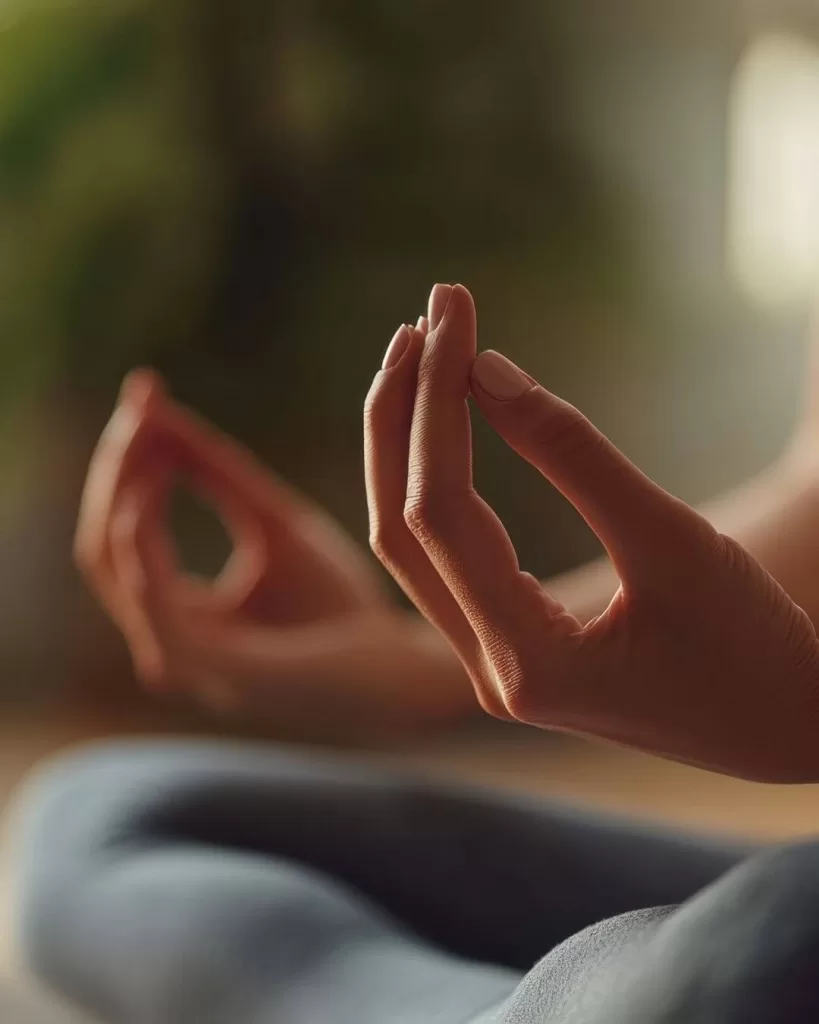
Here’s the kicker: I don’t even meditate that much. Fifteen minutes in the morning and 30 minutes in the evening. I don’t force myself. I don’t need to. I can’t skip my meditation anymore. I see the effect, and it brings me pleasure. It’s like exercise, but for your brain instead of your muscles.
For the Skeptics: Where to Start
If you’re where I was three years ago – curious but skeptical – here’s my advice:
1. Strip Away the Spiritual Language
Look for apps and resources that focus on the practical benefits. For example, Balance (the app I used at the beginning) offers a personalized, science-based approach with a non-secular style of meditation with no options to choose anything religious-based, like meditations based on Buddhist teachings.
2. Start Small and Consistent
Begin with 5-10 minutes daily. Consistency matters more than duration. As Jon Kabat-Zinn explains, “Mindfulness is awareness that arises through paying attention, on purpose, in the present moment, non-judgementally.” That’s it – no mysticism required.
3. Focus on the Science
Read about the research. For example, Harvard’s Meditation Research Program offers extensive scientific backing for meditation’s benefits. Understanding the “why” behind the practice helped me stick with it.
Like me, you can find fascinating discussions about meditation science on podcasts (I loved listening to scientists on shows with Mel Robbins, Jay Shetty, and Andrew Huberman), YouTube videos from neuroscientists, and research papers. Understanding the “why” behind the practice – how it literally changes your brain structure – helped me stick with it when the initial novelty wore off.
4. Treat It Like Brain Training
Think of meditation not as a spiritual practice but as going to the gym for your brain. You’re literally strengthening neural pathways and building mental resilience.
5. Try Different Techniques
Just as people choose different types of therapy or exercise based on their needs, there are various meditation techniques: Vipassana, guided meditation, mindfulness meditation, movement meditation, visualization meditation, and loving-kindness meditation. Try different approaches to find what works for you.

The Bottom Line
Meditation isn’t tarot cards or crystals. It’s a proven practice where you can discover who you are. Meditation doesn’t promise you anything. You have to try it yourself and be responsible for the changes in your life.
I wish I hadn’t been so stubborn. I wish I had tried this practice earlier. There’s no miracle here, no mystical transformation. Just a proven method that helps you cut through mental noise to access clarity, focus, and well-being.
The scientific evidence is clear: meditation changes your brain, reduces stress, improves focus, and boosts mental health. What more proof do you need?
Ready to try it for yourself? Start with just 5 minutes tomorrow morning. Sit comfortably, focus on your breath, and see what happens. Your skeptical mind might just surprise you.



0 Comments