
In This Article
The scattered girl’s breakthrough – what happened when I finally stopped making excuses and built real habits
The Phone Call That Made Me Realize How Far I’d Come
Yesterday I was talking to a friend who’s stuck in the same chaos I used to live in. She hates her job but works crazy hours anyway. Then crashes on weekends, sleeping until 2pm or going out and getting completely wasted. Some days she’s productive and motivated. Other days she can’t get off the couch.
There’s no middle ground. No rhythm. Just extremes.
After we hung up, I found myself thinking about our conversation. What she’s going through, how she’s living, what thoughts it brought up for me. I do this after most conversations with friends – I replay them, process them.
She is messy. I was messy too. But I didn’t want to jump in with advice or try to fix her life. That’s annoying. I just shared my experience without judgment, let her know I’m here if she needs me.
Two years ago, that was me.
The only difference? I finally built habits that actually stuck.
Not the Pinterest-perfect morning routine kind. Real habits. Small ones. Ones that worked even when I didn’t feel like it.
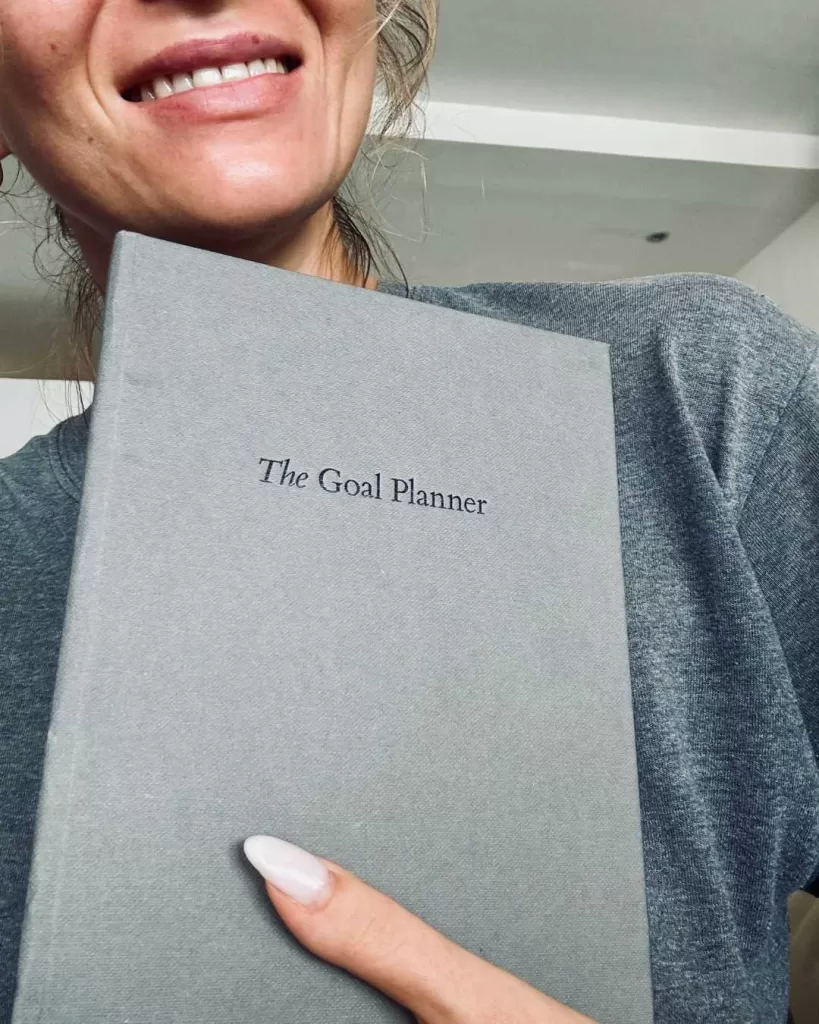
Why I Was a Walking Contradiction for Most of My Life
When I think back to who I was 10, 5, even 2 years ago (probably all my childhood too), I see someone completely scattered. I lived in extremes – either no plan at all, or everything mapped out to the smallest detail.
The funny thing about those detailed plans? They were just fantasies in my head, not actual steps I could take.
One week I’d be super organized, making color-coded schedules and detailed to-do lists. The next week I’d abandon everything and wing it completely. No middle ground. No consistency.
This pattern started way back in childhood. My parents are good people, but they weren’t structure people. They lived by “whatever happens, happens.” Wake up when you feel like it. Eat when you’re hungry. Do homework if you remember. Go to bed whenever.
Back then, I thought this was freedom. No rules, no pressure, no one telling me what to do.
But here’s what I learned: that wasn’t freedom at all. It was chaos disguised as choice.
I’m genuinely happy for people who don’t relate to this. They had adults who created natural rhythms from day one. Wake up at 7, brush teeth, breakfast, school, homework, dinner, bedtime. Structure that became automatic.
That rhythm never existed in my house. So I grew up thinking structure was boring and restrictive. I thought spontaneous meant free-spirited. Really, I was just lost and calling it flexibility.
The absence of routine doesn’t create freedom. It creates anxiety. You’re constantly making decisions about basic things that should be automatic. When to wake up, when to eat, when to work. It’s exhausting.
The “Fun Friend” Who Was Actually Falling Apart
My friends thought I was the fun one. Always up for drinks. Always flexible. Want to try that new bar? Sure. Random party invitation? I’m in.
But here’s what they didn’t see. My “flexibility” came from having nothing solid to protect. No morning routine to maintain. No evening boundaries to respect. No goals that actually mattered to me.
I could stay out until 3am because I had no reason to get up early. I could cancel plans because nothing I was doing felt important anyway. I could say yes to everything because I was saying no to nothing – including myself.
James Clear talks about this in Atomic Habits – when you don’t have systems, you end up “drifting” through life, making choices based on what feels good in the moment rather than what serves your long-term goals.
That was exactly me. Drifting from one weekend to the next, one distraction to another, one excuse to the next.
The problem with having no structure is that you end up being reactive instead of intentional. You’re not choosing your life. Your life is choosing you. Every invitation gets to decide what you do next. Every mood. Every impulse.
The Breaking Point: When Working for Myself Exposed Everything
Everything shifted when I started working for myself. Suddenly, no one was telling me what to do or when to do it. No boss checking if I showed up. No schedule imposed by someone else.
At first, I thought this was going to be amazing. Total freedom, right?
Wrong. It was terrifying.
When you work for yourself, your income depends on your discipline. Your success depends on your habits. Your future depends on what you do today, not what you plan to do someday.
I couldn’t hide behind someone else’s structure anymore. I couldn’t blame my boss for my lack of progress. I couldn’t coast on a steady paycheck while dreaming about “someday” goals.
Working for myself gave me a bigger purpose, but it also exposed every weakness I had. No morning routine? My most productive hours were wasted. No boundaries with my time? I’d work until midnight then crash for days. No clear priorities? I’d spin my wheels on busy work that didn’t matter.
The first few months were rough. Really rough. I’d have days where I’d accomplish nothing, then panic and work 14 hours straight to make up for it. I’d start projects with all this enthusiasm, then lose steam halfway through and abandon them.
My bank account reflected this chaos. Some months I’d make decent money, other months almost nothing. The inconsistency was killing me – and my confidence.
That’s when I got desperate enough to find real answers.
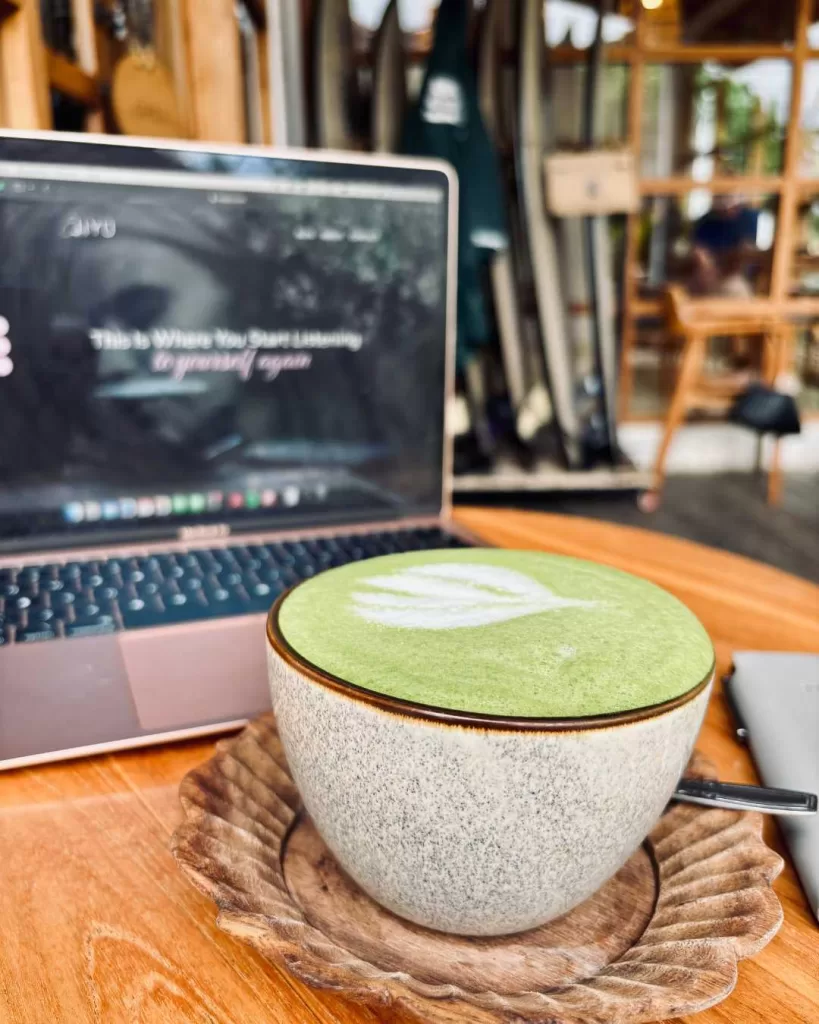
What Actually Worked (And What Spectacularly Didn’t)
I started reading everything I could about habit formation and listening to podcasts from neuroscientists and high performers. Not because I suddenly loved self-help, but because I was desperate. I needed to figure out why I kept getting stuck and how to stop making excuses.
The research was clear. People who succeed don’t rely on motivation or willpower. They rely on systems. Routines that work even when they don’t feel like it.
I realized I had two choices. Go back to a regular job where structure was provided for me. Or finally learn to create structure for myself.
I chose to build habits. Real ones this time.
Here’s what I tried first (and failed at miserably):
- Waking up at 5am to “maximize productivity” – lasted exactly 3 days before I hit snooze until 9am
- Hour-long morning routine with meditation, journaling, yoga, and gratitude practice – way too overwhelming, quit after a week
- Tracking 7 different habits in a fancy app – became obsessive about the numbers instead of actually doing the habits
- Following someone else’s “perfect day” schedule – felt like wearing clothes that were three sizes too small
- Going to the gym for 90 minutes every day – burned out after two weeks and didn’t exercise for a month
Every failure made me feel more hopeless. Maybe I was just someone who couldn’t stick to anything. Maybe some people were disciplined and others weren’t, and I was in the second group.
Then I tried something completely different. I started ridiculously small.
The One Habit That Changed Everything
I started with setting an alarm for 7am. That’s it. Not “wake up at 7am and immediately do 20 things.” Just set the alarm. Get up when it goes off.
I did that for two weeks before adding anything else.
Here’s why this worked when everything else failed:
My brain could handle one small change. When you try to become a completely different person overnight, your brain fights you on everything. But it can handle one tiny adjustment.
It built confidence. Every morning I got up at 7am, I proved to myself that I could keep a promise. That I wasn’t completely hopeless with habits.
It created a foundation. Once I had a consistent wake-up time, everything else became possible.
After waking up at 7am felt automatic (took about 3 weeks), I added five minutes of meditation. Not 20 minutes. Five. I literally set a timer on my phone.
After that became normal, I added journaling – one page, not three. Then I added the skincare routine, then the lemon water, then gradually built up to what I do now.
The key was stacking one tiny habit on top of another. Building slowly. Being boring about it.
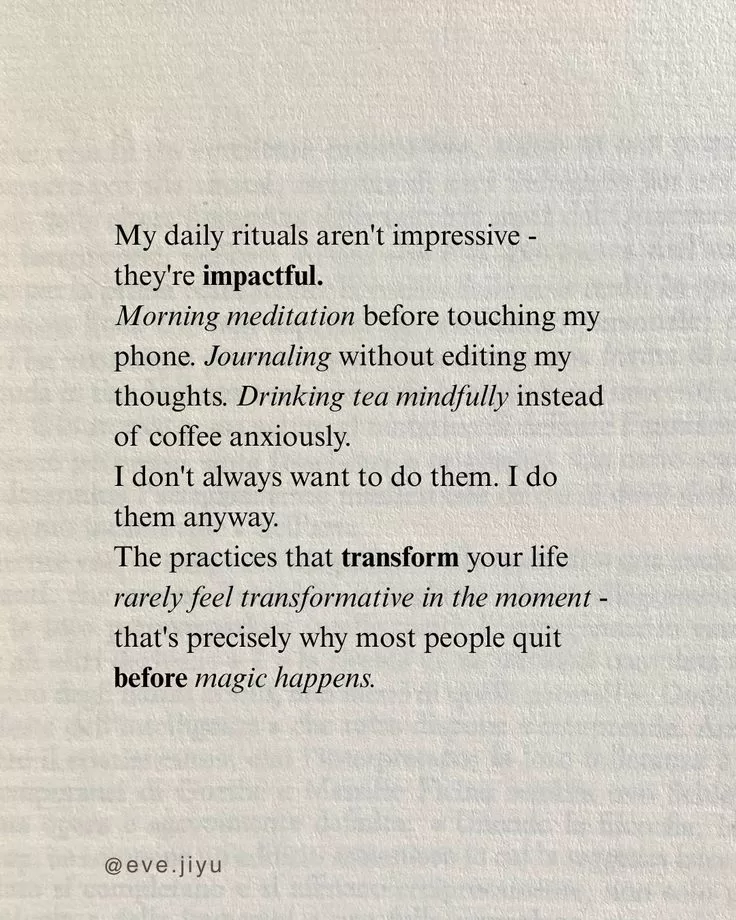
My Current Routine (And Why It Actually Works This Time)
My alarm goes off at 7am, and I get up for my morning meditation – now 15 minutes, built up slowly over months. Then I write one page in my journal. After that, I wash my face, apply skincare, drink water with lemon, and do facial exercises.
Then I make tea and breakfast, allow myself to scroll through my phone to catch up on yesterday’s news, and then go to the gym. I work out about 3 times a week for around 60 minutes – nothing crazy, just consistent. All of this takes until about 11am.
I eat lunch at 12pm and work until about 5pm. On weekends, I wake up at the same time but spend time in nature or with friends instead of working.
Why this routine works for me:
It’s not perfectionist. I allow phone time and flexibility. I don’t beat myself up if I skip meditation one day or sleep in on Sunday.
It matches my energy. I’m naturally more alert in the morning, so I protect those hours for myself before work starts demanding my attention.
It has built-in rewards. The skincare routine feels luxurious. The tea ritual is something I genuinely look forward to.
It creates what I call a “domino system.” Each habit naturally leads to the next one. I don’t have to think about what comes next.
It’s flexible enough to travel with. I can do most of this routine in a hotel room or at a friend’s house.
The Evening Habits That Made the Biggest Difference
I have simple evening routines too, but these were game-changers:
No phone after 8pm. This was probably the hardest habit to build. When I slip up (because I’m human), I immediately feel it – it becomes hard to fall asleep. Sleep became my non-negotiable because it affects literally everything else.
I mostly stopped drinking alcohol. Not completely, but mostly. Even one glass of wine created difficulty the next day and I couldn’t exercise well – it disrupted my entire system. I’m not saying everyone should do this, but for me, protecting my morning routine became more important than wine.
Simple evening wind-down. Light stretching, herbal tea, reading fiction. Nothing fancy, but it signals to my brain that the day is ending and it’s time to rest.
I prep for tomorrow. Lay out workout clothes, set up my journal and pen, prepare the coffee maker. My morning self thanks my evening self every single day.
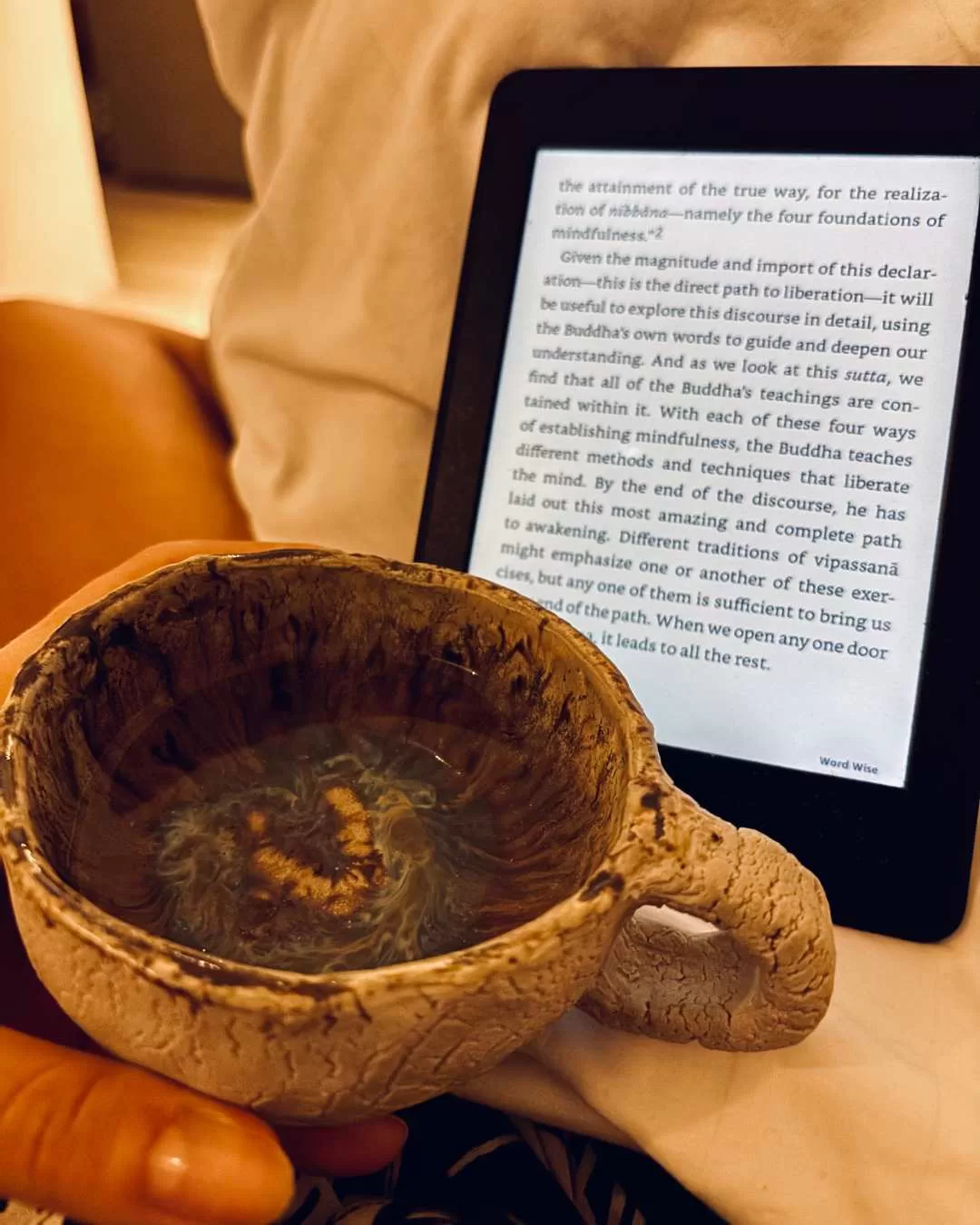
The Mistakes I Made (So You Don’t Have To)
Mistake 1: Starting with too many habits at once I tried to change everything immediately. Failed every time. Your brain can only handle so much change at once. Pick one thing. Do it for at least two weeks. Then add something else.
Mistake 2: Making habits too complicated “I’ll wake up at 6am, meditate for 30 minutes, journal 3 pages, do yoga, make a perfect breakfast, and answer emails.” Yeah, right. Simple works. Complicated fails.
Mistake 3: Being all-or-nothing If I missed one day, I’d throw in the towel completely. Now I just get back to it the next day. Perfection is the enemy of consistency.
Mistake 4: Comparing my beginning to someone else’s middle I’d see someone’s polished routine on Instagram and feel like a failure because mine was messier. Everyone’s journey is different. Focus on your own progress.
Mistake 5: Forgetting my why I’d focus on the habit itself instead of remembering why it mattered. My morning routine isn’t about being perfect – it’s about feeling grounded and intentional before the world starts demanding my attention.
Mistake 6: Not planning for obstacles I never thought about what would happen when I traveled, got sick, or had a crazy work deadline. Now I have “minimum viable” versions of my habits for tough days.
How to Start Without Overwhelming Yourself
Here’s what I wish someone had told me when I was trying to build life changing habits after 30 for the millionth time:
Pick one stupidly simple thing. Not five things. One. For me, it was setting an alarm for 7am. For you, it might be drinking one glass of water when you wake up or making your bed.
Do it for two weeks before adding anything else. I know this sounds slow, but slow actually works. Fast fails spectacularly.
Stack one tiny habit on top of another. Once waking up at 7am felt automatic, I added five minutes of meditation. After that became normal, I added journaling.
Be boring about it. The goal isn’t to impress anyone. It’s to create something sustainable that serves your actual life.
Expect it to feel weird at first. Your brain doesn’t like change. It’ll try to talk you out of it. This is completely normal and doesn’t mean you’re doing it wrong.
Plan for obstacles. What will you do when you travel? When you’re sick? When work gets crazy? Having a plan makes it easier to get back on track.
Focus on identity, not outcomes. Instead of “I want to lose weight,” think “I’m becoming someone who takes care of their body.” Instead of “I want to be productive,” think “I’m becoming someone who shows up consistently.”
What Actually Changes When You Build Real Habits
The transformation isn’t dramatic. It’s gradual. Subtle. Then one day you realize everything is different.
My energy is more stable. No more 3pm crashes or Sunday night anxiety attacks about the week ahead.
My confidence grew slowly but steadily. Every small promise I kept to myself built trust that I could keep bigger ones.
My relationships improved in unexpected ways. When you’re not constantly drained by basic life management, you have more emotional bandwidth for others.
Work became significantly easier. Having structure in my personal life created focus in my professional life. I stopped procrastinating as much because I had practice showing up even when I didn’t feel like it.
I stopped feeling guilty all the time. The constant background anxiety of things I “should” be doing mostly disappeared.
I learned the real difference between discipline and restriction. Discipline gives you more choices, not fewer. Chaos takes your choices away.
My mental health improved. This was unexpected but huge. Having routines that anchor my day made everything feel more manageable.
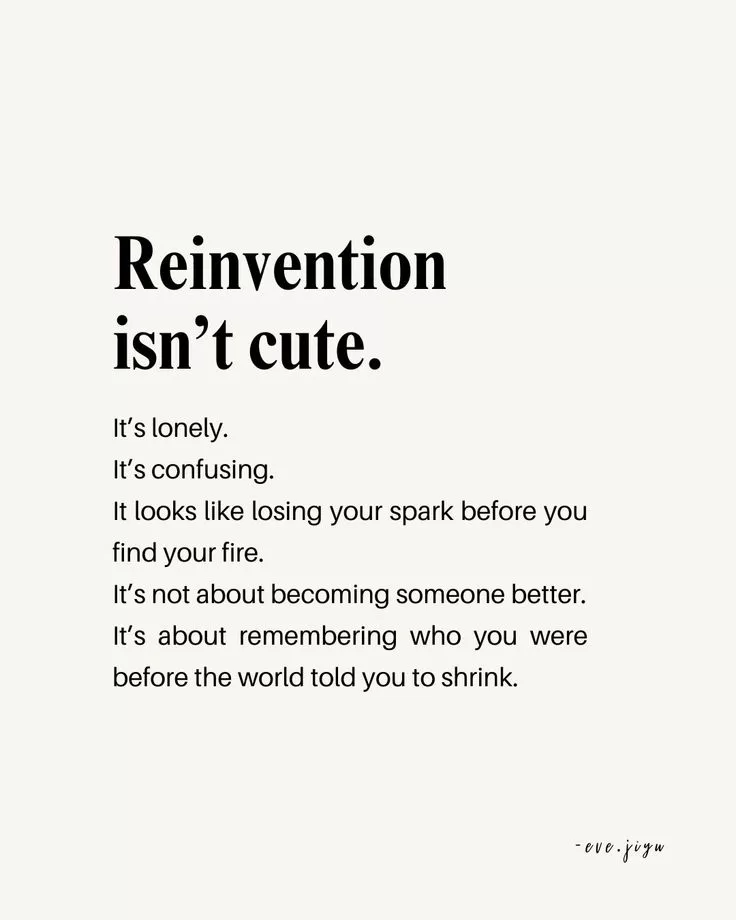
The Truth About Building Life Changing Habits after 30
Building life changing habits after 30 is different than in your twenties. You have more self-awareness but also more entrenched patterns. You know what doesn’t work, but changing what you’ve always done feels harder.
Here’s what I’ve learned about changing your life in your 30s:
You’re not starting from scratch. You have decades of experience to draw from. You know yourself better than you did at 20. Use that knowledge.
You have clearer motivation. You’ve probably felt the consequences of not having structure. You know what’s at stake if you don’t change.
You’re done with fake solutions. You don’t want another “life hack” or magic pill. You want something that actually works long-term.
You understand that time is finite. Every day you don’t start is another day further from the life you want. This urgency can actually help you commit.
You have the emotional maturity to stick with difficult changes. You can tolerate discomfort better than you could when you were younger.
You probably have more responsibilities. This makes it both harder and more important to have systems that work automatically.
The Ripple Effect No One Talks About
When you start building habits that actually work, something interesting happens. The discipline you develop in one area starts affecting everything else in ways you never expected.
My morning routine improved my work focus. Better sleep habits boosted my relationships. Regular exercise increased my confidence. Consistent journaling helped me process emotions instead of avoiding them.
This is what researchers call the “compound effect” – small changes create massive transformations over time, but not always in the ways you expect.
Some changes I never saw coming:
- I became more reliable in friendships
- I stopped making impulse purchases as much
- I started having better conversations because I wasn’t always mentally scattered
- I became more patient with difficult people
- I started enjoying simple things more because I wasn’t constantly seeking the next distraction
I’m 34 years old and I’m still building new habits. The difference is, now I know how to do it in a way that actually sticks instead of burning out after two weeks.
Your Permission Slip to Start
If you’re reading this thinking “I’m too old to change” or “I should have figured this out by now,” let me be clear: You’re exactly where you need to be.
Starting over in your 30s means you have:
- Life experience to know what doesn’t work (this is valuable!)
- Emotional maturity to stick with difficult changes
- Clear motivation based on real consequences you’ve experienced
- The wisdom to choose quality over quantity in your habits
- Better boundaries than you had in your twenties
You’re not behind. You’re not broken. Youre not too old or too set in your ways.
You’re ready.
The person you want to become – the one living with intention, clarity, and genuine happiness instead of just reacting to whatever happens – is waiting for you to take the first small step.
What will that step be?
Maybe it’s setting an alarm 30 minutes earlier. Maybe it’s putting your phone in another room at night. Maybe it’s making your bed every morning. Maybe it’s drinking one glass of water before coffee.
It doesn’t matter what it is. It matters that you start.
Remember: Building habits in your 30s isn’t about perfection. It’s about progress. And progress starts with something so small you can’t fail.
Start tomorrow. Your future self – the one who actually has their life together – is counting on it.


0 Comments