
In This Article
Looking for meditation techniques that actually calm anxiety? Here are seven 15-minute, science-backed mindfulness practices to reset your mind, boost self-love, and reduce overwhelm.
Do you ever feel like your brain won’t stop spinning, with a million thoughts racing at once? Meditation doesn’t have to be an hour-long ritual with bowls and perfect posture. Even 15 minutes of meditation can calm your nervous system, reduce mental noise, and help you feel like yourself again instead of a productivity machine running on fumes.
Science supports this. Research shows that even short meditation trainings can lower cortisol responses to stress and improve emotional regulation. You don’t need a full hour — your brain just needs you to show up.
In this guide, you’ll discover seven types of 15 minute meditation techniques that are practical, grounded, and designed for women dealing with burnout, overwhelm, or those afternoons when taking a full breath feels impossible. These practices are accessible, evidence-backed, and can fit into any busy schedule.
If you’ve ever wondered whether meditation actually works or if it’s all placebo, I get it. I was skeptical too. But the neuroscience is clear, and the lived experience is even clearer.
Why 15 Minutes Is Enough to Reset Your Mind
Most of us dismiss meditation because we think we don’t have time. But the truth is, 15 minutes is not only enough to create a meaningful shift in your nervous system—it’s often more sustainable than trying to carve out an hour you don’t have.
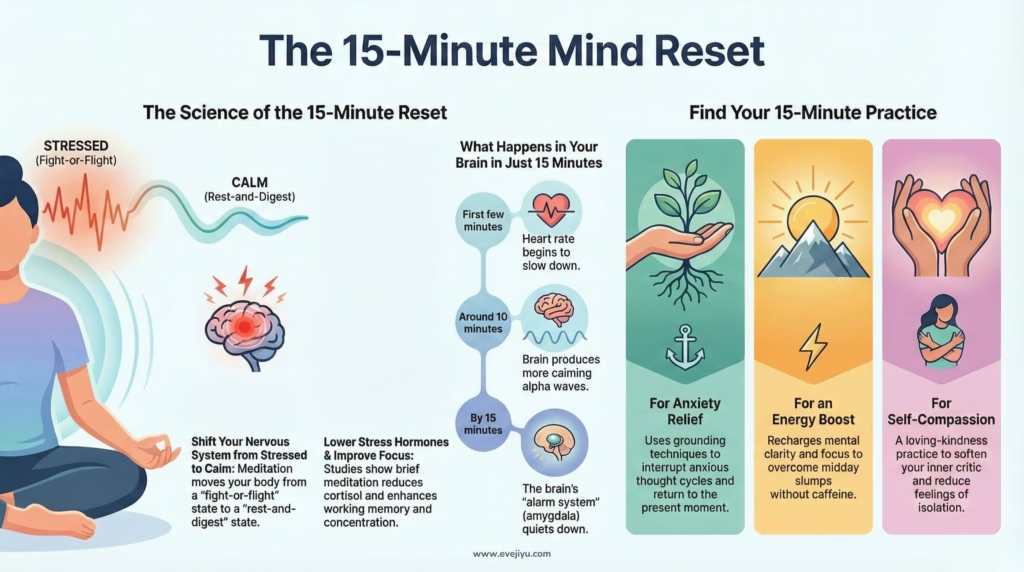
Research from the University of Waterloo found that just 10 minutes of daily meditation improved focus and reduced mind-wandering in participants who had never meditated before. Another study in Consciousness and Cognition showed that brief mindfulness practices enhanced working memory and cognitive flexibility within weeks.
Your brain doesn’t measure meditation success by duration. It measures it by consistency and presence.
When you sit down for 15 minutes of meditation, you’re giving your prefrontal cortex—the part of your brain responsible for decision-making and emotional regulation—a chance to come back online. You’re interrupting the stress cycle. You’re teaching your nervous system that it’s safe to slow down.
I used to think that if I couldn’t do a “real” meditation session, it wasn’t worth doing at all. That perfectionist thinking kept me from meditating for years. Now, I know that 15 minutes on a Tuesday morning while drinking lukewarm coffee is worth more than zero minutes spent waiting for the “right” conditions.
If you’re dealing with anxiety or racing thoughts, these mindfulness exercises can offer immediate relief without requiring a full lifestyle overhaul.
What Happens in Your Brain During 15 Minutes of Meditation
Let me break down what’s actually happening when you meditate, because understanding the “why” makes it easier to commit to the practice.
Within minutes of settling into meditation, heart rate and physiological arousal begin to decrease as the body shifts from fight‑or‑flight toward rest‑and‑digest. Over the session, brain rhythms like alpha activity associated with relaxed alertness increase, and stress‑related regions such as the amygdala become less reactive, leaving you calmer and more able to focus on what truly needs your attention.
This is why even short meditation sessions work. Your nervous system doesn’t need perfection. It needs permission to pause.
7 Types of 15 Minute Meditation You Can Try Today
I’ve tested dozens of guided meditations over the years. Some felt too abstract, others too performative. The ones I’m sharing here are the ones I actually return to when I need to reset my mind, calm my body, or reconnect with myself.
1. Self-Love Meditation
If you’ve spent years being kind to everyone except yourself, this meditation is where you start rebuilding that relationship.
Self-love meditation isn’t about forced affirmations or pretending you feel great when you don’t. It’s about sitting with yourself without judgment. It’s about learning to speak to yourself the way you’d speak to someone you care about.
I remember the first time I tried a self-love meditation. Within minutes, I noticed how automatically I criticized myself for small things—my posture, my wandering thoughts, even the way I was breathing. That awareness was uncomfortable, but it was also the beginning of something better.
- What it does:
This type of meditation helps you cultivate self-compassion, soften your inner critic, and remind yourself that your worth isn’t tied to your productivity or perfection. It’s particularly helpful on days when you feel inadequate, behind, or like you’re failing at everything. - How to practice:
Find a quiet space where you won’t be interrupted. Sit comfortably and close your eyes. Start by placing one hand on your heart and one on your belly. Breathe deeply. Listen to a guided meditation that walks you through phrases like “I am enough as I am” or “I release the need to prove my worth.” - Recommended video:
Search YouTube for “15 minute self love meditation” and look for practices led by voices that feel grounding to you. I personally prefer meditations that don’t feel overly saccharine or performance-based. You want something honest, not theatrical.
If you’re interested in building a broader practice around self-compassion, daily mindfulness and gratitude practices can support this work beautifully.
2. Relaxation Meditation for Stress Relief
This is the meditation I reach for after a long day when my shoulders are up by my ears and my jaw is clenched without my realizing it.
Relaxation meditation focuses on progressive muscle release and breath awareness. It’s designed to calm your nervous system and release the physical tension that accumulates when you’re holding everything together.
- What it does:
It brings your attention to areas of tension you didn’t even know you were carrying. It helps you distinguish between “feeling tired” and “feeling wired.” It creates space between your stressful day and your evening, so you’re not carrying the weight of work into your personal time. - How to practice:
Lie down or sit in a comfortable position. Close your eyes. Start by noticing your breath without changing it. Then begin to scan your body from head to toe, releasing tension in each area as you exhale. Guided relaxation meditations will walk you through this process step by step. - Recommended video:
Look for “15 minute relaxation meditation” or “body scan meditation” on YouTube. Choose one with a calm, unrushed pace.
3. Anxiety Relief Meditation
Anxiety doesn’t always announce itself with a panic attack. Sometimes it’s just a low hum of dread, a tightness in your chest, or the feeling that something bad is about to happen even when everything is objectively fine.
Anxiety relief meditation helps you interrupt that cycle. It doesn’t erase anxiety, but it creates distance between you and the anxious thoughts, so they don’t hijack your entire day.
- What it does:
This type of meditation uses breathing techniques and grounding prompts to bring you back to the present moment. It reminds your nervous system that you’re safe right now, in this moment, even if your brain is trying to convince you otherwise. - How to practice:
Sit comfortably and close your eyes. Focus on your breath, lengthening your exhale to activate your parasympathetic nervous system. When anxious thoughts arise, notice them without engaging. Imagine them as clouds passing through the sky—present, but not permanent. - Recommended video:
Search for “15 minute meditation for anxiety” on YouTube. Look for practices that incorporate breathwork and body awareness.
For more tools to manage anxiety, explore mindfulness exercises specifically designed for anxious thoughts.
4. Energy Boost Meditation
Not all meditations are about winding down. Sometimes you need to reset your mind and wake up your focus without reaching for another cup of coffee.
Energy boost meditation is designed for midday slumps, creative blocks, or moments when your brain feels foggy and uncooperative.
- What it does:
This meditation uses visualization, breath control, and intention-setting to recharge your mental clarity. It’s particularly useful before a meeting, a creative project, or any task that requires you to be present and alert. - How to practice:
Sit upright with your spine straight. Take a few deep, energizing breaths—inhale through your nose, exhale sharply through your mouth. Visualize bright light or energy entering your body with each inhale. Set a clear intention for how you want to feel for the rest of your day. - Recommended video:
Search for “15 minute meditation for focus” or “energy meditation” on YouTube. Look for practices that feel dynamic rather than sleepy.
5. Guided Visualization Meditation
Visualization meditation uses your imagination to create mental experiences that calm your mind, clarify your goals, or help you process emotions.
I’ve used visualization meditations to rehearse difficult conversations, imagine peaceful places when I felt trapped, and reconnect with parts of myself I’d been ignoring.
- What it does:
This type of meditation engages your brain differently than breath-focused practices. It activates the same neural pathways as actually experiencing something, which is why visualization can feel so vivid and emotionally powerful. - How to practice:
Close your eyes and listen to a guided meditation that walks you through a specific scene—a forest, a beach, a version of your future self. Engage all your senses. What do you see? What do you hear? How does the air feel on your skin? - Recommended video:
Search for “15 minute guided visualization” on YouTube. Choose themes that resonate with what you need today—peace, clarity, confidence, or healing.
If you’re curious about different meditation techniques and how they work, this guide to meditation techniques offers a deeper dive.
6. Mindfulness Meditation for Presence
Mindfulness meditation is the practice of bringing your full attention to the present moment without trying to change it. You’re not solving anything. You’re just here.
This is the meditation I return to when I feel disconnected from my body or when I’ve been living too much in my head.
- What it does:
It trains your brain to notice what’s happening right now instead of replaying the past or rehearsing the future. It helps you become aware of your thoughts, emotions, and physical sensations without getting swept away by them. - How to practice:
Sit comfortably and bring your attention to your breath. Notice the sensation of air entering and leaving your body. When your mind wanders (and it will), gently bring it back to your breath without judgment. That’s the practice—noticing, returning, noticing, returning. - Recommended video:
Search for “15 minutes of meditation for mindfulness” or “basic mindfulness meditation” on YouTube. Look for straightforward guidance without unnecessary spiritual jargon.
7. Loving-Kindness Meditation (Metta)
Loving-kindness meditation is a practice of directing compassion toward yourself and others. It’s not about forcing positive feelings. It’s about softening the hardness we carry toward ourselves and the people who frustrate us.
I used to think this type of meditation was too soft, too ‘woo-woo’ for me. But the first time I practiced it during a period of deep loneliness, I felt this unexpected softening in my chest—like something that had been clenched for months finally let go.
- What it does:
This meditation reduces feelings of isolation, resentment, and self-criticism. Research from Stanford University found that just seven minutes of loving-kindness meditation increased feelings of social connection and positivity toward strangers. - How to practice:
Sit comfortably and close your eyes. Begin by directing kind phrases toward yourself: “May I be safe. May I be healthy. May I be at peace.” Then extend those wishes to someone you love, someone neutral, and eventually even someone who has hurt you. - Recommended video:
Search for “loving-kindness meditation 15 minutes” on YouTube. Choose a voice that feels warm and genuine.
How to Make the Most of Your 15 Minutes
Meditation doesn’t require a perfect setup, but a few small adjustments can make the experience feel more grounding instead of like another task you’re rushing through.
Create a Space That Feels Safe
You don’t need a meditation room or an altar. You just need a spot where you won’t be interrupted. That could be your bedroom, a corner of your living room, or even your car during lunch break.
Turn off notifications. Close the door if you can. Let the people you live with know you need 15 minutes of quiet. Protecting this time is part of the practice.
Use Headphones
If you’re listening to a guided meditation or 15-minute meditation music, headphones make a difference. They block out external noise and create a more immersive experience. You’re less likely to be pulled out of the practice by a dog barking or a neighbor slamming a door.
Set a Clear Intention
Before you start, ask yourself: What do I need right now? Calm? Clarity? Self-compassion? Energy? Your answer will guide which type of meditation you choose.
Having an intention doesn’t mean forcing an outcome. It just means you’re showing up with purpose instead of going through the motions.
Be Consistent, Not Perfect
You don’t have to meditate every single day at the same time to benefit from the practice. But the more often you return to it, the more familiar your nervous system becomes with the feeling of slowing down.
Some days you’ll sit for the full 15 minutes and feel nothing. Other days, three minutes in, you’ll cry or laugh or feel a weight lift. Both are valid. Both are part of the process.
Let Yourself Be Messy
Your mind will wander. You’ll itch. You’ll think about your grocery list. You’ll wonder if you’re doing it wrong. All of that is normal. Meditation isn’t about silencing your thoughts. It’s about noticing them without letting them run the show.
15-Minute Meditation Music for Focus and Relaxation
Sometimes you don’t want guided words. You just want sound—something that holds space for you without telling you what to do.
15-minute meditation music can be a beautiful background for breathwork, journaling, or simply sitting in silence with your own thoughts. I use it when I’m writing, when I’m overwhelmed and need to reset, or when I just want something calming in the background that isn’t trying to sell me anything.
What to Look For
Look for music that feels grounding rather than distracting. Binaural beats, nature sounds, soft instrumental tracks, and Tibetan singing bowls are all good options.
YouTube has thousands of free meditation music videos. Search for phrases like “15 minute meditation music,” “calming music for stress relief,” or “focus music for work.”
How Music Affects Your Brain
Music activates the limbic system—the part of your brain responsible for emotion and memory. When you listen to calming music, your brain releases dopamine and reduces cortisol. Your heart rate slows. Your breathing deepens.
This is why meditation music works even when you’re not actively meditating. It creates an environment where your nervous system can relax.
My Personal Favorites
I keep a rotating playlist of 15 minute meditation music for different moods. Some days I want something ambient and spacious. Other days I need a steady rhythm that helps me focus and settle my mind.
If you’re exploring on your own, try searching YouTube for “spa music 15 minutes,” “nature sounds meditation,” or “theta waves meditation music.” Give yourself permission to experiment until you find sounds that feel grounding and familiar.
Below is a YouTube playlist I created with carefully selected 15 minute meditation music for focus, relaxation, and mental reset. Every track is around 15 minutes, so you don’t have to search or guess what fits your schedule. I hope you enjoy it and find it useful whenever you need a short, calming break or a moment of clarity.
Play this curated YouTube playlist whenever you need focused calm, relaxation, or a quick mental reset. Each track is around 15 minutes, making it easy to drop into your practice without planning or searching.
A Quick 15-Minute Reset Routine
If you’re new to meditation or feeling overwhelmed by choice, here’s a simple routine you can try today.
- Minutes 1–2: Ground Yourself
Sit comfortably. Close your eyes. Take three slow, deep breaths. Notice where your body makes contact with the chair or floor. Let your weight settle. - Minutes 3–7: Self-Love Visualization
Place one hand on your heart. Imagine sending warmth and kindness to yourself. Repeat silently: “I am enough. I am doing my best. I am worthy of rest.” - Minutes 8–12: Relaxation Body Scan
Bring your attention to your forehead. Release any tension. Move down to your jaw, your shoulders, your hands. Let each part of your body soften. - Minutes 13–15: Reflection or Gratitude
Open your eyes slowly. Take a moment to notice how you feel. Write down one thing you’re grateful for or one thing you noticed during the practice.
This routine is flexible. You can adjust the timing, skip sections, or repeat the parts that feel most helpful. The goal is presence, not perfection.
Why This Practice Matters
Meditation isn’t about becoming a calm person who never feels stressed. It’s about building the capacity to return to yourself when life gets loud.
15 minutes is enough to interrupt the cycle of overwhelm. It’s enough to remind your nervous system that you’re safe. It’s enough to remember that you are not your racing thoughts.
You don’t need to do this perfectly. You don’t need special equipment or years of training. You just need to show up, sit down, and let yourself be still for a few minutes.
Science proves it works. Lived experience proves it works. And every time you choose to reset your mind instead of pushing through exhaustion, you’re choosing yourself.
Try one of these meditations today. Bookmark the videos that resonate. Notice how you feel before and after. Then come back tomorrow, or next week, or whenever you need it.
Your 15 minutes are waiting.
What’s your go-to meditation when you’re feeling overwhelmed? Share in the comments below, or explore more grounded practices in my guide to daily mindfulness and gratitude.
⬇⬇⬇Pin or save to read later ⬇⬇⬇











0 Comments